


Last fall, the philosophical and technological worlds converged in an unprecedented closed-door meeting at the Vatican, bringing together Notre Dame philosopher Meghan Sullivan with a diverse assembly of religious thinkers, esteemed academics, and influential leaders from the technology industry. The central agenda of this high-level discussion was to deliberate on the complex ethical dimensions emerging from the rapid advancement of artificial intelligence. This gathering underscored a growing recognition, even within the highest echelons of spiritual authority, that AI’s transformative potential necessitates a profound ethical and societal reckoning.
The Convergence of Faith and Technology at the Vatican
The Vatican meeting, held within the hallowed grounds of the Holy See, served as a symbolic arena for a dialogue between ancient wisdom and cutting-edge innovation. Such gatherings reflect the Catholic Church’s long-standing engagement with modern societal challenges, from social justice to environmental stewardship, now extending to the digital frontier. Meghan Sullivan, known for her work on questions of meaning, purpose, and the good life, offered a crucial philosophical lens to the discussions. Her insights into the human condition and moral reasoning were particularly pertinent as participants grappled with how AI might redefine work, relationships, and even human identity.
As Sullivan recounted in a recent newsletter, an optional Catholic Mass was offered on the first morning in an ancient church. Her observation of a prominent tech leader, typically associated with the casual attire of Silicon Valley, quietly participating in the service while dressed in a brown suit and tie, offered a poignant glimpse into the underlying motivations of some attendees. This individual, later identified as not being Catholic, articulated his presence by stating, "We’re building something that is going to change life as we know it. I want to make sure I keep in touch with what humans have always cared about. This is a place that takes care of those values." This statement, widely circulated following Sullivan’s account, encapsulates a critical tension: the relentless drive for technological innovation often intersects with a deep-seated human desire for meaning, values, and ethical grounding, even among those at the forefront of disruptive change.
The "Religious Fervor" in AI Development
The sentiment expressed by the tech leader at the Vatican highlights a broader phenomenon that critics have increasingly identified within the AI industry: a discernible "religious fervor." This characterization suggests that a segment of the AI community has transcended the traditional aims of product development, instead embracing a mission to "invent the future," often imbued with an almost messianic zeal. This mindset, as Elizabeth Lopatto recently observed, positions these companies and their leaders in a dual role, acting as both priests and prophets of a new digital age. They are perceived by some as frantically attempting to appease a digital deity they believe they have summoned, while simultaneously warning the global populace of its impending, transformative power, sometimes framed in terms of "holy wrath" or existential risk.
This techno-spiritual enthusiasm is not without its historical precedents. Throughout technological revolutions, from the industrial age to the space race, there have been figures who blend scientific ambition with a sense of destiny or divine purpose. However, the current AI landscape presents unique challenges, particularly when the pursuit of innovation appears to overshadow immediate utility or tangible societal benefit. The focus on abstract concepts like Artificial General Intelligence (AGI) or superintelligence, often accompanied by predictions of mass job displacement and radical societal restructuring, has fostered an environment where technological progress is sometimes viewed with a mix of awe and trepidation, rather than purely as a means to solve concrete human problems. This approach has led to a perception that some AI developers see themselves as not merely creators of tools, but as architects of a new epoch, embodying roles traditionally reserved for spiritual or philosophical leaders.
The Vatican’s Moral Compass: Pope Leo XIV’s "Magnifica Humanitas"
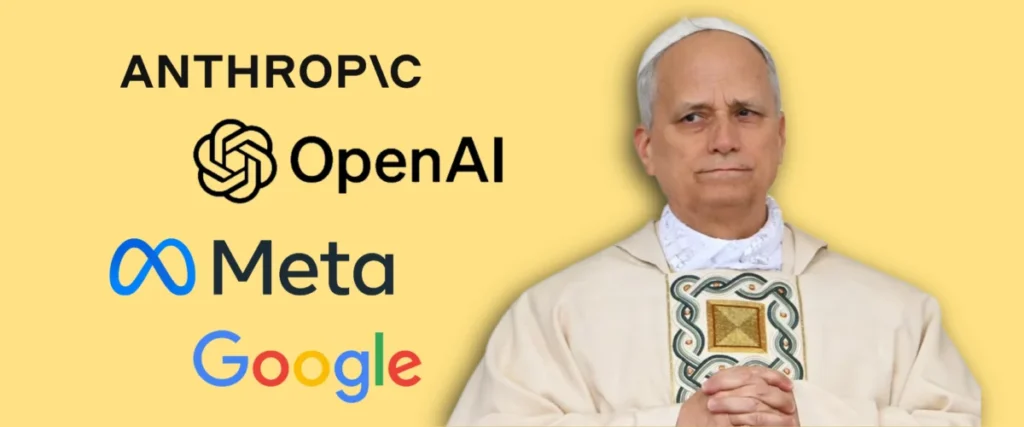
In a significant intervention that directly addresses this burgeoning techno-spiritual landscape, Pope Leo XIV recently released a comprehensive 42,000-word encyclical titled "Magnifica Humanitas" (Magnificent Humanity). An encyclical, a papal letter circulated to all bishops of the Roman Catholic Church, serves as a major pronouncement on Catholic doctrine regarding moral, social, or theological issues. Its issuance on artificial intelligence marks a pivotal moment, signaling the Vatican’s commitment to providing a moral framework for one of the most defining technologies of our time. Historically, encyclicals like Rerum Novarum (on labor and capital) or Laudato Si’ (on environmental care) have profoundly influenced global discourse and social policy. "Magnifica Humanitas" is poised to do the same for AI ethics.
While still undergoing full digestion by theologians and policy analysts, early summaries and excerpts indicate a clear and resolute message from Pope Leo XIV. Far from meekly acquiescing to an "inevitable" AI future, the encyclical issues a powerful call for caution, human-centered development, and a rejection of hubris. A central exhortation from the document states: "With the heart of a shepherd and a father, I ask everyone to abandon the construction of yet another Tower of Babel and to join forces in building up the common good, so that humanity will never lose its beauty, and the world once again will come to recognize the human heart as the place where God desires to dwell."
This "Tower of Babel" analogy is particularly potent. In biblical narrative, the Tower of Babel represents human ambition and pride leading to divine judgment and linguistic fragmentation. Applied to AI, it serves as a stark warning against unchecked technological ambition driven by a desire for power or transcendence, rather than genuine human flourishing. The Pope’s message underscores the Church’s conviction that technology should always serve humanity and contribute to the "common good," a foundational principle in Catholic social teaching emphasizing the well-being of all individuals and the flourishing of society as a whole. This includes ensuring equitable access, protecting human dignity, and preventing AI from exacerbating existing inequalities or creating new forms of marginalization. The encyclical implicitly challenges the notion that technological advancement, in itself, guarantees progress or happiness, instead advocating for an ethical framework rooted in enduring human values.
A Shift in Silicon Valley’s Rhetoric
The Pope’s pronouncement arrives amidst a noticeable, albeit potentially tactical, shift in how leading technology executives are discussing AI. For a period, many prominent figures within the AI industry engaged in what critics termed "x-risk evangelism," frequently predicting widespread job automation, the necessity of universal basic income (UBI) as a societal safety net, and even existential threats to humanity from advanced AI. Figures like Sam Altman, CEO of OpenAI, and Dario Amodei, CEO of Anthropic, had previously articulated visions of a future where AI would automate vast swathes of human labor, necessitating government-provided "guaranteed income" or envisioning a symbiotic existence with "machines of loving grace." This rhetoric often fueled public anxiety and contributed to a sense of inevitability regarding AI’s disruptive power.
However, recent weeks have seen a marked change in tone. Nvidia CEO Jensen Huang, a key figure in the AI hardware ecosystem, publicly "called BS" on executives who claimed to be laying off employees due to AI, dismissing the excuse as "lazy" and a way "for them to sound smart." Huang’s comments suggest a pushback against the narrative that AI is an immediate, widespread job killer, instead implying that such claims might be used to mask other business inefficiencies or strategic decisions. Perhaps even more significantly, Sam Altman, previously a vocal proponent of AI’s transformative and potentially disruptive impact on the labor market, admitted last week that he had been "pretty wrong" about his earlier predictions of mass job automation. This retraction, echoed by other industry leaders, signals a pivot from dire warnings to a more tempered, and perhaps more realistic, assessment of AI’s current capabilities and near-term impact on employment.
Analysis: From Prophecy to Pragmatism
These shifts in industry rhetoric are likely multifaceted. While some may view them as purely pragmatic public relations damage control in response to growing public skepticism, regulatory scrutiny (as seen with the European Union’s AI Act), and investor pressure, they also reflect a potential internal re-evaluation within the tech sector. The initial hype surrounding generative AI models, while revolutionary, has perhaps begun to settle into a more sober understanding of the technology’s current limitations and the complex challenges of integrating it responsibly into society.
The "p(doom)" narrative—the probability of humanity’s doom due to AI—which gained considerable traction among some tech leaders and researchers, created significant public anxiety and fueled a sense of an uncontrollable technological force. The current walk-back by these same leaders suggests an attempt to recalibrate public perception and perhaps regain a degree of trust. It underscores the critical difference between building useful, ethical tools that enhance human capabilities and pursuing a vision of "inventing the future" that may be detached from tangible human needs or societal well-being.
The Vatican’s "Magnifica Humanitas" serves as a powerful counter-narrative to the techno-utopian or dystopian visions that have permeated the AI discourse. By emphasizing human dignity, the common good, and the dangers of a new "Tower of Babel," Pope Leo XIV articulates a clear moral imperative for AI development: technology must serve humanity, not the other way around. This message resonates deeply with a growing demand from the public and policymakers for accountability, transparency, and ethical governance in AI.
The Enduring Challenge: Rebuilding Trust and Guiding Innovation
The convergence of religious ethics and technological discourse at the Vatican, coupled with the evolving rhetoric from Silicon Valley, highlights an ongoing societal challenge: how to responsibly guide the development of powerful technologies like AI. The initial period of "x-risk sages" spreading anxiety and fear has left a lasting impact, creating a "p(doom) genie" that will take considerable effort to put back in its bottle. Rebuilding public trust requires not just a change in language, but a demonstrable commitment from technology leaders to prioritize human values, utility, and the common good over speculative, often self-serving, prophecies.
Moving forward, the focus must shift from a quasi-religious pursuit of an abstract "future" to the practical development of AI tools that are genuinely useful, solve real-world problems, and contribute positively to human lives. This necessitates collaboration between technologists, ethicists, policymakers, and civil society, ensuring that diverse voices and values inform the trajectory of AI. The Pope’s call to abandon the "Tower of Babel" and build for the "common good" provides a robust ethical framework, reminding all stakeholders that at the heart of technological progress must always lie the magnificent beauty and inherent dignity of humanity itself. This ongoing dialogue, bridging ancient wisdom and futuristic innovation, will be crucial in shaping an AI future that truly serves humanity.