


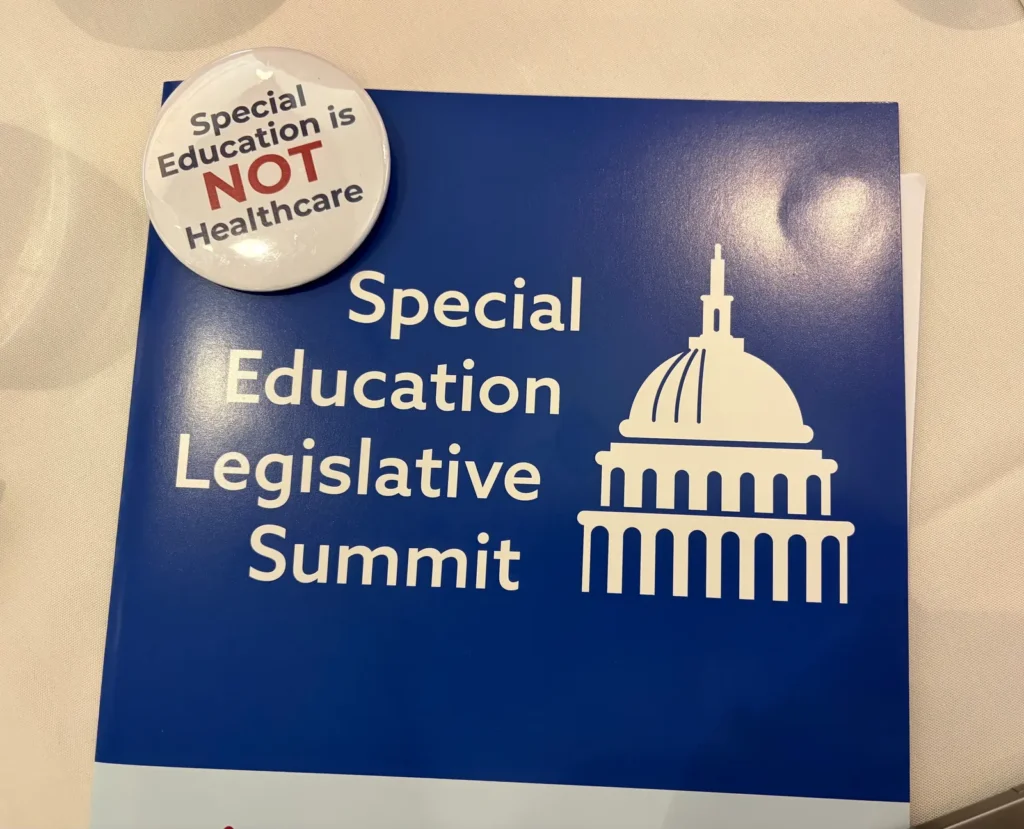
ALEXANDRIA, Va. – A significant restructuring of special education functions within the U.S. Department of Education has ignited a firestorm of apprehension among special education professionals, advocates, and former federal officials. Concerns are mounting that transferring key responsibilities to other federal agencies, particularly the U.S. Department of Health and Human Services (HHS), could lead to a fragmentation of services, exacerbate existing disparities in support for students with disabilities across states, and erode crucial accountability measures. These anxieties were a central theme at the Special Education Legislative Summit, held from Sunday through Wednesday in Alexandria, Virginia, where nearly 300 attendees gathered to discuss the implications of these administrative shifts.
The summit, jointly hosted by the Council for Exceptional Children (CEC) and the Council of Administrators of Special Education (CASE), organizations dedicated to supporting special education professionals, provided a platform for a robust exchange of views on the potential fallout from the Trump administration’s "Returning Education to the States" initiative. This broader campaign aims to reduce the federal government’s role in education, advocating for greater control and decision-making power for parents and local districts over federal funding.
Unpacking the Interagency Agreements
At the heart of the controversy are a series of interagency agreements that reassign core functions previously managed by the Department of Education. One prominent agreement, announced in the month preceding the summit, establishes a partnership between the Department of Education and HHS. This accord will see key responsibilities for special education, including the administration of formula and discretionary grants, compliance monitoring, and the annual assessment of state performance, transition to HHS. Despite this operational shift, the Department of Education will retain its statutory responsibility for these functions.
This Education Department-HHS special education partnership is not an isolated incident. It is part of a larger trend, with the Department of Education having entered into fourteen such agreements over the past year with six other federal agencies. Another notable agreement involves the transfer of certain activities from the Department’s Office for Civil Rights (OCR) to the U.S. Department of Justice.
Voices of Concern from Former Officials
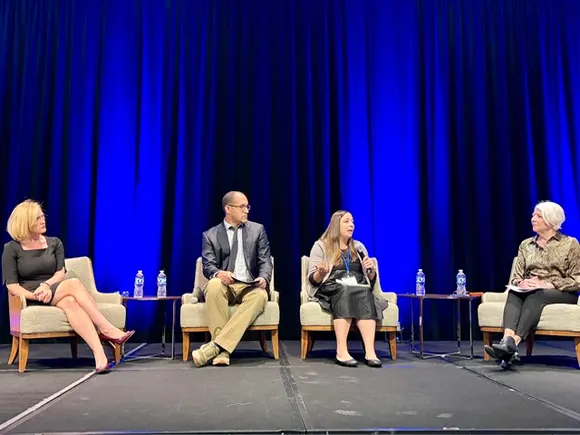
Several former officials from the Department of Education shared their perspectives at the summit, articulating the deep-seated concerns regarding the impact of these relocations on special education funding, policy development, accountability frameworks, and the overall coordination of services for students with disabilities within the broader K-12 landscape.
Meghan Whittaker, formerly the chief of staff in the Department’s Office of Special Education and Rehabilitative Services (OSERS), emphasized the potential for increased complexity and confusion for school districts and states. "There’s a real risk here that the guidance you’re getting from one agency and the guidance you’re getting from another makes it impossible or harder to administer all of the laws that you need to actually administer," Whittaker stated. OSERS houses the Office of Special Education Programs (OSEP), which plays a pivotal role in implementing the Individuals with Disabilities Education Act (IDEA). Whittaker, now serving as program director at The Learning Agency, highlighted that the fragmentation of guidance across different federal bodies could create significant administrative hurdles for those on the front lines of special education.
Marcus Hedrick, a former attorney with the Department of Education and now with Sligo Law Group, directly addressed the perceived rationale behind these moves. "To those who think that moving OSEP to another agency and reducing its staffing is empowering, like returning power to the states, it’s not," Hedrick asserted to summit attendees. "It’s really just abdicating some of the responsibility to support you in implementing the program." He argued that rather than empowering states, these actions represent a withdrawal of federal support and expertise.
The Broader Context: "Returning Education to the States"
The administrative maneuvers are framed by the Trump administration as integral to its "Returning Education to the States" campaign. This initiative’s stated goal is to dismantle what it terms "education bureaucracy" in Washington, D.C., and to empower parents and local school districts with greater control over federal education funding decisions.
Proponents of this approach suggest that these interagency agreements are initial steps towards eventually eliminating the Department of Education entirely. This sentiment was echoed by House Republicans on the Education and Workforce Committee, who recently approved a package of ten bills designed to permanently transfer certain Department of Education functions to other agencies. However, legislative proposals to codify the specific interagency agreements concerning special education and civil rights were notably absent from this package.
Rebuttals and Counterarguments
In response to these criticisms, the administration has offered a different perspective. Kelly Rogers, the current acting assistant secretary of OSERS, stated in a June interview with K-12 Dive that the interagency agreement with HHS would not alter a student’s individualized education program (IEP) or the services they receive. The administration maintains that the partnership with HHS is intended to "align federal services to improve academic outcomes and strengthen access to programs and information for infants, toddlers, students, young adults and adults with disabilities."
U.S. Education Secretary Linda McMahon, in a letter to parents of individuals with disabilities dated June 16, characterized the Education Department-HHS partnership as the result of "careful deliberation and collaboration with stakeholders." She further emphasized that "IDEA, as an education law, ensures that a child’s disability isn’t viewed as a medical condition that needs to be treated," suggesting that the collaboration with HHS, a health-focused agency, would not compromise the educational nature of IDEA.
Financial Investments and Funding Gaps
While administrative functions are being reorganized, the Trump administration has also highlighted increased funding for special education and early intervention services. This year, the administration has allocated an additional $144 million for early intervention programs for infants and toddlers, as well as for K-12 special education initiatives. This is in addition to the $15.5 billion designated for IDEA services in fiscal year 2026.
However, CEC and CASE argue that these funding levels are insufficient to address the mounting challenges within the special education field. These challenges include severe teacher shortages, the escalating demand for student mental health services, and a consistent year-over-year increase in special education enrollment. In 2024, approximately 8.2 million students aged 3-21 qualified for IDEA Part B school-aged services, representing a 3.8% increase from the previous year. The IDEA’s Part C program served nearly 460,000 infants and toddlers with disabilities and developmental delays in the same year.
Growing Pushback and the Risk of Educational Dilution
The proposed transfer of OSEP’s functions to HHS has drawn significant opposition from special education professionals and disability rights organizations. They contend that such a move will inevitably lead to confusion and complicate the ability of states and districts to adhere to the mandates of IDEA.
A significant concern raised by opponents, including thirteen former senior federal special education officials from both Democratic and Republican administrations, is the potential for special education to be viewed through a medical lens rather than an educational one. In a letter penned to members of Congress on July 13, these former officials urged lawmakers to block efforts to dismantle the Department of Education and relocate its core functions. Their letter explicitly stated, "Moving IDEA’s implementation into a health agency risks substituting medical management for educational access."
This concern was echoed by Meghan Whittaker, who commented on the cultural differences between the agencies. "I think stepping into the culture of HHS is going to have a really big and potentially negative impact on how students access services and how we support them and their families," she stated. Whittaker further alluded to the perception that the Department of Education staff understand that "disability is a natural part of the human existence" and are committed to ensuring children with disabilities "can achieve the best outcomes possible."
Erosion of Expertise and Accountability
Beyond the philosophical shift, practical implications are also a major point of contention. Audrey Levorse, interim executive director of the National Association of State Directors of Special Education, voiced concerns at the summit about the impact on states’ ability to measure student progress. She warned that a reduction in federal staff dedicated to providing technical assistance and support could hinder states’ capacity to accurately assess how students with disabilities are progressing.
The proposed FY27 budget from the Department of Education further fuels these worries, recommending a drastic reduction in OSERS staff from 163 in FY25 to just 31 in FY27. This potential loss of institutional knowledge and expertise is a significant concern for those dedicated to the field.
This sentiment was amplified on Monday when 86 House Democrats sent a letter to Secretary McMahon, calling for the reversal of the special education interagency agreement with HHS and the OCR agreement with the Justice Department. The letter highlighted the risk of losing knowledgeable staff who are intimately familiar with K-12 programs. "We worry that the loss of institutional expertise could cause irreparable damage to these offices that millions of students and their families rely on," the Democrats wrote, underscoring the potential for "irreparable damage" to these critical offices.
The Department of Education, however, maintains that OSERS staff with special education expertise will continue their work in collaboration with HHS.
Legislative Opposition and the Future of Special Education Oversight
The political landscape is also reflecting the growing opposition. During a press call on Monday, Senator Patty Murray, D-Wash., alongside representatives from disability rights groups, parent organizations, and the teaching profession, declared the interagency agreements for special education and civil rights to be "illegal." She further asserted that "dismantling the Department of Education — continuing on this path — will be devastating for kids with disabilities in America."
The ongoing administrative realignments and the ensuing debates underscore a fundamental divergence in philosophies regarding the federal government’s role in ensuring equitable and effective special education services for all students with disabilities across the nation. As these agreements take effect, the long-term consequences for accountability, service delivery, and the overall well-being of students with disabilities remain a critical area of focus for educators, policymakers, and advocates alike.