

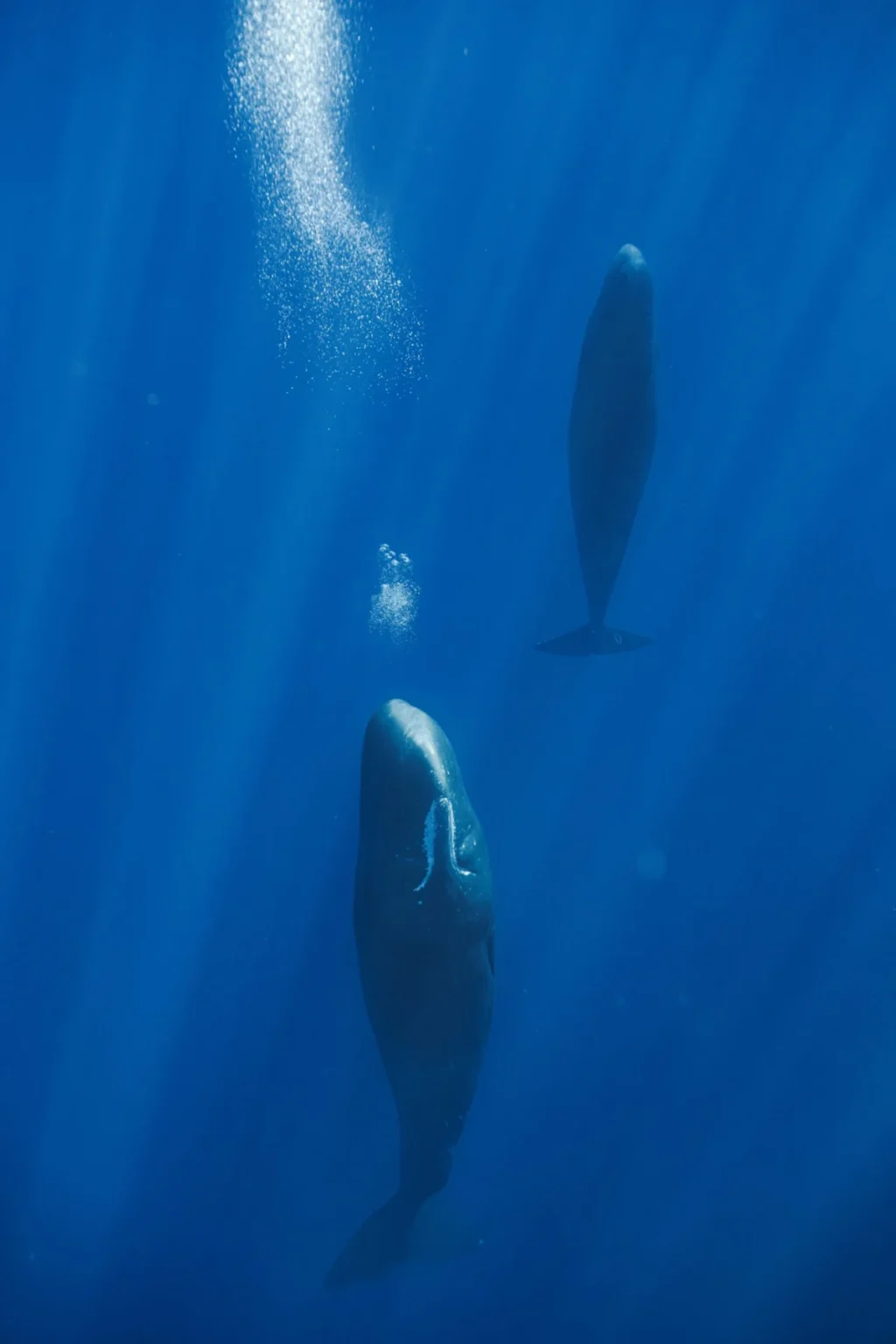
The deep oceans have long held secrets regarding the behavioral patterns of the sperm whale (Physeter macrocephalus), the world’s largest toothed predator. While these cetaceans are renowned for their record-breaking dives and complex social structures, their resting habits have remained largely enigmatic until recently. A new study published in the Journal of Experimental Biology has shed light on a peculiar physiological mechanism: sperm whales appear to utilize bubble-blowing as a form of biological ballast. By releasing air from their lungs in a controlled manner, these marine giants can maintain their position in the water column while napping vertically, preventing their naturally buoyant heads from bobbing to the surface and disrupting their rest.
This discovery adds a significant layer to our understanding of cetacean physiology. Researchers have historically struggled to observe sperm whales during their most vulnerable states, but the integration of advanced bio-logging technology has allowed scientists to peer into the quiet moments of these deep-sea residents. The study, led by Noémie Freymond of the University of Neuchâtel and Patrick Miller of the University of St Andrews, suggests that sleep for a sperm whale is not merely a passive state but a finely tuned balancing act involving physics, anatomy, and respiratory control.
The Mechanics of Vertical Rest
Sperm whales are unique among cetaceans for their "drift-diving" or vertical resting posture. Unlike many other whale species that may rest horizontally or while slowly swimming, sperm whales often bob in the water like giant logs, their heads pointed toward the surface and their tails dangling into the abyss. This behavior was first documented in detail by Patrick Miller in 2008, but the specific mechanics of how they maintain this orientation without active swimming remained a subject of theoretical debate.
The primary challenge for a sleeping sperm whale is its own anatomy. A significant portion of the sperm whale’s head is occupied by the spermaceti organ, a massive cavity filled with waxy oil. While this organ is believed to play a role in echolocation and potentially in buoyancy regulation during deep dives, it is inherently buoyant. Without a counter-mechanism, a sperm whale at rest would naturally float upward, head-first, until it broke the surface. To stay submerged at a safe depth—typically between 10 and 15 meters—the whale must find a way to offset this upward pull.
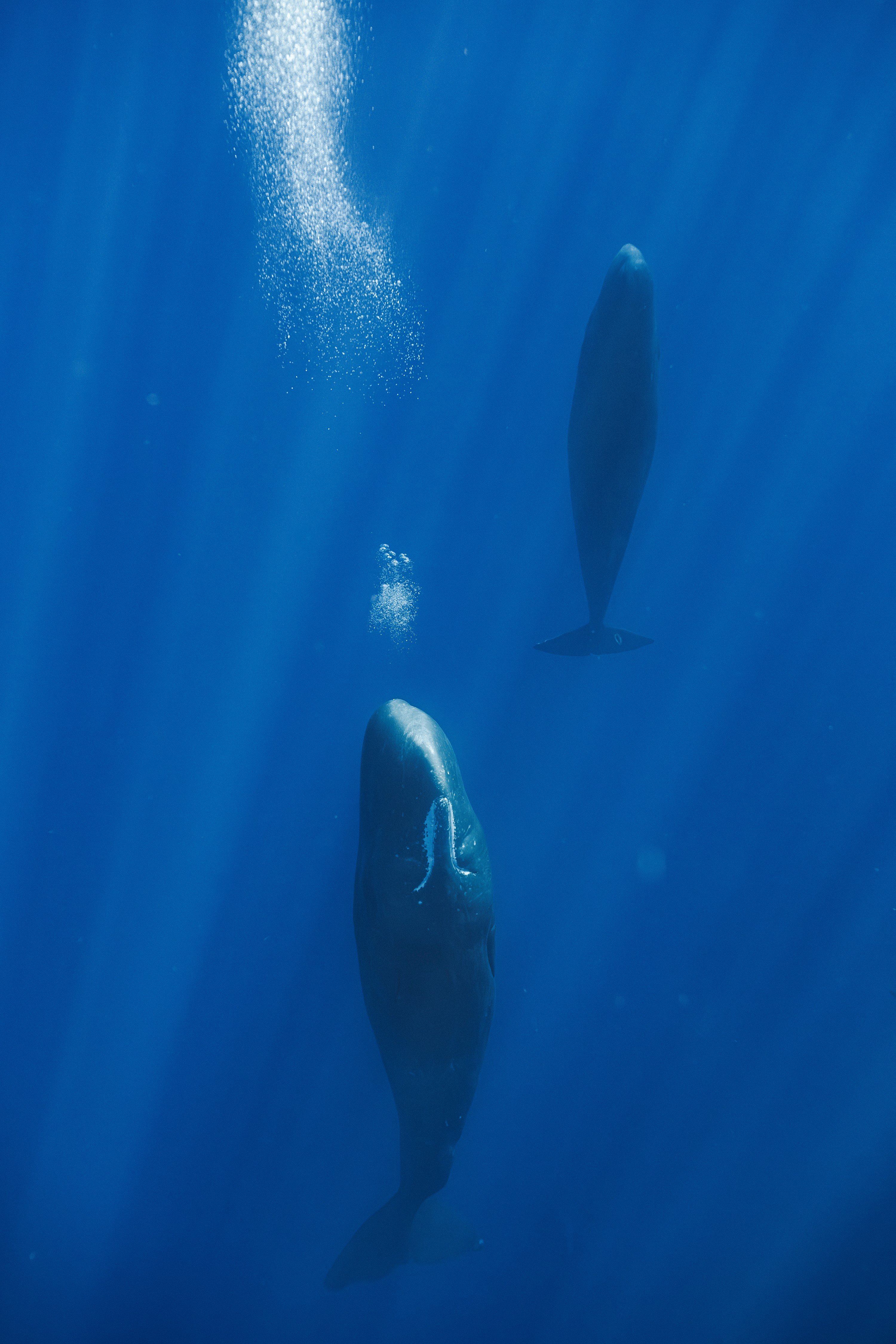
The research team discovered that the solution lies in the whales’ lungs. By monitoring 42 individual whales off the coast of Norway’s Lofoten Islands, the team observed a consistent pattern of bubble release during resting periods. These bubbles are not accidental leaks; they are tactical releases of air that reduce the volume of the lungs, thereby decreasing the whale’s overall buoyancy and allowing it to remain suspended in a vertical "sweet spot" below the surface turbulence.
Methodology and Data Collection in the Lofoten Islands
The study was conducted in the nutrient-rich waters of the Lofoten Islands, a known foraging ground for male sperm whales. To gather data, the research team utilized non-invasive suction-cup tags equipped with a suite of sensors, including accelerometers, magnetometers, pressure sensors, and high-sensitivity hydrophones. These devices, often referred to as DTAGs (Digital Acoustic Recording Tags), allowed the researchers to reconstruct the three-dimensional movements of the whales and record the distinct acoustic signature of bubbles being released from the blowhole.
The logistical challenge of this research was significant. Tags had to be applied to the whales from small vessels, a process requiring precision and favorable weather conditions. Once attached, the tags recorded data for several hours or days before detaching automatically and floating to the surface for recovery via VHF radio beacons.
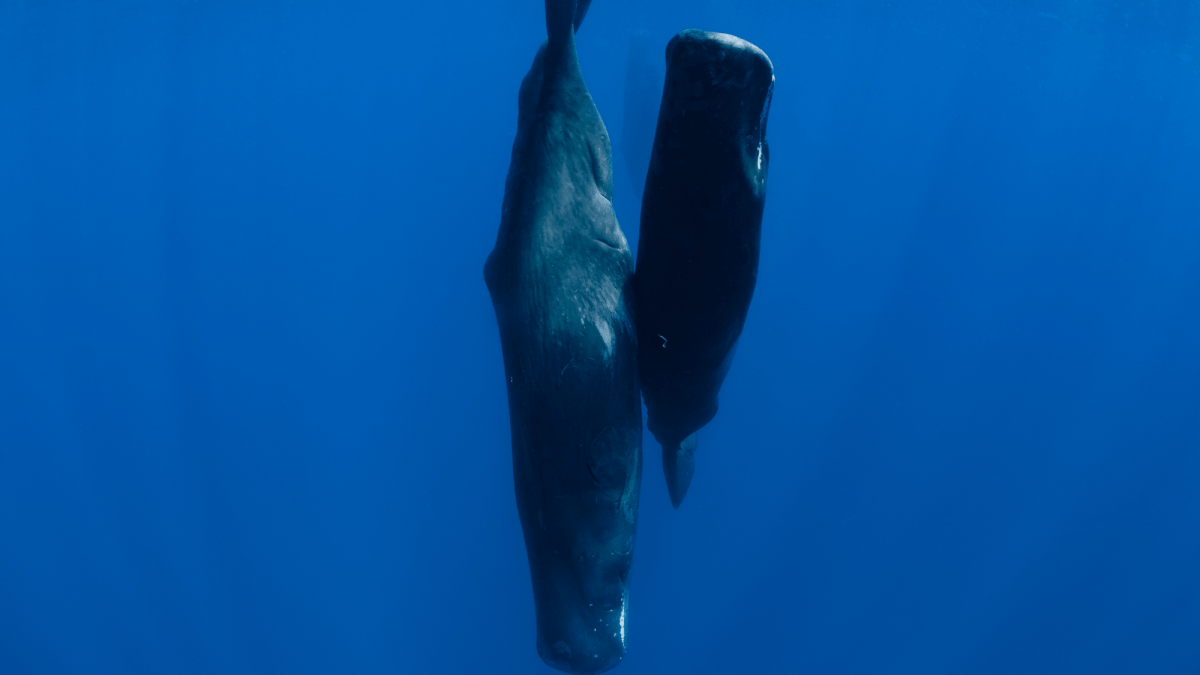
Over the course of the study, the team analyzed hundreds of hours of data. They identified three distinct resting modalities:
- Tail-first Sinks: The whale slowly descends tail-first to a depth of roughly 8 meters before stabilizing.
- Shallow Head-up Drifts: The whale dives head-first but quickly pivots to a vertical position, remaining near the surface.
- Deep-ascent Rests: After a deep foraging dive (exceeding 200 meters), the whale rests while slowly drifting back toward the surface.
The data revealed a direct correlation between depth and bubble-blowing frequency. Whales resting closer to the surface, where the water pressure is lower and air in the lungs expands to its maximum volume, were observed blowing bubbles approximately 11 times per nap. In contrast, whales resting during an ascent from greater depths—where high pressure compresses the air in the lungs, making the whale naturally less buoyant—only released bubbles three or four times.
The Physics of Buoyancy and Pressure
To understand why sperm whales blow bubbles more frequently at shallow depths, one must look to Boyle’s Law, which states that the pressure and volume of a gas have an inverse relationship. As a whale descends, the increasing water pressure compresses the air in its lungs, making it denser and reducing its buoyant force. Conversely, as a whale rises, the air expands, increasing buoyancy.
For a sperm whale attempting to stay still at 10 meters, the air in its lungs provides a powerful upward lift. By "burping" out small amounts of air, the whale effectively fine-tunes its density to match that of the surrounding seawater. This behavior demonstrates a sophisticated level of instinctual physics. The researchers noted that the whales were essentially using their lungs as a "variable ballast tank," much like a submarine uses water and compressed air to maintain depth.
This finding also clarifies why the whales do not simply exhale completely before resting. Some air must remain in the lungs to facilitate oxygen exchange and to provide a reserve for the whale’s eventual return to the surface. The bubble-blowing represents a middle ground—retaining enough air to survive, but not so much that the whale is forced to the surface prematurely.
Implications for Cetacean Intelligence and Consciousness
The study raises profound questions about the nature of sperm whale sleep. In many marine mammals, such as dolphins and fur seals, sleep is "unihemispheric," meaning one half of the brain remains awake while the other sleeps. This allows the animal to continue swimming, surface for air, and remain alert for predators.
However, the vertical, motionless rest observed in sperm whales suggests they may enter a deeper, more "human-like" state of sleep. If a sperm whale is indeed fully unconscious during these 10-to-15-minute bouts, the act of blowing bubbles to regulate buoyancy would have to be an autonomic reflex, similar to breathing in humans. Alternatively, if the behavior is conscious, it implies that sperm whales maintain a level of environmental awareness even while resting.
"We still can’t definitively say whether this is a conscious or unconscious action," Noémie Freymond noted. "But it requires a high degree of physiological coordination."
This research fits into a broader emerging picture of sperm whales as highly sophisticated, sentient beings. Recent studies by Project CETI (Cetacean Translation Initiative) have suggested that sperm whale "codas"—the patterns of clicks they use to communicate—possess a structure similar to human phonemes, including vowels and an "alphabet" of sorts. Understanding their resting behavior is a critical piece of the puzzle in understanding their overall cognitive lives.
Chronology of Sperm Whale Resting Research
The scientific journey toward understanding sperm whale sleep has evolved over several decades:
- Pre-1990s: Sperm whales were largely thought to be active 24/7, with little known about their resting phases due to the difficulty of night-time and deep-sea observation.
- 2008: Patrick Miller and colleagues published a landmark paper in Current Biology documenting the first evidence of vertical resting behavior, suggesting that sperm whales might be the least sleep-dependent mammals in the world, napping for only 7% of their day.
- 2010s: The widespread use of DTAGs allowed for more frequent observations of "drift dives," confirming that vertical resting is a universal trait among the species.
- 2023-2024: Researchers began focusing on the "why" of vertical orientation, leading to the investigation of bubble-blowing as a buoyancy aid.
- Present: The latest study provides the first empirical link between bubble sounds, depth, and buoyancy regulation.
Broader Ecological and Conservation Context
Understanding the resting requirements of sperm whales is not just a matter of biological curiosity; it has significant implications for conservation. As the oceans become increasingly crowded with shipping traffic and industrial noise, the quiet, motionless resting periods of sperm whales are easily disrupted.
Unlike foraging, which involves active movement and echolocation, resting whales are silent and relatively stationary, making them harder for ships to detect via sonar and more vulnerable to ship strikes. Furthermore, if bubble-blowing is a delicate physiological process required for rest, increased environmental stress or changes in water temperature (which affects water density) could impact the whales’ ability to recover energy.
The findings also provide a baseline for comparing the health of different whale populations. Whales in high-stress environments may show altered resting patterns or a failure to maintain buoyancy, which could serve as an early warning sign of population decline.
As researchers continue to decode the "alphabet" of sperm whale clicks and the nuances of their "bubble-ballast" sleep, the image of the sperm whale as a mere "oil resource" of the past is replaced by a complex, vertical sleeper of the deep—a creature that manages the physics of the ocean with every breath and every bubble. Future research will likely focus on whether these bubbles serve any secondary purpose, such as a visual or acoustic deterrent to predators like orcas, or if they are strictly a tool for the silent, vertical slumber of the sea’s most mysterious giants.