




The rapid and simultaneous acceleration of artificial intelligence adoption and the looming horizon of quantum computing are creating an unprecedented convergence of vulnerabilities for enterprise security architectures worldwide. According to fresh empirical research published in the 2026 Thales Data Threat Report: Quantum & AI Trends, this technological intersection is placing intense, compounding pressure on legacy security frameworks. Conducted by 451 Research, a part of S&P Global, the extensive study surveyed 3,120 information technology and cybersecurity management professionals spread across 20 countries. The findings reveal a landscape in transition, where nearly all surveyed organizations—98%—are actively evaluating how artificial intelligence and quantum computing intersect to alter their threat profiles, even as fundamental data hygiene and encryption practices show measurable declines.
The research paints a complex picture of modern corporate digital infrastructure. On one hand, organizations are heavily increasing their monetary allocations toward defensive AI measures; 30% of respondents noted a significant expansion in budgets dedicated specifically to artificial intelligence defense mechanisms. On the other hand, core defensive baselines such as enterprise-wide data encryption are slipping. This dichotomy highlights a systemic challenge for chief information security officers (CISOs) who must balance the rapid deployment of productivity-enhancing algorithms against the expansion of vulnerable attack surfaces. As quantum computing draws closer to commercial viability, security leaders find themselves racing to future-proof their networks while simultaneously struggling to protect present-day cloud environments.

Evolving Threat Vectors and the Cloud Infrastructure Paradox
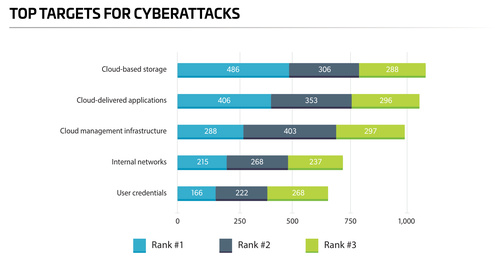
The expansion of enterprise AI initiatives has fundamentally shifted the primary targets of cybercriminals. Rather than traditional on-premises data centers or localized endpoints, modern threat actors are increasingly zeroing in on cloud-based ecosystems. According to the Thales report, cloud-based storage, cloud-delivered applications, and cloud management infrastructure emerged as the three most frequently targeted asset types by malicious actors, cited by 35%, 34%, and 32% of respondents, respectively.
This heightened vulnerability is a direct byproduct of how modern artificial intelligence operates. AI and machine learning models require massive, centralized datasets for training, fine-tuning, and continuous inference. Consequently, organizations are migrating vast pools of sensitive operational, customer, and proprietary data into cloud environments to fuel these algorithms. This rapid data centralization, paired with the accelerated pace at which AI infrastructure is deployed, creates sprawling digital footprints that are difficult for internal security teams to monitor comprehensively.
Interestingly, organizations are increasingly looking outward to mitigate these cloud-related risks. Rather than relying solely on internal personnel, 67% of surveyed enterprises reported making direct investments in security tools specifically provided by their cloud service providers. This edges out traditional third-party security vendors, which were utilized by 63% of respondents. Modern enterprises are also diversifying their defense strategies by integrating solutions from specialized tech startups, large language model (LLM) developers, and internally engineered controls.
A Troubling Decline in Enterprise Encryption Coverage
Despite heightened spending on specialized AI defenses and cloud security tooling, the foundational layer of data protection—encryption—is experiencing a concerning regression. The Thales report highlights a persistent gap between the volume of sensitive data stored in the cloud and the percentage of that data that is actually encrypted.
Data from the report shows that only 7% of organizations currently encrypt more than 80% of their sensitive cloud-stored data. Furthermore, just 29% of respondents reported encrypting more than 60% of such assets. When aggregated, the average share of sensitive cloud data protected by encryption stands at 47% for 2026. This represents a measurable decline from the previous year, when average encryption coverage sat at 51% according to the 2025 iteration of the research.
This downward trend echoes warnings raised by security analysts over successive budget cycles. In the 2025 study, AI security already commanded the second-highest priority in overall security spending—trailing only general cloud security—while 52% of organizations admitted that their newly minted AI budgets were actively displacing pre-existing cybersecurity allocations. The reality that enterprises are spending more on AI security wrappers while actually scaling back foundational data encryption underscores a dangerous operational blind spot: organizations are investing in high-level technological shields while leaving the underlying data vulnerable to exfiltration.

Misaligned Priorities: Speed, Success Metrics, and Governance Gaps
The tension between technological innovation and risk management is further evidenced by how organizations measure the success of their artificial intelligence initiatives. While AI security ranks as the second-highest prioritized spending category overall, protecting enterprise data and maintaining regulatory compliance rank astonishingly low among the metrics leadership uses to evaluate project viability.
When asked to identify the criteria used to determine whether an AI project is successful, risk management took a back seat to productivity and user experience. Improving the customer experience led all measures at 68%, closely followed by reducing employee toil through task automation at 63%. In stark contrast, reducing or managing the risks of data loss, data leakage, or regulatory noncompliance placed sixth out of seven potential success criteria, cited by only 35% of respondents.
This prioritization gap directly feeds into the primary obstacles inhibiting broader AI adoption. Poor data quality and inadequate initial data governance emerged as the single greatest barrier to implementation, cited by 65% of IT and security professionals. This was closely followed by the security risks associated with exposed data, noted by 61% of participants. Furthermore, 51% of respondents pointed to a cultural and operational hurdle: AI initiatives are simply moving too fast within their organizations to be properly secured by existing personnel and protocols.

The Quantum Horizon: Anticipating Post-Quantum Cryptography
Compounding the immediate challenges of artificial intelligence deployment is the shadow cast by emerging quantum computing capabilities. Unlike classical computers, which process information using binary bits, quantum computers leverage the principles of quantum mechanics to process complex variables simultaneously. While this promises revolutionary computational power, it poses an existential threat to modern cryptography.
The vast majority of contemporary data encryption—including widely used protocols such as RSA and Elliptic Curve Cryptography—relies on mathematical problems that are extraordinarily difficult for classical computers to solve, but which theoretical quantum computers could crack with relative ease using algorithms like Shor’s algorithm. Consequently, the convergence of AI and quantum computing is viewed by security experts not as a distant theoretical exercise, but as an urgent architectural crisis.
Despite these terrifying long-term prospects, the Thales research highlights a dual perspective on the relationship between the two technologies. While quantum computing threatens current cryptographic standards, a majority of industry professionals also recognize its potential defensive and operational benefits. Specifically, 57% of survey participants believe that quantum computing will eventually enhance machine learning algorithms by exponentially increasing processing speeds and pattern recognition capabilities. Additionally, 54% expect quantum systems to enable advanced simulations of complex systems, which could revolutionize fields ranging from pharmaceutical research to macroeconomic modeling.

Navigating this transition requires organizations to adopt a proactive posture toward post-quantum cryptography (PQC). Standards bodies, such as the National Institute of Standards and Technology (NIST), have begun finalizing quantum-resistant cryptographic algorithms, but enterprise migration timelines remain dangerously protracted. Security analysts note that organizations must begin harvesting and cataloging their sensitive data assets now, implementing robust cryptographic inventories to ensure they are prepared for the day quantum hardware achieves cryptographic relevance.
Industry Implications and Strategic Recommendations
The convergence of artificial intelligence scaling, cloud migration vulnerabilities, and the approaching quantum threat requires a fundamental paradigm shift in how corporate boards and executive leadership approach enterprise risk management. The traditional approach of treating cybersecurity as an isolated IT compliance checklist is no longer viable in an environment where algorithmic systems process petabytes of distributed cloud data at unprecedented velocities.
Security analysts and institutional researchers recommend several critical adjustments for organizations navigating this complex operational landscape:

- Rebalancing Security Budgets: While investments in AI-specific security tools and cloud-native protections are vital, enterprises must avoid cannibalizing foundational security measures. Budgets must be deliberately structured to ensure that data discovery, classification, and encryption coverage keep pace with AI deployment rates.
- Elevating Data Governance in Project Metrics: Organizations must realign their internal key performance indicators (KPIs) for AI initiatives. Elevating data governance, loss prevention, and privacy compliance from secondary considerations to core success metrics will prevent teams from sacrificing security for speed.
- Implementing Cryptographic Agility: With quantum computing threats on the horizon, IT leaders must audit their current cryptographic infrastructure. Transitioning toward cryptographic agility—the ability to seamlessly update encryption algorithms and keys without disrupting core business systems—will be essential for surviving the post-quantum transition.
- Closing the Cloud Visibility Gap: Because cloud environments represent the primary target for modern threat actors fueled by the demands of AI training, organizations must invest heavily in automated cloud posture management, continuous monitoring, and Zero Trust architectures that assume breach conditions.
Ultimately, the findings from the 2026 Thales Data Threat Report serve as both a warning and a roadmap. As artificial intelligence continues to reshape commercial operations and quantum technology edges closer to reality, organizations that fail to address foundational data hygiene, encryption coverage, and governance gaps will find themselves increasingly exposed to sophisticated, automated cyber threats. Bridging the gap between rapid technological innovation and resilient security architecture remains the definitive challenge for the modern enterprise.