


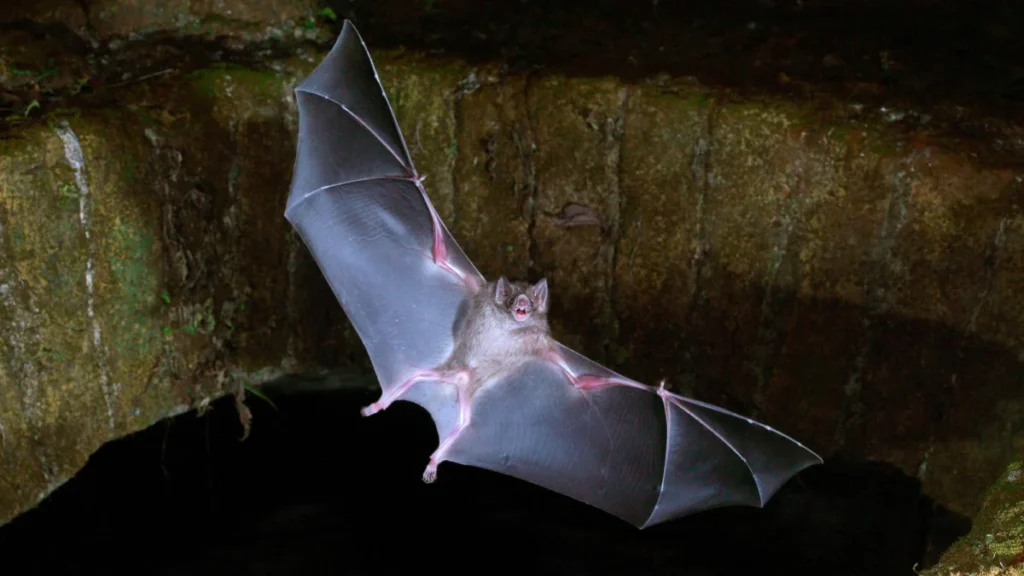
Bat Week officially gets underway today, marking an annual, concerted global effort to shift public perception away from enduring myths and toward the genuine ecological necessity of Earth’s only flying mammals. While popular culture has long tethered bats to nocturnal dread, disease vectors, and Gothic folklore involving vampires, scientists emphasize an entirely different reality. These creatures are vital pollinators, apex pest-control agents, and the architects of intricate social dynamics that bear an uncanny resemblance to human behavior.
To understand the depth of these behavioral parallels, researchers have dedicated decades to observing the nuanced lives of bats in the wild and in controlled habitats. Rachel Page, an evolutionary biologist at the Smithsonian Tropical Research Institute (STRI) in Panama, has spent years peeling back the layers of bat biology. According to Page, initial forays into bat research routinely open doors to cascading questions, revealing a complexity that challenges long-held assumptions about mammalian evolution.
The Evolutionary Significance of Bat Week
Established to foster conservation and public education, Bat Week serves as an annual international celebration designed to highlight the ecological roles of bats and promote their protection. Conservationists utilize this period to counter historical stigmatization, which has historically hindered funding and public support for bat preservation initiatives.
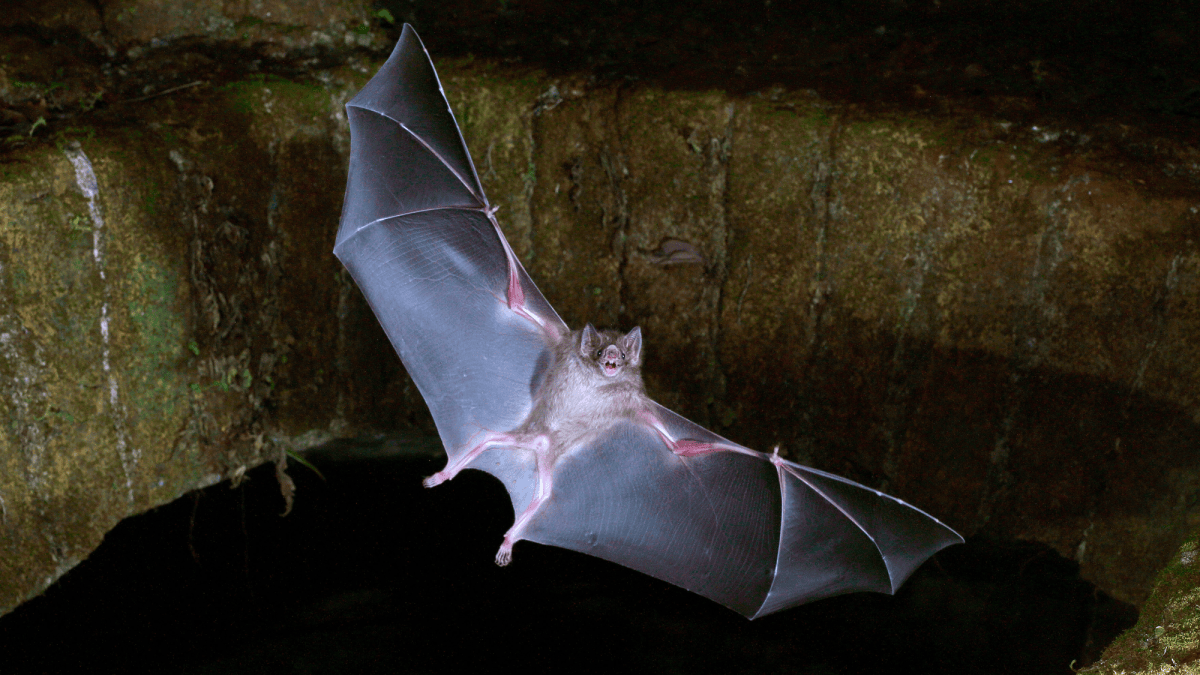
Ecologically, bats provide indispensable services. Insectivorous species consume vast quantities of agricultural pests nightly, saving the global farming industry billions of dollars in crop damage and chemical pesticide reductions. Meanwhile, nectar-feeding bats act as primary pollinators for hundreds of tropical plant species—including economically vital crops like agave, the source of tequila, as well as mangoes, bananas, and guavas.
Despite these contributions, bat populations worldwide face unprecedented threats, ranging from habitat fragmentation and climate change to fungal pathogens like White-Nose Syndrome, which has devastated North American cave-dwelling populations over the past two decades. Events like Bat Week provide a critical platform for biologists and conservation organizations to share research findings, advocate for habitat preservation, and educate the public on coexistence strategies.
Mutual Aid and Social Networks in Vampire Bats
Among the most thoroughly documented parallels between bats and humans is the complex social structure found within vampire bat species, specifically those belonging to the subfamily Desmodontinae. Surviving exclusively on a diet of blood, these mammals face a razor-thin margin for survival: a typical individual can endure only about two consecutive nights without a blood meal before succumbing to starvation.
To mitigate this high-stakes risk, vampire bats have evolved sophisticated social networks founded on reciprocal altruism—a trait historically considered unique to humans and a handful of other advanced primates. Research conducted by STRI and collaborating institutions demonstrates that vampire bats maintain long-term bonds functionally equivalent to friendships.
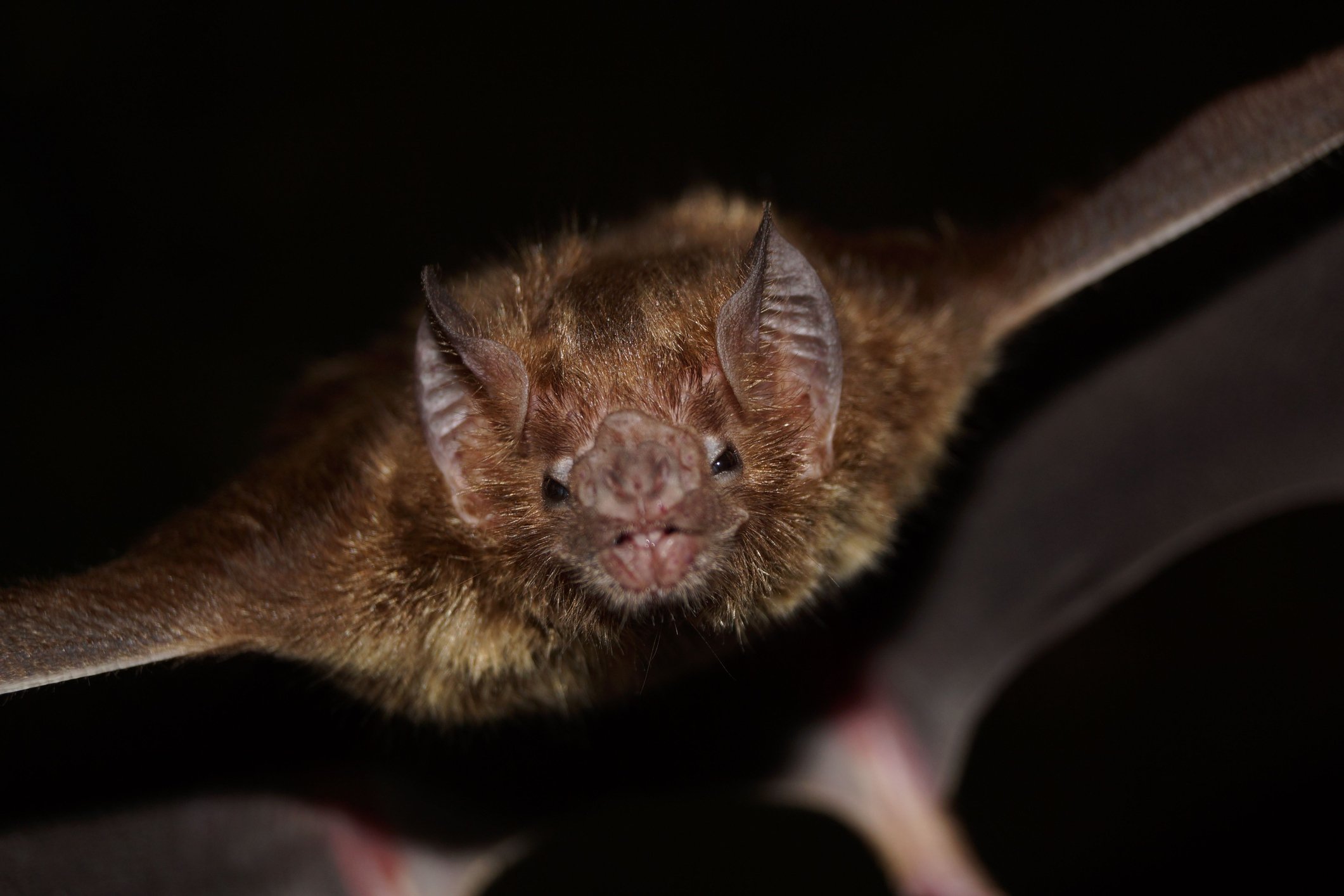
When a bat returns to the roost unsuccessful after a night of foraging, members of its social network will readily share resources through regurgitation. This donation is not unconditional charity; it is governed by a strict system of reciprocity. A bat that acts as a donor today expects—and typically receives—support when its own foraging efforts fail in the future. This dynamic system of shared risk underpins colony survival in harsh jungle environments.
Personality and Behavioral Hierarchies in the Wild
Beyond cooperation, individual bats exhibit distinct behavioral personalities, ranging from cautious and passive to bold and aggressive. These personality traits manifest not only across different species but also among individuals within the same colony.
At the edge of Panama’s Soberanía National Park, field researchers have documented fascinating behavioral hierarchies that defy simple size-based expectations. In territorial disputes over roosting sites, tiny fruit-eating bats—such as Seba’s short-tailed bat (Carollia perspicillata), which weighs roughly the same as a single strawberry—frequently challenge and displace much larger competitors.
In observed encounters, male Seba’s short-tailed bats have been documented aggressively boxing, displaying open mouths, and driving off larger frog-eating bats (Trachops cirrhosus), which weigh twice as much and are comparable in size to an apricot. Such behavioral boldness illustrates that resource acquisition in the wild is governed by tactical persistence and aggression rather than sheer physical mass alone.

Echolocation Innovation and Spatial Problem-Solving
Navigating dense tropical canopies presents monumental sensory challenges. For decades, scientific consensus held that flat, broad leaves would create an acoustic camouflage, reflecting echolocation signals away from bats and effectively rendering stationary insects invisible.
Recent field studies have upended this assumption. Researchers discovered that insectivorous bats successfully circumvent acoustic camouflage through precise spatial problem-solving. By adjusting the specific approach angle of their flight path, bats can manipulate how echolocation sound waves bounce off flat surfaces. When directed at an optimal angle, the acoustic signal successfully returns to the bat, revealing the presence of motionless prey hiding in plain sight. This behavioral adaptability highlights an advanced cognitive capacity for spatial analysis and acoustic navigation.
Parental Investment and Fledging Dynamics
The parallels between human and bat societies extend deeply into family life, particularly regarding maternal investment and the transition of offspring to independence.
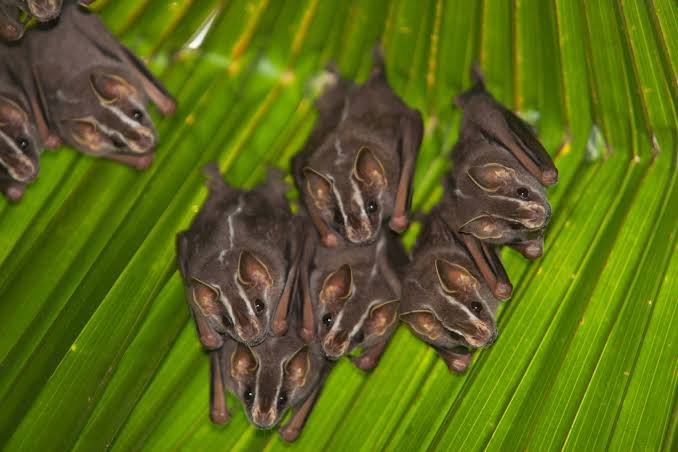
Among tent-making bats (Uroderma bilobatum), mother bats actively manage the weaning process by physically prodding their young with their forearms when it is time to leave the roosting tent and learn to fly. This behavioral tug-of-war mirrors the developmental transition observed in altricial bird species and mammalian infants, characterized by maternal encouragement balancing infant hesitation.
Furthermore, maternal care strategies shift dynamically when sickness strikes. In ongoing collaborative research between the Smithsonian Tropical Research Institute and the Ukrainian Bat Rehabilitation Center examining bats on Barro Colorado Island, scientists have analyzed fecal samples to track dietary modifications during illness. Similar to how certain primates consume medicinal plants when infected, fruit-eating bats have been observed altering their foraging habits to ingest specific leaves that may possess therapeutic or anti-inflammatory properties.
Simultaneously, vampire bats exhibit quarantine behaviors when ill, voluntarily self-isolating to prevent the spread of disease within the colony. However, this self-isolation is superseded by maternal instinct. Just as human parents continue to care for sick children despite personal health risks, mother bats maintain direct contact and care routines with their dependent offspring even while battling illness or infection.
Eavesdropping as an Evolutionary Strategy
The fringe-lipped bat (Trachops cirrhosus) demonstrates an advanced form of auditory learning through eavesdropping. To secure prey, these bats monitor the nocturnal acoustic landscape, specifically listening in on the mating calls of male túngara frogs.
By analyzing these vocalizations, fringe-lipped bats can distinguish between palatable, safe prey and toxic species before initiating an attack. According to Dr. Page, this behavioral adaptation is functionally equivalent to humans recognizing specific auditory cues in a crowded environment—such as the distinct sound of a bag opening—and utilizing that information to guide immediate action. Bats learn these distinctions socially, observing the successful hunting behaviors of experienced colony members and adapting their foraging strategies accordingly.

Broader Implications and Conservation Outlook
The mounting body of research into bat cognition, social structures, and ecological specialization carries profound implications for conservation science. As anthropogenic pressures increasingly fragment natural habitats, understanding the intricate behavioral networks of bats becomes essential for designing effective wildlife corridors and protected areas.
Experts warn that continued habitat loss, coupled with emerging infectious diseases and climate destabilization, poses severe risks to global biodiversity. Protecting bats is not merely a matter of preserving charismatic wildlife; it is an economic and ecological imperative necessary for maintaining agricultural stability, forest regeneration, and ecosystem resilience.
As Bat Week events unfold globally, researchers emphasize that shifting public perception from fear to fascination is the first step toward long-term preservation. By recognizing the remarkable social bonds, problem-solving capabilities, and ecological importance of bats, society can better appreciate the complex natural systems that sustain life on Earth.