


The foundational pillars of modern physics are resting on increasingly fractured ground, according to the results of what is widely considered the largest survey of physicists ever conducted. Released following an extensive multi-year data-gathering effort, the Big Mysteries in Physics survey captured the viewpoints of more than 1,600 professional physicists from around the globe. The findings reveal a striking lack of consensus on some of the most fundamental questions concerning the universe, including whether the big bang truly marked the beginning of time, what constitutes dark matter, and how quantum mechanics can be reconciled with general relativity.
Published in Physics Magazine, the survey data challenges the public perception of science as a monolith of absolute agreement. Instead, the results paint a picture of a scientific community grappling at the absolute frontiers of human knowledge, where empirical data grows scarce, theoretical models multiply, and fundamental assumptions about reality are heavily contested.
The Genesis of the Survey and Methodological Framework
The initiative began in 2025 when an international coalition of theoretical physicists and researchers issued an open call for the Big Mysteries in Physics survey. Designed to map the intellectual topography of contemporary theoretical physics and cosmology, the questionnaire invited participation from researchers worldwide. To maintain the integrity of the findings, the responses from self-identifying, credentialed physicists were systematically filtered and segregated from the general public submissions before final analysis.
The resulting dataset of over 1,600 validated physicist responses provides an unprecedented quantitative look into the minds of those studying the cosmos. Historically, surveys of scientific opinion have focused on broad issues like climate change or public health policies. This project, however, dove deep into esoteric theoretical physics: the nature of space-time singularities, the validity of cosmic inflation, the microscopic composition of dark matter, and the ongoing quest for a theory of everything.
The Big Bang and the Myth of Time’s Beginning
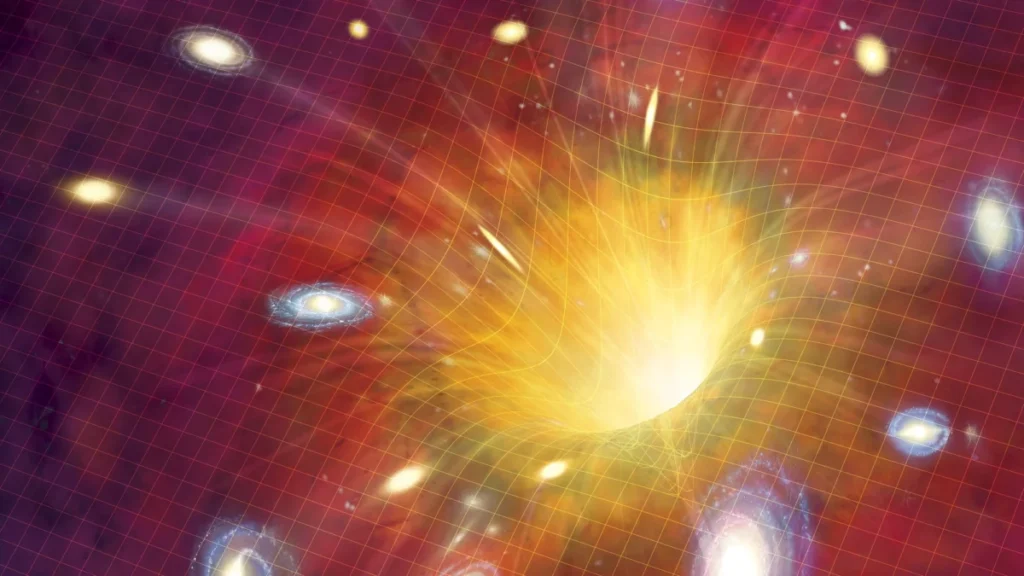
Among the most astonishing revelations of the survey pertains to the big bang theory, formally known in cosmology as the Lambda Cold Dark Matter ($LambdatextCDM$) model. Popular culture and media representations have long portrayed the big bang as a cosmic explosion that erupted out of nothingness, marking the absolute dawn of time itself. However, the survey revealed that approximately 68 percent of participating physicists reject the notion that the big bang necessarily represents the absolute beginning of time.
This skepticism is rooted in a nuanced understanding of standard cosmological equations. The big bang theory does not describe the creation of the universe from absolute nothing; rather, it describes the rapid expansion of the universe from an initial state of unimaginable heat and density. Mathematical models running backward toward year zero inevitably break down at the Planck scale, yielding singularities where general relativity ceases to function. Consequently, a vast majority of working physicists suspect that the big bang may merely represent a transitional phase in a much older or even infinite cycle of cosmic evolution, rather than the true birth point of existence.
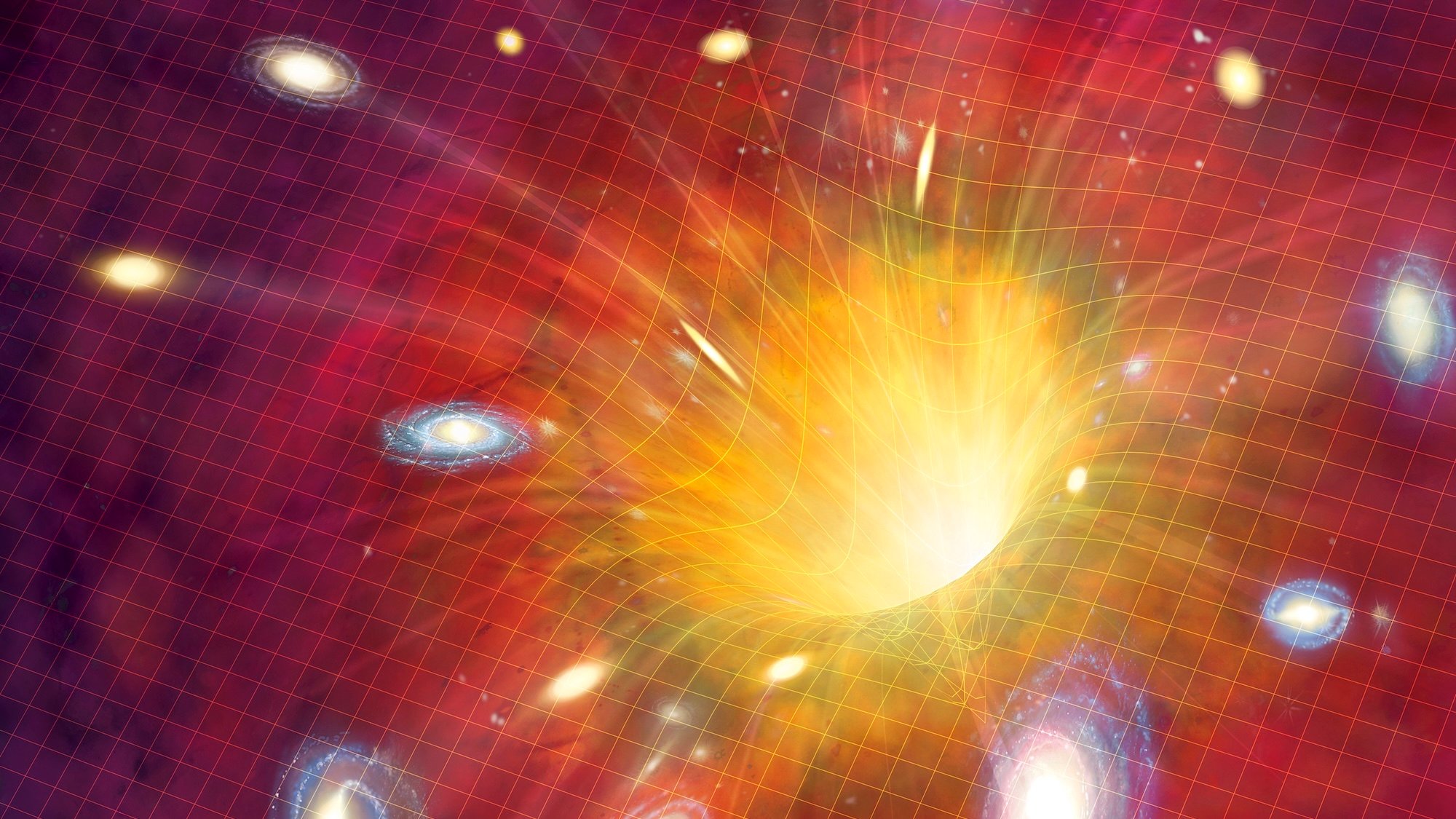
Adding to the complexity of early-universe mechanics, the survey uncovered a near-even split regarding the theory of cosmic inflation. Only 51 percent of respondents agreed that the universe underwent an infinitesimally brief period of hyper-exponential expansion in the immediate aftermath of the big bang. The remaining 49 percent expressed skepticism or favored alternative paradigms, highlighting that even a cornerstone model of modern cosmology remains fiercely debated among specialists.
The Dark Matter Dilemma and Quantum Chaos
Beyond the origins of the universe, the survey exposed profound divisions concerning the hidden components of the cosmos. Dark matter accounts for roughly 27 percent of the universe’s total mass-energy budget, yet its physical identity remains completely unknown.
When asked about the composition of dark matter, survey respondents splintered into multiple factions. Only 17 percent of physicists expressed confidence that dark matter is composed of a yet-undiscovered elementary particle, such as Weakly Interacting Massive Particles (WIMPs) or axions. Meanwhile, roughly 12 percent argued that dark matter is an illusion born of an incomplete understanding of gravity, advocating instead for modified gravity theories such as Modified Newtonian Dynamics (MOND). The remaining vast majority distributed their hypotheses across complex combinations of exotic particles, primordial black holes, and undiscovered field interactions, with no single hypothesis capturing more than a fractional consensus.
The situation grows even more fractious when crossing the boundary into quantum physics. For decades, physicists have attempted to merge general relativity—which governs gravity and the large-scale structure of the universe—with quantum mechanics, which dictates the behavior of the subatomic realm.
According to the survey data, roughly 19 percent of physicists believe string theory offers the most viable mathematical framework to unify gravity with the quantum world. In contrast, only 12 percent favor loop quantum gravity, a rival framework that treats space-time as a network of discrete quantum loops rather than a continuous fabric. Most concerning for the future of theoretical unification, approximately 18 percent of respondents voiced the pessimistic suspicion that gravity simply cannot be quantized at all, implying that general relativity and quantum mechanics may represent fundamentally incompatible descriptions of reality that cannot be reconciled under a single banner.
Perspectives from the Research Team
The publication of these findings has sparked considerable discussion within the global scientific community. Rather than viewing the deep divisions as a sign of weakness or systemic failure within the discipline, lead researchers emphasize that disagreement is the lifeblood of scientific progress.
Niayesh Afshordi, a theoretical physicist at the University of Waterloo and a co-author of the study, noted that consensus—or the lack thereof—acts as a vital diagnostic tool for the scientific enterprise.

"Consensus, or its absence, tells us where the evidence feels settled and where researchers still see room for radically different ideas," Afshordi explained in a public statement accompanying the release. "In this sense, lack of consensus can be a clue. It marks places where better data, sharper theory, or new connections between subfields may be needed."
Afshordi was quick to remind observers that scientific validity is never established by democratic vote. Unlike political polling, where majorities dictate policy, the ultimate arbiter in physics remains empirical observation, mathematical consistency, and repeatable experimentation.
"The interesting point is not that physicists are confused," Afshordi added. "It is that the frontier is genuinely alive."
Implications for the Future of Physics
The implications of the Big Mysteries in Physics survey extend far beyond academic philosophy; they directly influence how research funding is allocated, how graduate students choose their specializations, and how next-generation particle accelerators and space telescopes are designed.
For the past half-century, theoretical physics has been dominated by efforts to validate grand unified theories, heavily anchored by models like string theory and supersymmetry. However, as decades of high-energy experiments at facilities like the Large Hadron Collider have failed to uncover supersymmetric particles, experimental data has begun to diverge from theoretical expectations. This empirical drought has created fertile ground for skepticism, allowing alternative frameworks—once relegated to the fringes—to gain renewed traction among credentialed researchers.
Furthermore, the ambiguity surrounding dark matter and cosmic inflation underscores the vital importance of upcoming observational facilities. Next-generation instruments, such as the Vera C. Rubin Observatory, the Nancy Grace Roman Space Telescope, and advanced gravitational wave detectors, are poised to map the distribution of dark matter and the polarization of the cosmic microwave background with unprecedented precision. Cosmologists hope these impending datasets will provide the empirical tie-breakers needed to resolve long-standing theoretical stalemates.
Ultimately, the survey serves as a humbling reminder of the vast expanse of the unknown. While humanity has mapped the movement of galaxies and unlocked the architecture of the atom, the fundamental rules governing space, time, and matter remain intensely contested by those who study them closest. Far from indicating a crisis, the fractured consensus revealed by the Big Mysteries in Physics survey demonstrates that the pursuit of fundamental truth remains an active, turbulent, and deeply vibrant human endeavor.