


OpenAI has announced a significant expansion of its ChatGPT capabilities, introducing new interactive visualizations designed to guide learners through complex math and science topics. This innovative feature, now available across all subscription plans globally, encompasses over 70 core math and science concepts, initially targeting high school and college-level learners. The integration marks a pivotal step in leveraging artificial intelligence for enhanced educational outcomes, moving beyond textual explanations to dynamic, real-time visual learning experiences.
The new functionality allows users to engage directly with the subject matter. When a user queries ChatGPT about a specific concept, the AI tool not only furnishes a comprehensive explanation but also presents an interactive visual module. Within this module, users possess the ability to "adjust variables, manipulate formulas, and instantly see how those changes affect graphs and outcomes," as detailed by OpenAI in an official blog post. This hands-on approach is engineered to deepen understanding by allowing learners to experiment and observe cause-and-effect relationships firsthand, rather than passively receiving information.
The Evolution of AI in Education and OpenAI’s Strategic Move
The introduction of these interactive tools by OpenAI is not an isolated event but rather a continuation of a broader trend seeing artificial intelligence increasingly integrated into the educational technology (EdTech) landscape. For years, AI-powered platforms have promised personalized learning paths, automated grading, and intelligent tutoring systems. However, the interactive visualization offered by ChatGPT represents a new frontier, addressing a critical need for engagement and conceptual understanding, particularly in STEM fields.

OpenAI, a leader in AI research and deployment, has been at the forefront of this evolution. Since the public launch of ChatGPT in late 2022, the platform has rapidly become a ubiquitous tool, sparking both excitement and debate within educational circles. Initial reactions ranged from concerns over academic integrity to praise for its potential as a research assistant. Recognizing the diverse applications and societal impact, OpenAI has systematically worked to refine ChatGPT, moving it from a general-purpose chatbot to a more specialized and pedagogically sound instrument. This latest update underscores a strategic pivot towards making AI a more direct and constructive partner in the learning process, particularly in subjects often perceived as challenging due to their abstract nature.
The global EdTech market, valued at approximately $254.8 billion in 2022, is projected to reach $680.1 billion by 2030, with AI in education expected to be a significant growth driver. This growth is fueled by the increasing demand for flexible, accessible, and effective learning solutions. OpenAI’s move to embed sophisticated interactive tools directly within a widely accessible platform like ChatGPT positions it to capture a substantial share of this expanding market, while simultaneously addressing pressing educational challenges.
Addressing the Challenges of STEM Education Through Interactive Learning
Mathematics and science education often grapple with the challenge of translating abstract theories and formulas into concrete understanding. Many students struggle to visualize complex systems, the interplay of variables, or the dynamic behavior of scientific principles. Traditional teaching methods, while foundational, can sometimes fall short in providing the immediate feedback and experiential learning that fosters deep conceptual grasp. This is particularly true for subjects like calculus, physics, chemistry, and advanced biology, where understanding processes and relationships is paramount.
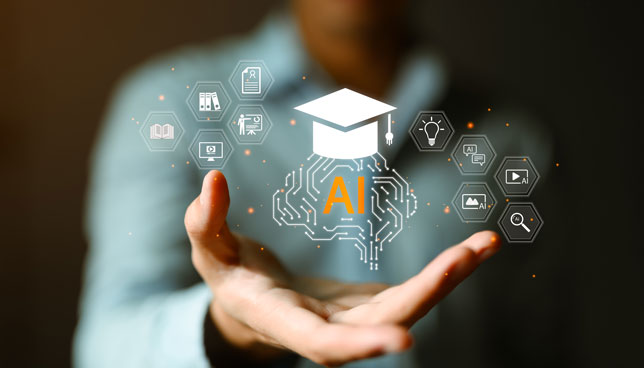
The pedagogical rationale behind OpenAI’s new feature is rooted in extensive educational research. "Research suggests that visual, interaction-based learning can lead to stronger conceptual understanding than traditional instruction for many students," OpenAI noted in its announcement. This aligns with decades of cognitive science and educational psychology findings that highlight the power of active learning, constructivism, and multimodal instruction. When learners can manipulate variables and instantly see the effects, they are better able to internalize the relationships behind mathematical and scientific concepts. This hands-on experimentation helps bridge the gap between theoretical knowledge and practical application, making learning more intuitive and memorable.
Anjini Grover, a high school mathematics teacher quoted in OpenAI’s blog post, articulated this benefit: "What stands out is how strongly this feature emphasizes conceptual understanding. When learning math, understanding why something works and how ideas connect helps concepts stick long term. I especially appreciate how it doesn’t stop at the original question but actively prompts you to extend thinking and explore deeper connections." This observation is critical, as it points to the tool’s potential to encourage higher-order thinking skills, prompting students to ask "what if" questions and explore beyond the initial query, thereby fostering genuine intellectual curiosity.
For instance, in a physics problem involving projectile motion, a student could adjust the launch angle, initial velocity, or gravitational force within the ChatGPT interface and immediately observe how these changes alter the trajectory, range, and flight time on a dynamic graph. In algebra, manipulating variables in an equation could instantly update its corresponding graph, illustrating the concept of functions and transformations. For chemistry, visualizing molecular structures and how changes in bonding affect properties could become significantly more accessible. These interactive elements move beyond static diagrams or pre-recorded simulations, offering a personalized, on-demand learning laboratory.
Broader Implications for Education and Accessibility

The implications of such a tool extend far beyond individual learning sessions. For educators, ChatGPT’s interactive features could serve as a powerful supplementary resource, enabling them to offload some of the repetitive explanation tasks and focus more on facilitating deeper discussions, project-based learning, and addressing individual student needs. It could also provide a common platform for students to explore concepts outside of class, reducing disparities in access to high-quality interactive learning tools, especially in regions with limited educational resources or a shortage of specialized teachers.
Moreover, the global availability of this feature across all subscription plans democratizes access to advanced learning technology. While not free, the subscription model makes sophisticated tools accessible to a broader demographic than expensive specialized software or physical lab equipment might. This aligns with the broader goal of making quality education more equitable and available to learners worldwide, regardless of their geographical location or socio-economic background.
However, the integration of AI tools like ChatGPT into mainstream education also brings forth important considerations. The digital divide, for instance, remains a challenge, as not all students have reliable internet access or the necessary devices. Educators will also need training to effectively integrate these tools into their curricula, ensuring they complement rather than replace human instruction. The goal, as many educational technologists argue, is to augment human capabilities, not to substitute them entirely.
Timeline and Future Outlook

OpenAI’s journey to this point reflects a rapid pace of innovation. From the initial release of GPT-3 in 2020, followed by the groundbreaking launch of ChatGPT in late 2022, the company has consistently pushed the boundaries of what AI can achieve. Subsequent updates, including improved reasoning capabilities, multimodal inputs (like DALL-E 3 integration), and custom GPTs, have paved the way for more specialized applications. The current interactive learning tools represent a maturation of this trajectory, demonstrating a focused effort to apply advanced AI to specific, high-impact domains.
Looking ahead, OpenAI has explicitly stated its plans to expand its interactive learning features to other subjects, indicating a long-term commitment to "continue building tools that strengthen learning with ChatGPT." This foreshadows potential future developments in humanities, languages, arts, and other fields, where interactive visualizations or simulations could similarly enhance conceptual understanding and engagement. Imagine, for example, interactive timelines for history, virtual laboratories for social sciences, or dynamic grammar exercises for language learning.
The ongoing development will likely focus on several key areas:
- Expanding Content: Continuously increasing the number of concepts and subjects covered.
- Personalization: Further refining the AI to adapt more dynamically to individual learning styles, pace, and knowledge gaps.
- Integration with Curricula: Developing features that allow educators to easily integrate these tools into their lesson plans and track student progress.
- Ethical AI in Education: Continuing to address concerns around data privacy, algorithmic bias, and ensuring the responsible use of AI in learning environments.
- Multimodal Learning: Integrating more advanced audio, video, and haptic feedback to create even richer interactive experiences.
While the promise of AI in education is immense, the true measure of its success will lie in its ability to foster deeper learning, critical thinking, and creativity, while complementing the invaluable role of human educators. OpenAI’s new interactive math and science tools represent a significant leap towards realizing this potential, offering a glimpse into a future where AI-powered platforms could fundamentally transform how we learn and teach complex subjects. The educational community will undoubtedly watch closely as these tools evolve and integrate into the fabric of global learning environments.