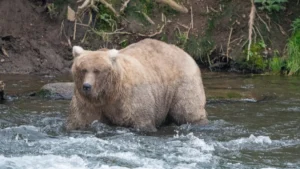


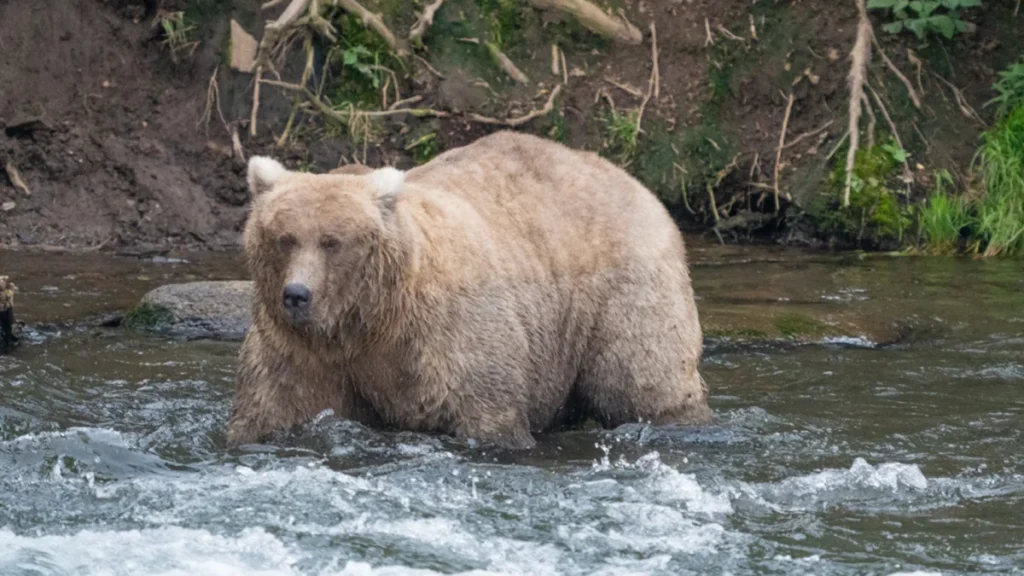
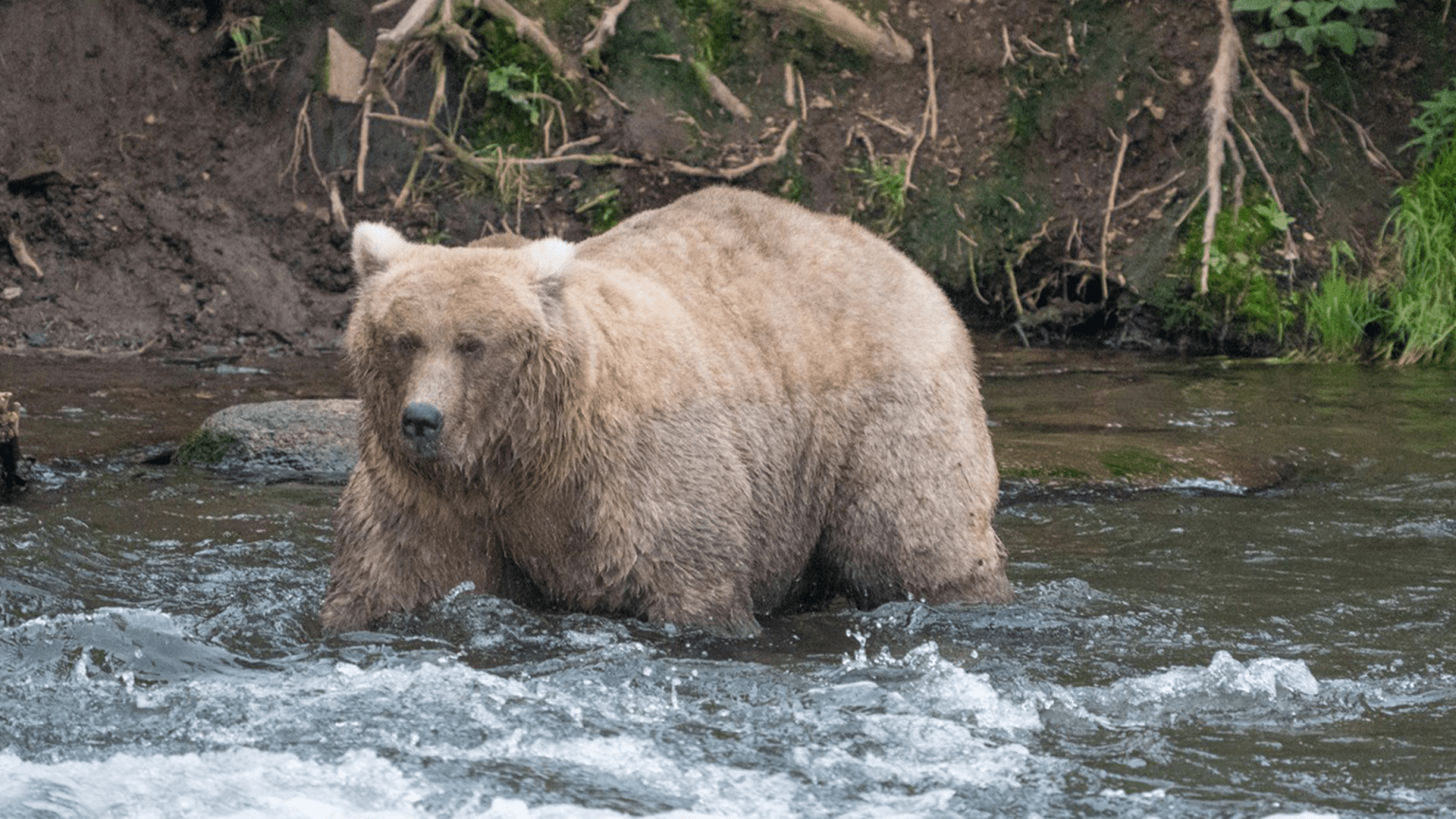
The reigning monarch of Katmai National Park, a colossal brown bear officially designated as Bear #32 and widely known to the public as Chunk, has officially reemerged on live-streaming webcams ahead of the highly anticipated Fat Bear Week 2026 tournament. Park rangers and wildlife enthusiasts spotted the 1,200-pound champion patrolling the familiar waters of the Brooks River, signaling the start of another dramatic season of heavy feeding, fierce competition, and global internet fandom in the rugged wilderness of Alaska.
Chunk’s return to public view comes at a critical juncture, occurring just days before the official bracket reveal for the 2026 tournament scheduled for Friday, September 18. For millions of viewers worldwide who tune into the live feeds provided by explore.org in partnership with the National Park Service and the Katmai Conservancy, the sighting of the massive boar offers an early glimpse into the physical condition of one of the park’s most resilient and dominant apex predators.
The Journey, Triumphs, and Trials of Bear #32
Chunk’s path to becoming a household name among wildlife enthusiasts is a masterclass in mammalian adaptability and survival. During the 2025 Fat Bear Week competition, Chunk captured the public imagination in a landslide victory, securing 96,350 votes to comfortably outpace the runner-up, Bear 856, by a margin of roughly 30,000 votes. Fans gravitated not only to his immense size—which regularly pushes past the 1,200-pound threshold by the time autumn approaches—but also to his striking and distinct physical features.
Characterized by narrow-set eyes, dark brown fur, a prominent brow ridge, and a massive muzzle scar, Chunk’s most notable physical attribute is a visibly misaligned jaw. Wildlife biologists and park rangers first documented the severe injury after Chunk emerged from his winter hibernation period in 2025, deducing that the broken mandible was the result of a violent territorial altercation with another formidable male bear at Brooks River.
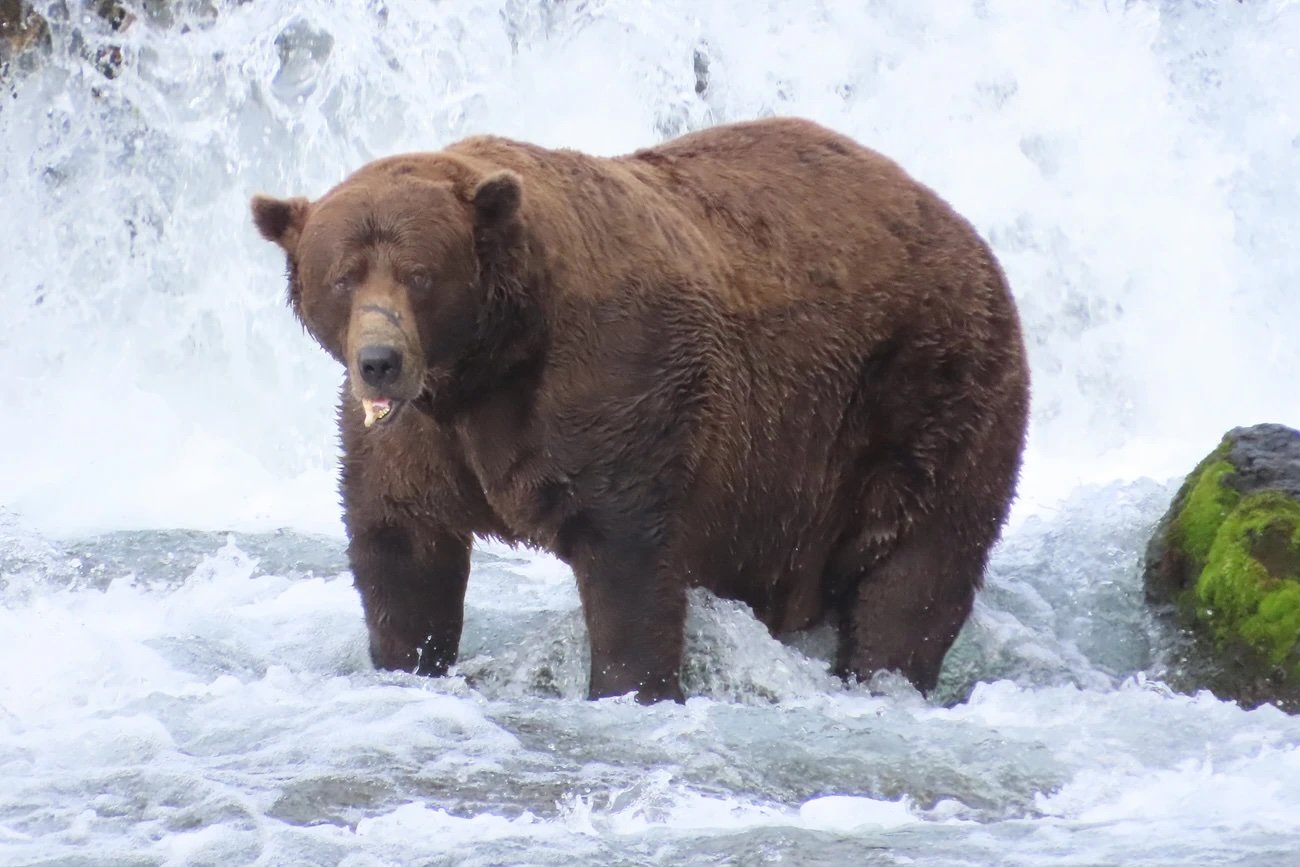
Despite the obvious disadvantage of a compromised jaw, Chunk demonstrated an extraordinary capacity for behavioral modification. Rather than engaging in reckless, high-risk confrontations with other massive boars vying for the prime fishing real estate at Brooks Falls, Chunk strategically adjusted his tactics. He learned to position himself and consume migrating sockeye salmon efficiently without requiring the full mechanical use of his lower mandible. Leveraging his massive baseline body size as an intimidation and leverage tool, Chunk maintained unhindered access to the most productive fishing holes, cementing his status as one of the largest and most successful bears in the entire watershed.
Chronology of the Season and Early Emergence
The timeline of Chunk’s activity leading up to the 2026 competition highlights the unpredictable nature of Alaskan brown bear behavior. While standard wildlife patterns typically see Katmai bears emerging from their dens in June to coincide with the peak of the sockeye salmon run, Chunk broke protocol earlier in the year. Cameras stationed throughout the national park captured him as early as April navigating patches of lingering ice—a remarkably early sighting that thrilled online observers who monitor the remote wilderness during the transitional spring shoulder season.
This early emergence underscores the physiological demands placed upon brown bears (Ursus arctos horribilis) as they navigate the shifting seasonal boundaries of their sub-arctic habitat. The transition from early summer, when an adult male bear might weigh a comparatively lean 700 pounds, to the peak of autumn hyperphagia, where weights frequently exceed 1,200 pounds, requires an astonishing caloric intake. Bears must consume massive quantities of lipid-rich salmon to build the fat reserves necessary to survive months of winter denning without food or water.
The Broader Ecological Context of Katmai National Park
While Fat Bear Week has evolved into a whimsical, highly engaging global celebration of wildlife conservation and ecology, the day-to-day reality captured by the park’s webcams is a visceral reminder of the raw and uncompromising nature of the ecosystem. The 2026 season has been particularly eventful, offering viewers an unfiltered look at the complex social structures, territorial disputes, and survival challenges that define life along the Brooks River.
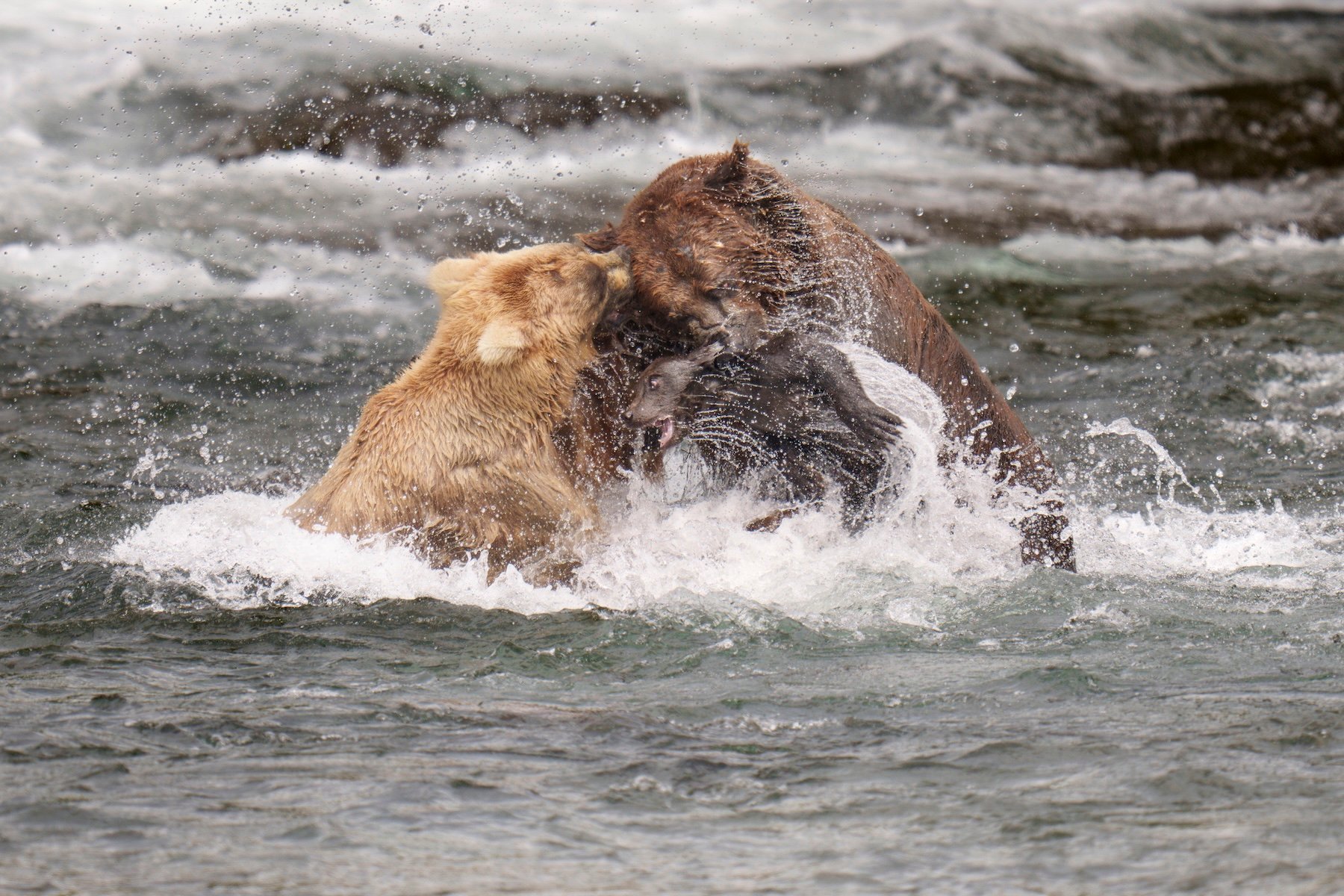
Earlier in the summer, the livestream documented intense interactions that highlighted the precarious realities of cub rearing. On July 28, cameras recorded a rare and distressing event in which an unrelated mother bear, Bear #806, attacked, killed, and consumed a young brown bear cub. Just days later, on August 2, a similar tragedy unfolded when a spring cub belonging to Bear #335 (Jolly) was killed after following three unrelated cubs up a tree, prompting a fatal defensive response from the resident mother.
Naturalist Mike Fitz, alongside park rangers Christine Loberg and Sarah Bruce, noted that these documented events offer unprecedented insights into intra-species predation. While wildlife experts continue to study the multifaceted drivers behind such behavior—hypothesizing that factors ranging from resource competition and food scarcity to attempted adoption and dominance plays a role—the occurrences serve as a stark reminder that nature operates independently of human sensibilities.
The History of Chunk and Rival Mother Bear Grazer
Chunk’s journey at Brooks Falls has not been without controversy or fierce rivalry. Prior to his triumphant championship run in 2025, Chunk was famously defeated in consecutive years by Bear #128, affectionately known to fans as Grazer. The competitive tension between Chunk and Grazer transcended the digital voting polls, manifesting physically in the wild.
In 2024, the two apex animals were involved in a high-profile confrontation when Chunk attacked two of Grazer’s spring cubs after the young animals tumbled over a waterfall. Grazer mounted a ferocious, high-stakes defense of her offspring, engaging the massive boar in a harrowing battle. While Grazer’s defensive efforts saved one of her cubs, another did not survive the encounter. This dramatic history added an extra layer of narrative complexity to the annual tournament, showcasing the intricate web of personal histories that keep millions of global citizens returning to the live feeds year after year.
Structure, Schedule, and Mechanics of Fat Bear Week 2026

As excitement builds for the upcoming tournament, park officials have finalized the schedule for Fat Bear Week 2026. The competition officially opens to the global voting public on Tuesday, September 22, and will run through Tuesday, September 29, when the new champion is crowned.
Participants from around the world can cast their ballots daily between noon and 9:00 p.m. EDT (9:00 a.m. to 6:00 p.m. PDT) via the official portal at fatbearweek.org. The voting process relies on comparative visual evidence, presenting voters with side-by-side photographs of individual bears captured early in the summer alongside images taken during the height of the autumn salmon feast. Voters are encouraged to weigh not only the physical transformation and sheer volume of weight gained by each bear, but also to consider the unique life histories, environmental hardships, and survival obstacles each animal has overcome throughout the active season.
Conservation, Philanthropy, and the Otis Fund
Beyond the digital pageantry and bracket-style competition, Fat Bear Week serves as a vital fundraising vehicle for the preservation of Katmai National Park and its resident wildlife. Supporters looking to contribute to the long-term stewardship of the region can donate to the Katmai Conservancy’s Otis Fund. Named in honor of Bear #480 (Otis), a legendary four-time Fat Bear Week champion who passed away around 2024, the fund directly supports conservation efforts, habitat research, and public education initiatives.
Demonstrating a strong commitment to these preservation goals, explore.org has announced that all financial contributions made to the Otis Fund between September 22 and October 3 will be fully matched, amplifying the impact of public donations and ensuring that the pristine wilderness of Katmai remains protected for generations of wildlife to come.
Implications and the Cultural Legacy of the Event
Since its inception in 2014 by former park ranger Mike Fitz, Fat Bear Week has grown from a modest local education initiative into a massive cultural phenomenon, drawing millions of votes from every corner of the globe. By framing rigorous ecological science through an accessible, engaging format, the program successfully bridges the gap between wild animal behavior and human conservation advocacy.
As Chunk prepares to enter the 2026 bracket, his story—marked by physical trauma, remarkable adaptation, territorial conflict, and sheer biological resilience—epitomizes the core message of Katmai National Park. It is a testament to the tenacity of wildlife thriving in a protected, functioning ecosystem where nature dictates the terms of survival. Whether Chunk can successfully defend his crown against a formidable field of contenders remains to be seen, but his return to the river guarantees that Fat Bear Week 2026 will deliver an unforgettable chapter in the ongoing saga of Alaska’s most famous bears.