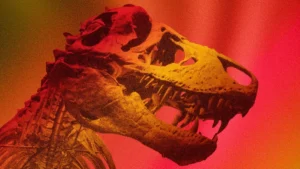




For generations, popular culture and early paleontological frameworks painted the Tyrannosaurus rex as a sluggish, lumbering reptile—a cold-blooded giant that relied entirely on environmental heat to regulate its body temperature. However, decades of evolutionary reevaluation have systematically dismantled this outdated perception. Modern paleontology increasingly views dinosaurs not as slow-moving biological anomalies, but as dynamic, highly active ancestors of present-day birds. Yet, while scientists grew increasingly convinced that apex predators like the T. rex required a high-energy, warm-blooded metabolism to sustain their hunting habits, definitive proof remained frustratingly out of reach.
That long-standing debate has finally been resolved. According to a landmark study published in the journal Science Advances, researchers have definitively established the internal body temperature of the Tyrannosaurus rex. Utilizing an innovative biochemical technique applied to exceptionally rare fossilized tooth enamel, an interdisciplinary team of scientists discovered that the iconic tyrant king maintained an internal body temperature of approximately 97 degrees Fahrenheit. This finding places the metabolic rate of T. rex remarkably close to that of modern warm-blooded mammals, including humans, bridging the evolutionary gap between ancient reptiles and their modern avian descendants.
The Significance of the Breakthrough
The implications of this discovery extend far beyond a single numerical measurement. Establishing that T. rex was endothermic—or warm-blooded—provides crucial physiological context for how the massive predator hunted, grew, and survived across diverse prehistoric ecosystems. Cold-blooded animals are generally restricted by ambient temperatures, relying on the sun to warm their bodies before they can engage in vigorous activity. An endothermic apex predator, conversely, possesses a continuous internal furnace that enables rapid movement, sustained endurance, and active predation regardless of the weather.
Furthermore, a warm-blooded metabolism helps explain a long-standing geographical mystery: how T. rex and its close relatives managed to thrive in high-latitude environments, such as present-day Alaska, where frigid temperatures would have proven fatal to strictly cold-blooded reptiles. By maintaining an internal temperature hovering near 97 degrees Fahrenheit, the tyrant king possessed the biological flexibility to roam vast territories and endure significant climatic shifts, establishing itself as a dominant ecological force across North America during the Late Cretaceous period.
The Evolution of Paleothermometry: A Chronological Overview
To understand how researchers finally unlocked the thermal secrets of T. rex, it is necessary to examine the evolution of paleothermometry over the past decade. For years, scientists lacked the tools to directly measure the body temperature of extinct animals, forcing them to rely on indirect inferences drawn from bone growth rings, body size ratios, and geographic distributions.

Approximately ten years ago, a technological breakthrough revolutionized the field. Geochemists and paleontologists developed a method known as clumped isotope paleothermometry. This technique examines rare bonds that form between carbon and oxygen atoms within mineralized tissues. The frequency of these specific molecular bonds is directly dependent on the temperature at which the mineral grew. Crucially, the researchers determined that tooth enamel serves as the ideal medium for this analysis. Composed of dense, highly crystalline structures, enamel resists chemical alteration and degradation over millions of years, preserving its original isotopic signature far better than porous bone.
Initial applications of this methodology successfully confirmed the warm-blooded nature of other ancient marine predators, including the colossal megalodon (Otodus megalodon). However, applying the technique to Tyrannosaurus rex presented a formidable obstacle. Early iterations of clumped isotope analysis required relatively large quantities of sample material—often several grams of powdered fossil. Because dinosaur teeth, particularly those belonging to apex predators like T. rex, are exceedingly rare and treasured items in museum collections around the world, curators were understandably unwilling to permit researchers to drill large, destructive holes into their prized specimens. Consequently, the T. rex thermoregulation debate stalled, trapped behind a barrier of analytical limitations.
Refining the Science: Overcoming the Sample Size Barrier
The deadlock was broken only after researchers significantly refined the mass spectrometry protocols and extraction techniques, reducing the required fossil sample size by approximately 90 percent. The updated protocol required only a few milligrams of material—a minuscule amount that could be harvested safely using a precise dental drill without causing structural compromise to the underlying fossil.
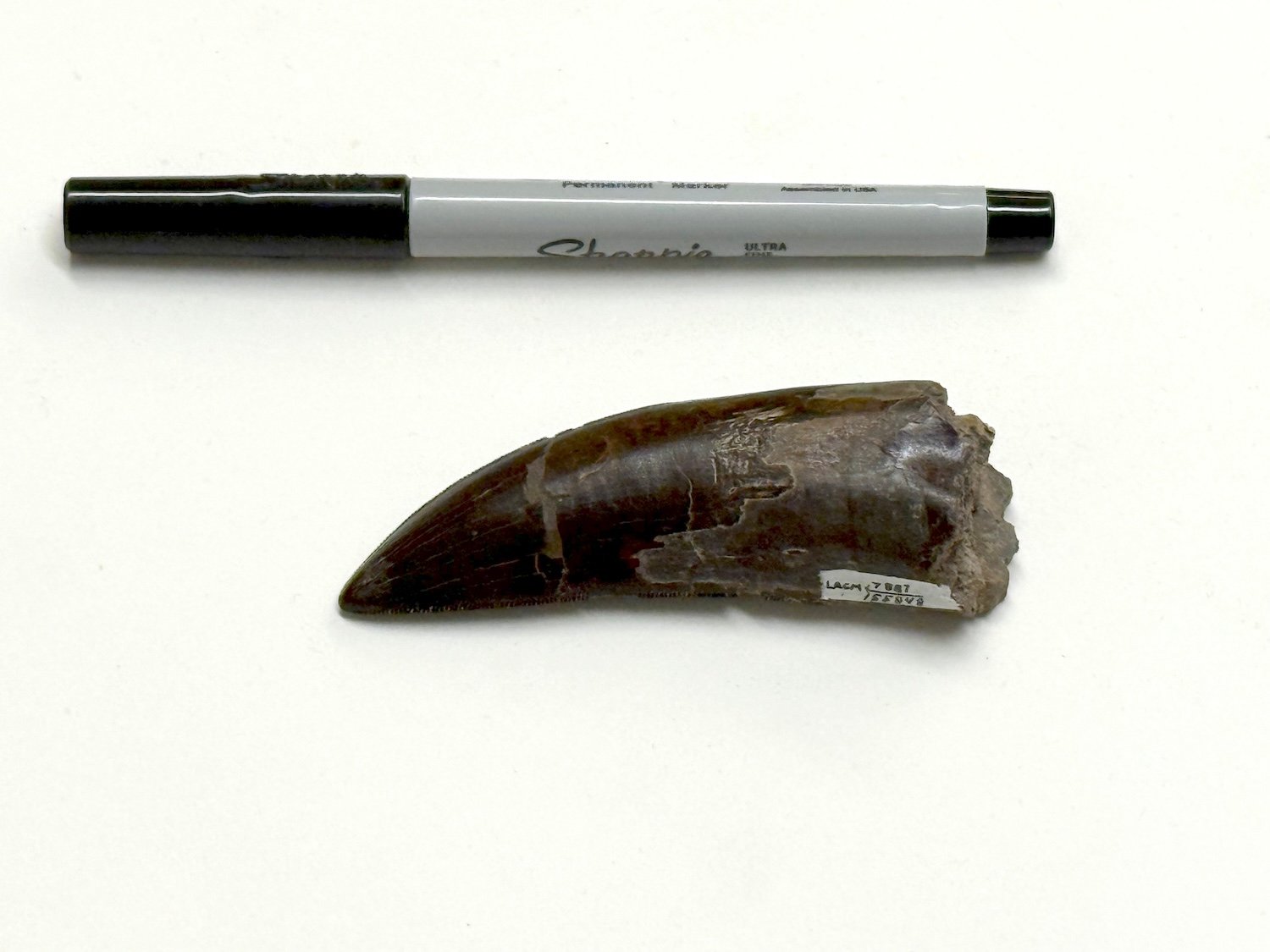
Armed with this miniaturized technique, the research team approached the Natural History Museum of Los Angeles County, which houses specimens of the famous Thomas the T. rex. Convinced by the safety and precision of the new methodology, museum curators agreed to provide sections of two teeth for analysis.
In the laboratory, geobiologists dissolved the extracted fossilized enamel in phosphoric acid, releasing trapped carbon dioxide gas containing the coveted carbon-oxygen isotopic bonds. After pressurizing the gas, the team analyzed the samples using a high-precision mass spectrometer. The resulting data revealed the exact thermal history encoded within the mineral matrix, culminating in the calculated internal body temperature of 97 degrees Fahrenheit.
Expert Insights and Reactions
The findings have garnered widespread acclaim within the scientific community, confirming long-held hypotheses while offering unprecedented precision.
"No one’s been able to make a temperature measurement like this before," said Robert Eagle, a co-author of the study and geobiologist at the University of California, Los Angeles (UCLA), in a public statement. Reflecting on the results, Eagle noted that the empirical figure aligned closely with theoretical models: "The temperature is about what I would have guessed."
Aradhna Tripati, a UCLA geochemist and co-author of the research, emphasized the environmental and ecological freedoms that such a metabolic rate afforded the apex predator. "The teeth tell us T. rex was warmer than the environment around it," Tripati explained. "A warm-blooded T. rex could go almost anywhere on the continent, including the Arctic."
Tripati also highlighted the collaborative hurdle that had to be cleared before the study could proceed, emphasizing that technological miniaturization was the ultimate key to unlocking the data. "Nobody hands you a T. rex tooth unless you can show them you only need a few milligrams," she remarked.
Broader Implications for Paleontology and Evolutionary Biology
The definitive classification of T. rex as a warm-blooded creature reshapes our understanding of dinosaur physiology and ecosystem dynamics. While modern birds—the direct descendants of theropod dinosaurs—maintain even higher internal temperatures ranging between 104 and 109 degrees Fahrenheit, and modern sloths fall slightly below, the 97-degree mark positions T. rex firmly within the spectrum of endothermy.
This metabolic profile supports the contemporary consensus that Late Cretaceous ecosystems were far more dynamic and high-energy than previously imagined. Maintaining a warm-blooded body at such a massive scale required an enormous caloric intake, reinforcing the portrait of T. rex as an active, relentless apex predator capable of sustained pursuits rather than a sluggish scavenger.
As analytical techniques continue to advance, paleontologists anticipate applying these refined isotopic methods to a broader array of prehistoric species. By bridging the gap between fossil morphology and molecular chemistry, researchers are steadily rewriting the biological history of Earth’s most magnificent ancient inhabitants, transforming static stone fossils into a window of vibrant, living physiology.