

A groundbreaking study spearheaded by Professor Karim Jerbi from the Department of Psychology at the Université de Montréal, featuring the invaluable participation of renowned AI luminary Yoshua Bengio, has delivered a definitive answer to one of the most pressing questions of our digital age: Can generative artificial intelligence systems, such as ChatGPT, truly generate original ideas? Published on January 21, 2026, in the esteemed journal Scientific Reports (part of the Nature Portfolio), this research represents the most extensive direct comparison ever undertaken between human creativity and the capabilities of large language models (LLMs), involving data from over 100,000 human participants. The findings signal a significant paradigm shift, confirming that while generative AI has now ascended to a level where it can surpass the average human in specific measures of creativity, the pinnacle of creative thought remains firmly within the domain of the most inventive human minds.
AI Ascends to Average Human Creative Levels: A New Benchmark
The study meticulously evaluated several of the leading large language models available, including prominent systems such as GPT-4, Claude, Gemini, and others, pitting their performance against the diverse creative outputs of more than 100,000 human participants. This unprecedented scale of comparison has unveiled a clear and undeniable turning point in the evolution of artificial intelligence. Researchers observed that some advanced AI systems, most notably GPT-4, consistently exceeded the average human scores on tasks specifically designed to gauge divergent linguistic creativity. This particular form of creativity, crucial for problem-solving and innovation, involves the ability to generate a wide array of unique and varied ideas from a single prompt.
Professor Karim Jerbi articulated the profound implications of these findings: "Our study unequivocally demonstrates that certain AI systems, powered by large language models, are now capable of outperforming average human creativity on well-defined tasks. This outcome may indeed be surprising—perhaps even unsettling for some—but it is vital to pair this understanding with an equally crucial observation: even the most sophisticated AI systems still fall short of the extraordinary levels achieved by the most creative individuals within the human population." This statement encapsulates the nuanced reality presented by the research, highlighting both AI’s remarkable progress and its enduring limitations when compared to peak human cognitive abilities.
Further in-depth analysis conducted by the study’s co-first authors, postdoctoral researcher Antoine Bellemare-Pépin from the Université de Montréal and PhD candidate François Lespinasse from Concordia University, illuminated a striking and consistent pattern. While a subset of AI models has indeed begun to surpass the creative output of the average person, the absolute zenith of creativity remains an exclusively human prerogative. To illustrate this, the research team highlighted that when they isolated the most creative half of the human participants, their collective average scores demonstrably surpassed those of every single AI model subjected to testing. This disparity widened even further and became profoundly pronounced when the comparison focused on the top 10 percent of the most creative individuals, underscoring a qualitative difference that current AI still struggles to bridge.
Professor Jerbi, who also holds an associate professorship at Mila (the Quebec AI Institute), emphasized the methodological rigor underpinning these conclusions: "We developed a robust and impartial framework that allowed us to conduct a direct and fair comparison of human and AI creativity using identical tools and metrics. This was built upon an expansive dataset derived from over 100,000 participants, a collaborative effort with Jay Olson from the University of Toronto, ensuring the statistical power and validity of our findings."
Deciphering Creativity: How Scientists Measure Innovation in Humans and AI
To ensure a fair and equitable evaluation of creativity across both human and machine intelligence, the interdisciplinary research team employed a multi-faceted approach. The cornerstone of their methodology was the Divergent Association Task (DAT), a widely recognized and extensively validated psychological instrument specifically designed to measure divergent creativity. The DAT assesses an individual’s capacity to generate diverse, novel, and original ideas from a singular stimulus or prompt.
The DAT, originally conceived and developed by study co-author Jay Olson, presents participants—whether human or AI—with a straightforward yet cognitively demanding instruction: to list ten words that are as semantically unrelated in meaning as possible. The genius of this task lies in its simplicity and its profound ability to probe the depths of associative thinking. A particularly high-scoring and illustrative example of a highly creative response provided by the researchers included words such as "galaxy, fork, freedom, algae, harmonica, quantum, nostalgia, velvet, hurricane, photosynthesis." The disparate nature and semantic distance between these words exemplify the kind of non-obvious, expansive thinking that signifies high divergent creativity.
Performance on the DAT has been consistently shown to correlate strongly with results on other established creativity assessments used across various domains, including creative writing, ideation processes, and complex problem-solving scenarios. While the task is inherently language-based, its cognitive demands extend far beyond mere vocabulary recall. It actively engages broader cognitive processes critical to creative thinking across a multitude of domains, touching upon conceptual flexibility, remote association, and the ability to break free from conventional thought patterns. Furthermore, the DAT offers significant practical advantages, requiring only two to four minutes for completion and being readily accessible online to the general public, facilitating large-scale data collection.
Beyond Word Lists: AI’s Foray into Complex Creative Writing
Recognizing that linguistic association is but one facet of creativity, the researchers extended their investigation to ascertain whether AI’s newfound success on the relatively simple word association task could translate effectively to more intricate and realistic creative activities. To address this, they engaged both AI systems and human participants in a series of creative writing challenges, which included the composition of haiku (a traditional short, three-line poetic form renowned for its evocative imagery and concise expression), the creation of concise yet compelling movie plot summaries, and the development of short stories.
The results of these advanced creative writing tasks largely mirrored the pattern observed in the DAT. While AI systems demonstrated instances where they could surpass the creative output of average humans, particularly in generating coherent narratives or adhering to structural constraints, the most accomplished and skilled human creators consistently produced work that was not only stronger in narrative depth and emotional resonance but also exhibited a higher degree of genuine originality and profound insight. This suggested that while AI could mimic creative forms, the spark of truly exceptional, human-centric creativity remained elusive for machines.
Sculpting AI Creativity: The Role of Human Guidance
These fascinating findings naturally led to another pivotal question: Is AI creativity an immutable, fixed characteristic, or can it be consciously shaped and adjusted? The study provided compelling evidence that creativity in AI is far from static; it can be significantly modulated by altering specific technical settings, most notably the model’s "temperature" parameter. This parameter acts as a crucial control mechanism, governing the predictability and adventurousness of the AI’s generated responses.
At lower temperature settings, AI systems are programmed to produce outputs that are more conventional, predictable, and "safe," adhering closely to learned patterns and minimizing deviation. Conversely, when the temperature is increased, the generated responses become markedly more varied, less predictable, and overtly exploratory, enabling the system to venture beyond familiar ideas and generate more novel associations. This demonstrates a spectrum of AI output that can be manipulated by human operators.
The researchers further discovered that AI creativity is profoundly influenced by the precise wording and structure of the instructions provided—a field now widely known as "prompt engineering." For instance, prompts that explicitly encouraged models to delve into the origins and structural nuances of words, leveraging etymology, consistently led to the generation of more unexpected associations and, consequently, higher creativity scores. These results emphatically underscore that AI creativity is not an autonomous process but rather one that depends heavily on astute human guidance and interaction, firmly establishing prompting and iterative interaction as a central and indispensable component of the co-creative process.
AI as Augmentation, Not Replacement: A Balanced Future for Creativity
The study offers a profoundly balanced and empirically grounded perspective on the widespread anxieties concerning artificial intelligence’s potential to displace or render obsolete creative professionals across various industries. While it is now evident that AI systems can indeed match or even exceed average human creativity on certain defined tasks, the research unequivocally highlights their persistent limitations and their inherent reliance on human direction and curation.
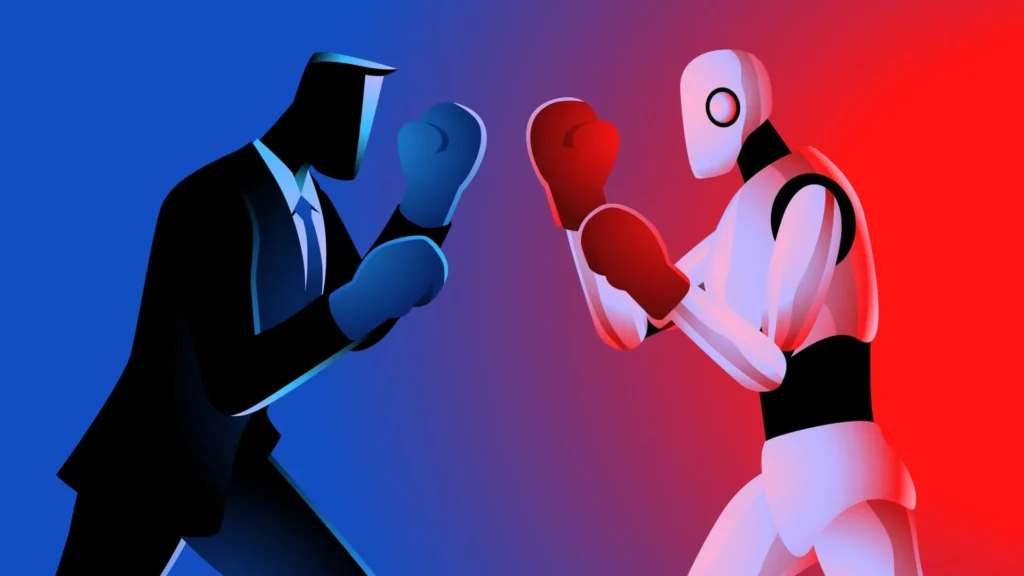
Professor Karim Jerbi passionately argued against a purely competitive framing of this evolving relationship: "Even though AI can now achieve human-level creativity on specific tests, we must transcend this misleading sense of competition. Generative AI has, above all, emerged as an exceptionally powerful tool designed to serve and amplify human creativity. It will not replace creators; rather, it will profoundly transform how they imagine, explore, and bring their ideas to fruition—for those who choose to harness its capabilities." This perspective reframes AI not as a rival but as a sophisticated collaborator, capable of extending the reach of human imagination.
Far from signaling the demise of creative careers, the study’s conclusions strongly advocate for a future where AI functions as a highly effective creative assistant or "co-pilot." By rapidly expanding the repertoire of ideas, suggesting novel connections, and opening up entirely new avenues for artistic and intellectual exploration, AI holds the potential to significantly amplify human imagination, fostering an era of augmented creativity rather than one of displacement. The human capacity for unique insight, emotional depth, cultural context, and subjective judgment remains unparalleled.
"By directly confronting and comparing human and machine capabilities in the realm of creativity, studies like ours compel us to critically re-evaluate and broaden our understanding of what we truly mean by creativity itself," Professor Karim Jerbi concluded, inviting a deeper philosophical engagement with the evolving landscape of intelligence and innovation.
Background and Chronology of AI and Creativity
The debate surrounding AI’s capacity for creativity is not new. For decades, the ability to create was often cited as a uniquely human trait, a bulwark against the encroachment of machine intelligence. Early AI systems, primarily rule-based, struggled with tasks requiring genuine novelty or abstract thought. The "AI winter" periods reflected the limitations of these early approaches. However, the dawn of deep learning in the 2010s, catalyzed by pioneers like Yoshua Bengio, dramatically altered this landscape. Deep neural networks, trained on vast datasets, began exhibiting emergent properties that surprised even their creators.
The public’s imagination was truly captured in late 2022 and 2023 with the widespread availability of large language models like ChatGPT. These tools demonstrated an unprecedented ability to generate human-like text, code, and even poetry, leading to both excitement and apprehension. Suddenly, the abstract concept of "AI creativity" became a tangible reality, accessible to millions. This rapid evolution set the stage for studies like Professor Jerbi’s, necessitating a rigorous, large-scale empirical investigation to move beyond anecdote and into scientific measurement. The development of specialized tools like the Divergent Association Task by Jay Olson provided the perfect quantitative framework to address this complex question, allowing for a standardized comparison that was previously challenging to achieve. The publication of this study in early 2026 marks a culmination of years of theoretical development and empirical testing, providing a crucial benchmark for the state of AI’s creative abilities.
Broader Impact and Implications Across Sectors
The findings of this landmark study will resonate across numerous sectors, influencing how industries, educational institutions, and society at large perceive and interact with artificial intelligence.
- Creative Industries: For artists, writers, musicians, designers, and marketers, AI is poised to become an indispensable tool. It can act as a tireless brainstorming partner, generating countless variations, styles, or concepts that might take a human hours or days to conceive. This could accelerate creative processes, allowing professionals to focus their unique human talents on curation, refinement, emotional depth, and strategic direction, rather than purely generative tasks. The challenge will be in discerning genuine originality from sophisticated pastiche and navigating complex copyright issues surrounding AI-generated content.
- Education: Educational paradigms around creativity will need to evolve. Instead of merely teaching students to generate ideas, the focus may shift towards critical evaluation, ethical AI use, prompt engineering, and the development of unique human-centric skills like empathy, critical judgment, and cross-domain synthesis that AI still struggles with. Understanding how AI creates will become as important as understanding how humans create.
- Research and Development: In scientific and engineering fields, AI’s ability to generate divergent ideas could accelerate innovation. Researchers might use LLMs to brainstorm novel experimental designs, synthesize hypotheses from vast datasets, or conceive of unconventional solutions to complex problems, acting as a powerful intellectual amplifier.
- Redefining "Originality": The study prompts a re-evaluation of what constitutes "originality." If an AI can generate ideas statistically less related than an average human, is that originality? Or does true originality require intent, consciousness, or a unique life experience that AI lacks? This philosophical inquiry will continue to shape our understanding of creativity in the hybrid human-AI future.
- Ethical Considerations: While the study focuses on capability, its implications touch upon ethics. The reliance on human guidance for AI creativity underscores the importance of responsible AI development and deployment. Ensuring fairness, preventing bias, and maintaining human agency in creative processes will be paramount as AI tools become more ubiquitous.
The paper, titled "Divergent creativity in humans and large language models," was formally published in Scientific Reports on January 21, 2026. This comprehensive research effort brought together a diverse consortium of scientists from leading institutions, including the Université de Montréal, Concordia University, the University of Toronto Mississauga, Mila (the Quebec AI Institute), and Google DeepMind. The study was expertly led by Professor Karim Jerbi, with Antoine Bellemare-Pépin (Université de Montréal) and François Lespinasse (Concordia University) contributing as co-first authors, signifying their substantial contributions to the research design and execution. The esteemed research team also included Yoshua Bengio, a pivotal figure as the founder of Mila and LoiZééro, and widely recognized as a pioneering architect of deep learning, the foundational technology underpinning the sophisticated AI systems such as ChatGPT that were central to this groundbreaking investigation.