



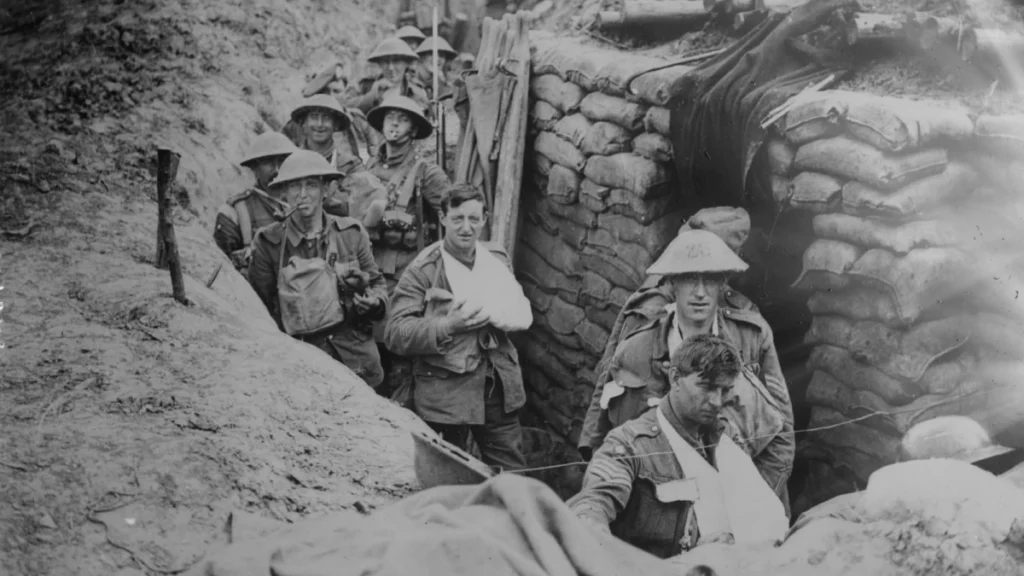
The rolling, green hills of West Flanders, Belgium, conceal a sobering history. Between 1914 and 1918, this pastoral landscape served as the crucible for some of the most catastrophic and destructive engagements of the First World War. An estimated 600,000 soldiers lost their lives, sustained debilitating injuries, or were reported missing in the region. Troops lived and died within an intricate, claustrophobic network of fortification lines, enduring relentless artillery bombardments while sinking into thick, waterlogged mud. Today, centuries removed from the armistice, a casual traveler traversing these tranquil Belgian fields might never realize they are walking atop a vast, hidden graveyard.
The physical erasure of these battlefields continues as modern infrastructure expands. However, an innovative digital preservation initiative spearheaded by Virginia Tech is racing against time to immortalize one of the war’s most poignant subterranean archives. Through the meticulous transformation of thousands of photographs, aerial surveys, and artifacts into an interactive virtual world, researchers are ensuring that the lessons and human stories of World War I remain accessible to future generations long after the physical trenches have vanished beneath modern developments.
The Race Against Modern Development: The Discovery of Dig Hill 80
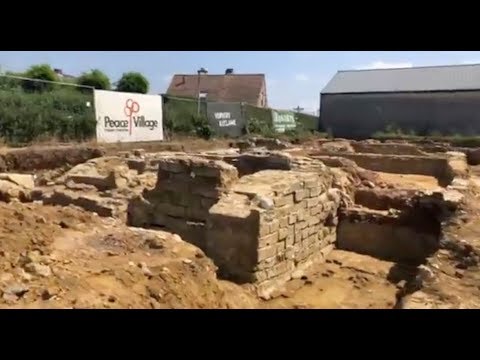
The site known as Dig Hill 80 near Wijtschate, Belgium, was initially brought to light in 2015 during routine archaeological testing. Surveyors unexpectedly stumbled upon the remains of a remarkably well-preserved German stronghold dating back to the conflict. However, the discovery coincided with rapid commercial real estate expansion; the targeted plot of land was already earmarked for suburban residential development.
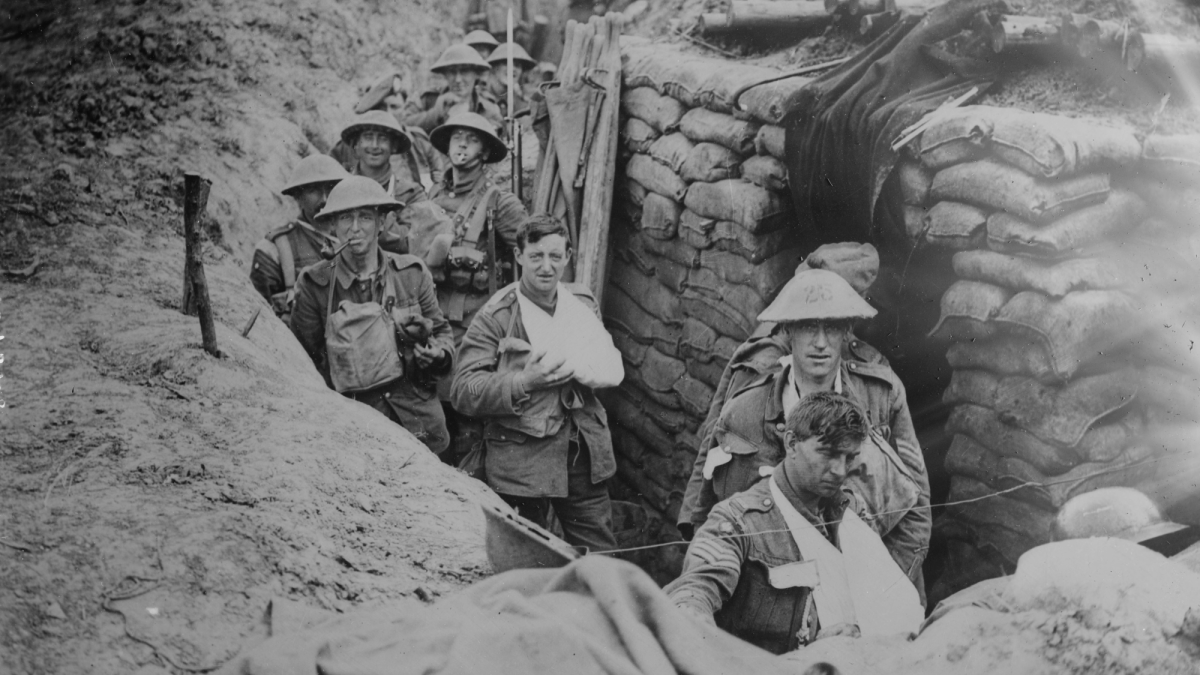
This impending construction triggered an urgent archaeological emergency. Traditional academic excavations often require years of bureaucratic planning, funding approvals, and phased reviews. Recognizing that the physical space would soon be lost beneath the foundations of single-family suburban homes, lead archaeologist Simon Verdegem took the unprecedented step of bypassing traditional institutional channels to launch a public crowdfunding campaign on Kickstarter.
The grassroots appeal struck a chord globally. A total of 2,679 financial backers contributed roughly €178,000 (approximately $200,000 USD) to fund an immediate, large-scale intervention. This rapid influx of capital enabled Verdegem and his team to deploy a full-scale excavation before construction crews moved in. Over the course of an intensive two-month operation, researchers meticulously stripped away the topsoil, mapped a complex maze of interconnected trench lines and bomb craters, and cataloged every recoverable item. Today, the surface of Dig Hill 80 is occupied by unassuming suburban houses, but the historical data rescued during that brief window has survived.
Unearthing a Century-Old Time Capsule
The excavation area spanned approximately the size of a soccer field, encompassing military architecture and material culture from multiple phases of the conflict. The stratigraphy of the site documented the initial German capture of the strategic high ground in 1914, its fortification through subsequent years, and its eventual recapture by Allied forces during the 1917 Battle of Messines.
The physical findings were both monumental and heartbreaking. Archaeologists recovered the human remains of 125 soldiers, some identified as teenagers as young as 15 years old. Alongside these fallen combatants lay a dense concentration of personal belongings, military hardware, and domestic items. The assemblage included standard-issue helmets, rifles, and ammunition cartridges alongside deeply personal artifacts: toothbrushes, bottles of British HP sauce, rosary beads, and crucifixes. These items provided a vivid, unvarnished window into the daily realities, psychological strains, and brief moments of normalcy experienced by soldiers trapped in the wet, perilous trenches.
Recognizing the ephemeral nature of archaeological digs—which are frequently reburied or destroyed after documentation—the Applied Research in Immersive Experiences and Simulations (ARIES) team at Virginia Tech intervened to capture the site in its entirety. Spending over a week on-site during the active excavation, the ARIES team captured aerial drone imagery, high-resolution orthophotos, structured-light scans of delicate objects, and photogrammetric 3D models. By the conclusion of the fieldwork, students and researchers had amassed over three terabytes of digital data, successfully repurposing entertainment and gaming technologies for historical preservation.
Translating Terabytes into Narrative: The Curatorial Challenge
The accumulation of raw spatial data and high-resolution scans presented a significant logistical and intellectual hurdle. Collecting terabytes of digital assets is only the first step; transforming that data into a coherent, educational experience requires rigorous curatorial strategy. Sarah Tucker, manager for immersive learning and research with ARIES, undertook the task of structuring the digital environment with the care of a traditional museum director.
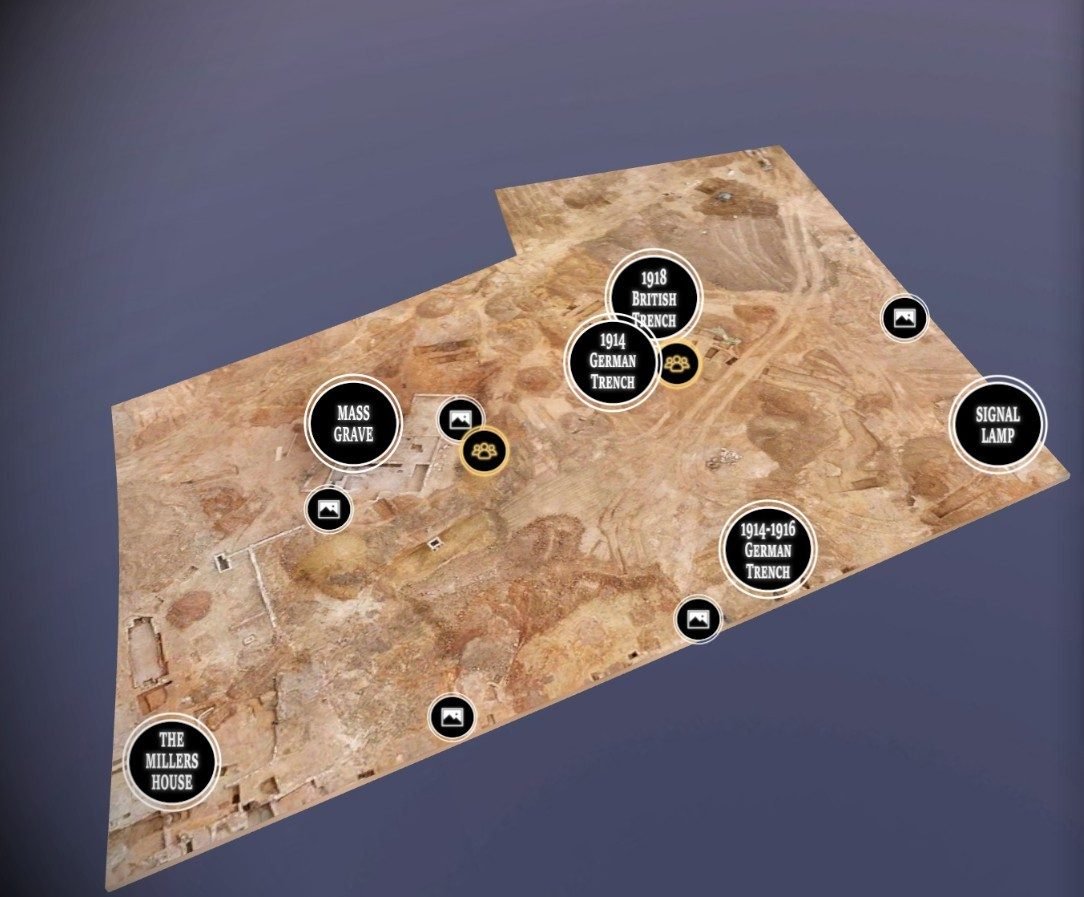
Working alongside executive director Todd Ogle, Tucker designed the digital platform using 3DVista software to create an intuitive, web-based experience. When users log into the platform, they are greeted by an overhead aerial view of the excavation site divided into five primary interactive zones: the Millers House, a mass grave, a 1914 German trench, a 1918 British trench, and an earlier 1914–1916 German trench sector.
Clicking on any of these sectors transitions the user into a 360-degree photographic environment of the actual excavation. Within these spaces, visitors can interact with precise 3D digital twins of artifacts precisely mapped to the coordinates where they were discovered. Accompanying text descriptions provide historical context, mirroring the educational layout of a physical museum exhibition.
Tucker deliberately selected specific items to establish a human-centric narrative rather than merely displaying a catalog of weaponry. Among the highlighted objects are German uniform buttons. Because Germany was a newly unified nation at the outbreak of the war, these buttons varied regionally; some featured the crown associated with Prussian troops, while others displayed the lion insignia of Bavarian soldiers. Another focal point is a recovered harmonica. By allowing users to digitally manipulate and spin the instrument on their screens, the exhibition highlights the profound psychological juxtapositions of trench life—where soldiers faced constant mortal terror yet utilized music to carve out fleeting moments of humanity.
Chronology of the Dig Hill 80 Project
- 1914–1918: West Flanders serves as a primary theater of war; Hill 80 is fortified and fiercely contested during major engagements, including the Battle of Messines.
- 2015: Archaeologists discover the remarkably preserved German stronghold during routine tests, coinciding with plans for residential real estate development.
- July–August 2018: Archaeologist Simon Verdegem launches a successful Kickstarter crowdfunding campaign, raising approximately €178,000 to fund an emergency excavation.
- 2018 (During Excavation): The Virginia Tech ARIES team spends over a week on-site, capturing aerial drone data, photogrammetric models, and structured-light scans totaling more than three terabytes of data.
- 2018–Present: Archivists, researchers, and curators led by Sarah Tucker develop the web-based virtual exhibition space using 3DVista software.
- Early 2025/2026 (Projected): The fully realized digital experience is scheduled for public release, allowing global audiences to explore the subterranean history of Dig Hill 80.
Broader Implications and the Future of Digital Archaeology
The Dig Hill 80 digital preservation project illustrates a vital shift in how cultural heritage institutions approach the documentation and dissemination of historical sites. As urban expansion, agricultural intensification, and climate change increasingly threaten archaeological resources worldwide, traditional methods of physical preservation are frequently insufficient.
By employing game-engine workflows, photogrammetry, and immersive web platforms, academic institutions can democratize access to historical data. Scholars across the globe can analyze millimeter-accurate 3D models of artifacts without handling or potentially degrading fragile original items, while the general public gains remote access to restricted or destroyed excavation sites. Furthermore, projects of this scale offer students invaluable, career-defining portfolio experience, bridging the gap between academic research and commercial technology sectors such as engineering simulation and virtual reality development.
As the Dig Hill 80 digital platform prepares for its official public debut, its overarching philosophy remains anchored in empathy and education. By fusing rigorous archaeological data with thoughtful digital curation, the Virginia Tech team is ensuring that the individual stories of those who suffered and died in the mud of West Flanders are not permanently lost beneath the foundations of the modern world.