




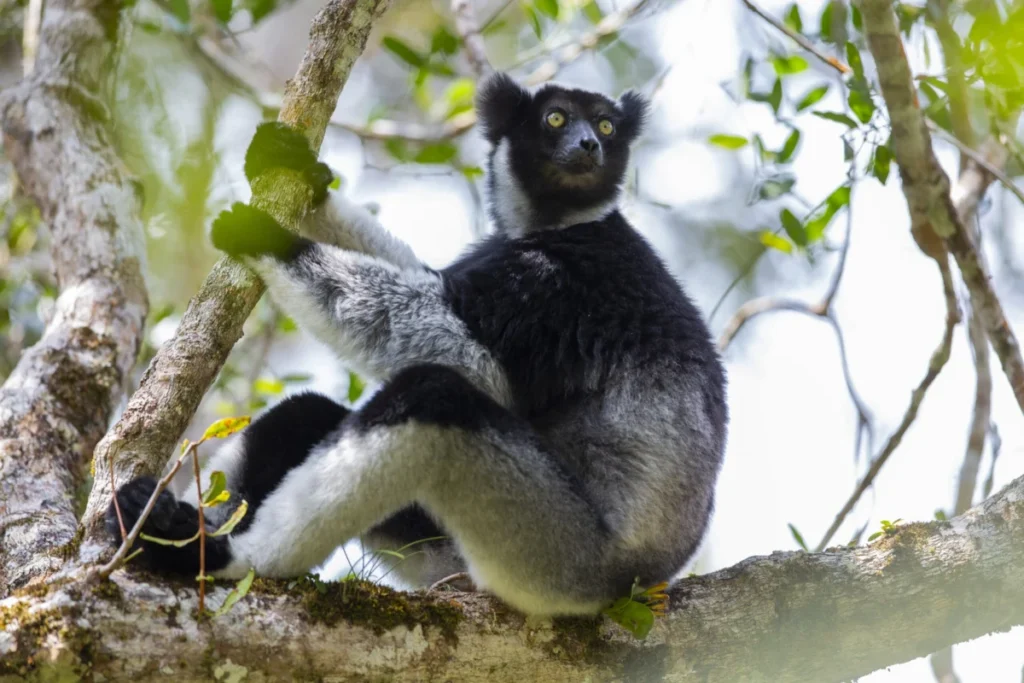
Deep within the dense, mist-shrouded rainforests of Madagascar, a haunting, siren-like melody pierces the morning air. This is the vocalization of the indri (Indri indri), the world’s only known singing lemur. While primates are renowned for a variety of vocal communications, from warning barks to territorial screeches, the indri produces complex, structured songs that carry across vast distances. Recent scientific investigations have revealed a fascinating physiological parallel between these endangered canopy-dwellers and trained human opera singers: to hit their highest notes, indris open their mouths wider, mirroring a fundamental human vocal technique known as formant tuning.
The findings, published in the journal PLOS Computational Biology, offer unprecedented insight into the biomechanics of animal communication. By combining advanced markerless motion-tracking technology with field audio recordings, researchers have mapped the intricate relationship between physical body movements and vocal pitch in a wild primate species separated from humans by tens of millions of years of evolutionary history.
Main Facts and the Mechanics of the Song
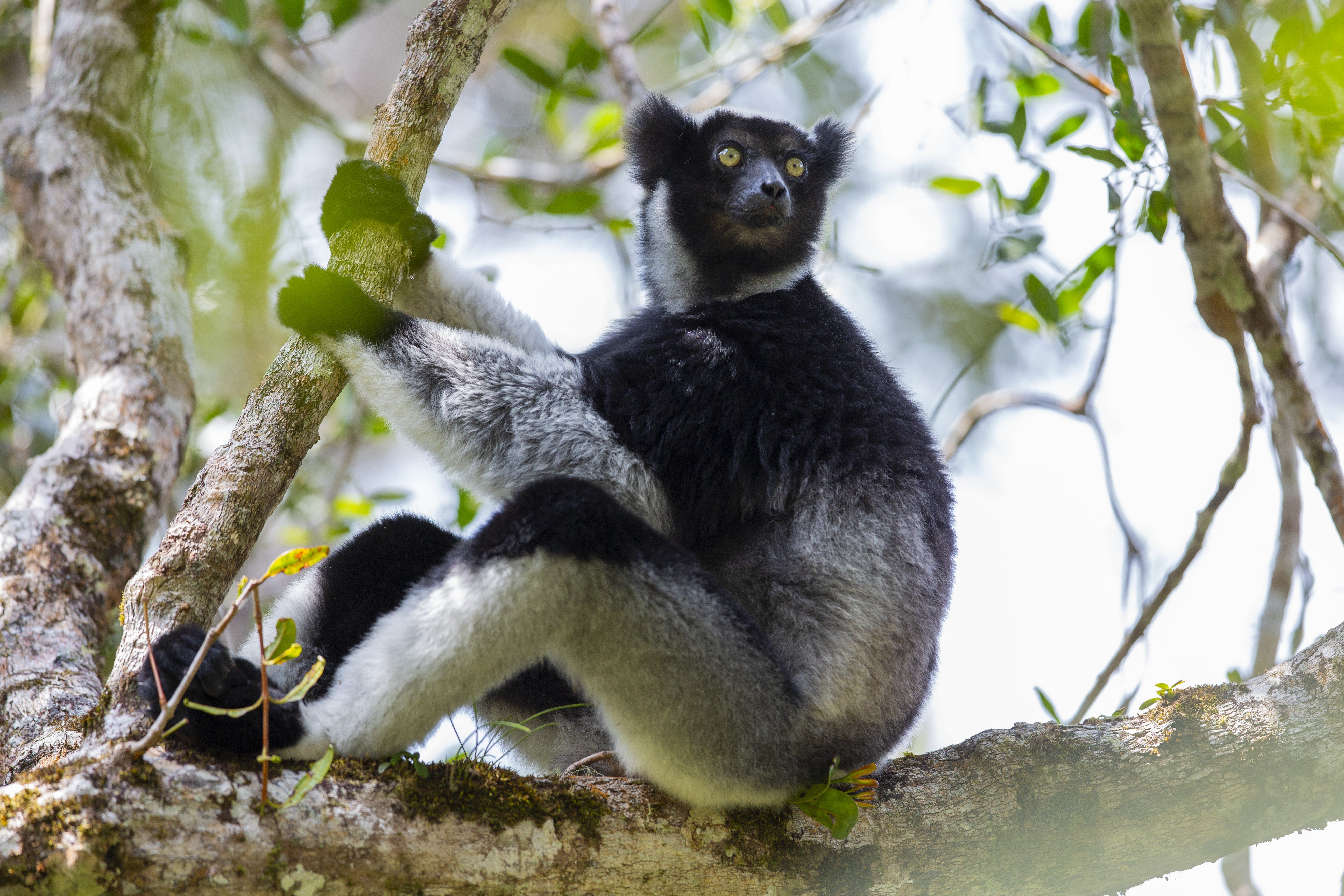
The indri is the largest living lemur species, easily recognized by its dense black-and-white fur, vestigial tail, and striking vertical leaping ability. However, their most remarkable trait remains their song. Indri families engage in coordinated vocal displays that can last for minutes. These acoustic performances serve vital social functions, including strengthening pair bonds within family groups, defending home territories, and broadcasting presence to neighboring clans across the dense forest canopy.
To ensure these messages cut through the dense foliage, humidity, and ambient noise of the rainforest, the sound must travel efficiently. This is where vocal mechanics come into play. In human opera singing, performers undergo rigorous training to widen their oral cavities as the pitch of a song rises. This widening aligns the vocal tract’s resonant frequencies with the harmonics of the voice, drastically amplifying the sound without requiring a proportional increase in breath pressure. This acoustic phenomenon is known as formant tuning.
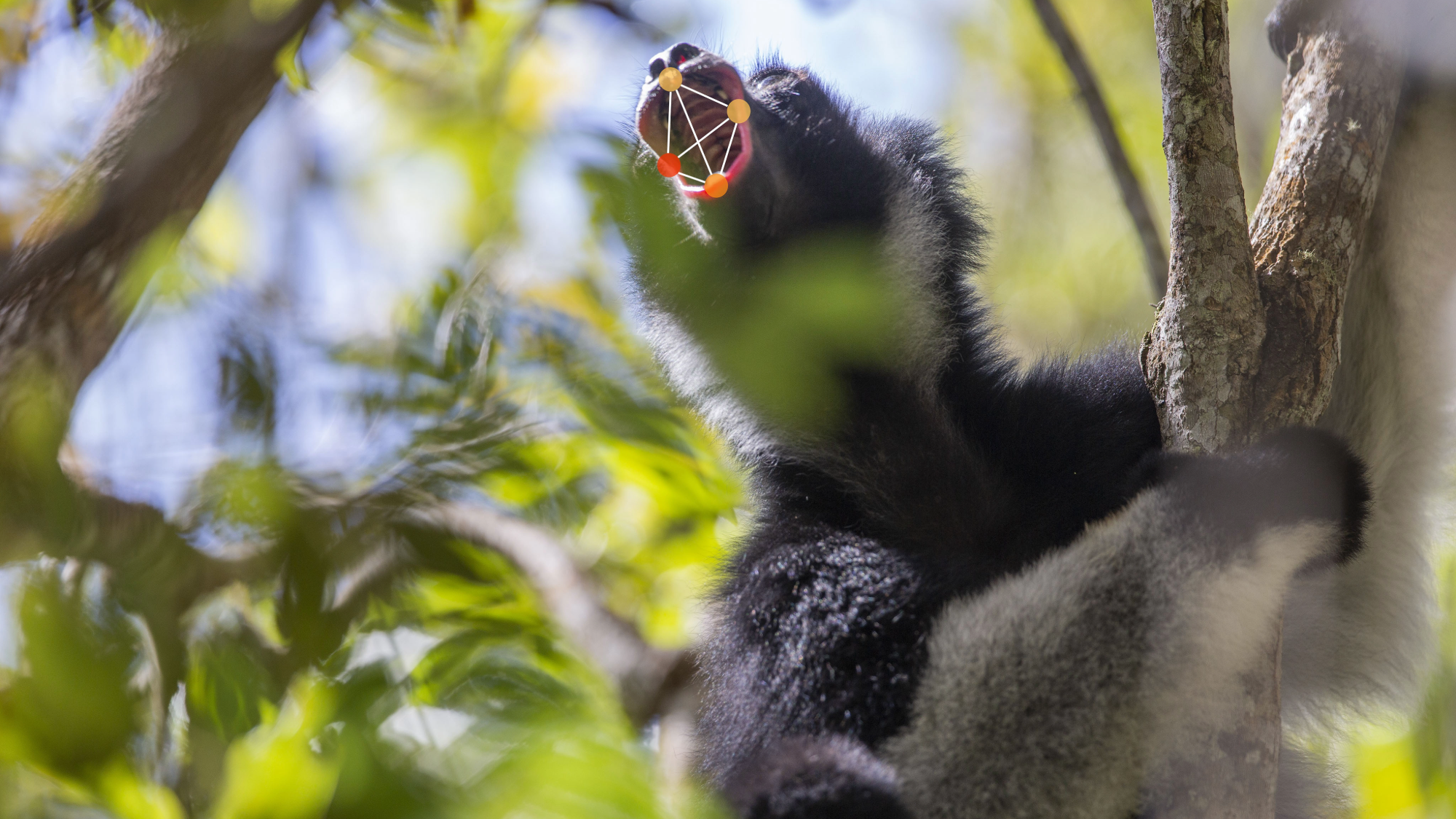
Researchers observed an identical physical coordination in wild indris. Chiara De Gregorio, a primatologist and research fellow at the University of Warwick in England who co-authored the study, noted that every time the pitch of an indri’s song escalated, its mouth opened wider in exact, frame-by-frame synchronization. This fine-tuned coordination between voice and body—traditionally thought to be unique to human performers practicing cultural art forms—is deeply embedded in the biology of these Malagasy primates.
Chronology and Research Methodology
The journey to understanding the indri’s operatic technique required a methodological leap, bridging field primatology and computational biomechanics. Traditional bioacoustic studies relied almost exclusively on audio analysis, capturing the frequency, duration, and rhythm of animal calls without accounting for the visual and physical adjustments made by the body during sound production.
The research project was structured over multiple field seasons in the protected forests of Madagascar, most notably within the Maromizaha forest, a key biodiversity hotspot managed by conservation groups and local researchers. During these expeditions, scientists tracked 19 wild indris across various social contexts.
The investigative timeline involved the following phases:
- Field Data Collection: Researchers captured high-definition video and synchronized audio recordings of wild indris performing spontaneous morning songs. In total, 83 distinct video recordings of high vocal quality were compiled for analysis.
- Markerless Motion Tracking: Rather than attaching invasive physical markers to the animals—which would be dangerous, stressful, and disruptive to wild endangered species—the team utilized advanced markerless pose-estimation algorithms. This computer vision technology tracked the exact coordinates of the upper and lower lips frame by frame.
- Acoustic Correlation: The computational models cross-referenced the precise physical measurements of the mouth opening with the corresponding acoustic frequencies recorded in the audio tracks.
- Peer Review and Publication: The resulting data underwent rigorous statistical validation before being submitted to PLOS Computational Biology, culminating in its publication.
Filippo Carugati, a naturalist at the University of Turin in Italy and a co-author of the study, emphasized the breakthrough nature of the technique. By applying markerless pose estimation to footage recorded in rugged wilderness conditions, the team bypassed the limitations of audio-only research. Observing how the face and mouth move in tandem with pitch changes revealed physical dynamics that could never be detected through sound alone.

Supporting Data and Evolutionary Significance
The data gathered from the 83 recordings yielded a statistically robust correlation between jaw displacement and acoustic frequency. As the indris transitioned from baseline vocalizations to their piercing, emergency siren-like peaks, the vertical aperture of the mouth increased predictably.
This discovery opens a broader window into evolutionary biology, particularly the concept of convergent evolution. Humans (Homo sapiens) and indris (Indri indri) share a common ancestor, but their evolutionary lineages diverged roughly 74 million years ago during the Cretaceous period. Despite this immense evolutionary distance and distinct anatomical pathways, both species independently arrived at the same physical solution to optimize acoustic projection.
For the indri, projecting sound across a thick rainforest canopy is an evolutionary imperative. A song that fails to carry due to acoustic absorption by dense foliage is a failed territorial warning or a missed social signal. By adopting formant tuning—or an analogous physiological mechanism—the indri maximizes its vocal output energy, ensuring survival and social cohesion within its arboreal habitat.
Conservation Context and Threats to the Indri
While the discovery of operatic mechanics highlights the sophistication of animal communication, it also underscores the urgent need to protect the species. The indri is classified as Critically Endangered by the International Union for Conservation of Nature (IUCN). Confined exclusively to the shrinking rainforests of eastern Madagascar, wild indri populations face severe anthropogenic pressures.
The primary drivers of the indri’s decline include:
- Habitat Fragmentation: Widespread deforestation driven by slash-and-burn agriculture (known locally as tavy), commercial logging, and charcoal production continues to break continuous forest tracts into isolated patches.
- Hunting: Despite being considered sacred by many local Malagasy taboos (fady), illegal hunting for bushmeat has increased in certain economically depressed regions.
- Climate Change: Shifting weather patterns and prolonged droughts in Madagascar threaten the delicate microclimates of the rainforests upon which the indri depends.
Conservationists stress that studying the complex social and vocal behaviors of indris provides essential data for breeding programs in captivity and protection strategies in the wild. When populations become fragmented, their ability to maintain auditory contact and social cohesion can be disrupted, adding acoustic stress to the physical threats of habitat loss.
Broader Implications of Primate Bioacoustics
Beyond evolutionary biology and conservation, the revelation that lemurs utilize mouth-shaping techniques akin to human opera singers bridges a conceptual gap between human language, music, and non-human primate vocalization. For decades, scientists debated the origins of human speech and musicality, often attempting to pinpoint unique anatomical mutations exclusive to the hominid lineage.
The finding that a prosimian—one of the most ancient and evolutionary distinct branches of the primate family tree—manages vocal resonance through dynamic mouth adjustment suggests that the foundational building blocks of vocal tract modulation are far older than previously assumed. The anatomical architecture required for complex sound projection may have been present in early primate ancestors long before the emergence of human speech.
As computational biology continues to merge with field ecology, researchers anticipate uncovering further hidden complexities in animal behavior. Technologies like markerless motion tracking are transforming the natural sciences, allowing researchers to decode the physical choreography of the wild without disturbing the fragile ecosystems they seek to understand. For now, the indri remains a solitary maestro of the Malagasy canopy—a tiny primate performing ancient, operatic duets across a vanishing wilderness.