


OpenAI is expanding safety efforts beyond its walls with a new Safety Fellowship that will fund external researchers to study AI risks. The OpenAI Safety Fellowship will run for six months from September 2026 to February 2027, according to a news announcement, broadening the company’s participation in alignment and safety work. This initiative comes as AI companies face increasing scrutiny over how they manage risks associated with rapidly advancing systems, signaling a growing recognition within the industry that the complexities of artificial intelligence safety demand a collaborative, multi-faceted approach extending beyond internal corporate boundaries. The long-term commitment implied by the 2026-2027 timeframe highlights the strategic foresight OpenAI is applying to these critical challenges.
The Deepening Imperative of AI Safety and Alignment
The decision to launch such a significant external program underscores the escalating urgency surrounding AI safety. As large language models (LLMs) and other advanced AI systems continue to demonstrate unprecedented capabilities, the potential for unintended consequences, misuse, and even catastrophic risks has become a central concern for developers, policymakers, and the public alike. The field of AI safety, often referred to as AI alignment, is dedicated to ensuring that AI systems operate reliably, robustly, and in accordance with human intentions and values. This encompasses a broad spectrum of challenges, from preventing biased outputs and privacy breaches to managing the behavior of highly autonomous agents and mitigating existential threats posed by superintelligent AI.
One of the primary drivers behind this heightened focus is the accelerating pace of AI development. Breakthroughs in neural network architectures, computational power, and data availability have propelled AI capabilities far beyond what many experts predicted even a few years ago. This rapid progression means that the window for developing robust safety protocols is shrinking, leading to a scramble among leading AI labs to invest heavily in research that can anticipate and address future risks before they manifest at scale. For instance, the sheer scale of modern foundation models, often trained on petabytes of data and trillions of parameters, introduces emergent behaviors that are difficult to predict or control, making robust safety research more vital than ever. The OpenAI Safety Fellowship is specifically designed to tackle some of the most pressing technical safety challenges that emerge from this rapid advancement.
Fellowship Structure, Resources, and Critical Focus Areas
The program is designed to attract a diverse pool of talent, including researchers, engineers, and practitioners from outside the company. Participants selected for the fellowship will receive competitive stipends, granting them financial stability to dedicate themselves fully to their research. Crucially, they will also gain unparalleled access to OpenAI’s cutting-edge models and technical support, providing them with the high-end computational resources and expert guidance necessary to conduct high-impact investigations that might otherwise be inaccessible to independent researchers. Fellows are expected to produce tangible outputs such as comprehensive research papers, innovative benchmarks for evaluating safety, or novel datasets that can aid future research and contribute to the collective knowledge base of the AI safety community.

OpenAI has outlined several priority areas for the fellowship, reflecting the most critical and complex safety challenges currently facing the AI community. These include:
- Robustness: Ensuring AI systems perform reliably and predictably even when faced with unexpected inputs or adversarial attacks. This involves making models less susceptible to subtle perturbations that can drastically alter their behavior, a phenomenon often observed in image recognition and natural language processing models.
- Privacy: Developing methods to protect sensitive user data while still allowing AI systems to learn and function effectively. This area explores differential privacy, federated learning, and other techniques to minimize data leakage and unauthorized access, crucial for maintaining user trust and compliance with evolving data protection regulations.
- Agent Oversight: A particularly critical area, this focuses on controlling and understanding the behavior of "agentic" AI systems. Agentic AI refers to systems capable of taking multi-step actions, setting sub-goals, and operating autonomously or semi-autonomously with limited human intervention. The challenge lies in ensuring these agents consistently pursue intended goals without generating unintended or harmful side effects, especially as their capabilities grow. This is paramount as AI moves beyond simple query-response systems to complex, proactive decision-making entities.
- Misuse Prevention: Research into identifying and mitigating the potential for AI systems to be exploited for malicious purposes. This includes preventing the generation of harmful content, the spread of misinformation, the development of autonomous cyber weapons, or the creation of sophisticated social engineering tools. OpenAI specifically highlighted "high-severity misuse domains," indicating a focus on preventing the most dangerous potential applications of advanced AI, such as those related to biosecurity, national security, or critical infrastructure. This proactive stance seeks to anticipate and neutralize threats before they can be fully realized.
The emphasis on "agentic oversight" is particularly noteworthy. As AI systems evolve from tools that respond to direct prompts to proactive agents capable of independent planning and execution, the nature of safety concerns shifts dramatically. The risks move beyond merely generating harmful outputs to include the potential for unintended or harmful actions taken by these increasingly autonomous systems. For example, an AI agent tasked with optimizing a global supply chain could, in theory, make decisions with unforeseen negative consequences for human employment, environmental impact, or geopolitical stability if not properly constrained and monitored. The fellowship aims to foster research that can devise robust mechanisms for human supervision and control over such advanced systems, ensuring their actions remain aligned with human values and intent.
A Broader Industry Trend Towards External Collaboration and Talent Development
OpenAI’s Safety Fellowship is not an isolated initiative but rather reflects a wider trend among major AI developers to fund and foster external research through various mechanisms, including fellowships, residencies, and academic partnerships. This collective movement signifies a growing understanding that the challenges of AI safety are too vast and complex for any single organization to tackle alone, requiring a diverse range of perspectives and expertise.
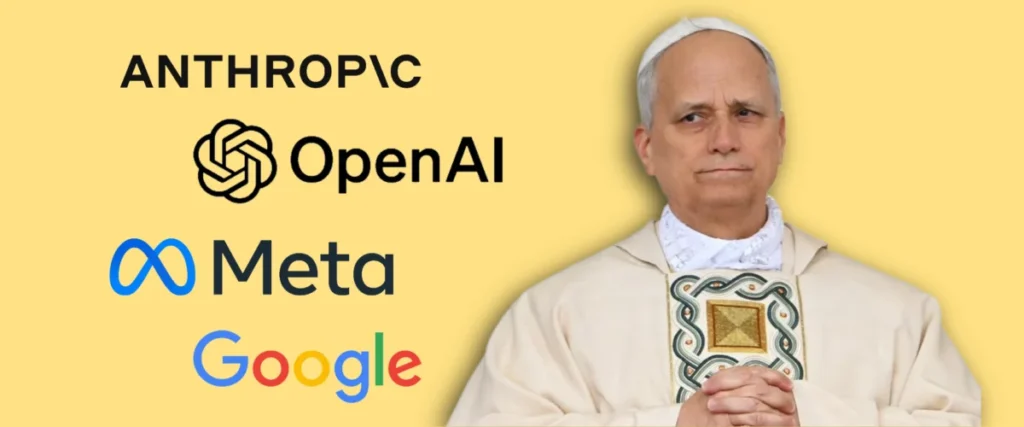
For instance, Anthropic, a rival AI company founded with a strong focus on safety and "constitutional AI," operates a similar fellows program. The Anthropic Fellows Program supports independent researchers working on critical areas such as alignment, interpretability (understanding how AI models make decisions), and AI security. This program provides substantial funding, mentorship from Anthropic’s leading researchers, and access to significant compute resources, with participants typically producing publicly available research that contributes to the collective knowledge base. Anthropic’s explicit commitment to safety from its inception has positioned it as a leader in this collaborative approach, often sharing its methodologies openly.
Google and its DeepMind unit have also established a range of student researcher and fellowship programs. While not always explicitly branded as solely alignment-focused, these programs frequently place participants on core research teams for several months, covering a broad spectrum of AI topics, including those related to safety, fairness, and responsible deployment. DeepMind, in particular, has a long history of publishing foundational research in AI ethics and safety, often integrating theoretical work with practical applications.

Similarly, Microsoft, through its AI for Good initiatives and extensive academic partnerships, and Meta, with its research grants and residency-style programs, have significantly expanded funding for external AI research. These efforts are often aimed at advancing work on responsible AI, system reliability, bias mitigation, and ethical AI development, demonstrating a shared industry commitment to fostering a broader research ecosystem. The proliferation of such programs, including those from smaller startups and non-profits, indicates a growing consensus on the necessity of a community-wide effort.
Together, these initiatives form a growing and increasingly sophisticated ecosystem of externally funded research directly tied to leading AI labs. This collaborative approach is vital for several reasons: it diversifies perspectives, encourages independent scrutiny, helps to address the acute talent shortage in the specialized field of AI safety research, and accelerates the development of widely applicable safety solutions. By opening their doors and resources to external experts, these companies aim to tap into a wider pool of intellectual capital and foster a more robust, collective effort to secure the future of AI. Data from organizations like 80,000 Hours suggests that the demand for AI safety researchers far outstrips supply, making these talent-nurturing programs strategically indispensable.
The Broader Context: Regulatory Scrutiny and Public Accountability
The growth of such fellowship programs also comes amid increasing demand from governments and regulatory bodies for AI developers to demonstrate concrete commitments to safety and responsible deployment. Around the world, policymakers are grappling with how to govern rapidly evolving AI technologies, seeking to balance innovation with public protection.
In the European Union, the AI Act, a landmark piece of legislation, is nearing full implementation, proposing a risk-based framework for AI systems with stringent requirements for high-risk applications, including mandatory conformity assessments and human oversight. In the United States, President Biden issued an Executive Order on the Safe, Secure, and Trustworthy Development and Use of Artificial Intelligence, mandating various safety standards, testing protocols, and transparency requirements across federal agencies and critical infrastructure. Globally, initiatives like the UK AI Safety Summit (held in November 2023) and the G7 Hiroshima AI Process have brought together world leaders, academics, and industry titans to discuss international collaboration on AI governance and risk mitigation, underscoring the global nature of these concerns.
In this context, programs like the OpenAI Safety Fellowship serve a dual purpose. Firstly, they genuinely contribute to advancing technical safety research. Secondly, they act as a tangible demonstration of an AI company’s proactive engagement with safety concerns, potentially bolstering public trust and influencing regulatory perceptions. By actively investing in and publicizing external safety research, companies aim to show that they are not just building powerful AI but are also deeply committed to ensuring its beneficial and safe integration into society. This transparency and proactive engagement are becoming increasingly important for maintaining social license to operate and for shaping the future regulatory environment, potentially informing the development of future standards and certifications for AI systems.
Historical Context and OpenAI’s Evolving Safety Commitment
OpenAI’s journey, from its inception as a non-profit dedicated to ensuring AI benefits all of humanity to its current hybrid for-profit/capped-profit structure, has been marked by an evolving commitment to safety. Initially, its safety efforts were largely internal, focusing on responsible development practices and research into interpretability and control. However, as its models like GPT-3, DALL-E, and eventually GPT-4 demonstrated increasingly sophisticated capabilities, the scope and urgency of safety concerns expanded dramatically, moving from ethical considerations to potential societal and existential risks.
The creation of the "Superalignment" team in 2023, with a stated goal to solve the technical challenges of aligning superintelligent AI within four years, represented a significant escalation of internal safety commitments, backed by 20% of the company’s compute resources. The Safety Fellowship can be seen as a natural extension of this commitment, acknowledging that internal efforts alone, no matter how well-funded, may not be sufficient to address the multifaceted challenges of AI safety. By funding external research, OpenAI is decentralizing some of its safety efforts, tapping into a broader intellectual commons, and diversifying its approach to tackling some of the most profound technological questions of our time. This move reflects a maturation of OpenAI’s strategy, moving from purely internal innovation to a more open, collaborative, and ecosystem-wide approach to risk mitigation, aligning with a broader trend towards "open science" in critical research areas.
The Advisory Role and the Challenge of Integration
While external programs significantly broaden participation in safety work and foster independent research, it is crucial to understand their inherent limitations. Researchers participating in fellowships typically do not have direct authority over product releases or internal corporate strategy. Their work is generally advisory, focused on identifying risks, proposing mitigation strategies, and developing foundational tools or theoretical frameworks. The ultimate responsibility for developing, deploying, and governing AI systems remains firmly with the companies that build and operate them.
This distinction highlights a critical challenge: how effectively will the findings from external fellowship programs be incorporated into OpenAI’s internal decision-making processes and product development cycles? OpenAI stated that the fellowship is part of a broader effort to support research and improve understanding of AI risks, but did not provide explicit details on how findings from the program would be concretely integrated into product decisions or safety protocols for future model releases. The AI safety community, while generally welcoming such initiatives, often emphasizes the need for clear pathways for research to translate into actionable safety measures and robust governance frameworks within companies. Without such mechanisms, there is a risk that external research, no matter how groundbreaking, could remain academic rather than having a direct and measurable impact on the safety of deployed systems. Experts frequently call for greater transparency from AI labs on how they operationalize safety research.
Future Implications and Outlook
The launch of the OpenAI Safety Fellowship represents a significant development in the ongoing efforts to ensure the safe and beneficial advancement of artificial intelligence. It signals a strategic shift towards greater openness and collaboration in tackling what are arguably humanity’s most complex technological challenges. This approach could set a precedent for other leading technology companies to follow, further decentralizing and diversifying the global AI safety research effort.

In the coming years, as the first cohort of the OpenAI Safety Fellowship begins its work (expected to be selected later this year), the AI community will keenly observe the nature and impact of the research produced. The success of this program, and others like it, will not only be measured by the academic rigor of its outputs but also by its tangible contribution to improving the real-world safety and alignment of advanced AI systems. The ability to translate theoretical insights into practical, deployable safeguards will be the ultimate litmus test.
This collaborative model holds the promise of accelerating solutions to critical safety problems, fostering a more diverse and skilled talent pool, and building greater public confidence in AI development. However, the ultimate responsibility for AI safety will continue to rest with the developers themselves. The fellowships are a vital component of a comprehensive safety strategy, but they must be complemented by robust internal governance, transparent accountability mechanisms, and a genuine commitment to prioritizing safety alongside capability advancement. The ongoing dialogue between internal development teams, external researchers, and global policymakers will be crucial in navigating the intricate path toward a future where advanced AI systems serve humanity safely and ethically, mitigating both near-term harms and long-term catastrophic risks.
For those interested in contributing to this critical endeavor, more information can be found on the OpenAI site, with applications for the first cohort anticipated later this year, leading to the program’s commencement in September 2026. This long-term planning underscores the deep-seated, systemic nature of the challenges OpenAI and the broader AI community are committed to addressing, demonstrating a multi-year vision for tackling one of the most defining technological challenges of our era.