



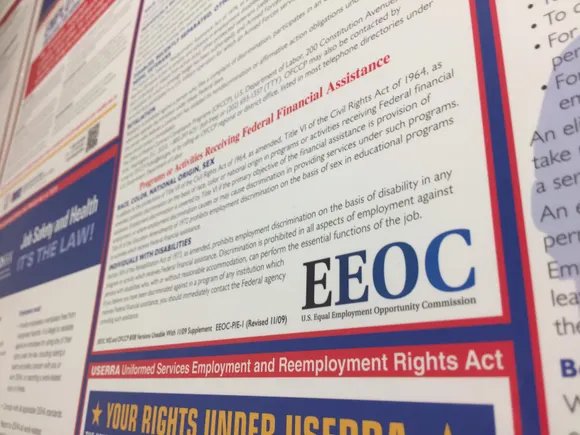
Public school districts across the United States may soon be relieved of a half-century-old federal mandate to track and report the demographic makeup of their workforces. Under a controversial proposal introduced by the U.S. Equal Employment Opportunity Commission (EEOC) during the Trump administration, the Elementary-Secondary Staff Information Report—commonly known as the EEO-5—faces complete elimination. The regulatory initiative, which follows the close of its public comment period, reflects a fundamental shift in federal oversight regarding employment practices, civil rights enforcement, and the role of demographic data in public education.
If finalized, the rescission would dismantle a data collection mechanism that has operated continuously since 1974. The requirement mandates that public school districts with 100 or more employees biennially submit detailed reports categorizing their personnel by race, ethnicity, sex, and job assignment classification. While the change is framed by federal regulators as a necessary step to curb reverse discrimination and reduce administrative burdens, civil rights organizations, labor unions, and education researchers warn that the move will obscure systemic inequities and undermine the enforcement of federal anti-discrimination laws.
Background and Historical Context of the EEO-5
The EEO-5 report traces its origins to the post-civil rights era legislative landscape, designed to give the federal government, researchers, and the public a transparent window into employment patterns within public education systems. Mandated under Title VII of the Civil Rights Act of 1964—which prohibits employment discrimination based on race, color, religion, sex, and national origin—the reporting requirement was established to ensure that public schools, as public entities funded by taxpayers, adhered to equal opportunity employment standards.
For over fifty years, the biennial data collection served as a baseline instrument for tracking the representation of racial minorities and women across various educational tiers, ranging from classroom teachers to administrative and support staff. Over the decades, the data provided federal investigators with empirical evidence during civil rights probes, allowed academic researchers to map workforce trends, and offered local communities insight into the diversity of their public school systems.
However, the regulatory framework governing EEO-5 is now being reevaluated as part of a broader government-wide reassessment of federal data collection practices. In July, the EEOC formally proposed the removal of these reporting requirements, arguing that the long-standing collections may be inconsistent with federal law, no longer useful for enforcing anti-discrimination statutes, or directly counter to the agency’s current enforcement priorities.
The Administration’s Rationale: Moving Away from Demographic Benchmarks
The philosophical cornerstone of the Trump administration’s proposal lies in the argument that mandatory demographic data collection unintentionally fosters the very practices it was designed to prevent. According to the EEOC’s published proposal, tracking race, ethnicity, and sex metrics can encourage employers to engage in discriminatory behaviors to avoid potential agency investigations or to manufacture specific statistical outcomes.
Federal officials articulated concerns that the existence of demographic benchmarks creates an implicit expectation among employers to produce workforces that match predetermined statistical distributions. The administration argued that such a framework promotes racial stereotyping and may lead employers to enact race- or sex-conscious policies to correct perceived imbalances—actions that the administration asserts violate the core tenets of Title VII by treating individuals differently based on protected characteristics.
Furthermore, the proposal cautioned that employers might operate under the mistaken belief that the absence of a statistical imbalance equates to absolute compliance with anti-discrimination laws, thereby causing institutions to neglect their proactive responsibilities in identifying and mitigating systemic workplace bias. This regulatory philosophy aligns with the administration’s broader policy agenda to dismantle Diversity, Equity, and Inclusion (DEI) initiatives across federal, state, and local entities, which critics within the administration argue inherently disadvantage majority groups, such as White and male employees.
Chronology of the Regulatory Overhaul
The push to eliminate EEO-5 reporting represents an accelerated federal rulemaking process that has drawn intense public scrutiny. The timeline of the proposal highlights the rapid pace at which the administration is seeking to alter federal civil rights enforcement mechanisms:
July: The EEOC published a notice of proposed rulemaking in the Federal Register, outlining the complete removal of the EEO-5 reporting requirements alongside parallel data collections in other economic sectors.
August: The public comment period opened, generating significant controversy and drawing more than 2,800 formal submissions from a diverse coalition of stakeholders, including civil rights advocates, labor unions, education associations, conservative policy groups, and private citizens.
Late August: Major educational organizations, such as the National Education Association (NEA) and the American Institute for Boys and Men, submitted detailed oppositional briefs highlighting the anticipated negative impacts on workforce transparency. Conversely, organizations like Defending Education filed supportive comments endorsing the deregulation.
Post-Comment Period: Following the closure of the public comment window, the proposal entered its final review phase, with legal experts predicting swift finalization despite widespread pushback.
Divergent Perspectives: Stakeholder Reactions and Debates
The proposed elimination of the EEO-5 report has deeply polarized the education and legal sectors, exposing a profound ideological divide over how civil rights and workplace equality should be measured and maintained.
Opponents of the Rescission: The Case for Transparency
Labor unions and civil rights advocates argue that stripping away demographic reporting will blind policymakers to persistent inequalities within the education workforce. Daaiyah Bilal-Threats, senior director of the Education Policy and Implementation Center at the National Education Association, forcefully criticized the proposal during the public comment window.
"The absence of EEO data will not eliminate disparities in employment, including in the education sector," Bilal-Threats stated in an August submission. "Instead, it will make those disparities more difficult to identify, investigate, and remedy." Bilal-Threats emphasized that systemic discrimination is notoriously difficult to uncover through individual complaints alone, making aggregated data an indispensable tool for maintaining accountability.
Similarly, the American Institute for Boys and Men defended the utility of the reporting framework, particularly in monitoring demographic imbalances within a heavily female-dominated profession. Alanna Williams, vice president of the organization, noted that federal data indicates men make up only about 23 percent of the public school teacher workforce. Williams argued that tracking the pipeline of educators across various school roles requires consistent, longitudinal data to understand where underrepresentation emerges and how it evolves over time.
Individual public education employees also voiced concern. One Afro-Latina educator submitted a comment arguing that while data collection does not automatically equate to discrimination, discarding the data entirely destroys the analytical capacity to evaluate equal opportunity. "You cannot effectively measure equality by deciding not to measure it," she wrote, suggesting that the EEOC should modernize and streamline the reporting process rather than abolish it.
Proponents of the Rescission: The Case Against Statistical Benchmarking
Conversely, conservative grassroots organizations and legal reform advocates praised the administration’s initiative, contending that the current reporting structure distorts the legal intent of Title VII.
Defending Education, an organization active in educational policy and parental rights advocacy, argued in its August comments that the EEO reporting mandates have become untethered from their original remedial purpose. The group asserted that the requirements create an untenable environment where employers feel compelled to establish internal diversity quotas, utilize race-conscious hiring and promotion practices, and market demographic achievements to investors and the public.
"Many employers use the EEOC reporting requirements to establish diversity goals, measure employees for promotion and hiring based on demographic outcomes, and justify race-conscious programs," the organization stated, maintaining that the rules actively subvert equal protection principles by institutionalizing race- and gender-based metrics.
Logistical and Financial Considerations for School Districts
From an administrative standpoint, the elimination of the EEO-5 report offers tangible, albeit modest, logistical relief to local education agencies. According to federal estimates, approximately 10,500 public elementary and secondary school systems and districts participate in the biennial data collection.
The government calculates that individual districts spend an average of 1.7 hours completing the EEO-5 submission, translating to an estimated labor cost of $56.90 per district. Across all participating districts nationwide, the total cost of the biennial collection is approximately $597,472.29. While proponents of the rescission point to these figures as unnecessary regulatory waste, critics argue that the minor financial and time investment is a negligible price to pay for national workforce transparency.
Legal Implications and Future Outlook
Legal experts specializing in labor and employment compliance emphasize that once the rule is finalized, reversing the decision will not be a simple administrative task. Jennifer Sandberg, a regional managing partner for the labor and employment consulting firm Fisher Phillips, noted that any future administration seeking to reinstate public school demographic reporting would be forced to navigate the protracted federal rulemaking process from scratch.
"The rules were implemented really to help the government track diversity, and that’s exactly why they’re now being undone," Sandberg explained. She noted that historical uses of the data extended far beyond simple record-keeping, serving as a primary metric for longitudinal workforce tracking, community census comparisons, and applicant flow analyses to detect hiring disparities.
Despite the impending regulatory change, compliance experts stress that school districts remain legally bound by Title VII and other federal anti-discrimination statutes. Sandberg suggests that educational institutions should maintain proactive, nondiscriminatory human resources practices—such as auditing job advertisement strategies, refining promotion protocols, and ensuring equitable employee benefit administration—regardless of whether federal reporting requirements remain on the books.
As the finalization of the EEOC proposal approaches, the debate over the EEO-5 signals a profound pivot in federal civil rights policy. By prioritizing the elimination of statistical tracking to prevent alleged reverse discrimination, the administration has ignited a nationwide debate over whether the suppression of demographic data serves to protect individual equity or merely obscures the structural disparities that continue to shape the American public education system.