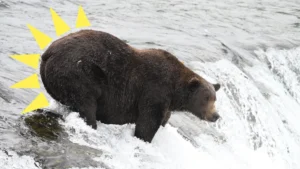
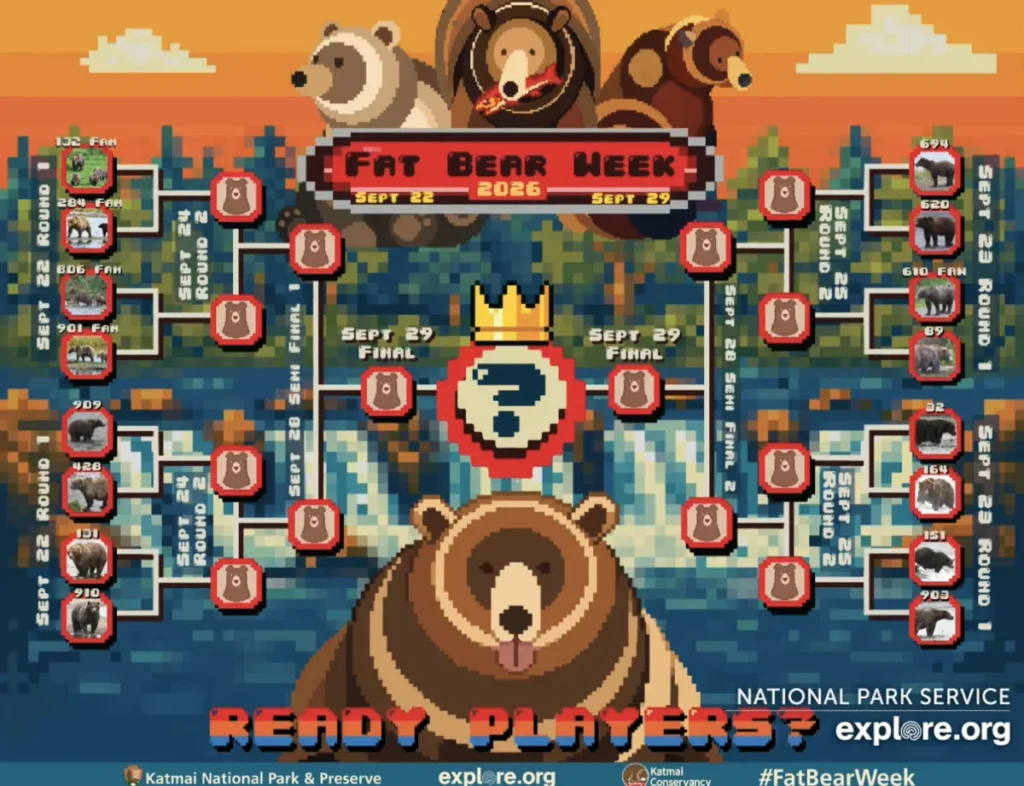
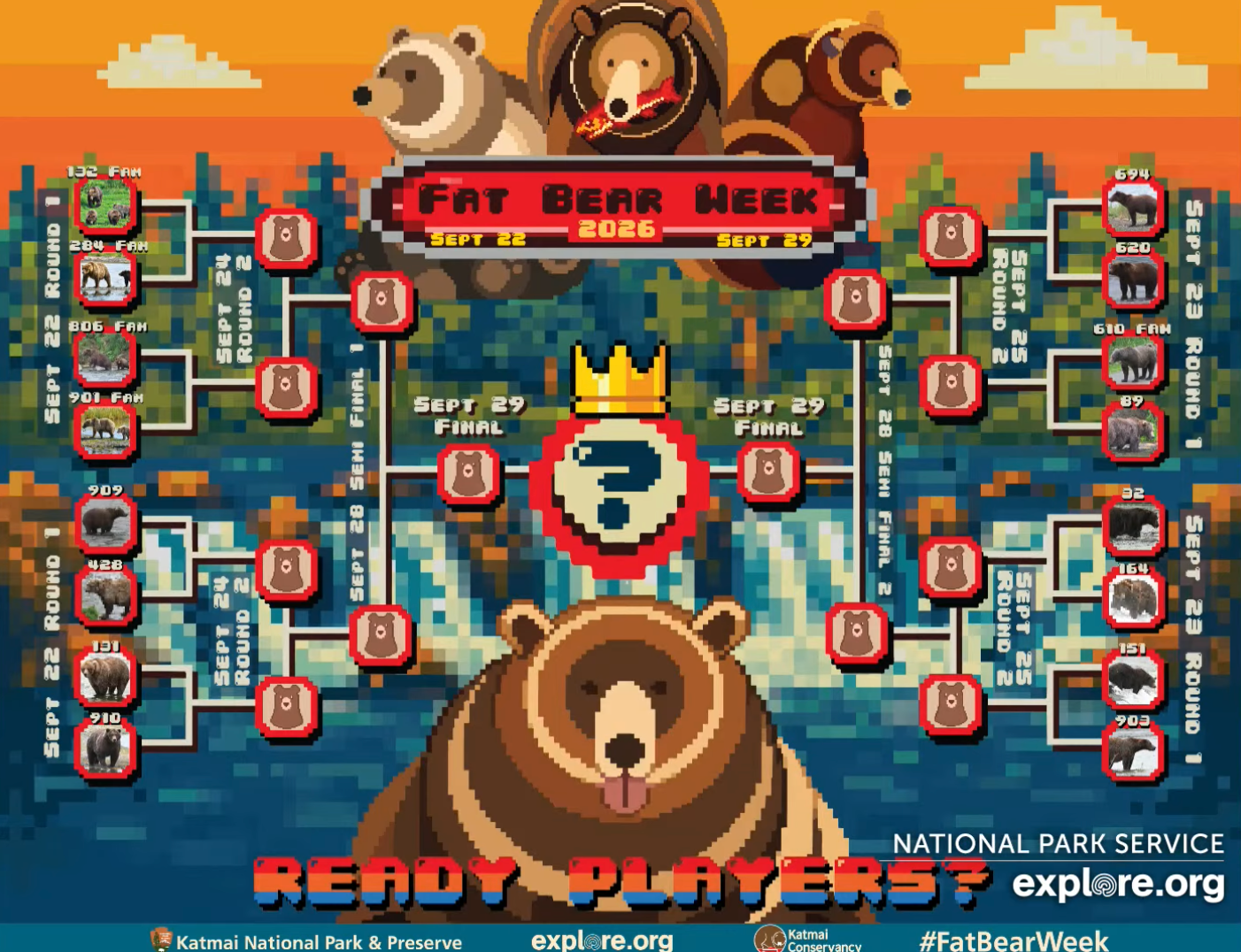
The official bracket for Fat Bear Week 2026 has been released, setting the stage for 16 adult brown bears (Ursus arctos) in Alaska to enter a single-elimination online tournament celebrating nature’s most successful foragers. As temperatures drop and the long, salmon-less winter approaches, the brown bears of Katmai National Park and Preserve have reached "peak fat," according to resident naturalist Mike Fitz. The annual competition, which mirrors the bracket-style format of March Madness, serves as both a global celebration of wildlife conservation and a public engagement initiative managed by Katmai National Park, the Katmai Conservancy, and explore.org.
With the tournament scheduled to run from Tuesday, September 22, to Tuesday, September 29, millions of international voters are expected to log onto fatbearweek.org to cast their ballots. The tournament features four distinct categories designed to showcase the diverse demographics of the Brooks River ecosystem: mother bears, single adult females, sub-adult bears, and behemoth adult male bears.
The Mechanics of Survival: From Summer Feasting to Winter Torpor
The journey to Fat Bear Week begins months before the first vote is cast. Every year in late June, brown bears congregate at Brooks Falls to take advantage of the annual salmon migration. During this initial phase, viewers can monitor the bears on explore.org’s high-definition livestreams as they build up the caloric foundation necessary for survival. By late summer, as the nutritious fish spawn and begin to die, the bears transition to the lower Brooks River in September and October to feed on the carcasses near the river’s mouth.
This relentless feeding cycle is an evolutionary necessity. Unlike small mammals such as bats, bees, and ground squirrels that experience deep hibernation, brown bears enter a physiological state known as torpor. Triggered primarily by food scarcity rather than cold temperatures alone, torpor is an involuntary state of reduced metabolic activity. During this period, bears cease eating, drinking, and excreting waste, relying entirely on the massive fat reserves accumulated during the summer months.
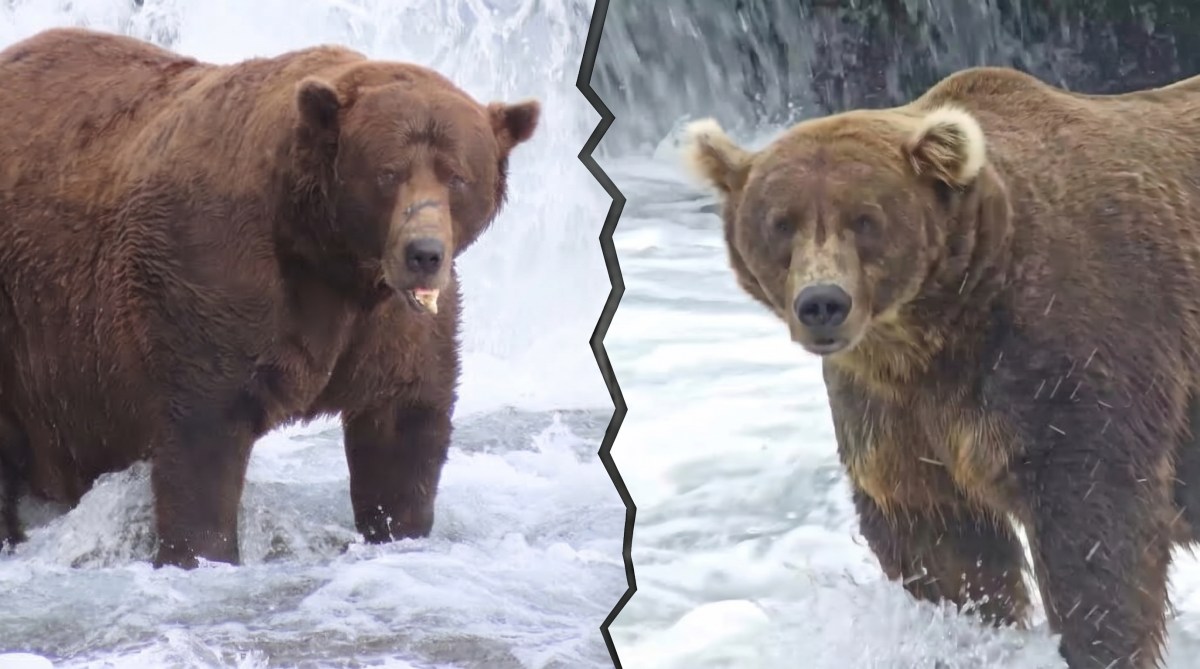
The stakes of the summer feeding frenzy are exceptionally high. An adult male brown bear can dramatically fluctuate in weight, growing from roughly 700 pounds in the early summer to over 1,200 pounds by the onset of autumn. Biologists and park rangers emphasize that the heftier the bear, the higher its statistical probability of surviving the harsh Alaskan winter.
Selection Process and Bracket Organization
Out of more than 100 individual bears identified by park staff at Katmai’s Brooks River this summer, only 16 were selected for the 2026 bracket. Park personnel intentionally chose bears that arrived early in the season and reappeared later, allowing photographers to capture clear before-and-after imagery. These comparative photographs are published on the voting platform, giving the public a visual metric of the staggering weight gain achieved through months of continuous salmon consumption.
The 16 contenders are divided into four carefully curated groups:
- Group One: Mother bears balancing the immense metabolic demands of lactation and cub-rearing with self-sustenance.
- Group Two: Single adult females operating independently without the energy sink of dependent offspring.
- Group Three: Sub-adult bears navigating their transition to independence and adult dominance hierarchies.
- Group Four: Behemoth adult males, characterized by massive physical stature and intense competition for prime fishing real estate.
Notably, Fat Bear Week Junior, a previous iteration that pitted spring cubs against one another in a separate bracket, has been discontinued for 2026. Instead, young cubs are integrated directly into the adult bracket as part of family units, reflecting the natural social structures observed in the park.
Historical Context and Explosive Global Growth
Since its inception in 2014, Fat Bear Week has expanded from a modest, one-day local event into an international cultural phenomenon. When the Katmai Conservancy first launched the concept, roughly 1,700 votes were cast. A decade later, the competition shattered previous records, drawing 1.2 million votes from more than 100 countries.
Recent years have featured dramatic rivalries and compelling storylines that have captivated the public. In the 2025 tournament, Bear #32, affectionately known as "Chunk," captured the crown despite beginning the salmon run with a freshly broken jaw—an injury likely sustained during a territorial dispute over a mate. Despite his physical handicap, Chunk successfully secured enough fish to maintain his dominance.
Chunk’s victory followed a contentious 2024 season in which he lost the championship title to the formidable mother bear Grazer. The two apex animals had previously been involved in a high-profile confrontation when two of Grazer’s cubs tumbled over a waterfall and were attacked by Chunk. Grazer fiercely defended her offspring, though one cub unfortunately perished. This raw, unfiltered interaction highlighted the complex and often brutal realities of wildlife dynamics at Brooks River.
A Turbulent Summer in Katmai National Park
The 2026 field season at Katmai National Park offered viewers an unvarnished look at the realities of apex predator ecology, marked by several notable events captured by park livestreams.
On Tuesday, July 28, live-cams documented a rare and distressing event: a young brown bear cub was killed and consumed by an unrelated mother bear, identified as Bear #806. The deceased cub belonged to Bear #909, a 10-year-old female that began the season with two spring cubs and ultimately lost both. Days later, on Sunday, August 2, another tragedy occurred when a cub belonging to Bear #335 ("Jolly") was attacked and killed after following three unrelated cubs up a tree.
Park naturalists Mike Fitz, Christine Loberg, and Sarah Bruce noted that these incidents represent some of the first thoroughly documented cases of infanticide and intra-species predation of this nature at Brooks River. While wildlife biologists have not reached a singular consensus regarding why mother bears occasionally kill cubs, leading hypotheses point toward competition for resources, food scarcity, aggressive territorial defense, and attempts to eliminate genetic competition.

Despite these grim encounters, the summer also brought moments of levity and wonder. Livestream observers tracked a cub with striking silver-hued fur, another young bear that presumably learned a painful lesson regarding porcupine quill safety, and Bear #164 ("Bucky Dent"), renowned for innovative fishing techniques. Additional viral moments included Bear #284’s ("Electra") family, whose cubs seemingly mastered shallow water navigation, alongside multiple instances of adventurous cubs taking accidental tumbles over the roaring waterfall.
Voting Schedule and Conservation Support
Public participation is central to the mission of Fat Bear Week, which aims to educate the global community about brown bear ecology and the preservation of pristine wilderness habitats.
- Voting Dates: Tuesday, September 22, through Tuesday, September 29.
- Daily Voting Hours: 12:00 p.m. to 9:00 p.m. EDT (9:00 a.m. to 6:00 p.m. PDT / 8:00 a.m. to 5:00 p.m. ADT).
- Official Platform: http://fatbearweek.org
In addition to casting votes, wildlife enthusiasts can financially support the preservation of Katmai’s ecosystem by contributing to the Katmai Conservancy’s Otis Fund, named in honor of the legendary four-time champion Bear #480 (Otis), who passed away around 2024. To bolster conservation efforts, explore.org has committed to matching all donations made to the Otis Fund between September 22 and October 3.
As millions prepare to analyze bracket matchups, examine weight-gain metrics, and debate the merits of individual bears, Fat Bear Week 2026 stands ready to deliver another week of engaging scientific education, conservation advocacy, and celebration of the natural world’s most impressive heavyweight survivors.