

The annual wilderness phenomenon known as Fat Bear Week has officially returned, bringing global attention to the remarkably resilient brown bear population of Alaska’s Katmai National Park and Preserve. Among the prominent contenders vying for the coveted title this season is Bear 151, widely known as Walker. A veteran competitor who has frequented the Brooks River since 2009, Walker has consistently returned to the protected ecosystem to gorge on sockeye salmon, transforming from a lean, scarred survivor into a massive, pear-shaped apex predator. As voting opens for the 2026 tournament, wildlife biologists, park rangers, and millions of online spectators are closely watching whether Walker can finally secure the championship crown that has eluded him for nearly a decade.
Fat Bear Week, established in 2014 by explore.org in partnership with Katmai National Park and the Katmai Conservancy, is a single-elimination tournament designed to celebrate the success and biological resilience of brown bears. The event highlights the crucial process of hyperphagia—an intensive period of eating where brown bears consume massive amounts of calories to build the fat reserves necessary for winter hibernation. During this period, adult males can dramatically increase their body mass, surging from roughly 700 pounds in the early summer months to upwards of 1,200 pounds by the onset of autumn. The tournament has grown from a local online poll into a cultural touchstone that attracts millions of international votes, educating the public on wildlife conservation, animal behavior, and the delicate balance of pristine ecosystems like the Brooks River.
The Early Years and Development of Bear 151
Walker’s journey within the Katmai ecosystem is well-documented by park rangers and naturalists who have monitored his growth over nearly two decades. First identified by researchers in 2009 as an independent sub-adult approximately two and a half years old, Walker quickly established a presence along the Brooks River. During his early developmental years, he exhibited a notably playful disposition, frequently engaging in light-hearted wrestling matches and social interactions with other young bears, including Bear 503, Bear 289, and the well-known competitor Bear 32, affectionately called Chunk.
Naturalists emphasize that play behavior in wild brown animals carries significant evolutionary and survival advantages. Mike Fitz, a resident naturalist for explore.org, notes that research, including studies conducted in Southeast Alaska, has consistently demonstrated a positive correlation between higher rates of play among brown bear cubs and increased long-term survival rates. For Walker, these formative years of socialization and physical engagement helped him develop the coordination and strength required to navigate the complex social hierarchies of the Brooks Falls.
As Walker matured into adulthood, his demeanor shifted from the playful curiosity of his youth to a more commanding, authoritative presence. While he was historically characterized by rangers as relatively chill compared to some of his more volatile peers, his sheer physical dimensions and dominant positioning along the prime fishing real estate of Brooks Falls have made him an undeniable force. Over successive summers, Walker has secured his position near the top of the local pecking order, leveraging his size and extensive river experience to successfully harvest salmon during the peak migration runs.
A History of Competition and Near Misses
Despite his impressive stature and regular appearances in the annual tournament since 2018, Walker has yet to claim a Fat Bear Week championship. In previous years, his tournament ambitions have been repeatedly thwarted by legendary competitors who captured the public imagination. These formidable rivals include the iconic four-time champion Bear 480 Otis, renowned for his tenacity and strategic fishing techniques despite missing teeth and advanced age, and the dominant two-time champion Bear 128 Grazer, who secured back-to-back titles in 2023 and 2024 through aggressive defense of prime fishing spots and her commanding maternal presence.
Observers and wildlife analysts have often pondered why Walker has struggled to advance deep into the tournament brackets in past years. Some speculate that his relatively peaceful demeanor in earlier seasons failed to generate the dramatic narratives that often drive voter turnout. While competitors with volatile temperaments or unique behavioral quirks frequently capture media headlines, Walker maintained a steady, reliable presence without courting controversy. However, as he enters the 2026 competition, wildlife experts note a distinct shift in his behavior. Matured and visibly more assertive, Walker has demonstrated an increased willingness to aggressively defend his established territory against younger, ambitious challengers such as Bear 164, known as Bucky Dent, and Bear 907, both of whom are rapidly approaching full adult size and seeking to disrupt the established hierarchy.
Biological Significance of Hyperphagia and Fat Accumulation
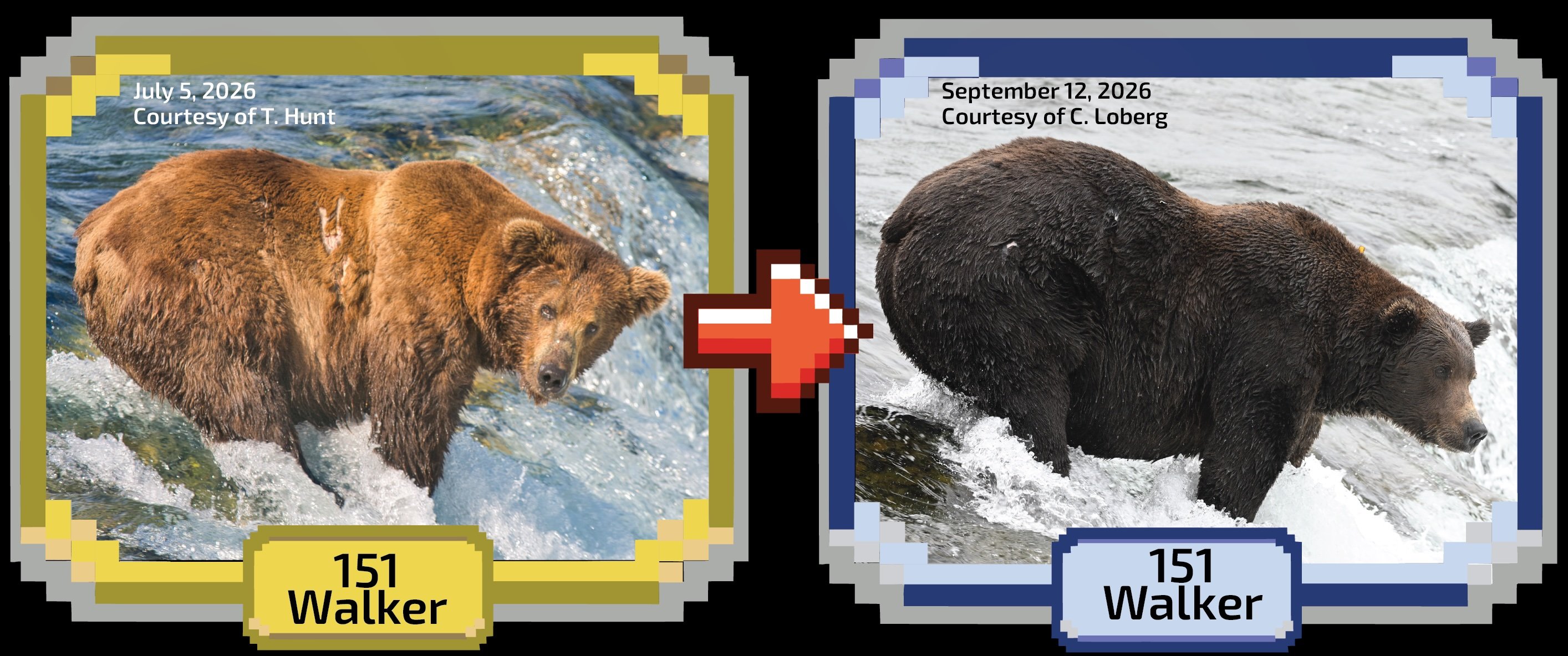
The physiological transformation that Walker and his fellow bears undergo each summer is a masterclass in mammalian adaptation. Emerging from their dens in the spring following months of winter sleep, brown bears are typically gaunt, metabolically depleted, and occasionally bearing scars from territorial skirmishes or mating conflicts. The primary objective of the spring and summer seasons is caloric acquisition.
The Brooks River provides an extraordinary ecological setting for this biological imperative, serving as a vital bottleneck where millions of Pacific salmon migrate upstream to spawn. For bears like Walker, the abundance of high-energy marine-derived nutrients enables rapid adipose tissue accumulation. By the time autumn arrives, an adult male brown bear must carry a massive layer of insulating and energy-storing fat to survive the harsh Alaskan winter inside a subterranean den without food or water.
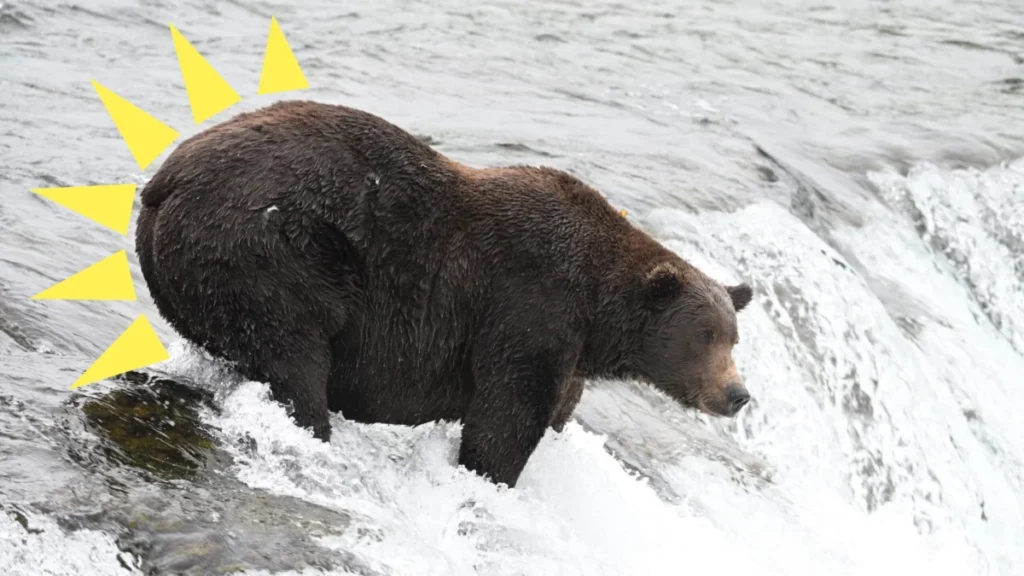
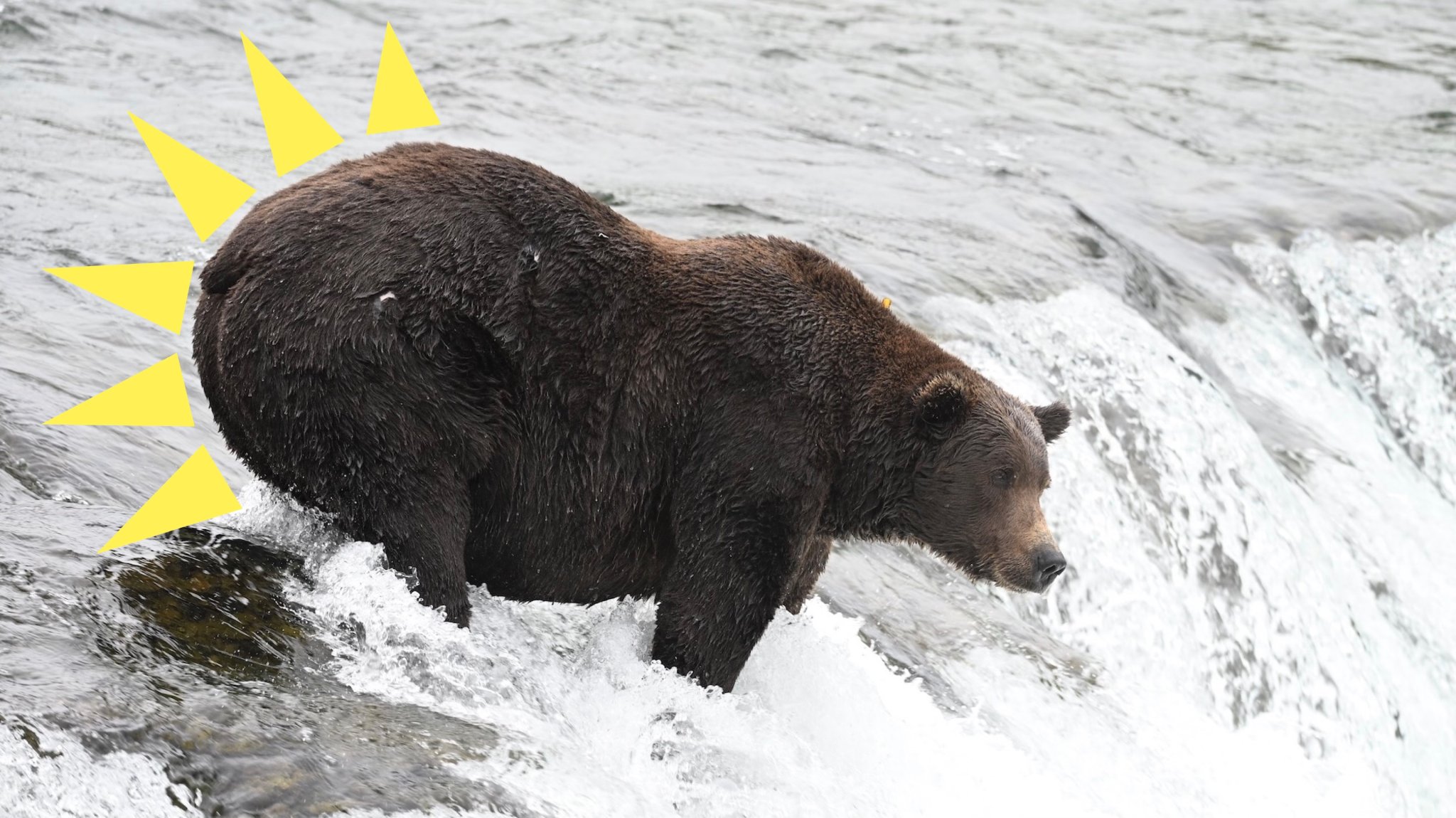
Park rangers frequently utilize descriptive terminology to categorize the physical condition of these animals ahead of the tournament, characterizing Walker’s 2026 physique as lightbulb- or pear-shaped. Official photographs captured by Katmai National Park ranger Christine Loberg ahead of the tournament vividly illustrate the extent of Walker’s summer weight gain, showcasing an expansive rear end and a robust frame that signal optimal nutritional health. Biologists emphasize that these visual assessments are not merely for entertainment; they serve as critical indicators of ecosystem health, reflecting the overall abundance of the salmon runs and the environmental stability of the Katmai wilderness.
The 2026 Tournament Bracket and Matchups

As the 2026 Fat Bear Week tournament commences, Walker enters the first round of public voting facing a formidable opponent: Gully, a younger bear who is the offspring of the multi-champion Grazer. Gully has earned a distinct reputation among park observers for a varied diet that occasionally includes scavenging on gulls in addition to the traditional sockeye salmon staple.
The voting structure for Fat Bear Week is designed to engage a global audience through a daily bracket system hosted on the official fatbearweek.org portal. Voting periods are carefully scheduled to accommodate international participants, running daily from 12 p.m. to 9 p.m. Eastern Daylight Time. Each matchup pits two bears against one another, with voters evaluating the animals’ success in preparing for winter based on before-and-after photographic evidence provided by park rangers and live webcams operated by explore.org.
Broader Implications and Conservation Impact
Beyond the lighthearted internet culture, memes, and enthusiastic community engagement that characterize Fat Bear Week each autumn, the event serves a serious and vital conservation purpose. Katmai National Park and Preserve encompasses over four million acres of wild public lands, protecting one of the most significant and undisturbed brown bear habitats in North America. By drawing millions of eyes to the lives of individual bears like Walker, the initiative fosters a deeper public appreciation for wild spaces and the complex ecological networks that sustain them.
Wildlife managers and conservation organizations emphasize that the continued health of bears like Walker depends heavily upon the preservation of clean water, intact forests, and sustainable fisheries. As climate patterns shift and human pressures on natural habitats increase, events like Fat Bear Week provide an accessible gateway for environmental education, inspiring advocacy and support for national parks and wildlife conservation policies worldwide. Whether Walker’s impressive physical transformation and enduring presence along the Brooks River will finally translate into a championship victory remains entirely in the hands of the global voting public, but his legacy as a fixture of the Katmai wilderness is already firmly secured.