




The methodology of instructional design serves as the cornerstone of academic success in modern education, transforming abstract curriculum standards into actionable classroom experiences. Educators across the United States are increasingly moving away from traditional, ad-hoc lesson planning toward the structured framework of Backward Design, a pedagogical strategy that prioritizes learning outcomes over daily content delivery. This shift represents a broader evolution in teaching philosophy, moving from a teacher-centered model to a results-oriented approach that emphasizes student mastery and clear, measurable progression.
Historical Context and Theoretical Framework
The concept of Backward Design was introduced to the professional lexicon in 1991 through the seminal work of Grant Wiggins and Jay McTighe, Understanding by Design. Their research challenged the conventional "activity-oriented" approach to planning, wherein teachers often selected textbooks and lesson activities before determining the intended learning outcomes.
Historically, this reactive planning often led to a disconnect between instruction and assessment. Research from the National Center for Education Statistics indicates that teachers who utilize comprehensive, backward-aligned unit plans report higher levels of student engagement and more consistent achievement across diverse student populations. By reversing the sequence—starting with the end goal and working toward the initial instructional steps—educators create a tighter alignment between state-mandated standards and classroom practice.
The Three-Phase Design Architecture
Modern instructional design follows a rigorous three-step trajectory that ensures every classroom minute is aligned with specific pedagogical objectives.

- Defining Measurable Objectives: The process begins with the identification of standards. Whether derived from state mandates or local curriculum requirements, these goals are distilled into observable student behaviors. Effective objectives must avoid vague terminology; rather than focusing on "understanding," they focus on what a student can demonstrate, such as "analyzing," "creating," or "evaluating."
- Developing Summative Assessments: Before any lesson plan is drafted, the assessment tool is finalized. This ensures that the instructor defines exactly what constitutes "success" before guiding students toward it. By developing rubrics and evaluation criteria in the initial phase, teachers ensure that the assessment measures the stated objectives directly, mitigating the risk of evaluating students on tangential information.
- Instructional Sequencing: Only after the assessment is finalized does the design of daily lesson plans commence. This ensures that the learning sequence is a deliberate path leading to the summative assessment.
Data-Driven Planning and Curricular Alignment
To illustrate the scale of this planning, consider a typical semester-long course. An instructor managing a curriculum that spans five to ten distinct units must synthesize hundreds of individual standards. Data from recent pedagogical audits suggest that high-performing school districts utilize a "Curriculum Map" to sequence these units, preventing content overlap and ensuring that prerequisite skills are acquired in the correct order.
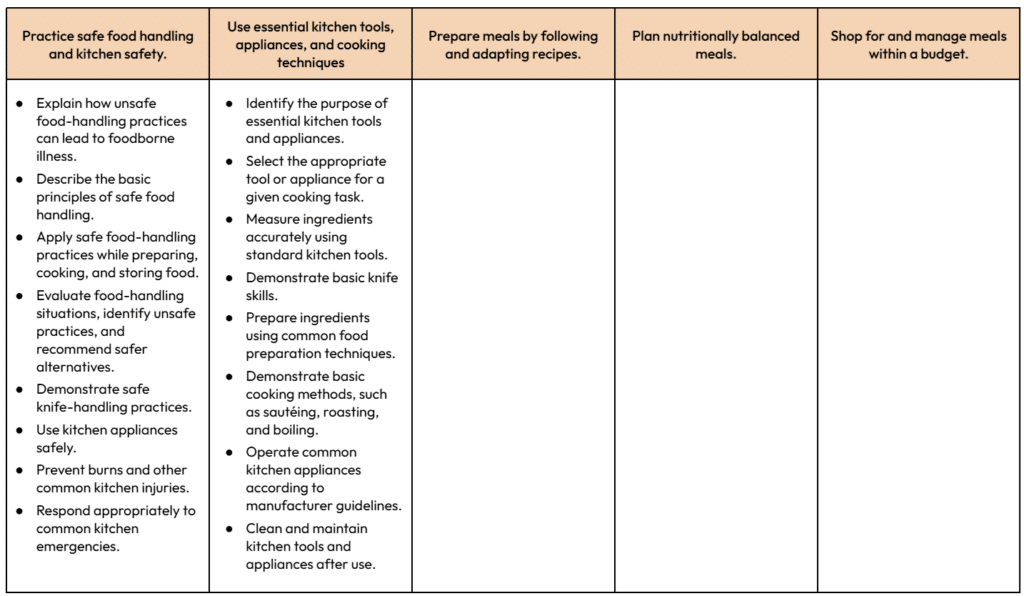
For instance, in a technical subject like food science or culinary arts, the curriculum must balance theoretical knowledge—such as sanitation protocols and nutrition—with practical application. Without a unit-based structure, these elements often remain fragmented. By grouping these topics into thematic units, educators can create a logical flow that builds student confidence through incremental mastery.
Implications for Teacher Efficacy and Student Outcomes
The shift toward standardized unit design carries significant implications for professional development. Education experts note that for pre-service teachers, mastering these design principles is essential for long-term retention in the profession. The cognitive load associated with daily planning is substantially reduced when a teacher has a comprehensive unit roadmap.
Experienced educators, conversely, utilize these frameworks to refresh their practice. Even veteran teachers find that re-evaluating their units against current standards can reveal gaps in instruction that have emerged over time. The "Mastering the Lesson Plan" initiative and similar professional development frameworks emphasize that this is not merely a task for beginners; it is a continuous improvement cycle for all practitioners.
Addressing the "Teaching to the Test" Critique
A common criticism of the Backward Design method is the perception that it encourages "teaching to the test." However, pedagogical experts distinguish between "teaching to an arbitrary, high-stakes exam" and "teaching to a well-designed, curriculum-aligned assessment."

When an educator designs an assessment that accurately reflects the depth and breadth of the intended learning goals, "teaching to that test" becomes synonymous with effective instruction. It ensures that students are not being asked to navigate a curriculum that drifts away from its core objectives. By aligning the daily activities with the summative assessment, the educator removes the "hidden curriculum" that often confuses students, providing a transparent path to proficiency.
The Role of Formative and Diagnostic Assessment
While the summative assessment serves as the destination, the instructional journey is defined by the strategic use of formative and diagnostic measures. Diagnostic assessments, administered at the start of a unit, allow teachers to gauge the existing knowledge level of their students. This data is critical, as it informs the pace of instruction.
Formative assessments—those woven throughout the daily lessons—provide real-time feedback on student progress. These might include exit tickets, periodic check-ins, or interactive simulations. The integration of these tools into the unit plan is what distinguishes a robust, responsive curriculum from a rigid one. When a teacher sees through formative data that a specific objective is not being met, they can adjust the next day’s lesson to provide additional support, ensuring that no student is left behind before the summative assessment occurs.
Broader Educational Impacts
The movement toward structured unit planning is not occurring in a vacuum. As state departments of education place a higher premium on accountability and demonstrable student growth, the ability to articulate exactly how a lesson contributes to a standard has become a professional necessity.
Furthermore, the integration of digital tools has streamlined this process. Modern platforms allow for the collaborative creation of unit plans, enabling teachers within a department to share resources and ensure that students in different sections receive an equitable education. This collaboration is the next frontier of unit design; when professional learning communities (PLCs) work together on unit plans, the quality of instruction tends to rise, and the disparity in student outcomes across classrooms decreases.
Conclusion: A Foundation for Success
The design of an instructional unit is both an art and a science. It requires the instructor to balance the constraints of time and curriculum with the needs of diverse learners. By following a structured process—defining clear, measurable objectives, creating robust assessments, and sequencing instruction to bridge the gap between the two—educators can foster an environment where learning is both intentional and effective.
As the educational landscape continues to evolve, the ability to design high-quality, unit-based instruction will remain a vital skill. Whether for a short, three-day module on food safety or a comprehensive, semester-long study of complex scientific principles, the core principles of Backward Design remain the most reliable path toward achieving academic excellence. Educators who commit to this framework are not merely planning lessons; they are building a reliable, evidence-based structure that empowers students to reach their full potential.