


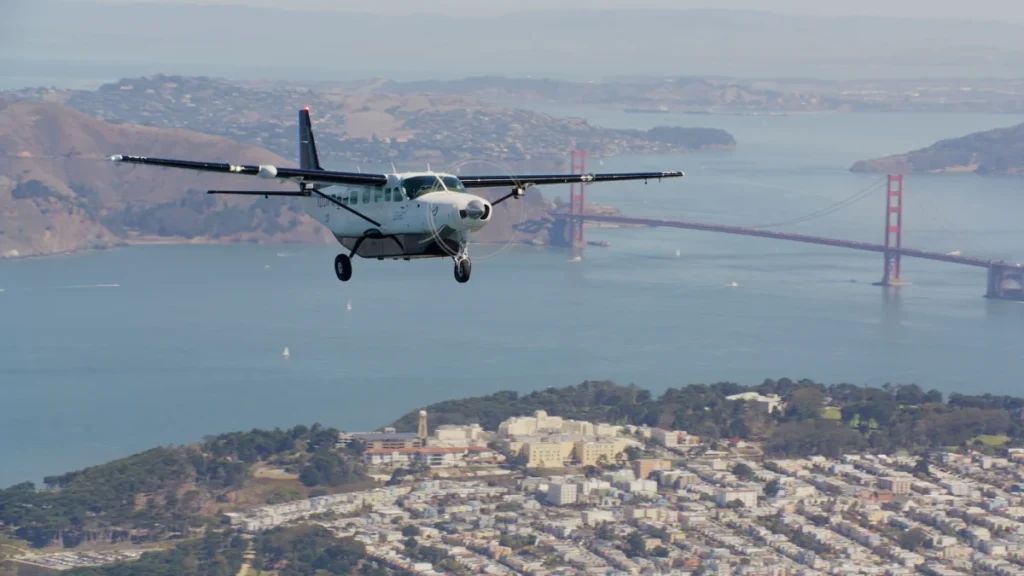
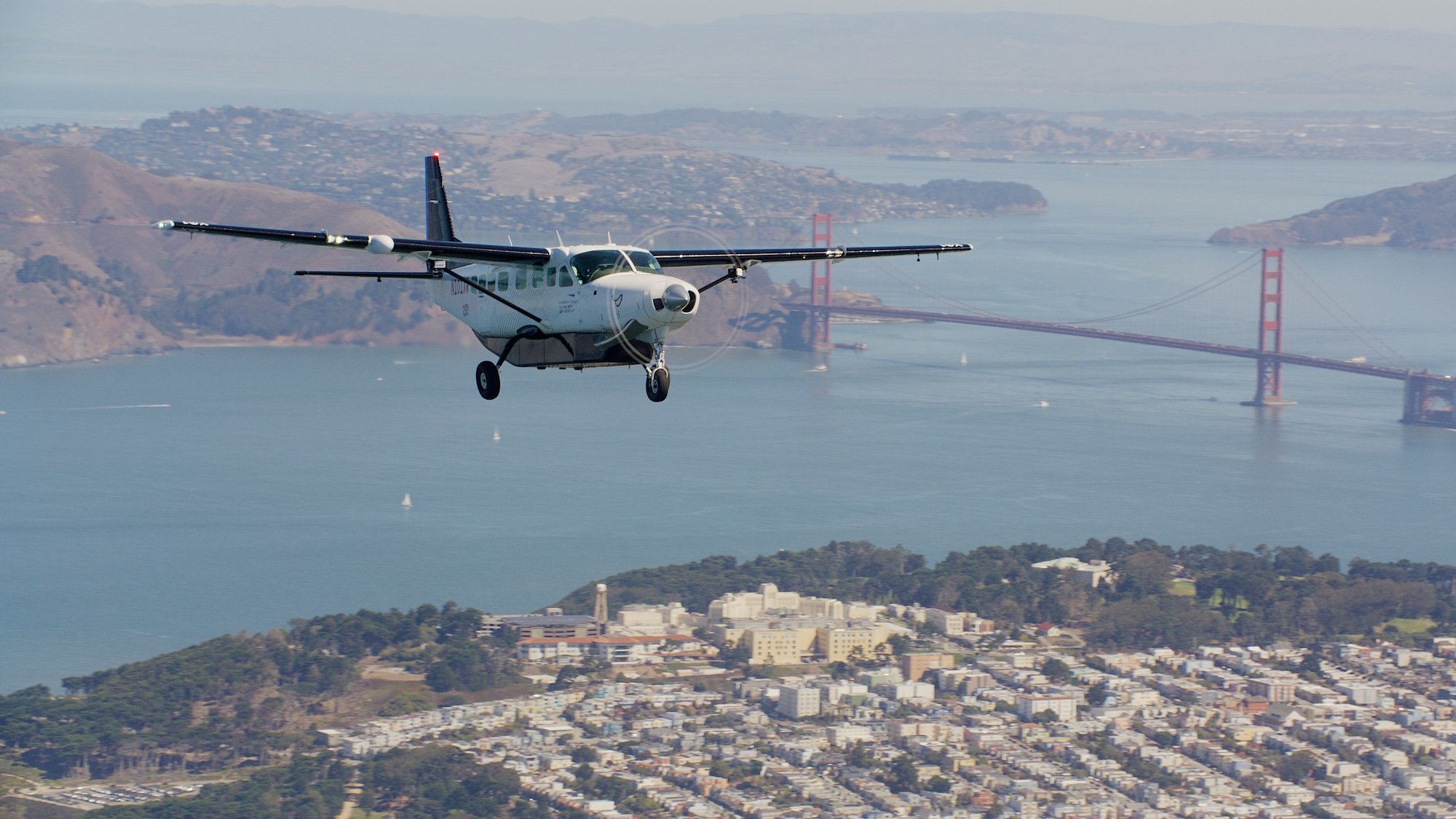
A single-engine propeller Cessna Caravan has officially etched its name into aviation history by completing the first fully autonomous cross-continental flight across the United States. Orchestrated and overseen by advanced aeronautics pioneer Joby Aviation, the experimental aircraft embarked on its unprecedented 3,199-mile journey from Concord, California, on September 7. Throughout the multi-stop expedition, the plane required zero manual intervention from the human safety pilot onboard, demonstrating that modern machine-learning navigation and flight software can execute complex commercial maneuvers independently from ignition to shutdown.
Rather than merely utilizing advanced autopilot systems while airborne—a common feature in contemporary commercial aviation—the retrofitted Cessna managed every isolated phase of flight autonomously. This comprehensive automation included ground taxiing, complex pre-takeoff checks, liftoffs, precision approaches, and terminal landings across various regional and municipal airports. Although a certified safety pilot remained stationed in the cockpit to comply with standard regulatory frameworks and monitor system integrity, the human operator’s role was entirely passive, as the onboard computing architecture executed the entire flight plan without assistance.
Chronology and Route Dynamics
The transcontinental mission was designed to test the limits of autonomous flight control systems under real-world, highly variable operational conditions. Departing Concord, California, on September 7, the aircraft was not permitted to follow a simplistic or isolated preset flight corridor. Instead, its autonomous navigation suite had to continuously compute routing decisions to address dynamic environmental challenges.
Among its most rigorous operational trials, the aircraft successfully self-piloted through the notoriously dense and heavily regulated airspace above Phoenix, Arizona, managing intricate air traffic control handoffs and standard terminal arrival procedures. Additionally, the software demonstrated adaptive routing capabilities by autonomously altering its course to detour around sudden thunderstorms and severe weather fronts spanning the American Southwest and Southern plains.
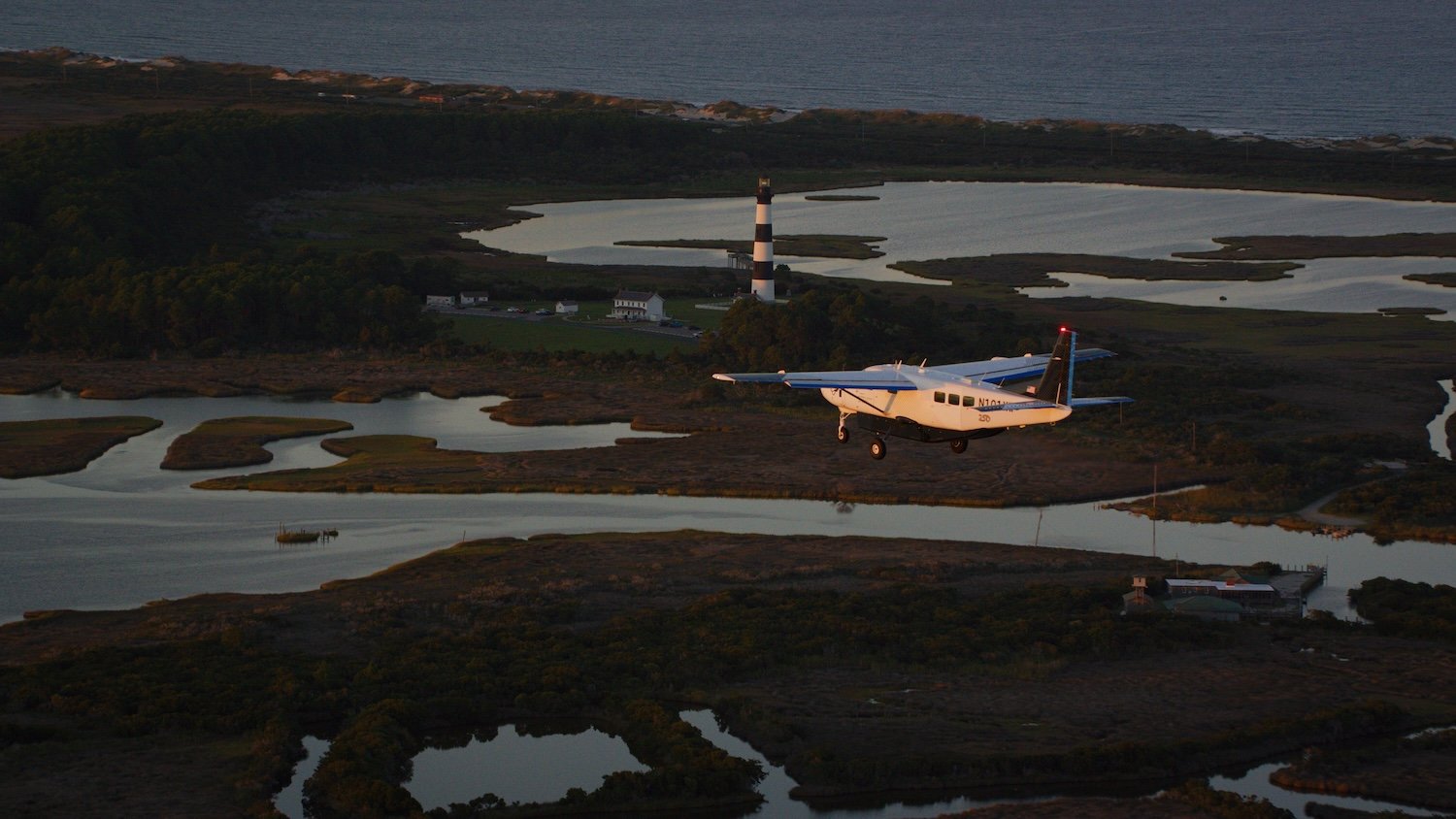
The journey included carefully coordinated demonstration stops at major aviation facilities, such as Alliance Airport in Fort Worth, Texas, and Shaw Air Force Base in South Carolina. The primary cross-country leg officially concluded on September 14. Following the cross-continental arrival, Joby Aviation directed the aircraft to execute a symbolic low-pass flight near the First Flight Monument in Kitty Hawk, North Carolina. This coastal landmark honors the historic 1903 aviation achievements of Orville and Wilbur Wright, bridging the gap between humanity’s first powered flight and the modern dawn of autonomous aerial navigation.
Following the completion of the eastern leg, Joby scheduled a comprehensive return journey to California. The westward return path incorporates additional technical demonstration stops at regional and municipal airports in Washington, D.C., Kentucky, Kansas, Oklahoma, Utah, and Oregon, allowing engineers to gather extensive telemetry data across diverse geographical topographies and weather patterns.
Technological Foundation and Industry Context
The realization of fully autonomous cross-country flight represents decades of incremental developments in aerospace engineering, sensor fusion, and artificial intelligence. While commercial aircraft routinely utilize autopilot technology to maintain altitude, heading, and glide slopes during commercial transport operations, total gate-to-gate autonomy—encompassing taxi, takeoff, cruise, and landing without human input—has largely remained confined to military drones and experimental testbeds.
The historical lineage of autonomous flight includes significant milestones. In 2010, a collaborative initiative between the Piasecki Aircraft Corporation and Carnegie Mellon University achieved the world’s first fully autonomous flight utilizing an unmanned helicopter, validating the feasibility of vertical flight automation. Over the subsequent decade, rapid advancements in LIDAR, radar, high-precision GPS, and redundant flight-control computers drastically accelerated the maturation of autonomous systems.
Joby Aviation, primarily recognized globally for its development of electric vertical takeoff and landing (eVTOL) aircraft intended for urban air mobility markets, views fixed-wing autonomy as a critical technological stepping stone. By retrofitting a conventional Cessna Caravan—a workhorse of regional aviation known for its utility and reliability—Joby has illustrated that its core autonomy software can be integrated into existing aerospace platforms rather than strictly proprietary aircraft designs.
Official Responses and Leadership Statements
The successful completion of the mission prompted broad industry commentary and formal executive statements highlighting the long-term utility of autonomous systems. Joby Aviation founder and CEO JoeBen Bevirt emphasized that the achievement marks a foundational shift in how society may utilize airspace in the coming decades.
"Autonomy has an important role to play in the future of flight," Bevirt stated following the public announcement of the mission’s completion. He elaborated on the societal and operational applications of the technology, noting that mature autonomous flight systems could soon be deployed to connect isolated or remote communities, facilitate the rapid delivery of critical medical supplies during emergencies, and mount faster responses to natural disasters.
Furthermore, defense analysts and industry observers have noted the profound utility of autonomous aviation in military logistics and tactical operations. By removing human pilots from high-risk environments, autonomous cargo and transport aircraft can sustain supply lines in contested or hazardous theaters without risking personnel, a sentiment echoed by Bevirt when he observed that the technology will ultimately help "keep pilots out of harm’s way."
Broader Implications and Economic Outlook
The successful demonstration flight carries profound regulatory, economic, and operational implications for the global aviation sector. As federal regulators, including the Federal Aviation Administration (FAA), continue to formulate certification frameworks for unmanned and autonomous aircraft systems, empirical data gathered from transcontinental test flights will serve as a vital benchmark for safety compliance.
Integrating autonomous aircraft into the National Airspace System (NAS) promises to fundamentally reshape regional logistics and cargo delivery models. Traditional regional freight carriers face persistent pilot shortages and escalating operational overhead costs. Automated and autonomous regional turboprop aircraft could dramatically lower the cost-per-mile of point-to-point cargo transit, enabling overnight or same-day delivery networks to expand into smaller municipalities that lack commercial airline service.
Moreover, the scalability of autonomous technology stands to revolutionize emergency management and humanitarian relief efforts. In the wake of hurricanes, earthquakes, or floods—events that frequently compromise local infrastructure and ground human-operated air support due to safety hazards—autonomous fixed-wing and VTOL aircraft could autonomously deliver food, water, and emergency medical equipment to affected populations with minimal delay.
As Joby Aviation prepares the Cessna Caravan for its intricate return flight across the United States, the aerospace industry watches closely. The transition from experimental trials to commercial integration will undoubtedly require rigorous regulatory scrutiny, public acceptance campaigns, and ongoing software refinement. However, by successfully navigating thousands of miles of complex American airspace without human intervention, the flight signals that the era of autonomous commercial aviation is transitioning from theoretical engineering to operational reality.