



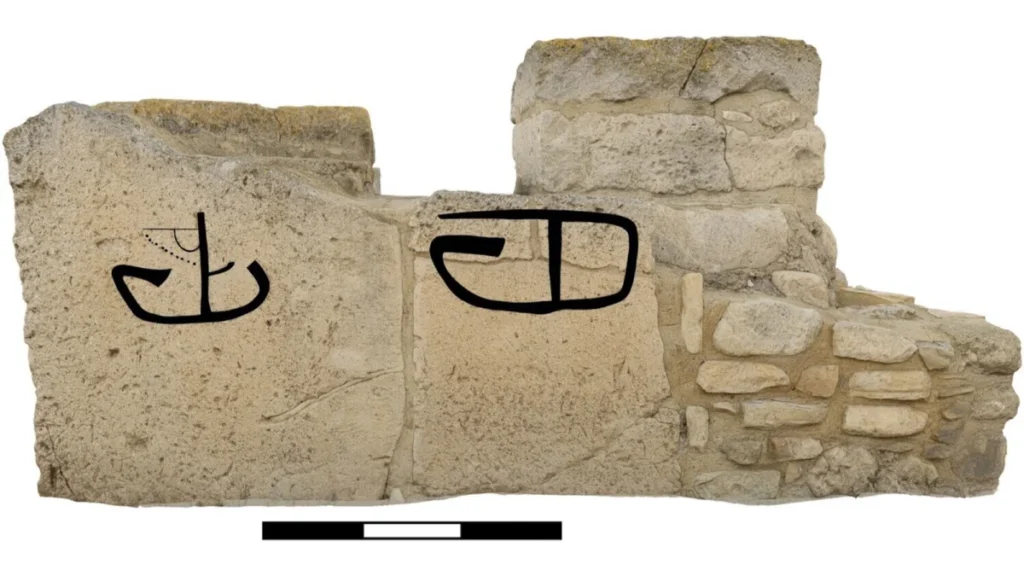
The utilization of advanced high-resolution laser technology has unveiled a hidden maritime gallery that had remained virtually invisible to the naked eye for over four decades inside the Kition Kathari temple complex in Cyprus. Published in the International Journal of Nautical Archaeology, a comprehensive new study details how researchers successfully scanned and reconstructed stonework to discover 23 previously undocumented vessel illustrations. Combined with earlier archaeological finds, the complex now boasts at least 40 distinct ship etchings. These intricate carvings, created over a span of 300 years, offer unprecedented insights into the maritime culture, trade networks, and societal continuity of the ancient eastern Mediterranean before and after the tumultuous Bronze Age collapse.
Historical Background and the Significance of Kition
Kition, a prominent city-kingdom situated on the southern coast of Cyprus, holds a vital place in the archaeological understanding of the ancient Mediterranean. Originally established by Phoenician settlers around the beginning of the 10th century BCE, the settlement grew into a thriving hub for metallurgy, commerce, and international exchange. Its strategic geographic location positioned it as a critical crossroads between the Aegean, the Levant, and the Near East.
Centuries after its Phoenician inception, the city was annexed by the Roman Republic in 58 BCE, marking a major administrative and cultural transition. Kition endured under Roman rule for nearly four hundred years, functioning as an active civic and religious center until a catastrophic series of earthquakes in 322 and 342 CE severely devastated the region, ultimately sealing the fate of the settlement beneath layers of rubble and sediment.
The Chronology of Discovery: From 1959 to 2024
The rediscovery of Kition’s ancient architecture began in earnest in 1959, when international archaeologists initiated large-scale excavations at a complex comprising five distinct stonework temples, designated as Kition Kathari. Over subsequent decades, researchers meticulously uncovered monumental ashlar masonry, altars, and sacred courtyards.
A major milestone occurred in the early 1980s, when archaeologists identified 21 ship engravings inscribed directly onto a temple wall and an adjacent altar. While these initial discoveries offered tantalizing clues regarding the religious or symbolic importance of seafaring to the temple builders, the exposed stonework quickly faced severe environmental pressures. Decades of exposure to air, moisture, and fluctuating temperatures accelerated the erosion of the delicate surface carvings, rendering many of the etchings nearly imperceptible to human observers.

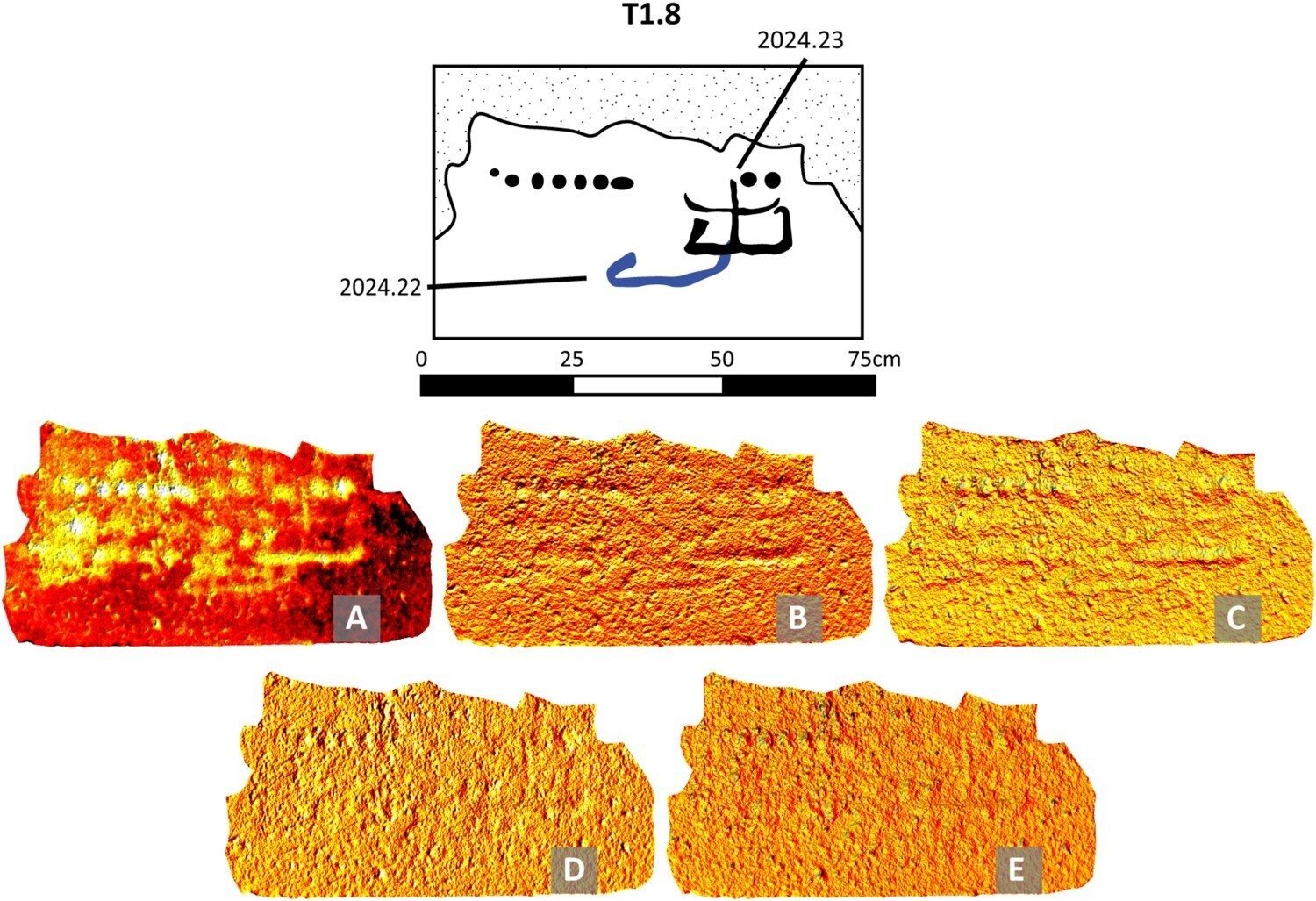
To assess the ongoing degradation and reevaluate the remaining Late Bronze Age masonry, a specialized research team returned to the Kition Kathari site in 2024. Rather than relying solely on traditional visual inspection and manual rubbings, the team deployed high-resolution 3D laser scanning systems. This non-invasive technology allowed scientists to capture millimeter-level surface topographies of the ancient stone blocks, transforming weathered and faded lines into sharply defined digital models.
Uncovering the Hidden Fleet
The implementation of laser scanning yielded results that far exceeded the research team’s initial expectations. While the primary objective was structural analysis of the masonry, the digital models revealed an abundance of hidden artistic details.
“When we noticed all the ships, I felt tremendously excited. We had not expected to find them,” stated Caroline Barnes, an archaeologist at the University of British Columbia and co-author of the study, in a statement to Phys.
Barnes and her colleagues ultimately tallied 23 newly discovered ship illustrations embedded within the stone surfaces. Crucially, contextual and stratigraphic analysis of the masonry demonstrated that the artwork was not produced during a single artistic campaign. Instead, the etchings accumulated across multiple generations. For instance, researchers identified a repair stone—a replacement block integrated into the temple wall approximately 150 years after the initial construction phase—that also featured a distinct boat carving. This technological and architectural evidence confirms that the practice of etching vessels into the sacred walls endured across centuries.
Typology and Regional Connections
A detailed examination of the collective 40-plus ship images allowed the research team to categorize the vessels into six distinct typologies. These designs closely mirror contemporary maritime architecture found throughout the eastern Mediterranean, displaying regional traits originating from the Levant, Minoan Crete, and specialized hybrid galleys potentially associated with the Carmel Coast of modern-day Israel.
The presence of diverse stylistic traditions highlights the cosmopolitan nature of Kition. As a major port city, its inhabitants were routinely exposed to foreign merchants, sailors, and shipbuilders. The temple walls essentially served as a physical canvas reflecting the complex network of cultural exchange that defined the Late Bronze Age and the early Iron Age.
Implications for the Late Bronze Age Collapse
The chronological span of the carvings—stretching across centuries both preceding and following the Bronze Age collapse—provides critical empirical data regarding a heavily debated period in human history. Traditionally, the end of the Late Bronze Age (circa 1200 BCE) was characterized by widespread societal upheaval, the destruction of major palace economies, and a cultural "dark age" marked by the fragmentation of literacy and long-distance trade.
However, the continuity of maritime imagery inscribed at Kition Kathari challenges simplistic narratives of total civilizational collapse. The ability of local communities to maintain architectural traditions, sacred spaces, and maritime knowledge across generations points to a high degree of cultural resilience.
“The conclusions presented here support the idea that there was a high degree of continuity that both persisted through and accompanied the important changes that occurred at the end of the Bronze Age,” the study’s authors noted in their published findings.
Rather than experiencing a complete erasure of knowledge, coastal populations in Cyprus and the broader eastern Mediterranean adapted to shifting geopolitical landscapes while preserving core elements of their maritime identity.
Future Directions in Archaeological Preservation
The successful deployment of high-resolution laser scanning at Kition Kathari establishes a new benchmark for non-destructive archaeological documentation. As environmental weathering continues to threaten vulnerable ancient monuments worldwide, digital preservation techniques offer a vital method for safeguarding cultural heritage.
Researchers plan to apply similar laser-imaging protocols to other excavated structures in the region to determine whether comparable hidden artwork exists elsewhere in Cyprus. By combining cutting-edge digital technology with rigorous stratigraphic analysis, modern archaeology continues to rescue lost chapters of antiquity from the shadows of time.