



The landscape of cyber threats has fundamentally shifted, with malicious actors increasingly abandoning traditional "breaking in" methods in favor of "logging in" using stolen legitimate credentials, according to the comprehensive 2026 Cloudflare Threat Report. This strategic pivot marks a critical evolution in cyber warfare, presenting unprecedented challenges for organizational security worldwide. The report underscores that the escalating sophistication of modern security defenses has made direct system penetration considerably more difficult and prone to detection, compelling attackers to seek stealthier and more efficient avenues of ingress.
The Evolution of Cyberattack Paradigms
For decades, the primary focus of cybersecurity revolved around fortifying the perimeter – building stronger firewalls, implementing intrusion detection systems, and patching vulnerabilities to prevent unauthorized access. Attackers, in turn, honed their skills in exploiting software flaws, network misconfigurations, and zero-day vulnerabilities to breach these defenses. However, the Cloudflare Threat Report highlights a significant maturation in enterprise security postures. Advanced persistent threat (APT) groups and financially motivated cybercriminals alike are now finding it increasingly challenging to bypass these hardened outer layers without triggering alarms. This evolving dynamic has rendered the direct assault less cost-effective and riskier for threat actors.
The report details that this strategic shift towards credential theft is driven by several compelling advantages for attackers. Firstly, leveraging legitimate login details allows them to bypass many initial security checks, effectively appearing as authorized users. This "trojan horse" approach makes their entry quicker, significantly stealthier, and notoriously harder to detect by traditional security measures designed to spot anomalies at the network edge. Once inside, with valid credentials, attackers can navigate internal systems with alarming ease, conducting reconnaissance, escalating privileges, exfiltrating data, or deploying ransomware without raising immediate suspicion. The primary identity systems vulnerable to this method include usernames, passwords, authentication tokens, and access privileges, which collectively form the keys to an organization’s digital kingdom.
Statistical Insights and Alarming Trends
The Cloudflare analysis provides stark statistics that paint a concerning picture of the current threat environment. A significant 4% of all login attempts observed are attributed to automated bots relentlessly testing stolen or guessed credentials. These "credential stuffing" attacks leverage vast databases of usernames and passwords harvested from previous data breaches, attempting to find matches against corporate accounts. This automated assault represents a constant, low-level but high-volume threat that can eventually succeed against accounts with weak or reused passwords.
Perhaps even more alarming is the revelation that an overwhelming 54% of all ransomware attacks now originate from initial access gained through credential-stealing malware. This data point underscores the critical role of identity compromise as a gateway to some of the most destructive cyber incidents. Ransomware operators, once gaining access via stolen credentials, can then move laterally within a network, identify critical systems, disable backups, and encrypt data, demanding exorbitant ransoms. The report also highlights a troubling user behavior pattern: close to 50% of human logins utilize credentials that have already been exposed in prior data breaches. This widespread reuse of compromised credentials provides attackers with a fertile ground for credential stuffing and targeted attacks, dramatically increasing the success rate of their endeavors.

Underlying Factors Fueling the Credential Theft Epidemic
The Cloudflare Threat Report identifies several fundamental changes in how organizations manage their IT environments as primary catalysts for the prevalence of credential-stealing attacks. These shifts have inadvertently created a breeding ground for sophisticated, targeted assaults:
-
Digital Transformation and Cloud Adoption: The pervasive migration of business applications and data from on-premise servers to cloud-based services (Software-as-a-Service, Platform-as-a-Service, Infrastructure-as-a-Service) has fundamentally reshaped the enterprise perimeter. Data and applications are no longer confined within a traditional network boundary but are distributed across numerous cloud environments. Each cloud service, each API endpoint, and each third-party integration represents a new login point and a potential vulnerability if not secured robustly. This decentralization has made identity the new control plane, rendering perimeter-centric security models increasingly obsolete.
-
Proliferation of SaaS Applications: Modern businesses rely on an ever-growing array of SaaS applications for everything from communication (Slack, Microsoft Teams) to customer relationship management (Salesforce) and project management (Jira). Each of these applications requires user authentication, creating a multitude of digital identities and credentials. Managing these identities across disparate platforms becomes a complex task, often leading to inconsistent security policies, weak password practices, and a wider attack surface for credential theft.
-
Remote and Hybrid Work Models: The global pivot to remote and hybrid work environments, significantly accelerated by recent global events, has further eroded the traditional network perimeter. Employees access corporate resources from diverse locations, using a mix of corporate and personal devices, often over less secure home networks. This shift necessitates robust remote access solutions, but also introduces new risks related to endpoint security, unmanaged devices, and the increased likelihood of social engineering attacks targeting employees outside the protected corporate environment. The reliance on VPNs, VDI, or zero-trust network access (ZTNA) solutions places immense pressure on identity verification at every step.
-
Supply Chain Dependencies: Organizations increasingly integrate with third-party vendors, suppliers, and partners, granting them access to their systems and data. A compromise of credentials belonging to one of these trusted third parties can provide attackers with a direct path into the target organization’s network. High-profile supply chain attacks have repeatedly demonstrated how a single weak link in the extended enterprise can lead to widespread breaches, with stolen credentials often being the initial vector.
-
Inadequate Identity and Access Management (IAM) Practices: Despite the growing importance of identity, many organizations still struggle with implementing mature IAM strategies. This can include a lack of multi-factor authentication (MFA) enforcement, insufficient privileged access management (PAM), poor password hygiene policies, and a failure to regularly review and revoke access privileges for former employees or contractors. These shortcomings create persistent vulnerabilities that attackers are quick to exploit.

These interconnected changes have collectively provided a fertile breeding ground for a sophisticated web of targeted attacks. Once obtained, these valuable troves of usernames and passwords are often aggregated, refined, and then sold or traded on illicit online marketplaces on the dark web. This robust underground economy ensures a continuous supply of fresh credentials, allowing attackers to leverage stolen data to breach IT systems in a full-circle exploitation cycle.
AI as an Accelerator for Attacker Capabilities
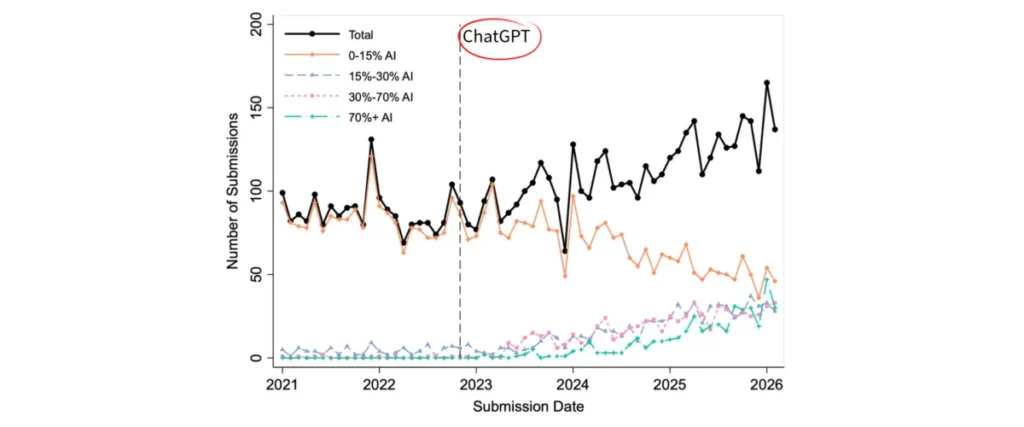
Beyond the fundamental shift towards credential theft, the Cloudflare Threat Report also critically examines the burgeoning role of generative Artificial Intelligence (AI) in bolstering attackers’ arsenals. AI is rapidly becoming a force multiplier for malicious actors, democratizing access to sophisticated attack tools and techniques:
-
Automated Reconnaissance: AI-powered tools can conduct automated reconnaissance at an unprecedented scale and speed. They can scan vast swaths of the internet for vulnerable systems, identify misconfigurations, map network topologies, and even pinpoint high-value targets within an organization by analyzing publicly available information and social media profiles. This dramatically reduces the time and effort required for initial intelligence gathering.
-
Enhanced Phishing and Social Engineering: Generative AI, particularly large language models (LLMs), has revolutionized the creation of highly convincing and personalized phishing messages. Attackers can leverage AI to craft emails, instant messages, and even deepfake communications that are virtually indistinguishable from legitimate correspondence. These AI-generated messages can be tailored to specific targets, mimic the writing style of colleagues or superiors, and overcome language barriers, significantly increasing the likelihood of successful social engineering and credential harvesting. Voice and video deepfakes are also emerging as powerful tools for business email compromise (BEC) and impersonation scams.
-
Code Generation and Vulnerability Exploitation: AI can assist in generating malicious code snippets, identifying potential vulnerabilities in codebases, and even suggesting exploitation techniques. While not yet fully autonomous in creating novel zero-day exploits, AI lowers the technical barrier for less skilled attackers to leverage existing exploits or adapt known attack methods.
The most concerning trend here, as highlighted by Cloudflare, is that AI gives attackers access to an arena of highly sophisticated tools without requiring commensurate technical expertise. This enables breaches at scale, allowing a wider range of threat actors to launch more potent and pervasive attacks, putting immense pressure on organizational defenses.

A Paradigm Shift in Cybersecurity Response
The report emphasizes that the traditional focus for IT security – keeping attackers out through perimeter defenses – is no longer sufficient. The new imperative is about identifying threats that have already gained access, appearing as legitimate employees or contractors, and operating within trusted applications like Slack, Google Workspace, or GitHub. This internal threat model necessitates a fundamental re-evaluation of security strategies.
Cloudflare recognizes that the cybersecurity response to this evolving threat landscape must also leverage advanced technologies, particularly autonomous defense systems. These systems are designed to utilize AI and automation to detect suspicious activity in real-time and respond instantly, mitigating threats before they can escalate. The report outlines several key areas where autonomous defense is critical:
-
Continuous Identity Verification: Beyond a one-time login, autonomous systems can continuously verify user identity throughout a session, ensuring that the person interacting with the system remains who they claim to be. This can involve behavioral analytics, device posture checks, and contextual authentication.
-
Behavioral Monitoring of Users and Devices: User and Entity Behavior Analytics (UEBA) powered by AI can establish baselines of "normal" behavior for each user and device. Any deviation from these baselines – such as logging in from an unusual location, accessing files outside of typical working hours, or attempting to connect to unauthorized internal systems – can trigger an immediate alert and automated response.
-
Automated Containment of Compromised Accounts: When suspicious activity indicative of a compromised account is detected, autonomous systems can instantly initiate containment measures. This might include automatically revoking access, forcing a password reset, isolating the affected user’s session, or even temporarily quarantining the device in question, thereby limiting the attacker’s ability to move laterally or cause further damage.
The report’s authors underscore the urgency: "Organizations must shift to automated, edge-based mitigation that can respond in seconds. Legacy scrubbing center models are no longer sufficient for attacks that peak and conclude within 10 minutes." This statement highlights the critical need for real-time automation over manual response, especially given the speed and sophistication with which modern attacks can unfold. Traditional security operations centers (SOCs) relying on human analysts to sift through alerts may be too slow to react to these rapid-fire credential-based intrusions. Edge-based mitigation, where security decisions are made closer to the source of the traffic, offers the speed and agility required to counter these fleeting but devastating attacks.
Broader Implications and the Path Forward
The implications of this shift are far-reaching. For businesses, the focus on identity-centric attacks means that strong Identity and Access Management (IAM) and Privileged Access Management (PAM) are no longer optional but foundational security pillars. Multi-factor authentication (MFA) must be universally enforced, and organizations must consider advanced forms of MFA that are resistant to phishing and MFA bypass techniques. Regular security awareness training for employees, emphasizing the dangers of social engineering and credential theft, becomes paramount.
From a regulatory standpoint, the increased risk of data breaches stemming from credential compromise will likely lead to stricter compliance requirements regarding identity protection, incident response times, and data breach notification. Cybersecurity insurance providers are also adapting, with stricter underwriting requirements for organizations that fail to implement robust identity security controls.
The Cloudflare Threat Report serves as a critical wake-up call, emphasizing that attackers are always on the lookout for new and innovative ways to compromise IT systems. This current wave of stealing credentials and entering systems under the auspices of legitimate users demands a proactive, automated, and adaptive defense strategy. The future of cybersecurity lies in leveraging AI and automation not just to detect, but to predict, prevent, and instantly respond to threats, ensuring that an organization’s digital identity remains its strongest defense, not its weakest link.
For a comprehensive understanding of these evolving threats and recommended mitigation strategies, the full 2026 Cloudflare Threat Report is available for review on the Cloudflare blog. The findings compel organizations to re-evaluate their security postures, invest in advanced identity and access management solutions, and embrace autonomous defense technologies to safeguard against the sophisticated, identity-focused attacks of today and tomorrow.