




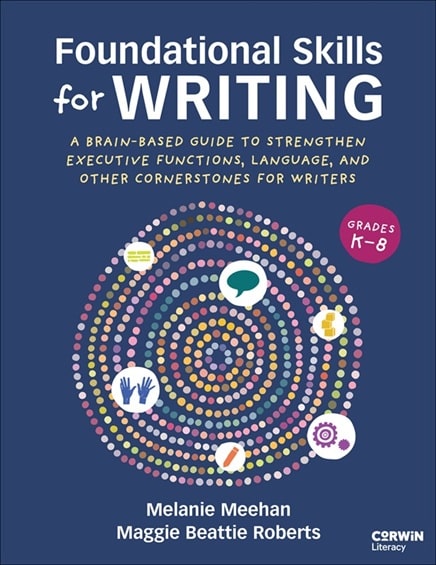
Literacy instruction has undergone a period of intense scrutiny and transformation over the past decade, yet the prevailing discourse—often termed the "Science of Reading"—has disproportionately focused on decoding and phonics, frequently sidelining the mechanical and cognitive complexities of writing. While educators and policymakers debate the merits of various reading curricula, writing instruction remains an under-resourced and often overlooked pillar of academic development. Addressing this systemic gap, literacy experts Melanie Meehan and Maggie Roberts have released a new pedagogical framework, Foundational Skills for Writing: A Brain-Based Guide to Strengthen Executive Functions, Language, and Other Cornerstones for Writers, which posits that writing proficiency is inextricably linked to neurological development and executive function.

The release of this text comes at a critical juncture in American education. According to the most recent National Assessment of Educational Progress (NAEP), fewer than one-third of eighth- and 12th-grade students perform at or above the "proficient" level in writing. This persistent stagnation in writing achievement suggests that current instructional models may be failing to bridge the gap between early literacy and complex, written expression. Meehan, a former curriculum coordinator, and Roberts, a veteran middle school educator and literacy consultant, argue that students struggle not because of a lack of creativity, but because they have not fully automatized the foundational skills required to offload the cognitive burden of transcription and organization.
The Neurological Architecture of Composition
The core thesis of the authors’ work is that writing is a high-level cognitive task that requires the simultaneous integration of transcription skills, oral language proficiency, and executive function. When a student lacks automaticity in basic mechanics—such as handwriting, keyboarding, or spelling—the brain’s working memory is overwhelmed. This cognitive bottleneck prevents students from focusing on higher-order tasks, such as argumentation, narrative structure, and thematic depth.
The authors categorize these essential precursors into three distinct domains:
- Transcription Skills: This includes the physical and technical aspects of writing, such as fine motor control, handwriting, and orthographic mapping.
- Oral Language: The ability to construct sentences and articulate ideas verbally, which serves as the primary scaffold for written syntax.
- Executive Functioning: The cognitive processes involving working memory, cognitive flexibility, and inhibitory control that allow a writer to plan, monitor, and revise their work in real-time.
By breaking these complex processes into manageable, "brain-based" segments, Meehan and Roberts suggest that educators can systematically build the neurological pathways necessary for long-term writing success.

Implementation: The Minute Moves Strategy
To translate these complex cognitive theories into classroom practice, the authors propose a series of interventions they characterize as "Minute Moves." These are brief, low-stakes activities designed to be integrated into daily transitions, morning meetings, or subject-area warm-ups. The efficacy of these moves lies in their ability to foster "deliberate practice"—a method of training that emphasizes repetition and immediate feedback to improve performance.
Orthographic and Linguistic Development
The authors introduce three specific strategies for spelling and word structure:

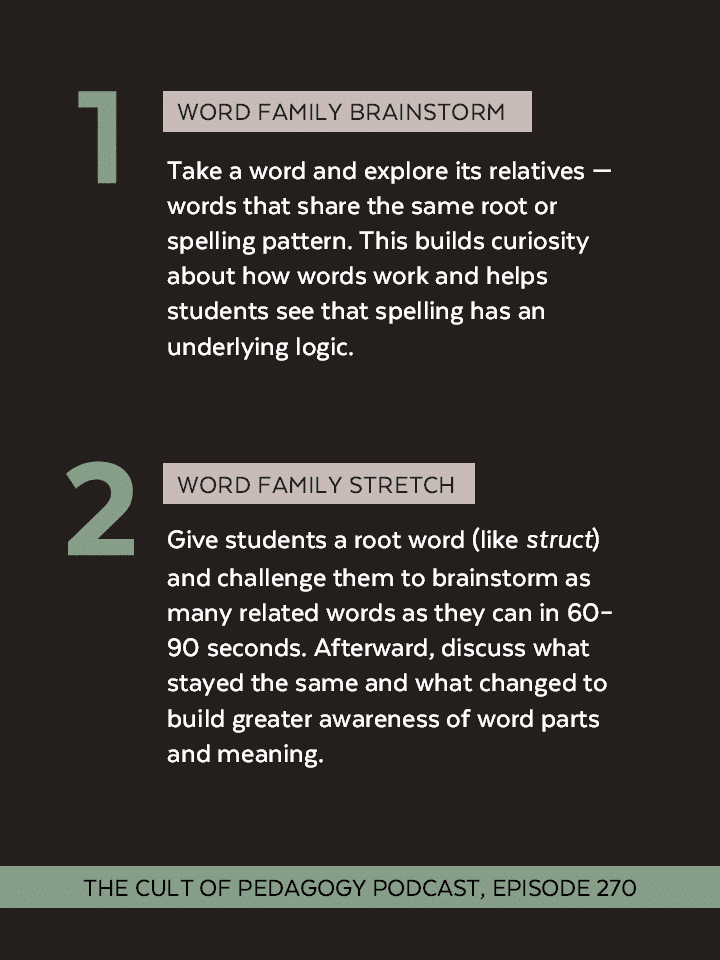
- Word Family Brainstorming: Moving beyond traditional rote memorization, this method encourages students to analyze the etymological relationships between words. By connecting seemingly disparate words—such as scissors, incision, and decision—through their shared Latin roots, students develop a conceptual understanding of spelling patterns that aids in long-term retention.
- Word Family Stretching: This activity requires students to analyze how prefixes and suffixes alter the meaning and function of root words. By distinguishing between "bound" roots (which require affixes) and "free" roots, students gain a deeper understanding of morphological structure.
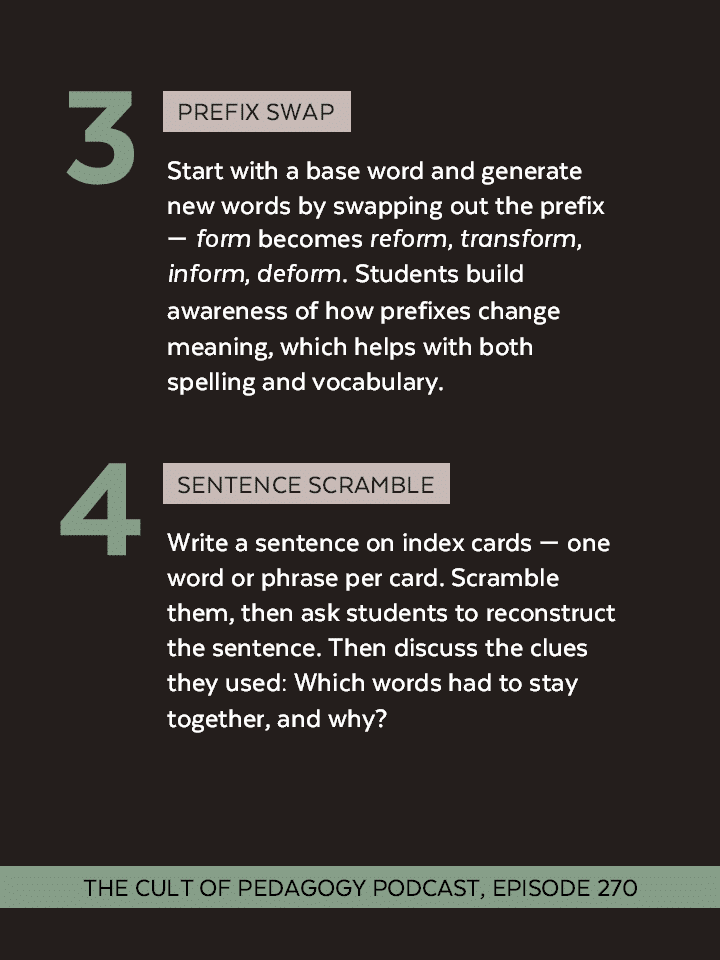
- Prefix Swapping: This strategy focuses on the transformative power of prefixes, allowing multilingual learners, in particular, to leverage their existing linguistic knowledge. Recognizing cognates and structural markers across languages provides a significant advantage in vocabulary acquisition and spelling.
Syntactic Mastery
To address the common challenge of writing "choppy" or underdeveloped sentences, the authors advocate for scaffolded construction techniques:
- Sentence Scrambling: By manipulating physical or digital words to rebuild sentences, students analyze the logic of syntax. This hands-on approach forces students to consider the relationship between subject, predicate, and modifier, fostering an internal sense of sentence structure.
- Sentence Expansion: Starting with "kernel" sentences—simple "doer/doing" structures—students systematically add detail through guided inquiry. This process teaches students how to manage complexity without losing the clarity of the core message.
- Sentence Combining: Research has consistently shown that sentence combining is one of the most effective ways to improve syntactic maturity. By merging two or more simple sentences into a complex structure, students practice the use of conjunctions and subordinating clauses in a controlled, low-pressure environment.
Executive Function and Cognitive Flexibility
Perhaps the most innovative aspect of the work is the explicit focus on cognitive flexibility. The authors argue that writing is, at its heart, an exercise in revision and perspective-taking.
The "What’s Another Way?" strategy encourages students to view their sentences as flexible entities rather than fixed statements. By experimenting with word order, pronoun substitution, and sentence length, students learn to curate their writing to match their intended impact. This practice demystifies the writing process and empowers students who may previously have viewed writing as a rigid, prescriptive task.
Furthermore, the "New Angle" strategy asks students to rewrite narratives from different character perspectives. This exercise requires students to hold multiple viewpoints in their working memory, a key executive function. Beyond the classroom, this practice develops empathy and critical thinking, as students learn to analyze the biases and motivations inherent in different points of view.
Broader Implications and Institutional Impact
The release of this guide arrives as educational institutions are re-evaluating the "Whole Language" versus "Phonics" debate. Many scholars argue that the next phase of the literacy movement must be a move toward "comprehensive literacy," which includes robust, evidence-based writing instruction.
Educational psychologists have long noted that writing is a "wicked" problem—it is a task that is simultaneously social, cognitive, and technical. By providing a framework that treats writing as a learnable, brain-based skill rather than an innate talent, Meehan and Roberts are providing a toolset that can be used across the curriculum, not just in English Language Arts classrooms.
The implications for school districts are significant. If, as the authors suggest, these brief, high-impact activities can reduce the cognitive load on students, then the time currently spent on repetitive, ineffective drilling could be redirected toward authentic, creative composition. Furthermore, the focus on executive functioning addresses the needs of neurodivergent students, for whom traditional, unstructured writing assignments can be particularly overwhelming.
Conclusion
Foundational Skills for Writing represents a shift in how educators might approach the "writing gap." By synthesizing current research on the brain’s role in composition with practical, time-efficient classroom strategies, the authors provide a clear roadmap for improving student outcomes. As the educational landscape continues to prioritize data-driven instruction, the focus on building the foundational architecture of the brain—one "minute move" at a time—offers a compelling, evidence-based path forward for teachers and students alike. The challenge for districts moving forward will be to integrate these methods into a cohesive, K-12 strategy that ensures writing receives the same rigorous attention as reading, ultimately fostering a generation of students who are not only literate but articulate and cognitively flexible communicators.