


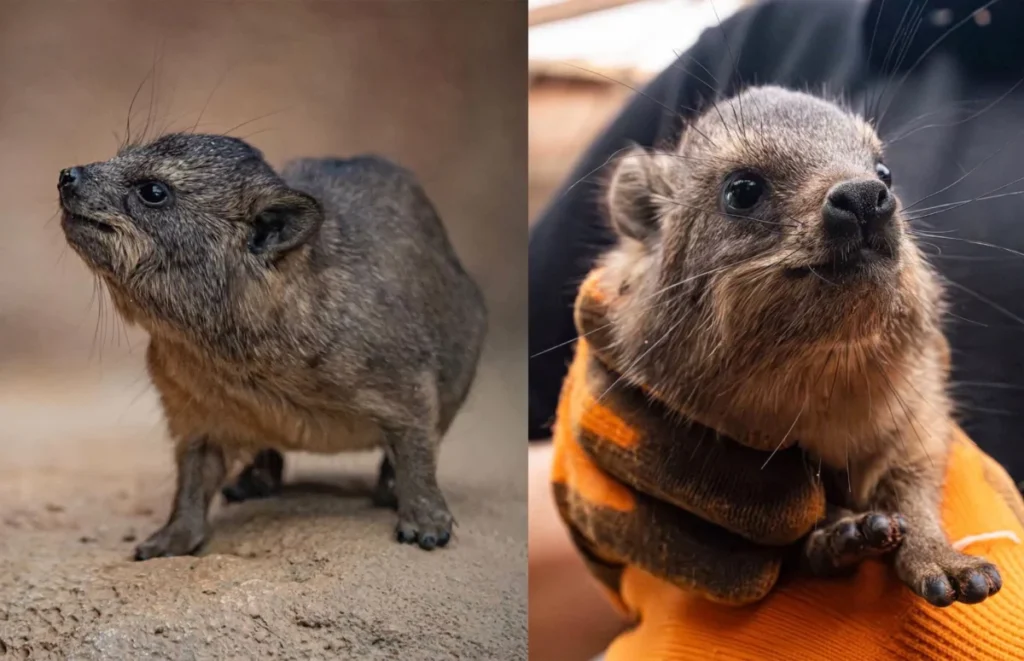
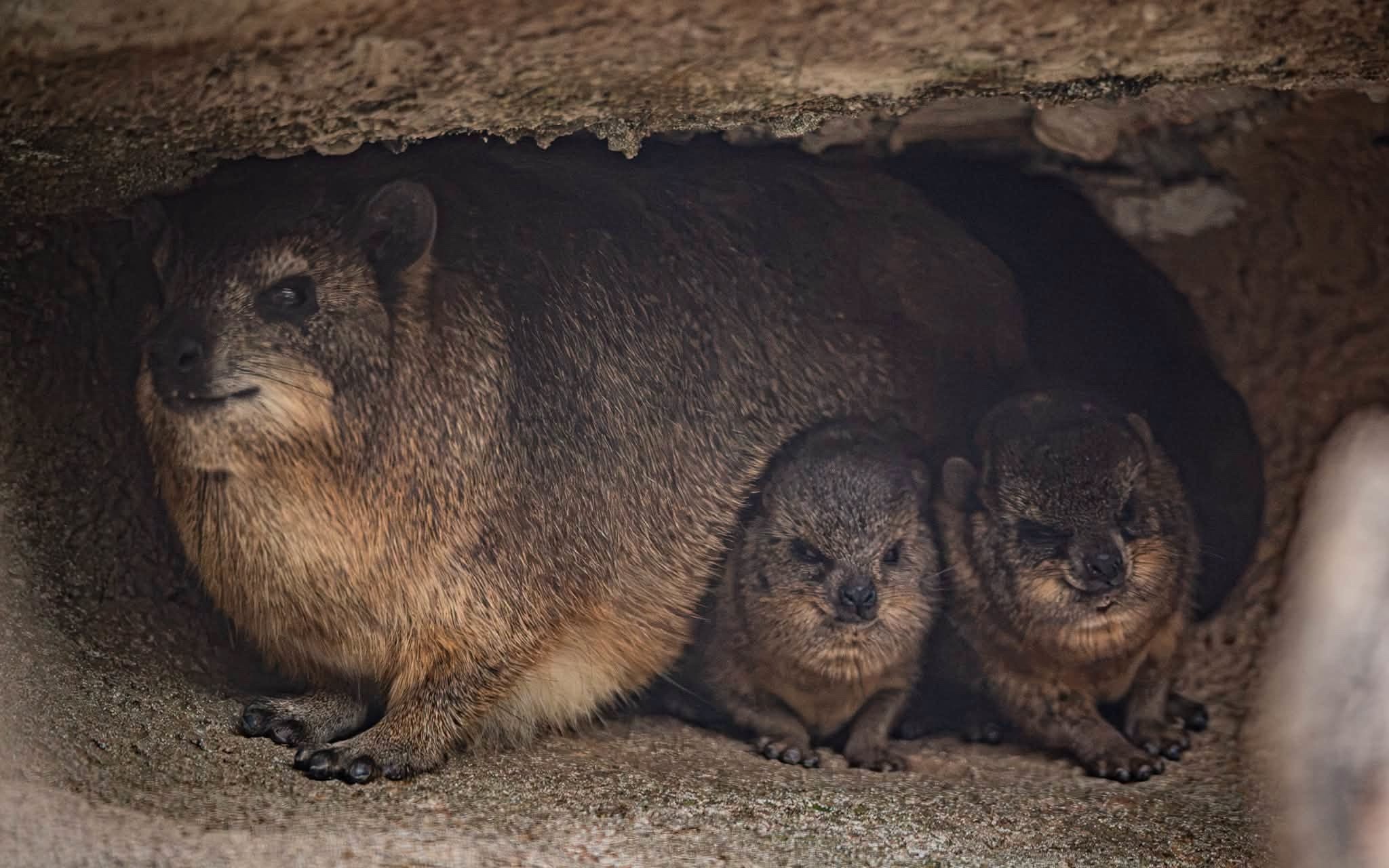
England’s Chester Zoo has announced the birth of three rock hyrax pups (Procavia capensis), adding a trio of energetic, potato-shaped mammals to its established colony. Born late this summer to parent hyraxes Maris and Albert, the newborns—affectionately nicknamed Russ, Spud, and Jackie—have quickly captured public attention following their successful initial veterinary examinations. Weighing roughly 12.3 ounces each at birth, the tiny mammals represent a significant and healthy addition to the zoo’s conservation and educational populations.
While their physical appearance—characterized by compact, rounded bodies and camouflage fur—closely resembles that of rodents or small rabbits, the rock hyrax possesses a surprisingly grand evolutionary lineage. Genetic and anatomical analyses place these sub-Saharan and Middle Eastern natives in the taxonomic order Hyracoidea, which shares a common evolutionary ancestor with modern elephants and sirenians, an aquatic order encompassing manatees and dugongs. This counter-intuitive lineage makes the species a frequent subject of study and public fascination regarding convergent evolution and morphological divergence.
Chronology of the Birth and Early Development
The timeline of the pups’ early life began in the late summer months with their birth at the Cheshire-based zoological institution. Following a gestation period that typically spans between six and seven months—unusually long for animals of their diminutive stature—Maris gave birth to the trio in a secure, rock-simulated enclosure designed to replicate their natural African and Middle Eastern habitats.
During their first weeks of life, the pups remained largely under the protective care of their mother, nursing and adapting to the temperature and terrain of the exhibit. As their motor skills developed, the animals graduated to more active exploration of their surroundings. Recently, the trio underwent their comprehensive inaugural veterinary check, a standard procedure for zoo-born mammals to assess overall health, record biometric data, and verify proper developmental milestones. Veterinarians confirmed that Russ, Spud, and Jackie are thriving, exhibiting robust health and vibrant behavioral patterns that signal optimal physical condition.
Anatomical Clues to an Elephantine Ancestry
The connection between rock hyraxes and Earth’s largest land mammals is not immediately obvious to the casual observer. An adult rock hyrax typically reaches a modest weight of no more than 8.8 pounds and measures roughly 12 to 20 inches in length. They lack trunks, towering heights, and expansive ears. However, closer anatomical inspection reveals distinct evolutionary markers tying them directly to Proboscidea (elephants) and Sirenia.
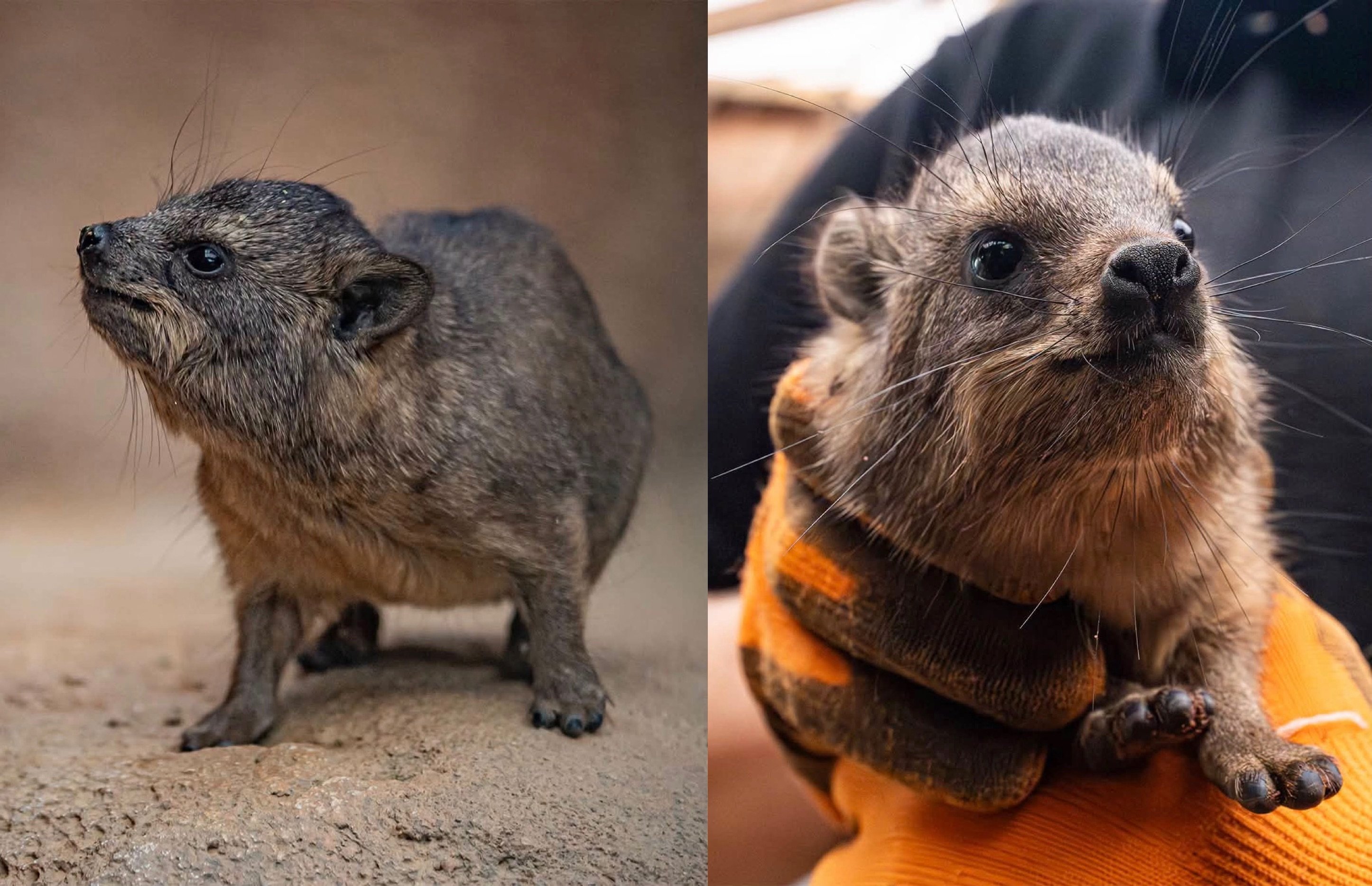
According to Chester Zoo keeper Megan Carpenter, these clues are embedded in the animal’s skeletal and dental structure. The rock hyrax features elongated upper incisor teeth that grow continuously throughout their lives, functioning similarly to miniature elephant tusks. Furthermore, examination of their paws reveals flattened, hoof-like nails rather than the sharp claws typical of standard terrestrial rodents or badgers. Their footpads are also equipped with specialized, sweat-producing glands that create a suction effect, enhancing their grip on vertical precipices and smooth rock faces.
In the wild, these adaptations allow adults to wedge themselves securely into narrow clefts and navigate sheer cliffs with remarkable agility, evading avian and mammalian predators such as leopards, eagles, and large snakes.
Official Responses and Zookeeping Observations
Zoo staff have noted that the arrival of the three pups provides a unique educational platform for visitors. Lyndon Howson, assistant team manager in visitor engagement at Chester Zoo, emphasized the conceptual value of the births in illustrating the complexities of natural history.
"It’s incredible to think these little animals are so closely related to elephants and manatees. They’re a brilliant example of how misleading appearances can be when it comes to evolution," Howson stated. "That’s what makes species like hyraxes so interesting—they challenge what we think we know about the natural world and show just how surprising animal evolution can be."
Behaviorally, the trio has earned the descriptive moniker of "little chaos potatoes" from animal care specialists. Observers note that the pups display significantly higher levels of activity and erratic movement than their adult counterparts. Video footage released by the zoo documents the young hyraxes engaging in rapid bursts of locomotion, colloquially referred to as the "zoomies," featuring abrupt directional changes and intermittent aerial leaps that highlight their burgeoning coordination and high metabolic energy.
Broader Ecological Context and Conservation Significance
Rock hyraxes are native to a diverse array of environments across sub-Saharan Africa, parts of North Africa, and the Middle East, ranging from arid semi-deserts to dense rainforests and high-altitude mountainous terrain up to 14,000 feet. Living in complex social structures known as colonies or "harem groups"—which can consist of up to fifty individuals dominated by a single territorial male—they play a specific ecological role within their native habitats. As herbivores, they feed on grasses, forbs, and shrubs, acting as both consumers of vegetation and a vital prey base for regional carnivores.
While the rock hyrax population as a whole is currently categorized by the International Union for Conservation of Nature (IUCN) as a species of Least Concern due to its wide distribution and adaptability, localized populations face pressures from habitat fragmentation and agricultural expansion. Zoos accredited by organizations such as the British and Irish Association of Zoos and Aquariums (BIAZA) maintain carefully managed populations to ensure genetic diversity and to serve as ambassadors for their wild counterparts.
The birth of Russ, Spud, and Jackie at Chester Zoo contributes to the institution’s ongoing mission to foster public connection with lesser-known species. By highlighting the hidden evolutionary connections between an 8-pound rock-dwelling mammal and a multi-ton savannah elephant, the zoo aims to broaden public understanding of biodiversity, taxonomy, and the intricate pathways of mammalian evolution. As the three pups continue to grow and integrate fully into the active colony, they remain accessible to the public both on-site in Cheshire and through the institution’s digital media channels, where their energetic development is regularly documented for a global audience.