





Starting with the incoming class of 2026, students at McGill, Concordia, and Bishop’s University will face a new academic requirement: proving their proficiency in French before they can graduate. This policy stems from a landmark agreement finalized in June between the provincial government and these three institutions, marking a significant shift in the operational landscape for Quebec’s English-language higher education sector. By the 2029-30 academic year, the first cohort impacted by these rules will be evaluated against standardized language benchmarks, signaling the government’s intent to weave linguistic integration into the fabric of the university experience.
The Legislative Context and Strategic Objectives
The move is part of a broader push by the Coalition Avenir Québec (CAQ) government to preserve and promote the French language in Montreal and across the province. In recent years, the government has expressed concern regarding the perceived erosion of French in the public square, particularly within the university system, which attracts thousands of international and out-of-province students. By mandating that 60 percent of undergraduate students reach a level four proficiency on the Quebec Scale of French Proficiency Levels—equivalent to an A2 rating under the Common European Framework of Reference for Languages (CEFR)—the province aims to ensure that graduates possess at least a functional command of the language, sufficient for basic social and professional interactions.
The implementation follows months of tense negotiations between the universities and the Ministry of Higher Education. While the institutions have historically operated with significant autonomy, the new funding structure links financial stability to linguistic outcomes. Under the terms of the agreement, the provincial government will inject $20 million annually over eight years to support language programming. However, this support comes with strict accountability mechanisms. McGill and Concordia face a potential penalty of $1,500 for every student who falls short of the 60 percent threshold, creating a high-stakes environment for academic administrators tasked with scaling up language training. Bishop’s University, citing its unique status as a small, regional English-language institution in the Eastern Townships, has been granted an exemption from these financial penalties.
A Chronology of the Policy Shift
The road to these requirements has been marked by a series of legislative and administrative maneuvers:
- 2023: The provincial government announces significant changes to the tuition structure for out-of-province students, sparking outcry from universities that rely on these revenue streams.
- Early 2024: Discussions commence between the Ministry of Higher Education and the three English-language universities regarding the preservation of French.
- June 2024: An official agreement is signed, setting the framework for the 60 percent proficiency target and the corresponding $20 million investment in language support.
- Fall 2026: The first cohort of undergraduate students subject to these new requirements begins their academic journey.
- 2029-30: The inaugural group of students reaches their graduation year, where they will be formally assessed for French-language proficiency.
Institutional Readiness and Pedagogical Expansion
To meet these ambitious targets, the three universities have begun a rapid expansion of their language learning infrastructure. For many students, the prospect is viewed as an opportunity rather than a burden. Carys Grey, a McGill student originally from the United States, noted that the opportunity to gain fluency was a primary driver for her choice to attend university in Montreal. "I wanted to learn a new language, I didn’t want to be stuck in a U.S. bubble," she stated, echoing a sentiment shared by many international students who view bilingualism as a competitive edge in the global labor market.
Bishop’s University has been particularly proactive in integrating language learning into the social life of the campus. Their Oui Experience initiative moves beyond the traditional classroom setting, offering weekly sing-alongs featuring Québécois artists, art workshops, and cultural outings. This holistic approach aims to demystify the French language by immersing students in local culture. Similarly, Concordia University has launched Oui Can Help!, a program emphasizing peer-to-peer learning, one-on-one conversation practice, and drop-in tutoring sessions.
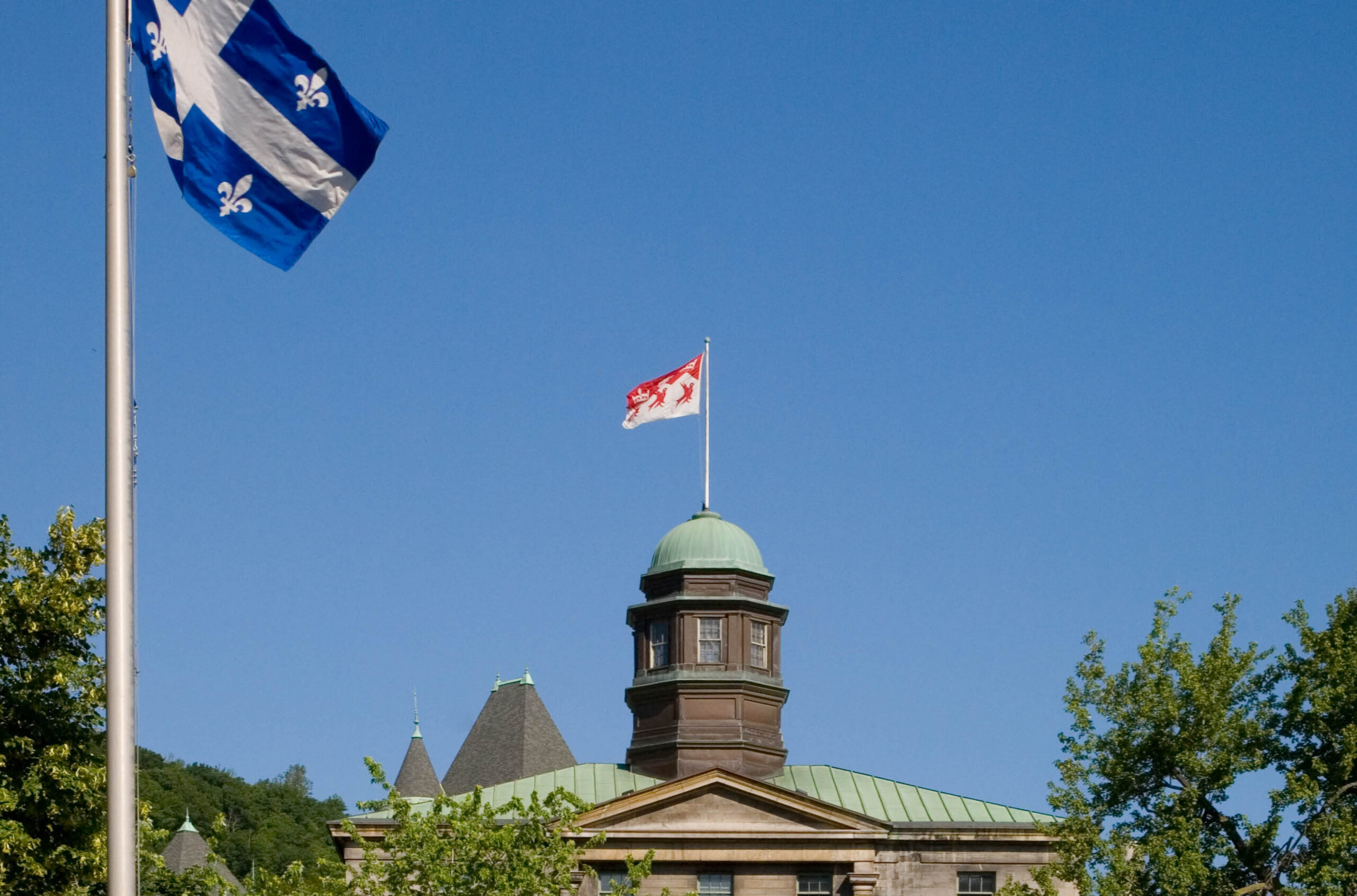
At McGill, the focus remains on both curricular and extra-curricular support. The university is set to pilot a French Course Award for the 2026-27 academic year, which will subsidize tuition for introductory language courses. Natallia Liakina, the associate provost for Rayonnement du français at McGill, emphasizes that the university’s dual identity is a source of strength. "This agreement is allowing us to enhance existing opportunities to learn French and help deepen our students’ integration into the Montreal community," Liakina said.
Economic and Academic Implications
While university administrators work to implement these programs, there is underlying concern regarding the financial strain caused by the government’s policies. Isabelle Rogers, a coordinator with the Concordia Student Union, highlighted that while students support the goal of learning French, the punitive nature of the funding agreement could exacerbate existing budget deficits. "With the current austerity crisis Concordia is facing, any financial impact will be felt on a microscale," Rogers noted. The concern is that if universities are forced to pay penalties for students failing to reach the target, those resources will be diverted away from student services and academic quality, creating a cycle of budgetary pressure.
The policy also contains specific nuances regarding who is counted toward the 60 percent goal. Students from francophone nations, as well as domestic students who completed at least three years of their high-school or post-secondary education in French, are automatically included in the target percentage. This effectively shifts the burden of training onto students who arrive with the least exposure to the language, placing pressure on departments to develop rapid-result curricula that can move a student from a "beginner" level to a functional A2 level within the span of an undergraduate degree.
Analyzing the Long-Term Impact
From an analytical standpoint, the success of this mandate will depend on whether these universities can transform language learning from an "obligation" into an "asset." If the programs remain strictly remedial, student engagement may wane. However, if the universities succeed in integrating French into the social and professional aspirations of their students, the long-term result could be a more linguistically cohesive cohort of graduates.
The $20 million annual investment is a significant sum, but critics argue that the cost of developing high-quality, scalable language instruction for thousands of students may exceed this amount. Furthermore, the reliance on the A2 level as a benchmark is a relatively low threshold. While it ensures a basic ability to navigate daily life in Montreal, it remains to be seen whether this level of proficiency will translate into the ability to work effectively in a professional French-speaking environment, which is the ultimate goal of the provincial government.
Conclusion
As the clock ticks toward the 2026 start date, the relationship between Quebec’s English-language universities and the provincial government remains in a state of delicate negotiation. The universities are balancing the requirement to maintain their global reputation and appeal to international students with the necessity of aligning with local linguistic standards. For the students, the upcoming years will serve as a test case for whether higher education can be the bridge that connects two distinct linguistic communities. Whether these new measures will successfully cement the role of French in the lives of English-speaking students remains one of the most significant challenges in modern Quebec educational policy. The success of this endeavor will be measured not just by the 60 percent target, but by the qualitative impact on student life and the long-term professional integration of graduates into the Quebec workforce.