


The United States Department of Education and the Department of Justice have jointly released comprehensive new guidance aimed at helping K-12 schools and higher education institutions navigate, prevent, and respond to the dangerous phenomenon known as "swatting."
Swatting involves making a false report of an ongoing, high-level violent crime—such as an active shooter, hostage situation, or bomb threat—at a specific location with the malicious intent of eliciting a massive, immediate armed response from law enforcement agencies. Within educational settings, these hoaxes routinely trigger emergency lockdown or shelter-in-place protocols. According to federal officials, these sudden disruptions can generate severe chaos, psychological trauma, and physical risks on campuses that are inadequately prepared to handle the sudden influx of heavily armed tactical units.
The newly published framework underscores that every incoming threat must be treated as fully credible until law enforcement authorities can definitively establish otherwise. While the federal guidance is voluntary and carries no statutory mandates for local districts, it highlights the severe legal consequences perpetrators face, noting that swatting offenders frequently violate multiple state and federal criminal statutes.
Understanding the Anatomy of Swatting in Educational Facilities
To fully grasp the scope of the new federal intervention, it is necessary to examine the mechanics and evolution of swatting within the American educational landscape. Historically, swatting originated in the online gaming community, where malicious actors targeted rival gamers by dispatching police to their residential addresses. Over the past decade, however, the tactic evolved to target soft targets, with schools, universities, and religious institutions becoming prime focal points for bad actors, pranksters, and foreign or domestic disruption campaigns.
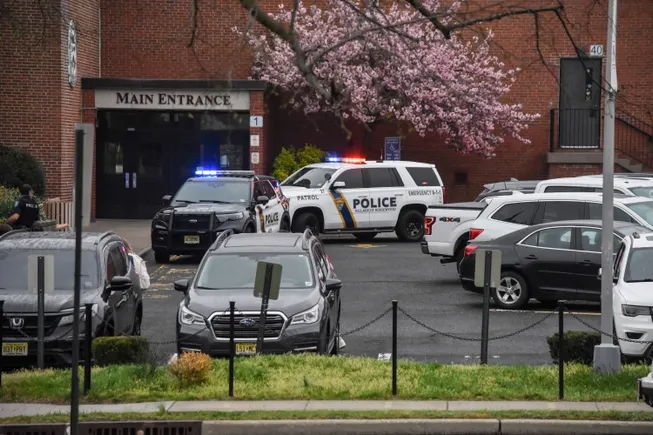
When a swatting call hits a local emergency dispatch center, dispatchers are legally and operationally bound to treat the call as a worst-case scenario. This often results in the rapid deployment of specialized units, including SWAT teams, K-9 units, and local police cruisers, descending upon a campus with sirens blaring and weapons drawn.
For students and teachers inside, the experience is indistinguishable from a genuine mass casualty event. Classrooms go dark, occupants hide under desks or barricade doors, and the psychological fallout can linger for months or years. Furthermore, the physical risks are profound: panicked students fleeing buildings, first responders operating under extreme adrenaline and incomplete information, and the potential for tragic accidents during the chaos.
Data and Statistical Trends: A Significant Decline in Recorded Incidents
Despite the high-profile nature of these incidents and the persistent fear they instill in communities, empirical data indicates a notable downward trend in K-12 school swatting over recent academic cycles.
According to tracking and analysis from the Educator’s School Safety Network, swatting incidents targeting schools have experienced a consistent and measurable decline since the peak of the 2022-23 academic year. During that specific school year, the network recorded an unprecedented wave of 446 separate swatting incidents across the United States.
The frequency dropped during the subsequent 2023-24 school year, which saw 158 recorded incidents. The downward trajectory continued into the 2024-25 school year, during which researchers documented 124 swatting incidents in K-12 schools nationwide. This represents a staggering 72% decrease from the high watermark of the 2022-23 academic year, as well as a 22% reduction when compared directly to the 2023-24 figures.
Analysts from the Educator’s School Safety Network have examined the underlying drivers behind this reduction. While isolating a single definitive cause remains methodologically complex, researchers have pointed to several contributing variables. Chief among these is the concerted effort by federal, state, and local law enforcement agencies to aggressively investigate, apprehend, and prosecute individuals responsible for making false reports. As federal prosecutors and local district attorneys bring felony charges—often carrying severe prison sentences and substantial financial restitution demands—the perceived anonymity and impunity of perpetrators have begun to erode.
Chronology of Federal Action and Policy Development
The release of the latest joint guidance by the Department of Education and the Department of Justice represents the culmination of years of interagency collaboration aimed at securing America’s classrooms.
In the wake of the 2022-23 surge in hoax calls, federal law enforcement agencies, including the Federal Bureau of Investigation (FBI) and the Department of Homeland Security (DHS), ramped up intelligence-sharing operations with local school districts. Joint terrorism task forces and fusion centers began tracking coordinated swatting waves that often affected multiple states simultaneously, suggesting organized efforts by domestic or international bad actors.
Throughout 2023 and 2024, federal agencies conducted regional training workshops and issued advisory notices warning educational administrators about evolving threat vectors, including the use of artificial intelligence, voice spoofing, and encrypted messaging applications to mask the origins of hoax calls.
The culmination of these ongoing efforts led to the Friday release of the structured guidance document. Compiled with resources and insights from the FBI and other specialized federal entities, the document seeks to standardize institutional readiness and front-line response mechanisms across the country’s thousands of independent school districts and university systems.
Core Recommendations and Front-Line Preparation
The newly released federal framework emphasizes that staff preparation and early threat detection are the foundational pillars of an effective institutional defense against swatting. Because the initial point of contact is often a front-office secretary, administrative assistant, or campus security officer, the guidance places heavy emphasis on specialized training for personnel who answer incoming telephone lines or monitor digital communications channels.
Specifically, the guidance recommends that schools and colleges implement the following foundational measures:
- Enhanced Front-Line Training: Equipping administrative and reception staff with the tools and questioning techniques necessary to quickly gather critical details from callers, assess credibility markers, and flag potentially fraudulent reports before emergency services are overwhelmed.
- Improved Communication Protocols: Establishing direct, secure, and rapid communication channels between school administrators and local emergency dispatch centers to verify information in real-time and potentially intercept tactical units before they engage in forced entry or aggressive campus lockdowns.
- Comprehensive Emergency Operations Plans (EOPs): Ensuring that institutional safety plans explicitly account for false reports, differentiating the appropriate response protocols for verified emergencies versus suspected hoaxes where feasible.
- Interagency Collaboration: Fostering ongoing relationships between school resource officers, local police departments, county sheriffs, and federal field offices to conduct joint tabletop exercises and threat-assessment drills.
"Staff preparation is key and should be the foremost priority in front-line awareness of and development of appropriate responses to swatting incidents," the joint guidance document states, highlighting the necessity of human vigilance in a digital age.
Official Statements and Reactions from Federal Leadership
The severity of the swatting crisis and the proactive federal response have drawn high-level commentary from key administration officials overseeing education and justice policy.
Nicholas Kent, under secretary at the Department of Education, and Stanley Woodward Jr., associate attorney general at the Department of Justice, issued a joint statement underscoring the federal government’s unwavering commitment to campus safety.
"We are committed to the safety of students, teachers, and staff across the country and take all incidents of swatting and violence seriously," Kent and Woodward stated within the guidance framework. "We welcome further conversations with educational institutions to determine how best to solve this crisis, which increasingly affects people and organizations across the country."
Furthermore, the officials indicated that the Department of Education and the Department of Justice intend to maintain an active dialogue with educational leaders, state policymakers, and law enforcement agencies. Additional updates and specialized guidance modules will be released as threat methodologies evolve and new defensive technologies become available.
Implications for Educational Institutions and Local Communities
While the statistical decline in swatting incidents offers a measure of relief for educators and parents, the release of the new federal guidance serves as a reminder that the threat has not been entirely eradicated. The psychological and operational toll of even a single swatting incident can reverberate through a community for months, straining local municipal budgets, diverting critical law enforcement resources away from genuine emergencies, and eroding the sense of security that is vital for an effective learning environment.
For cash-strapped school districts and higher education institutions, implementing the recommendations outlined in the federal guidance presents both logistical and financial challenges. Smaller rural districts, in particular, may lack the dedicated security personnel or administrative bandwidth to conduct comprehensive staff training regimens or overhaul existing emergency communication systems.
Nevertheless, legal and security experts emphasize that adherence to proactive prevention strategies remains the most effective defense. By tightening front-line protocols, fostering transparent communication with local law enforcement, and supporting the aggressive prosecution of those who perpetrate these destructive hoaxes, educational institutions can better safeguard their campuses against the disruption of false alarms.
As federal agencies continue to monitor the landscape, the collective objective remains clear: to protect the physical well-being and emotional stability of the nation’s students and educators while ensuring that those who weaponize emergency services against schools face the full weight of the law.