



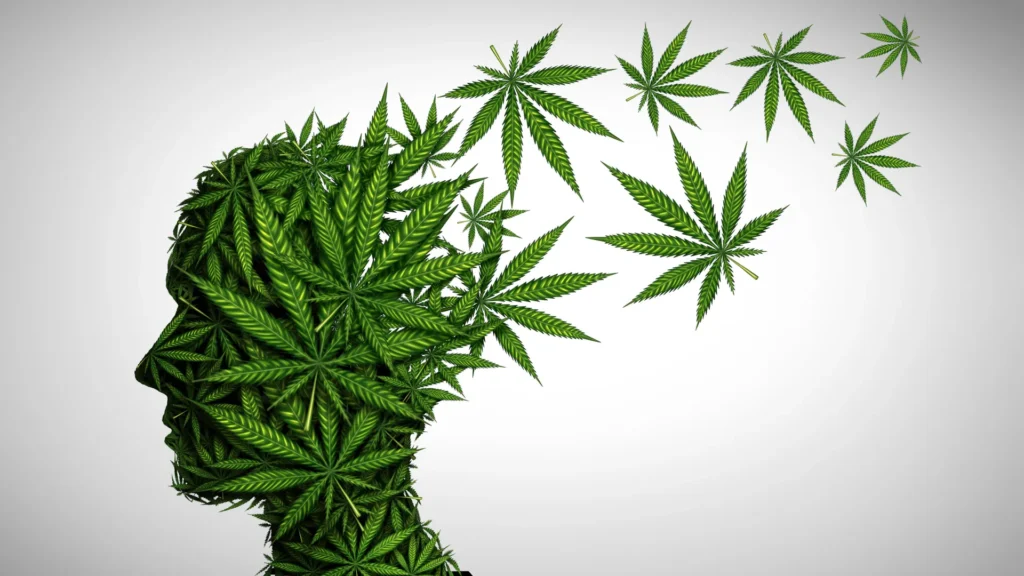
The groundbreaking research, published in the Journal of Psychopharmacology, offers one of the most comprehensive examinations to date of how the primary psychoactive compound in cannabis, delta-9-tetrahydrocannabinol (THC), acutely influences the intricate mechanisms of human memory. Beyond the commonly perceived "fuzziness" or short-term recall issues, the study’s findings suggest that cannabis consumption may fundamentally alter how memories are formed, stored, and retrieved, leading to significant impairments across a spectrum of cognitive functions essential for daily living. This pioneering work arrives amidst a rapidly evolving landscape of cannabis legalization and increasing public access, underscoring an urgent need for robust scientific understanding of its cognitive impacts.
Unpacking the Washington State University Study: A Multi-System Memory Assessment
Led by senior author Carrie Cuttler, an associate professor of psychology at WSU, and co-author Ryan McLaughlin, an associate professor in the Department of Integrative Physiology and Neuroscience, the study employed a rigorous double-blind, placebo-controlled experimental design. Researchers recruited 120 regular cannabis users and randomly assigned them to one of three groups: vaporizing placebo cannabis, 20 milligrams (mg) of THC, or 40 mg of THC. This methodology ensured that neither the participants nor the researchers knew who received which substance, minimizing bias and enhancing the reliability of the results.
Following consumption, participants engaged in approximately one hour of meticulously designed memory tests. Unlike many previous studies that typically focused on one or two specific aspects of memory, the WSU team cast a wide net, assessing an impressive array of memory types. These included verbal memory (recalling spoken words), visuospatial memory (remembering visual information and spatial relationships), prospective memory (remembering to perform future actions), source memory (recalling where information came from), false memory (remembering something that never happened), episodic content memory (recalling personal experiences), and temporal order memory (remembering the sequence of events).
The results were stark and consistent: individuals who consumed either 20 mg or 40 mg of THC performed significantly worse than those in the placebo group on the majority of the tests. Out of 21 memory measures evaluated, cannabis intoxication produced significant differences in 15 of them, indicating a broad and pervasive disruption across various memory systems. "Most previous studies have only looked at one or two types of memory, like recalling lists of words," Cuttler noted. "This is the first study to comprehensively examine many different memory systems at once, and what we found is that acute cannabis intoxication appears to broadly disrupt most of them."
A particularly striking finding was the lack of meaningful differences in memory impairment between participants who consumed 20 mg of THC and those who consumed 40 mg. This suggests a potential ceiling effect, where even a moderate amount of THC may be sufficient to induce substantial cognitive deficits, implying that simply reducing the dose might not fully mitigate memory-related risks once a certain threshold is crossed. This insight is crucial for informing public health guidelines and individual consumption choices, as it challenges the assumption that higher doses are proportionally more impairing across the board.
The Peril of False Memories and Source Confusion
Among the most pronounced and concerning effects observed were those on false memory and source memory. These two systems are fundamental to accurately processing and recalling information, and their impairment carries significant real-world implications.
In one test designed to assess false memory, participants listened to lists of thematically related words, such as "bed," "rest," "dream," and "snore." Crucially, the central keyword linking them all—in this case, "sleep"—was never spoken. Later, when asked to recall the words they had heard, individuals who had consumed THC were significantly more likely to confidently assert that they remembered hearing the unpresented central keyword. "I found it was really common for people to come up with words that were never on the list," Cuttler explained. "Sometimes they were related to the theme of the list, and sometimes they were completely unrelated." This phenomenon of "remembering" events or information that never occurred can have profound consequences, ranging from misremembering personal interactions to more serious scenarios like providing inaccurate eyewitness testimony.
Equally critical was the impairment in source memory. Participants under the influence of THC struggled more to identify where previously learned information originated. This type of memory is vital for discerning the credibility and context of information – whether it came from a reliable news source, a casual conversation with a friend, or an unverified online post. In an era saturated with information, the ability to accurately attribute sources is paramount for critical thinking and informed decision-making. Problems with source memory can lead to the unwitting propagation of misinformation or a diminished capacity to evaluate the trustworthiness of data encountered daily.
These memory distortions are not merely academic curiosities; they have tangible, potentially severe implications. Consider legal contexts, where the accuracy of eyewitness accounts is paramount. Suggestive questioning or even intrinsic memory errors, exacerbated by cannabis use, could profoundly influence how events are remembered and recounted, potentially leading to miscarriages of justice. In educational settings, students might struggle to remember where they learned a particular fact, hindering their ability to cite sources or integrate information effectively. Professionally, individuals in roles requiring meticulous attention to detail or recall of complex instructions could face significant challenges.
Impacts on Everyday Memory Tasks: The Prospective Memory Challenge
Beyond the more complex forms of memory, the WSU study also highlighted impairments in prospective memory – the ability to remember to perform intended actions in the future. This is the memory system responsible for countless daily responsibilities, from remembering to take medication at a specific time, attending scheduled meetings, making a crucial phone call, or picking up groceries on the way home.
"These are things we rely on constantly in our day-to-day lives," Cuttler emphasized. "If you have something you need to remember to do later, you probably don’t want to be high at the time you need to remember to do it." The implications here are broad, affecting personal well-being, professional reliability, and social obligations. A forgotten medication dose could have health consequences, a missed appointment could damage professional relationships, and an overlooked task could lead to significant inconvenience or even safety hazards.
Interestingly, one form of memory, episodic content memory, which involves recalling personal experiences and the "what, where, and when" of events, did not show a statistically significant effect in this particular study. However, Cuttler cautioned that further research is needed before drawing firm conclusions about this specific memory type, as other studies have sometimes indicated impacts on episodic recall. The nuances across different memory systems underscore the complexity of cannabis’s effects on the brain.
Broader Context: The Evolving Landscape of Cannabis and Research Gaps
The WSU study emerges at a critical juncture in North America and globally. Cannabis use has become increasingly prevalent, particularly in states like Washington where recreational use is legal. The past decade has seen a rapid shift in public perception and policy surrounding cannabis, with numerous jurisdictions moving towards legalization or decriminalization. According to a 2023 Gallup poll, 17% of U.S. adults reported currently using marijuana, a figure that has steadily climbed from 7% in 2013. This widespread acceptance and accessibility underscore the urgency of understanding the full spectrum of its effects, both beneficial and adverse.
Despite this surge in use and availability, there remains a significant knowledge gap regarding the acute and long-term cognitive effects of cannabis. Historically, research into cannabis has been severely hampered by its classification as a Schedule I substance under federal law in the United States. This designation, shared with drugs like heroin and LSD, implies a high potential for abuse and no accepted medical use, imposing stringent regulatory hurdles on researchers. Accessing research-grade cannabis, obtaining necessary federal licenses, and navigating complex bureaucratic processes have made large-scale, comprehensive studies incredibly challenging. This regulatory environment has inadvertently created a situation where public policy has outpaced scientific understanding, leaving consumers and healthcare providers with incomplete information.
Timeline of Cannabis Legalization and Research
- 1970: Controlled Substances Act classifies cannabis as Schedule I, severely restricting research.
- 1996: California becomes the first state to legalize medical cannabis.
- Early 2000s-2010s: More states follow suit with medical cannabis laws.
- 2012: Colorado and Washington become the first states to legalize recreational cannabis.
- Mid-2010s-Present: A wave of states legalizes recreational cannabis, expanding access and consumption.
- Ongoing: Debates intensify regarding federal rescheduling of cannabis to facilitate research and align federal law with state-level policies.
- 2024: WSU study published, providing comprehensive insight into acute memory effects.
The WSU study directly addresses some of these research gaps by offering a detailed, multi-faceted look at acute cognitive impacts. "We’re living in a state where cannabis use is very common, but there’s still a lot we don’t know about its acute effects," Cuttler reiterated. "The goal is to help people make informed decisions about the risks and benefits."
Implications for Public Health, Policy, and Individual Choices
The findings from Washington State University carry profound implications across several domains:
- Public Health Messaging: Public health campaigns must evolve beyond generic warnings to provide specific, nuanced information about memory impairment. Emphasizing the risks of false memories and source confusion, alongside the impact on everyday tasks, can help individuals make more informed choices about when and where to consume cannabis.
- Policy and Regulation: These findings could influence discussions around cannabis potency limits, packaging warnings, and public safety regulations, particularly concerning driving under the influence or operating heavy machinery. The observation that even moderate doses cause significant impairment suggests a need for caution across the spectrum of use.
- Workplace Safety: For professions requiring high levels of cognitive function, memory, and attention, these findings underscore the importance of clear policies regarding cannabis use during work hours or before shifts. Industries with safety-sensitive roles, such as transportation, construction, or healthcare, may need to revisit their substance use policies in light of this research.
- Driving Safety: The impairment of memory systems crucial for decision-making, spatial awareness, and recalling rules of the road adds another layer of concern regarding impaired driving. While reaction time is often highlighted, the subtle disruption of memory processes could also contribute to unsafe driving behaviors.
- Medical and Therapeutic Contexts: For patients using medical cannabis, these findings highlight potential cognitive trade-offs that need to be discussed with healthcare providers. Balancing therapeutic benefits with cognitive side effects, especially for conditions where memory is already compromised, becomes a critical consideration.
- Future Research Directions: This study opens avenues for further investigation into long-term cognitive effects, the impact on different demographics (e.g., adolescents whose brains are still developing, older adults, individuals with pre-existing cognitive conditions), the role of different cannabinoid profiles (e.g., CBD vs. THC), and the potential for individual variability in response to cannabis. Understanding the precise neurobiological mechanisms underlying these memory disruptions will also be a vital area of inquiry.
Reactions from Related Parties (Inferred)
While specific reactions to this new study are yet to be widely published, it’s possible to infer the likely stances of various stakeholders:
- Public Health Agencies (e.g., CDC, state health departments): These bodies would likely welcome the robust data, reiterating their calls for responsible use and emphasizing the need for comprehensive public education on the risks, particularly concerning cognitive function. They might advocate for clearer labeling requirements on cannabis products detailing potential memory effects.
- Cannabis Industry and Advocacy Groups: While acknowledging the scientific findings, these groups might also stress the importance of context, responsible consumption, and differentiating between acute and chronic effects. They could emphasize the need for continued research into the full spectrum of cannabis effects, including potential therapeutic benefits, and advocate for federal rescheduling to facilitate this research. They might also point to the lack of evidence for long-term permanent damage from acute use.
- Medical Professionals: Physicians and clinicians would incorporate these findings into patient counseling, especially for individuals considering cannabis for pain management, anxiety, or other conditions. They would likely advise against cannabis use before tasks requiring high cognitive load or critical memory recall.
- Educational Institutions: Universities and schools might use these findings to inform student wellness programs and academic integrity policies, especially concerning the impact of cannabis on learning and recall.
In conclusion, the Washington State University study serves as a critical contribution to our understanding of cannabis’s acute cognitive effects. By meticulously dissecting its impact on a wide range of memory systems, it moves the conversation beyond anecdotal observations to evidence-based insights. As societies continue to grapple with the implications of widespread cannabis availability, such rigorous scientific inquiry is indispensable for empowering individuals to make informed decisions and for shaping responsible public policy. The findings underscore that while cannabis use may be normalized, its acute effects on the brain, particularly on the integrity of our memories, are anything but trivial.