
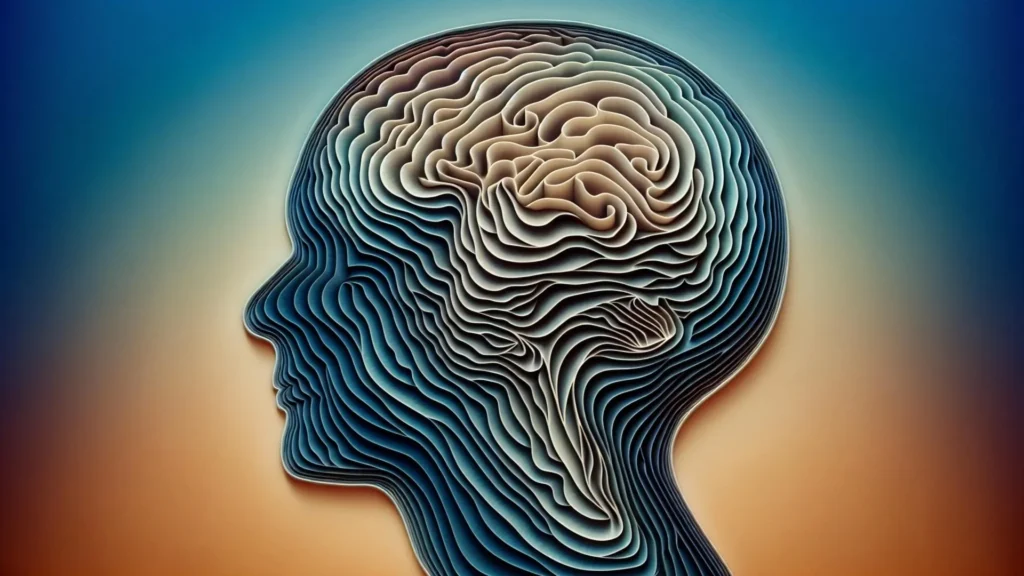
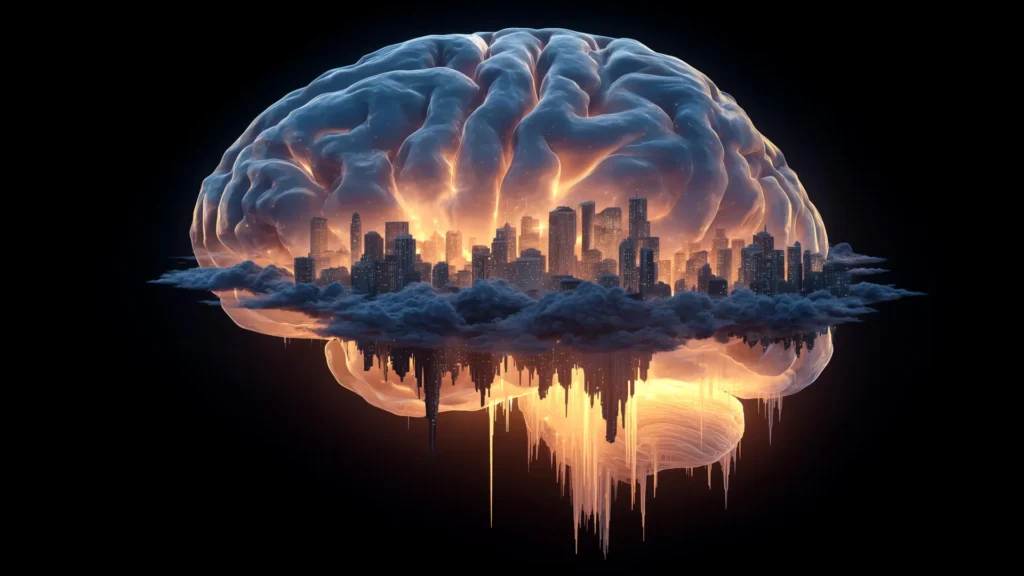
Why do some dreams feel so vivid that they seem almost real, while others unfold as confusing fragments that are difficult to remember or understand? The mystery of the nocturnal mind has long fascinated psychologists, neurologists, and philosophers alike. However, new research from the IMT School for Advanced Studies Lucca suggests that the answer is not found in the chaotic firing of random neurons, but rather in a sophisticated intersection of personality traits, sleep hygiene, mental habits, and the environmental pressures of the waking world. By leveraging the power of natural language processing (NLP), researchers have moved beyond anecdotal evidence to quantify the semantic structures that define our nightly journeys.
The Methodology of Modern Dream Analysis
The study, recently published in the journal Communications Psychology, represents a significant leap forward in the field of oneirology—the scientific study of dreams. The research team, led by Valentina Elce, embarked on a comprehensive data collection effort involving 287 participants aged 18 to 70. Over a rigorous two-week period, these individuals maintained detailed logs of both their waking life experiences and their nocturnal dream reports.
To ensure a holistic understanding of each participant, the researchers compiled extensive psychological profiles. These included metrics on personality traits, cognitive performance, sleep quality, and individual attitudes toward dreaming. By amassing more than 3,700 distinct reports, the team created a dataset of unprecedented scale and depth. The primary challenge, however, was the qualitative nature of the data. Dream reports are notoriously difficult to categorize due to their surreal imagery and subjective narrative arcs. To overcome this, the scientists employed artificial intelligence, specifically NLP models, to map the semantic relationships between words, settings, and emotional themes.
Chronology of a Shifting Landscape: From Lockdown to Recovery
A critical component of this investigation involved longitudinal data collected during the COVID-19 pandemic. By comparing dream reports gathered during the height of the 2020 lockdowns—facilitated by researchers at Sapienza University of Rome—with data collected during post-pandemic periods, the team was able to observe how external global stressors manifest in the unconscious mind.
In the early stages of the pandemic, dream content was dominated by themes of confinement, physical barriers, and heightened emotional distress. These reports often featured restricted movement and claustrophobic settings, providing a clear psychological mirror to the societal limitations imposed by public health mandates. As the timeline progressed into the subsequent months and years, these themes gradually receded, replaced by more diverse and less restricted imagery. This transition suggests that the sleeping mind acts as a dynamic processor, absorbing the trauma of external events and gradually recalibrating as the individual adapts to a changing environment.
The Creative Engine: How the Brain Reorganizes Reality
One of the most profound findings of the IMT School study is that the brain does not function as a simple "replay" system. Popular culture often depicts dreams as a direct playback of the previous day’s events, but the empirical evidence suggests a much more creative process. While familiar settings—such as an office, a school, or a home—frequently appear in dreams, they are almost never presented in their original, logical context.
Instead, the brain appears to engage in a process of "semantic re-contextualization." A person might dream of their childhood home, but find the furniture arranged like their current workspace, while the outside view displays a landscape they visited years ago. This synthesis of memory, imagination, and expectation suggests that the brain is not merely archiving data during REM sleep, but is actively testing potential scenarios. By blending unrelated memories into a single, cohesive, albeit surreal, scene, the sleeping mind may be practicing emotional regulation or exploring future possibilities in a low-stakes, simulated environment.
Personality as a Determinant of Dream Texture
The research indicates that the "vividness" of a dream is intrinsically linked to the dreamer’s own psychological architecture. The study identified two primary variables that dictate the quality of a dream: the propensity for mind-wandering and the subjective importance placed on the dream state.
Participants who exhibited a higher frequency of mind-wandering during their waking hours—a trait often associated with high creative output but lower focus—tended to report fragmented, rapidly shifting dream narratives. Their dreams were characterized by abrupt transitions in setting and perspective, reflecting a mind that struggles to hold a single narrative thread for extended periods.
Conversely, participants who assigned significant value to their dreams reported experiences that were markedly more immersive and perceptually rich. These individuals described sensory details—colors, textures, and sounds—with much higher clarity. While the study does not definitively claim that valuing dreams causes them to be more vivid, it highlights a clear correlation between cognitive focus and the depth of the dream experience. This suggests that how we perceive our dreams may actively shape the neural pathways involved in their recall and construction.
The Role of Artificial Intelligence in Future Research
The integration of NLP into sleep research marks a transformative moment for the field. Historically, large-scale dream studies were limited by the necessity of manual coding, a process that is not only time-consuming but also prone to human bias. By utilizing AI to analyze the semantic structure of thousands of reports, the IMT School team achieved a level of consistency that was previously impossible.
The NLP models proved capable of identifying thematic clusters with an accuracy comparable to that of human evaluators, but at a speed that allows for the processing of massive datasets. This methodology creates a roadmap for future research into consciousness and mental health. If scientists can track how the semantic structure of dreams changes in response to, for example, the onset of depression, anxiety, or post-traumatic stress disorder (PTSD), it could provide a non-invasive diagnostic tool for clinical psychology.
Broader Implications and Institutional Support
The findings from the IMT School for Advanced Studies Lucca carry significant weight for our understanding of the human condition. By demonstrating that dreams are a "dynamic process" rather than a byproduct of random neural noise, the research elevates the importance of sleep as a period of active cognitive labor.
Valentina Elce, the lead author, emphasized that this approach allows for the detection of subtle patterns that would otherwise be obscured by the volume of data. "Our findings show that dreams are not just a reflection of past experiences, but a dynamic process shaped by who we are and what we live through," Elce noted. This perspective aligns with growing evidence in neuroscience that sleep is essential for memory consolidation, emotional processing, and the maintenance of the self-concept.
This study was made possible through the support of the BIAL Foundation (Grant #091/2020) and the European Research Council (ERC) under the TweakDreams project (Grant #948891). The collaboration between the IMT School for Advanced Studies Lucca, Sapienza University of Rome, and the University of Camerino represents a multi-disciplinary approach that is becoming the standard for complex psychological research.
Conclusion: The Future of Oneirology
As we move forward, the implications of this research are vast. If dreams can be systematically decoded, we may eventually gain a clearer understanding of how the human mind resolves internal conflicts and prepares for future challenges. The ability to distinguish between the "random noise" of a tired brain and the "meaningful synthesis" of a creative one will undoubtedly change the way we approach sleep hygiene and mental well-being.
The study effectively demystifies the dream state without stripping it of its complexity. It reaffirms that while our dreams are shaped by the constraints of our environment and the architecture of our personalities, they remain a uniquely personal space where reality is constantly being reconstructed. As computational methods continue to evolve, the dreamscape—once thought to be entirely private and inaccessible—may become one of the most fertile grounds for understanding the depths of human consciousness. Through the lens of data, the sleeping mind is finally beginning to reveal its secrets, proving that our nocturnal lives are just as vital to our identity as the hours we spend awake.