





Stanford Online recently commemorated its three-decade legacy of pioneering digital education with the unveiling of a state-of-the-art immersive learning studio, a monumental stride poised to redefine global educational experiences through advanced AI-powered and immersive learning technologies. This innovative facility is meticulously designed to empower faculty with unprecedented capabilities to craft and customize educational content using virtual reality (VR), augmented reality (AR), and artificial intelligence (AI), thereby continuing Stanford’s tradition of delivering highly personalized and faculty-led instruction on an expansive scale. Having already reached an astounding 22.4 million learners worldwide since 2012, this new infrastructure solidifies Stanford Online’s commitment to pushing the boundaries of pedagogical innovation, fostering deeply immersive, individualized, and profoundly impactful learning journeys for its diverse student body.
A New Era of Experiential Learning
The establishment of this immersive learning studio marks a significant inflection point in the evolution of online education, not just for Stanford but potentially for the broader landscape of higher education globally. Carissa Little, associate dean of Global and Online Education at the Stanford School of Engineering and executive director of Stanford Online, articulated the profound vision behind this initiative. "This studio will enable us to create more immersive learning experiences, which we will pair with the evolution in AI to develop personalization in learning on a global scale," Little stated, underscoring the dual thrust of immersive content creation and AI-driven individualization. This strategy aims to transcend traditional digital learning formats, moving towards environments where students can engage with complex concepts through direct, simulated experience and receive tailored support that adapts to their unique learning pace and style.
The physical attributes of the studio itself are testament to its ambitious goals. It features a commanding 20×12-foot 4K LED wall, cinematic-grade cameras, and a versatile greenscreen cyclorama. These components collectively enable faculty and other content creators to seamlessly merge live footage with sophisticated digital environments in real time, facilitated by integrated AI-enabled workflows. This technological synergy allows for the creation of dynamic, interactive lessons that were previously confined to imagination or prohibitively expensive production budgets. A dedicated control room complements the main studio space, providing comprehensive capabilities for monitoring multiple camera feeds, professional audio mixing, and precise cueing of graphics and interactive elements. Furthermore, a robust nearby server room provides the essential computational backbone, housing the power infrastructure for the video wall, five remote editing stations, and a massive 672-terabyte storage area network, ensuring ample capacity for high-fidelity content production and archiving.

Stanford Online’s Journey: Three Decades of Innovation
Stanford Online’s 30th anniversary, serving as the backdrop for this launch, provides crucial context for understanding the significance of the new studio. Originating in the mid-1990s, Stanford Online (then under different iterations, reflecting the nascent stage of internet technology) began its journey with a pioneering spirit, recognizing the potential of digital platforms to extend Stanford’s academic excellence beyond its physical campus. Early initiatives focused on delivering graduate-level engineering courses to working professionals, utilizing rudimentary streaming technologies and online forums.
Over the subsequent decades, Stanford Online systematically expanded its offerings, embracing new technologies as they emerged. The early 2000s saw a gradual increase in course variety and improvements in delivery mechanisms. The explosion of Massive Open Online Courses (MOOCs) in the early 2010s marked a pivotal moment, with Stanford at the forefront of this movement. It was during this period that Stanford Online’s reach began its exponential growth, culminating in the reported 22.4 million learners reached since 2012. This trajectory highlights a continuous commitment to innovation, adaptation, and scaling quality education, making the immersive learning studio not an isolated event, but a natural progression in its long-standing mission.
Carissa Little emphasized the core principle guiding this evolution: "Everything we do is faculty-led. The faculty teaching our courses are leaders in their fields. Their research and expertise drive innovation in technology development and knowledge discovery, which directly informs our curriculum." This faculty-centric approach ensures that technological advancements serve pedagogical goals rather than dictating them, maintaining the rigorous academic standards synonymous with Stanford University. The studio, therefore, is not merely a production facility but an advanced toolkit designed to amplify the intellectual contributions of Stanford’s world-renowned faculty.
The Power Trio: VR, AR, and AI in Pedagogy
The convergence of virtual reality, augmented reality, and artificial intelligence within a dedicated studio environment represents a cutting-edge approach to educational technology. Each of these technologies brings distinct advantages that, when combined, offer transformative potential.

Virtual Reality (VR) creates fully simulated, immersive environments that can transport learners to places and situations otherwise inaccessible. In education, VR can facilitate:
- Medical Training: Surgeons can practice complex procedures in a risk-free virtual operating room.
- Engineering and Architecture: Students can design, build, and walk through virtual prototypes or structures.
- Historical and Cultural Immersion: Learners can explore ancient civilizations, visit historical battlefields, or tour distant museums, fostering a deeper understanding of context and scale.
- Scientific Visualization: Complex molecular structures or astronomical phenomena can be manipulated and explored in three dimensions.
Augmented Reality (AR), by contrast, overlays digital information onto the real world, enhancing rather than replacing the physical environment. Its applications in education are equally compelling:
- Interactive Textbooks: Textbooks can come alive with 3D models, animated diagrams, and supplementary video content triggered by scanning pages.
- Lab Experiments: Students can visualize chemical reactions or biological processes in real-time within a physical lab setting without requiring expensive or dangerous equipment.
- Field Trips: Digital annotations and historical context can be projected onto real-world landmarks during educational excursions.
- Maintenance and Repair Training: Complex machinery can be overlaid with digital instructions and diagnostic information, guiding students through practical tasks.
Artificial Intelligence (AI) serves as the intelligent backbone, driving personalization and efficiency. In the context of the new studio, AI’s capabilities extend to:
- Adaptive Learning Paths: AI algorithms can analyze student performance and preferences, dynamically adjusting content difficulty, pace, and delivery methods to optimize learning outcomes.
- Intelligent Tutoring Systems: AI can provide instant, personalized feedback, answer questions, and guide students through challenging concepts, effectively acting as a virtual tutor available 24/7.
- Automated Content Generation and Curation: AI can assist faculty in generating diverse learning materials, summarizing complex texts, or curating relevant external resources, significantly reducing content development time.
- Data Analytics for Learning: By processing vast amounts of student interaction data, AI can identify learning patterns, predict areas of difficulty, and inform faculty about overall course effectiveness, leading to continuous pedagogical improvement.
The studio’s ability to merge live footage with digital environments in real time, powered by AI-enabled workflows, means that a faculty member can deliver a lecture from a greenscreen, appearing to interact with a virtual 3D model of a human heart, while an AI system simultaneously monitors student engagement and adapts the presentation for different learners. This level of integration promises a highly dynamic and responsive educational experience.

Global Scale and Personalized Impact
The vision for "personalization in learning on a global scale" articulated by Carissa Little is perhaps the most ambitious aspect of this initiative. With Stanford Online’s extensive global reach, the studio’s capabilities are not just about enhancing the learning experience for a select few but about democratizing access to high-quality, individualized education for millions.
The sheer volume of learners (22.4 million) underscores the necessity for scalable personalization. Traditional teaching methods struggle to provide individual attention to such large numbers. AI, however, thrives on data and can effectively manage and respond to the unique needs of a massive, diverse student population. This could manifest as:
- Language Adaptation: AI-powered translation and localization of content, making complex topics accessible to non-native English speakers.
- Cultural Contextualization: Adapting examples and case studies to resonate with learners from different cultural backgrounds.
- Accessibility Features: AI assisting in generating captions, audio descriptions, and interactive elements for learners with disabilities.
- Skill-Gap Identification: For professional development courses, AI can pinpoint specific skill gaps and recommend targeted modules, ensuring learners gain the most relevant knowledge.
By leveraging these technologies, Stanford Online aims to create a learning ecosystem that is not only immersive but also deeply empathetic and responsive to the individual learner, regardless of their geographical location, prior knowledge, or learning style. This moves beyond a "one-size-fits-all" approach to a "one-size-fits-one" model at scale.
Broader Implications for Higher Education
The launch of Stanford Online’s immersive learning studio carries profound implications for the future trajectory of higher education:
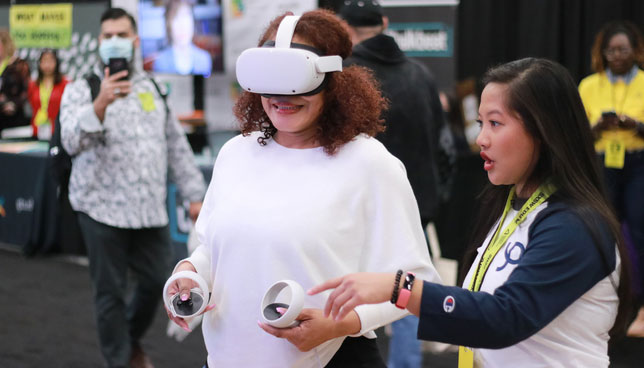
- Enhanced Student Engagement: Passive consumption of lectures has long been a challenge in online learning. Immersive environments and interactive content are proven to increase engagement, critical thinking, and knowledge retention by providing active, hands-on experiences.
- Bridging the Digital Divide and Accessibility: While the initial investment in such technology is significant, its long-term potential to deliver high-quality, interactive education to underserved populations globally is immense. By offering diverse learning modalities, it can cater to students who may not thrive in traditional classroom settings or those in remote areas with limited access to resources.
- Reshaping Pedagogy: The studio will serve as a living laboratory for pedagogical innovation. Faculty will not only teach with these tools but also research their effectiveness, potentially leading to new best practices in digital education that could be adopted by other institutions. It challenges educators to rethink course design, content delivery, and assessment methods.
- Research and Development Hub: The studio itself is an incubator for ed-tech research. Stanford’s faculty and researchers can experiment with new forms of immersive content, test AI algorithms for learning, and publish findings that advance the entire field of educational technology.
- Economic Impact and Market Trends: The global educational technology market is experiencing explosive growth, projected to reach hundreds of billions of dollars in the coming years. This growth is driven by increasing demand for online learning, lifelong skill development, and the integration of advanced technologies like AI, VR, and AR. Stanford’s investment signals a confident outlook on this market and positions it as a leader in shaping its future. According to various market research firms, the global VR/AR in education market alone is expected to grow at a compound annual growth rate (CAGR) exceeding 20% over the next decade, while the AI in education market is projected to see even higher growth rates. Institutions like Stanford investing in such facilities will likely accelerate this trend, prompting other universities to follow suit to remain competitive.
The Path Forward: Challenges and Opportunities
While the potential is immense, the journey ahead will not be without its challenges. The high cost of developing and maintaining such advanced infrastructure, ensuring equitable access for all learners (addressing potential digital divides in terms of hardware and internet connectivity), and providing comprehensive training and support for faculty to effectively utilize these sophisticated tools are critical considerations. Furthermore, the ethical implications of AI in education, particularly concerning data privacy, algorithmic bias, and the balance between human instruction and automated systems, will require careful navigation.
However, these challenges are overshadowed by the unprecedented opportunities. The studio’s launch is, as Carissa Little profoundly noted, "a major milestone in our journey of continuous innovation in education, but it’s also the beginning of a new chapter in our history. We’re on the threshold of what is arguably the most consequential era in our history, where we now have the capability to extend research-based learning at a scale that was previously unimaginable."
This sentiment encapsulates the essence of Stanford Online’s latest endeavor. It is not merely an upgrade in technology but a fundamental reimagining of how knowledge can be created, shared, and absorbed. By blending cutting-edge immersive technologies with intelligent personalization, Stanford Online is not just adapting to the future of education; it is actively shaping it, promising a richer, more accessible, and profoundly impactful learning experience for millions of learners worldwide.