


Archaeological excavations near the Vatican City walls have brought to light a rare and fascinating cache of 10th-century Anglo-Saxon coins, providing concrete physical evidence of a vibrant medieval immigrant community often referred to by historians as a "Little England" within the heart of the eternal city. Unearthed near the ruins of Emperor Nero’s ancient theater—specifically within the historic gardens of the Palazzo della Rovere—the collection of 20 silver coins challenges long-held assumptions regarding monetary circulation, foreign relations, and urban diversity in medieval Rome.
The discovery, first brought to light through archaeological work initiated in 2023 and detailed in the recent academic volume Rome and the Others (300-1000): Foreigners in the city between conflicts and integration, underscores an era of robust cultural exchange. Far from being isolated to native populations, medieval Rome functioned as a bustling metropolis populated by diverse groups of foreign merchants, diplomats, students, and religious pilgrims. Among all expatriate groups residing in the city during the Middle Ages, the Anglo-Saxons appear to have maintained a uniquely privileged, highly visible, and economically impactful enclave.
Main Facts and Archaeological Findings
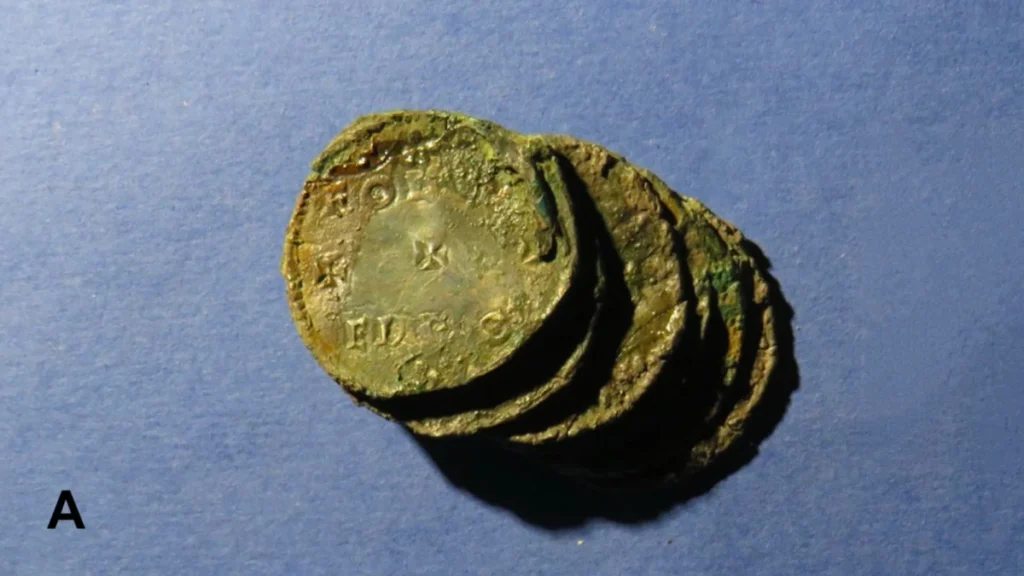
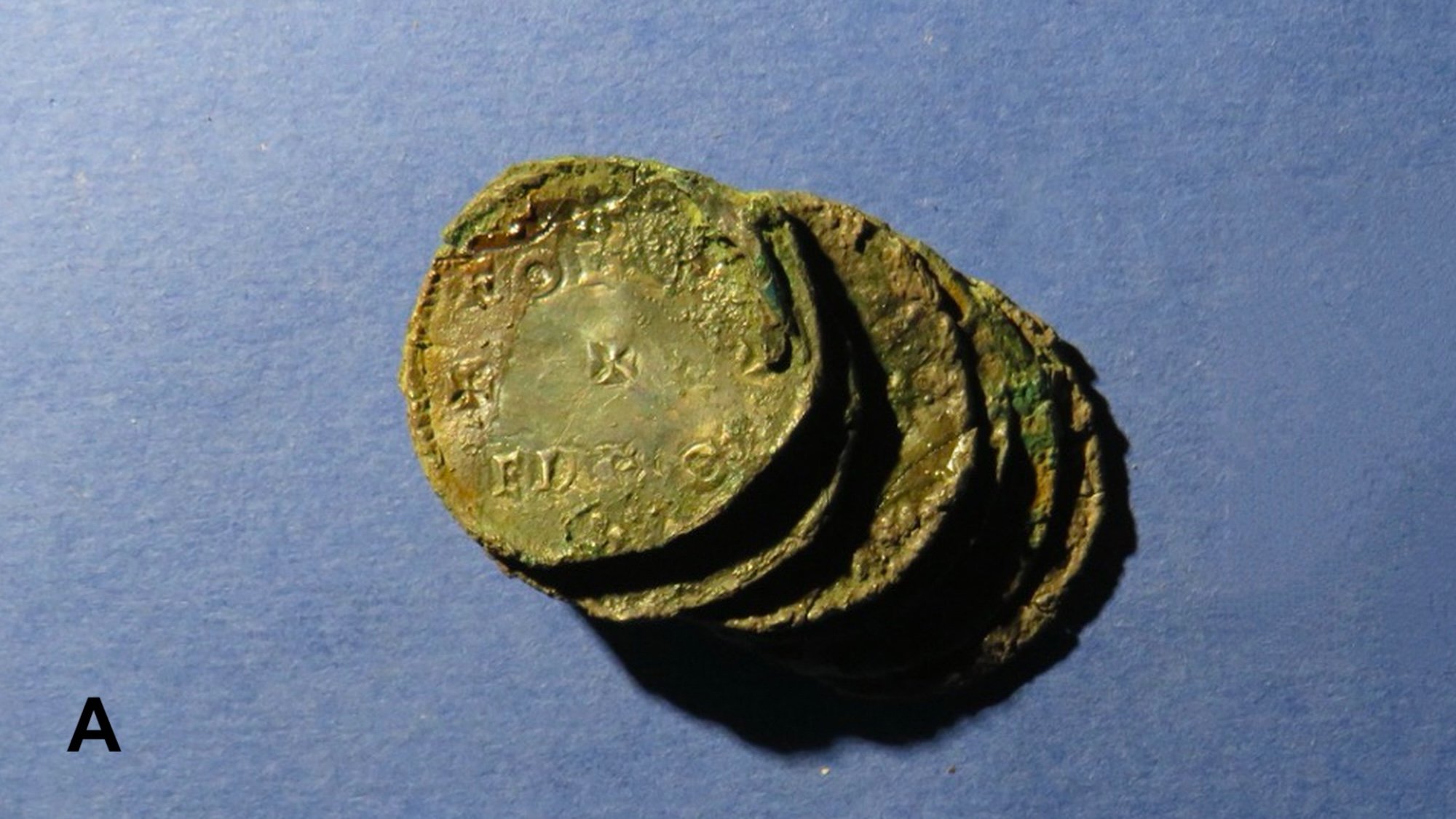
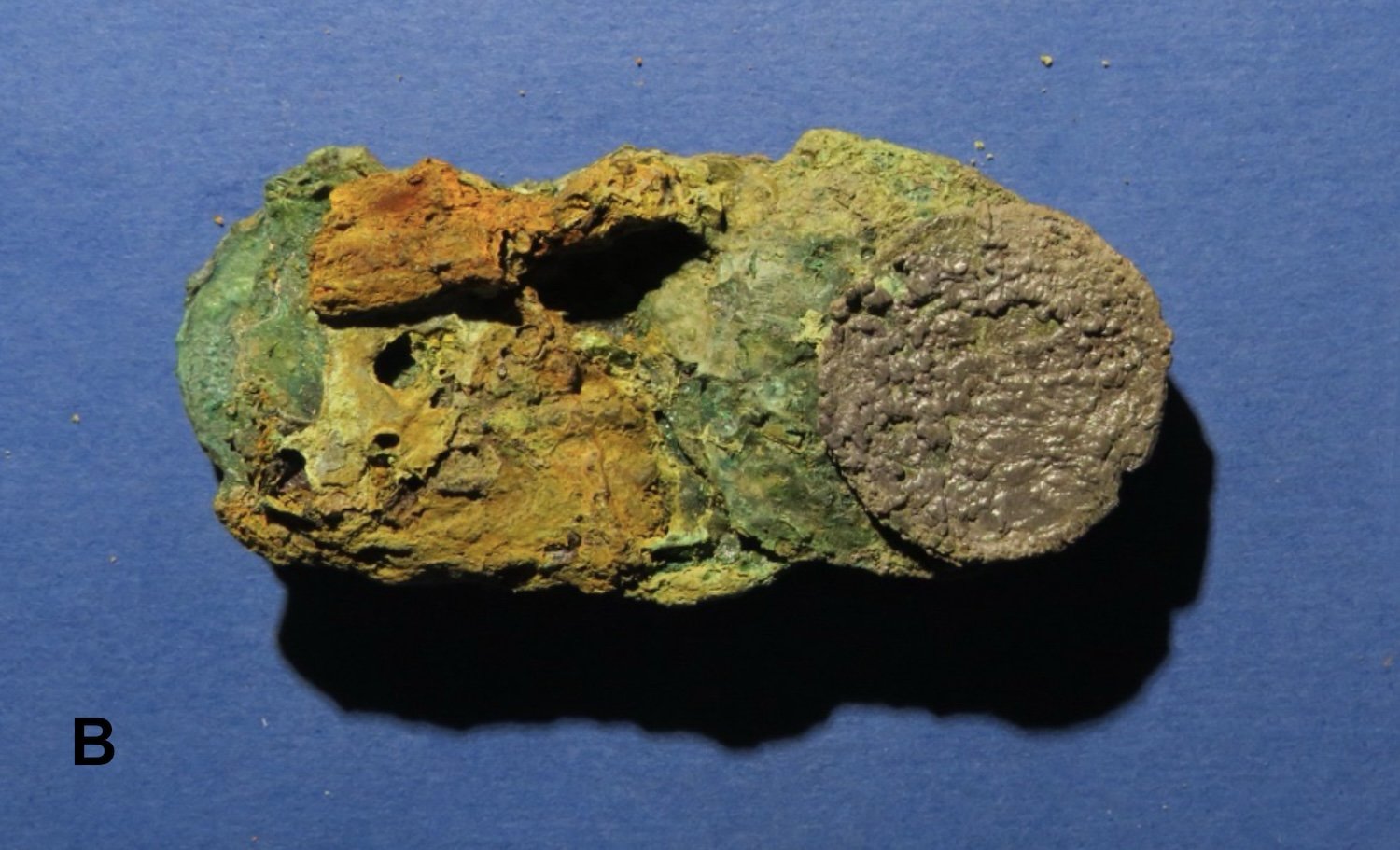
The excavation site, managed by the Superintendency of Archaeology, Fine Arts, and Landscape for the Municipality of Rome, yielded 19 silver pennies and a single silver halfpenny, all minted in England during the 10th century. One of the most striking physical attributes of the find is that several of the pieces—specifically two clusters consisting of six to eight coins each—were fused together. Over a millennium spent buried in the Roman soil had chemically bonded the silver elements, cementing their shared history.
The presence of these distinctively English denominations in Italy is far more than a simple numismatic curiosity. Under strict Roman legal traditions, the use of foreign coinage within the city limits was generally prohibited or heavily restricted. Domestic currency minted by the Papacy or regional authorities was meant to dominate local commerce. Therefore, the physical recovery of native Anglo-Saxon currency directly at a trade and residential zone indicates that these regulations were either bent, bypassed, or officially accommodated to support the burgeoning English population.
According to numismatists and historians studying the artifacts, the coins were not merely ceremonial tokens dropped by wealthy travelers. Instead, they served as working capital. Pilgrims, merchants, and foreign laborers needed to sustain themselves during lengthy stays abroad, and the presence of these silver pennies suggests an active local economy where English travelers could conduct daily transactions, purchase provisions, and perhaps engage in localized trade crafts.
Chronology of a Special Relationship: From Imperial Rule to Medieval Devotion
To understand how a distinct Anglo-Saxon neighborhood materialized in Rome, researchers look back across a long chronology of geopolitical and religious developments that tied Britain to the Mediterranean power center.
The historical entanglement began in the 1st century CE when the Roman Empire expanded its military frontiers into the British Isles. Under emperors such as Claudius, Rome established firm administrative control over Britannia, a status that endured for approximately 400 years. During this prolonged period of imperial integration, roads, cities, villas, and economic networks connected the distant province to the heart of the empire.
However, by 410 CE, facing mounting internal pressures and economic crises across the continent, Rome formally withdrew its military legions from Britain, effectively ending imperial governance over the island. For over a century following the withdrawal, direct ties between Rome and Britain frayed as Germanic tribes—including the Angles, Saxons, and Jutes—migrated to the region, eventually establishing various Anglo-Saxon kingdoms.
The diplomatic and spiritual bridge was dramatically rebuilt in the late 6th century under the leadership of Pope Gregory I. Eager to expand the reach of Western Christianity, Gregory dispatched a celebrated mission to Anglo-Saxon England led by Augustine of Canterbury in 597 CE. The mission successfully converted several Anglo-Saxon rulers and populations, sparking an enduring religious and cultural devotion to Rome.
Throughout the early medieval period, Anglo-Saxon monarchs, nobles, and commoners made arduous overland and maritime pilgrimages to the eternal city to visit the tombs of the apostles Peter and Paul. This steady stream of travelers ultimately led to the establishment of the Schola Saxonum—an institutionalized quarter designed to house, feed, and protect English visitors. While the exact boundaries of this medieval community remain a subject of ongoing archaeological debate, historical estimates suggest the enclave spanned at least 32,000 square feet, roughly equivalent to half a modern soccer field, situated strategically near the Vatican.
Supporting Data and Numismatic Anomalies
The scale of the Anglo-Saxon presence in medieval Rome is further highlighted by astonishing statistical anomalies noted by researchers. Rory Naismith, a historian at the University of Cambridge and co-author of the recent study on Rome’s foreign populations, highlighted a startling comparison regarding the monetary record.
"More Anglo-Saxon coins from this period have now been found in Rome than papal coins," Naismith noted in analysis shared following the publication of the findings. "This sounds bizarre, but it’s telling us that a very large amount of money was flowing in from England at this time."
The steady influx of capital from Britain was driven by both religious piety and organized tribute. Throughout the 9th and 10th centuries, Anglo-Saxon kings famously contributed Peter’s Pence (Romescot), a regular financial levy collected across English parishes and remitted directly to the Papacy to support church administration and charitable works. Coupled with private donations from wealthy pilgrims and the living expenses of permanent and semi-permanent expatriates, vast quantities of English silver poured into the Roman economy.
That these physical coins remained in circulation and were ultimately lost or hidden near the Palazzo della Rovere—close to the primary pilgrimage routes leading toward early medieval St. Peter’s Basilica—reinforces the thesis that the Schola Saxonum was a dynamic economic hub rather than a passive hostel.
Official Responses and Archaeological Significance
Italian cultural heritage officials and municipal archaeologists have praised the Palazzo della Rovere excavation as a milestone for urban archaeology in Rome. Because the historic center of the city has been continuously inhabited for millennia, unearthing intact, undisturbed layers from the medieval period is notoriously difficult. Modern construction projects frequently disrupt older strata, but careful stratigraphic analysis by project leads allowed researchers to isolate the 10th-century coin cache within its proper historical context.
Alessio De Cristofaro, one of the leading archaeologists overseeing the site investigations, emphasized that the discovery bridges a vital gap between written historical chronicles and material culture. While medieval ecclesiastical texts frequently mention Anglo-Saxon visitors, kings visiting the papal court, and institutional land grants within the city, tangible artifacts belonging to everyday working people from Britain have historically been scarce.
The fused silver pennies provide a rare material link to the transient labor force that supported the pilgrim infrastructure—bakers, innkeepers, scribes, and artisans who catered specifically to the spiritual tourists of the 10th century.
Broader Impact and Historical Implications
The identification of these coins and the continued mapping of the Schola Saxonum carry profound implications for how modern historians conceptualize identity and mobility in the medieval world. Popular misconceptions often characterize the Middle Ages as an era of isolated, static populations bound strictly to their local manors. However, recent archaeological breakthroughs consistently demonstrate that medieval cities—particularly pilgrimage centers like Rome, Constantinople, and Santiago de Compostela—were remarkably cosmopolitan.
The special status enjoyed by the Anglo-Saxons in Rome reflects a sophisticated framework of international diplomacy and religious solidarity that transcended linguistic and political borders. England, though situated on the extreme northwestern periphery of the known European world, wielded disproportionate cultural and financial influence in the capital of Western Christendom.
As ongoing laboratory analyses of the Palazzo della Rovere coin hoard continue, researchers hope to trace the specific mints in England from which the silver originated, potentially pinpointing regional economic networks that fed capital directly into medieval Italy. For now, these twenty fused silver pennies stand as a silent yet eloquent testament to a time when travelers braved thousands of miles of perilous terrain to reach Rome, leaving behind a resilient footprint of commerce, faith, and cultural integration.