



Starting November 1, all recipients of U.S. Department of Education grants will face a new regulatory hurdle before they can access pre-approved federal funds. A directive issued via an agency memo mandates that every draw-down request must include a concise, written justification detailing the intended use of the money. This policy change applies broadly across the educational spectrum, impacting early childhood education programs, K-12 school districts, higher education institutions, and adult education providers.
The mandate represents a significant procedural shift designed to enhance fiscal oversight and align the nation’s educational funding mechanisms with broader federal cost-efficiency goals. While administration officials maintain that the policy is a common-sense measure aimed at safeguarding taxpayer dollars, education advocacy groups and administrative associations have raised serious concerns. Critics warn that the added layer of bureaucracy could introduce critical payment bottlenecks, ultimately threatening the timely delivery of educational services to vulnerable student populations.
The Genesis of the Directive: The DOGE Initiative and Federal Oversight
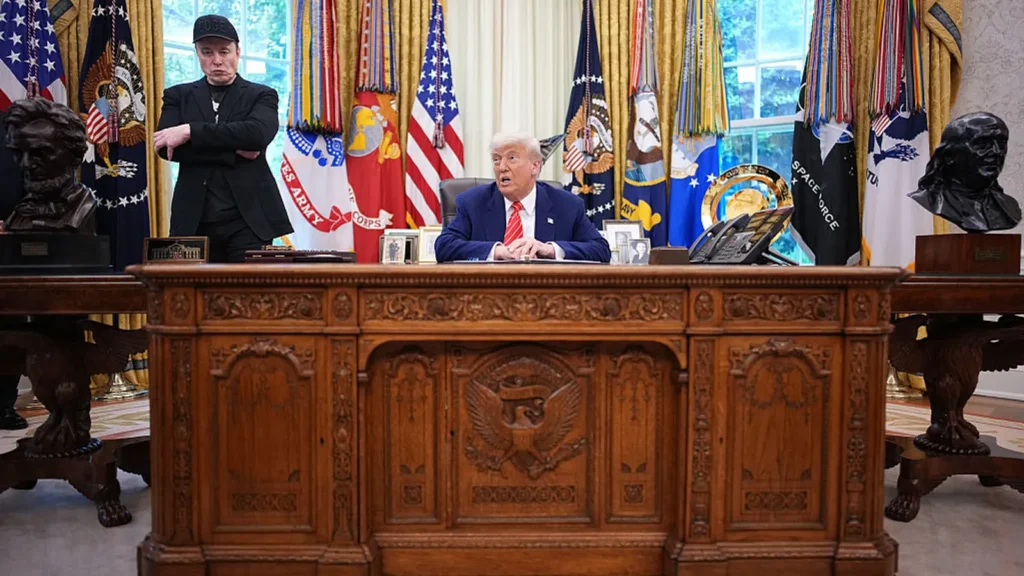
The newly announced requirement is not an isolated policy decision; rather, it is a direct implementation of broader federal directives spearheaded by the Trump administration. Specifically, the mandate stems from an executive order signed in February 2025 that established the Department of Government Efficiency, widely referred to as DOGE. Often branded publicly under the banner of "defend the spend," the DOGE cost-efficiency initiative seeks to scrutinize federal expenditures, eliminate government waste, and impose rigorous accountability frameworks across all federal agencies.
Under the guidance of the Department of Education’s Office of Planning, Evaluation and Policy Development, the policy was formalized in a memo distributed to stakeholders. Murray Bessette, acting assistant secretary for the office and principal deputy assistant, emphasized that the change is intended to streamline transparency without imposing an unmanageable burden on recipients.
According to the department’s instructions, each payment request must now clearly articulate the program name, specific expense categories, monetary amounts, and the start and end dates for the expenditures in question. Crucially, the Department of Education has imposed a strict limit on these explanations: written justifications cannot exceed 255 characters and must remain comprehensible without supplementary narrative documentation.
Administrative Friction and Concerns Over Payment Delays
Despite the administration’s characterization of the rule as a minor administrative adjustment, education administrators and sector advocacy groups have reacted with immediate alarm. The primary concern centers on the potential for delayed disbursements, which could disrupt the complex financial ecosystems of state educational agencies and local school districts.
Sasha Pudelski, director of advocacy for AASA, The School Superintendents Association, articulated these anxieties in an online statement following the memo’s release. Pudelski pointed out that because federal education funds typically flow downward through state agencies before reaching local school districts, the new requirement creates a cascading administrative burden. States will now be forced to draft new guidance, offer technical training, and review localized submissions. Meanwhile, districts must generate detailed, albeit brief, explanations for pre-approved expenditures that have already cleared initial budgetary hurdles.
Furthermore, education advocates argue that the new rule is duplicative. School districts and educational institutions are already subject to extensive accountability measures, including comprehensive application reviews, rigorous budget approvals, ongoing monitoring requirements, federal and state audits, and detailed fiscal reviews.
"Adding another layer of pre-approval paperwork increases administrative burden without meaningfully improving accountability, redirecting limited administrative capacity away from teaching, learning, and student services," Pudelski stated.
Special Education Advocates Warn of Impact on Vulnerable Students
The apprehension surrounding the drawdown restrictions is particularly acute within the special education community. The National Association of State Directors of Special Education (NASDSE) issued a formal statement warning that the policy changes threaten to "impact every student in every school," with disproportionate consequences for children with disabilities.
Federally funded initiatives authorized under the Individuals with Disabilities Education Act (IDEA) rely on a complex network of formula and discretionary grants. These funds enable schools to provide specialized therapies, assistive technologies, and individualized support services that students with disabilities depend upon for their daily education.
NASDSE officials cautioned that any administrative delay in federal disbursements could directly disrupt these vital services. Such interruptions risk depriving vulnerable students—including eligible children enrolled in private schools who receive public funding—of their statutory right to a free and appropriate public education (FAPE).
The Department of Education’s Defense and Interagency Precedents
In response to widespread pushback from educational organizations, senior officials at the Department of Education have defended the policy, arguing that it corrects inefficiencies in the current payment system. According to department leadership, the status quo frequently necessitates ad-hoc email exchanges between grantees and agency personnel to clarify spending justifications whenever red flags are raised. These manual interventions often drag out the payment process longer than a standardized, upfront written justification would.
Furthermore, Department of Education representatives have noted that the written justification process is already a standard operational procedure across several other federal entities. To demonstrate the feasibility of the model, officials pointed to the U.S. Department of Labor, which operates an interagency agreement managing grants for the Education Department’s Office of Career, Technical and Adult Education.
Data from the Department of Labor illustrates the scale of such operations: since September 2025, the agency has processed approximately 7,600 payments totaling $2 billion for career and technical education programs. Out of that substantial volume, only six payments required flagging for further explanation. Department officials believe this low exception rate proves that the requirement is neither overly burdensome nor prone to causing widespread gridlock.
While other federal agencies implementing similar drawdown justifications often permit longer character counts for explanations, the Education Department intentionally capped its requirement at 255 characters to keep the process as streamlined as possible for educators.
Navigating the Transition and Compliance Support
To assist grantees in adapting to the November 1 implementation date, the Department of Education has rolled out a series of support resources. Step-by-step instructions and technical guidance have been published to help institutions navigate the updated G5 grantee dashboard and payment submission portal.
Under the new workflow, if an automated flag or manual review identifies an ambiguous or insufficient written justification, the grantee will receive a prompt notification via email. The notification will request additional context or clarification. Once the grantee updates the request directly within the system, the payment is scheduled for processing.
Broad Implications for Educational Finance and Governance
The introduction of the DOGE-inspired drawdown restrictions marks a critical test case for the intersection of federal efficiency initiatives and operational education funding. On one hand, the policy underscores the federal government’s increasing focus on strict financial transparency, real-time expenditure tracking, and taxpayer protection. By standardizing the rationale behind every dollar drawn from pre-approved funding pots, the Department of Education aims to establish an airtight digital paper trail.
On the other hand, the friction generated by the mandate highlights the persistent challenge of balancing federal oversight with the operational realities of local educational institutions. Schools and districts are currently navigating complex staffing shortages, budgetary pressures, and post-pandemic recovery efforts. Critics argue that even minor administrative hurdles can consume precious hours that educators and district leaders would otherwise dedicate to student instruction and support services.
As the November 1 effective date approaches, educational agencies nationwide are racing to update their internal accounting protocols and train staff on the concise reporting standards required by the new memo. Whether the policy achieves its stated goal of seamless, transparent oversight without triggering the anticipated disbursement delays remains one of the most pressing operational questions facing the American educational landscape.








