

In the landscape of modern education, where the demands for critical thinking and deep literacy are paramount, a significant challenge persists: fostering genuine student engagement with textual material. For decades, reading and interacting with texts—ranging from classic literature and poetry to articles and textbooks—have formed the bedrock of knowledge acquisition, particularly within English Language Arts (ELA) classrooms. However, this foundational practice often encounters a formidable adversary: student disinterest. In many classrooms, with certain texts, and for numerous students, the process can become monotonous, leading to glazed eyes and superficial learning.
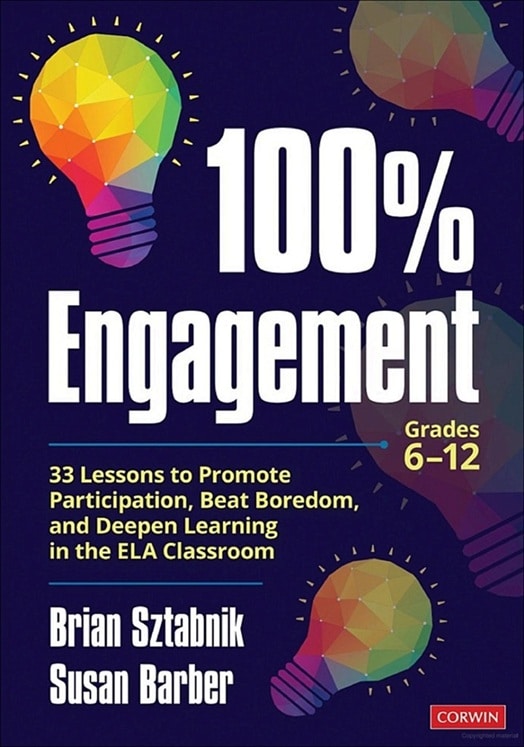
This pervasive issue has prompted a proactive response from seasoned educators Brian Sztabnik and Susan Barber. Both highly experienced high school English teachers, Sztabnik and Barber have channeled their extensive classroom experience and a decade of online community building into a transformative resource. Through their blog, Much Ado About Teaching, and various social media platforms, they have cultivated a vibrant network for ELA educators, consistently identifying a shared struggle: the planning of lessons that truly captivate students and promote active learning. Their collaborative efforts culminated earlier this year in the publication of their book, 100% Engagement: 33 Lessons to Promote Participation, Beat Boredom, and Deepen Learning in the ELA Classroom, offering a practical antidote to classroom inertia.
The Enduring Challenge of Textual Engagement in ELA
English Language Arts stands as a crucial discipline, tasked with developing students’ abilities to comprehend, analyze, interpret, and create written and spoken communication. The curriculum inherently relies on extensive interaction with diverse texts, aiming to cultivate not just factual recall but also critical thinking, empathy, and a nuanced understanding of the human experience. Yet, traditional methods of text study, often centered around silent reading followed by comprehension questions or essays, can inadvertently alienate students. Research consistently indicates that passive learning approaches often lead to lower retention rates and diminished intrinsic motivation. For instance, studies on adolescent literacy frequently highlight a decline in reading for pleasure as students progress through secondary education, often correlating with instructional methods perceived as uninspiring or overly academic.

The digital age further complicates this landscape. Students today are immersed in a world of instant gratification and multimedia content, making sustained engagement with lengthy, complex texts a particular challenge. The perception of ELA as "boring" or "dry" is not merely anecdotal; it reflects a genuine pedagogical hurdle in translating the inherent richness of literature into an engaging classroom experience for every learner. This disengagement can manifest as a lack of participation in discussions, superficial textual analysis, and a general reluctance to delve deeper into course material. Addressing this requires innovative strategies that break from convention, activate multiple learning pathways, and foster an environment where students actively construct meaning rather than passively receive it.
From Online Community to Published Pedagogy: The Genesis of 100% Engagement
Brian Sztabnik and Susan Barber are not newcomers to the discourse on effective ELA instruction. For over ten years, they have been at the forefront of building a robust online community for English teachers. Their blog, Much Ado About Teaching, became a hub for sharing insights, challenges, and successful classroom practices. This continuous dialogue with educators across the globe provided them with invaluable insights into the common pain points and aspirational goals within ELA teaching. A recurring theme emerged: the urgent need for practical, adaptable strategies to combat student boredom and elevate participation.
Their work on Much Ado About Teaching allowed them to experiment, refine, and curate a collection of strategies that consistently yielded positive results in their own classrooms and those of their peers. Recognizing the widespread nature of the engagement crisis, they embarked on the ambitious project of consolidating these proven methods into a comprehensive guide. The publication of 100% Engagement represents a significant milestone in their journey, transforming a decade of collaborative learning and practical application into an accessible resource for the broader educational community. The book’s title itself underscores its core mission: to achieve full student involvement, move beyond mere compliance, and inspire a deeper, more meaningful interaction with academic texts.
Key Strategies for Active Textual Engagement
Sztabnik and Barber’s philosophy is rooted in the belief that engagement doesn’t require elaborate technology or complex setups. Instead, many of the most effective strategies are low-tech, highly interactive, and designed to get students physically and cognitively active. During a recent interview, they elucidated three such strategies from their book, each demonstrating a unique approach to fostering deeper learning and participation. These methods exemplify how simple, well-designed activities can dramatically alter the classroom dynamic, transforming passive readers into active interpreters.
1. Cutting Up Poems: Reconstructing Meaning Through Deconstruction
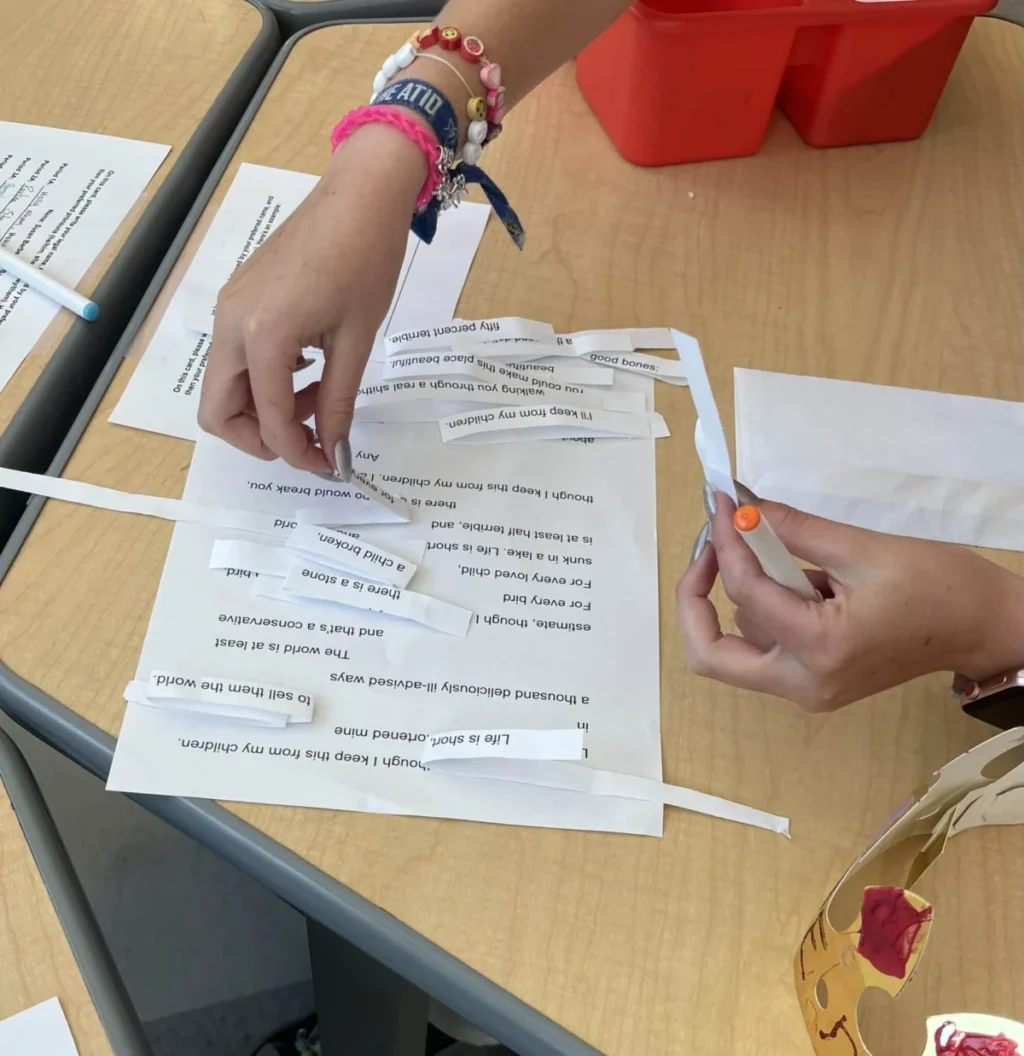
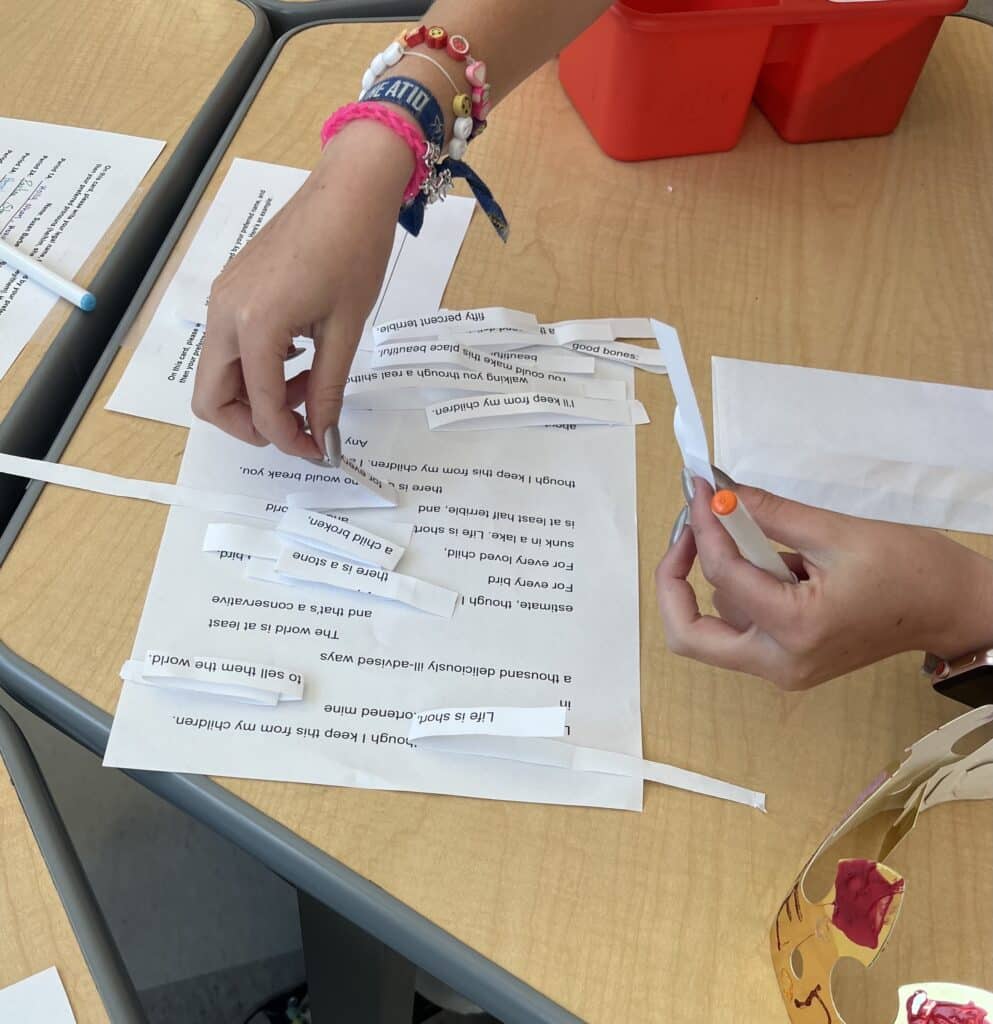
The "Cutting Up Poems" strategy is a deceptively simple yet profoundly effective method for close reading and textual analysis. In this activity, a chosen poem is meticulously cut into individual words, phrases, or lines, and these strips are then distributed to students, typically working in small groups. The students’ task is to reconstruct the poem in its original order, then annotate their reconstructed version, and finally compare it to the original text.
Barber highlights the immediate impact of this hands-on approach: "It’s forcing the students to do a close reading of the poem. If I would have passed out this poem and said, I want you to do a close reading, their eyes would be glazed over." The tactile nature of the task inherently compels students to engage with each linguistic unit. They must consider grammatical structures, punctuation cues, thematic coherence, and poetic devices to logically sequence the fragments. Questions naturally arise: "Does this make sense if it goes here? Well, this is a capital letter, so it may not go in the middle of those sentences, or this is a comma here, that may not fit right there." This iterative process of hypothesis, arrangement, and re-evaluation fosters analytical thinking from the outset.
The "teacher trick," as Barber playfully refers to it, lies in transforming a potentially intimidating analytical task into an interactive puzzle. Students are not just reading; they are manipulating, discussing, and justifying their choices. This collaborative problem-solving stimulates robust discussion, forcing students to articulate their reasoning and engage deeply with the poem’s structure and meaning before even seeing the original. The subsequent comparison to the original text allows for powerful metacognitive reflection on their interpretive choices and the author’s craft. This strategy is particularly effective for developing an understanding of poetic form, syntax, and the subtle nuances of language.
2. Inferential Timeline: Mapping Narrative and Unveiling Significance
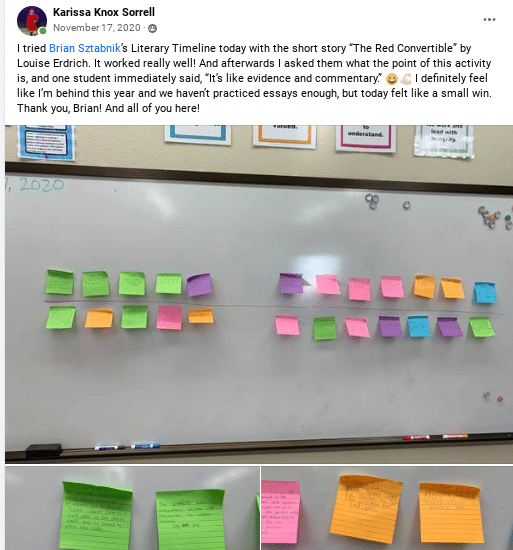
For longer narrative texts like novels, the "Inferential Timeline" provides a dynamic way for students to track plot development, character arcs, and thematic emergence while practicing summarization and inferential reasoning. The activity begins by assigning each student a specific segment of a novel (e.g., a few pages) and providing them with an index card or post-it note. On this card, students must identify the single most important event or development within their assigned pages and support it with a relevant quote from the text. These cards form the top tier of a two-tiered timeline displayed prominently in the classroom.
Sztabnik explains the initial cognitive demands: "What I’m really asking is to summarize the plot and boil it down to one or two sentences. So this is all about decision-making and cutting out the extraneous details and just focusing on what’s really important. And often it’s either character development or increasing conflict or maybe a symbol finally emerges." This forces students to distinguish between minor details and pivotal moments, a crucial skill for literary analysis.
The second tier of the timeline introduces a layer of inferential thinking and collaborative analysis. Once the top row of summary cards is complete, students select a classmate’s card from the wall (representing a different section of the text) and create a new card to place underneath it. On this second card, they must explain why that particular event or development is significant in the broader context of the narrative. This moves beyond mere plot summary to interpretative analysis.
"It’s collaborative without being collaborative physically," Sztabnik observes, highlighting the intellectual connection forged between students’ contributions. "It’s collaborative mentally: They have to look at their classmate’s card, determine what happened, and make an inference about why that event was so important in the grand scheme of those chapters. So here’s where we’re getting to the higher level thinking – we can understand the plot; now we need to draw conclusions." The lesson culminates in a "gallery walk," where students move along the entire timeline, taking notes on the summaries and inferences made by their peers. This provides a holistic view of the text’s progression and a diverse range of interpretations, reinforcing both individual and collective understanding.
3. Text Rendering: Dissecting Passages to Uncover Core Meaning
The "Text Rendering" strategy is designed to address a common student challenge: moving from broad, general ideas about a text to specific, evidence-based interpretations. Barber often encountered students who could articulate "big ideas" but struggled to pinpoint the textual evidence supporting them. "I have trouble every year getting students to narrow their focus when they’re making meaning from the text," she recounts. "They talk in these really big, general ideas, and I would be like, Where did this come from? And they’re like, You know, it’s just there. It has to come from someplace specific in the text. I had to find some activity to get them to take the big ideas to the small."
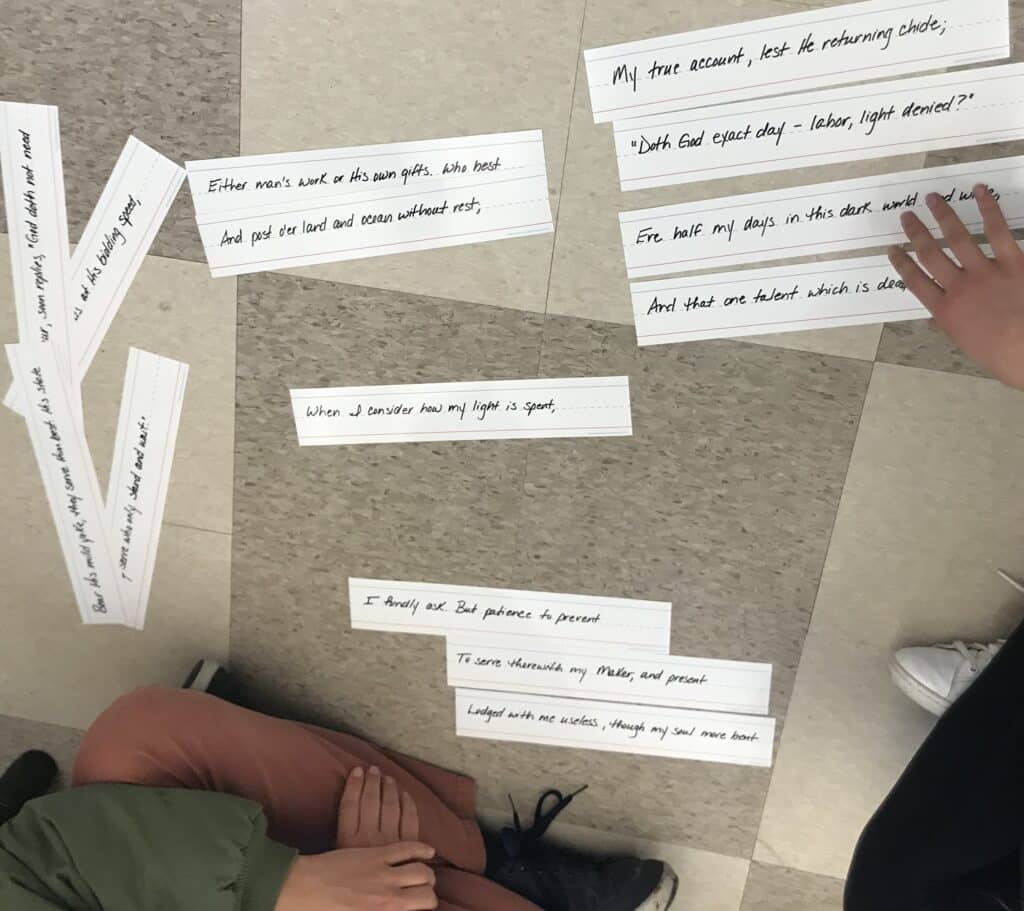
This strategy involves a guided process of textual deconstruction. Students begin with a given passage. From this passage, they are tasked with identifying:
- The single most important sentence or line.
- The most important phrase or clause within that chosen sentence.
- The most important single word from that chosen phrase.
This hierarchical selection process compels students to engage in rigorous analysis, justifying each choice based on its perceived significance to the passage’s overall meaning or thematic contribution. After making their individual selections, students defend their choices to their classmates, articulating the rationale behind their decisions. This peer discussion further refines their analytical skills and exposes them to alternative interpretations. Finally, small groups work together to synthesize their individual findings and draw collective conclusions about the passage, grounding their interpretations firmly in the text’s specific language.
"Text Rendering" effectively teaches students to zoom in on textual details, demonstrating that profound understanding often emerges from the meticulous examination of individual words and phrases. It bridges the gap between general comprehension and deep analytical insight, cultivating the habit of evidence-based reasoning essential for academic success in ELA and beyond.
Broader Pedagogical Implications and the Future of ELA
The strategies championed by Sztabnik and Barber resonate deeply with contemporary educational research advocating for active learning, student-centered instruction, and the development of 21st-century skills. By prioritizing movement, collaboration, and critical decision-making, these lessons move beyond rote memorization and passive reception of information. They foster a classroom environment where students are not merely consumers of content but active participants in the construction of knowledge.
The emphasis on low-tech solutions also highlights a crucial point: effective engagement does not necessitate expensive digital tools. Instead, it relies on well-designed pedagogical approaches that tap into fundamental human learning processes – curiosity, problem-solving, social interaction, and metacognition. These strategies inherently promote critical thinking, analytical reasoning, communication skills, and collaboration – competencies vital for success in any field.
Moreover, by making learning visibly active and interactive, these approaches can significantly impact student motivation. When students are physically and mentally involved in tasks, they are more likely to feel a sense of ownership over their learning, leading to increased self-efficacy and a more positive attitude towards challenging texts. This shift from "doing school" to "doing learning" is a fundamental goal for educators striving to prepare students for a complex world.
Continuing the Dialogue: A Community for Engagement
Recognizing the power of shared practice, Sztabnik and Barber have extended their commitment to fostering engaged learning through a dedicated Facebook group titled "100% Engagement." This online community serves as a platform for teachers to exchange ideas, ask questions, share successes, and collectively refine these strategies. Such collaborative spaces are indispensable for professional development, allowing educators to learn from each other’s experiences and adapt these versatile lessons to their unique classroom contexts. Their blog, Much Ado About Teaching, also continues to serve as a valuable resource for ongoing insights and discussions on ELA pedagogy.
In conclusion, 100% Engagement by Brian Sztabnik and Susan Barber offers a timely and impactful contribution to the field of English Language Arts education. By providing concrete, actionable strategies like "Cutting Up Poems," "Inferential Timeline," and "Text Rendering," they empower teachers to transform potentially dry textual analysis into vibrant, interactive learning experiences. Their work underscores the profound truth that engagement is not a luxury but a fundamental prerequisite for deep learning, paving the way for a more dynamic and effective ELA classroom for all students.