


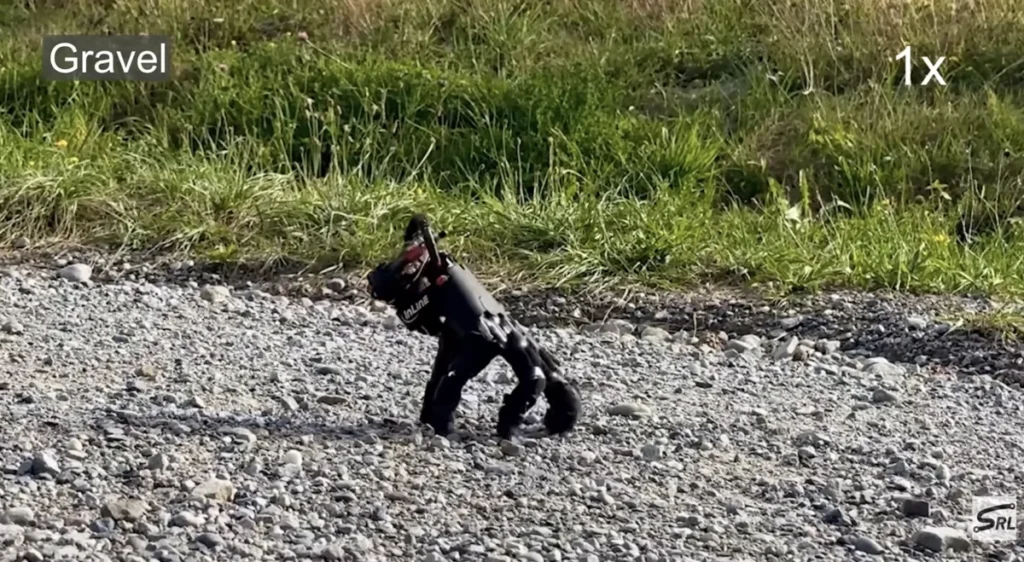
Engineers at the Soft Robotics Lab at ETH Zurich have unveiled a breakthrough in robotics: a fully articulated, five-fingered mechanical hand capable of independent locomotion, complex balance, and precise object manipulation. Drawing inspiration from speculative fiction but grounded in rigorous applied engineering, the prototype addresses long-standing mechanical challenges associated with robotic asymmetry. While previous iterations required uniform finger lengths to achieve balance, the ETH Zurich team successfully programmed an asymmetrical, human-like hand to navigate diverse terrains, recover independently from falls, and perform delicate tasks such as typing and playing video games.
This development arrives at a critical juncture in the global robotics sector. As companies increasingly race to commercialize bipedal humanoid robots for manufacturing, logistics, and domestic applications, the introduction of mobile end-effectors suggests a paradigm shift in how machines might interact with spaces explicitly designed for human anatomy.
Background Context and Technological Evolution
The pursuit of robotic dexterity has traditionally focused on stationary applications—manipulating objects on assembly lines, assisting in surgeries, or performing delicate warehouse sorting tasks. When researchers have previously explored the concept of walking robotic hands, they faced a fundamental design contradiction. Human hands rely on distinct physiological characteristics: an opposing thumb and uneven finger lengths. This asymmetry optimizes humans for tool use and grasping versatility, yet it creates severe kinetic challenges for stability and locomotion.
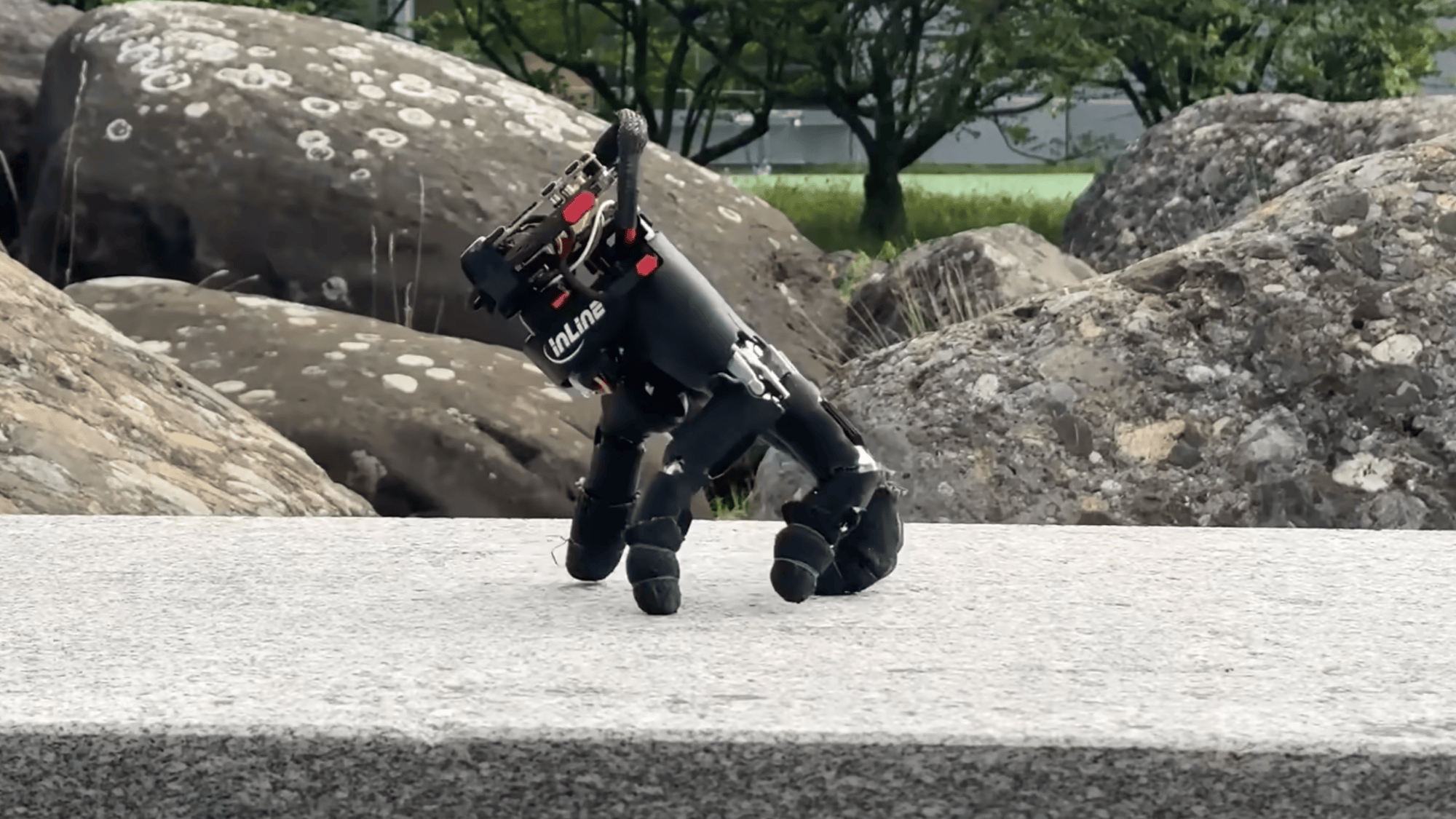
Historically, engineers circumvented this problem by altering the morphology of robotic hands, forcing uniformity across all digits to simplify the physics of balance. However, standardizing finger length sacrifices the very utility that makes human-shaped hands desirable in the first place.
To overcome this limitation, the ETH Zurich research team utilized an off-the-shelf mechanical humanoid hand featuring five fingers and 20 actuated joints. To grant the appendage autonomy, engineers integrated a localized power source, inertial motion sensors, and a compact computational unit mounted near the structural wrist junction. The entire self-contained unit weighs a mere 1.8 pounds, establishing a lightweight profile essential for maintaining balance during dynamic movement.
Chronology and Development Methodology
The development process bridged advanced simulation environments with rigorous real-world implementation. The timeline of the project highlights the rapid iteration cycle typical of modern reinforcement learning applications in robotics:
- Hardware Integration: Engineers equipped a commercial 20-joint robotic hand with onboard batteries, sensors, and micro-processing hardware, establishing the physical parameters of the 1.8-pound mobile unit.
- Simulation and Reinforcement Learning: Due to the physical dangers and inefficiencies of training balance on physical hardware, the team deployed a virtual simulation environment. Using reinforcement learning algorithms, the software was trained to reward the system for maintaining equilibrium on its uneven fingertips.
- Asymmetrical Timing Calibration: Recognizing the variable lengths of the fingers, the training architecture assigned unique timing protocols and target positions to each digit. This ensured that the movement of the thumb, index, and remaining fingers adapted dynamically depending on the required task.
- Field Testing and Terrain Trials: Following successful virtual training, the physical hand was deployed across 14 distinct indoor and outdoor terrains.
- Functional Manipulation Trials: Subsequent testing evaluated the hand’s ability to divide its computational resources between locomotion and fine-motor tasks, including object pushing, typing, and puzzle-solving.
Real-World Testing and Performance Metrics
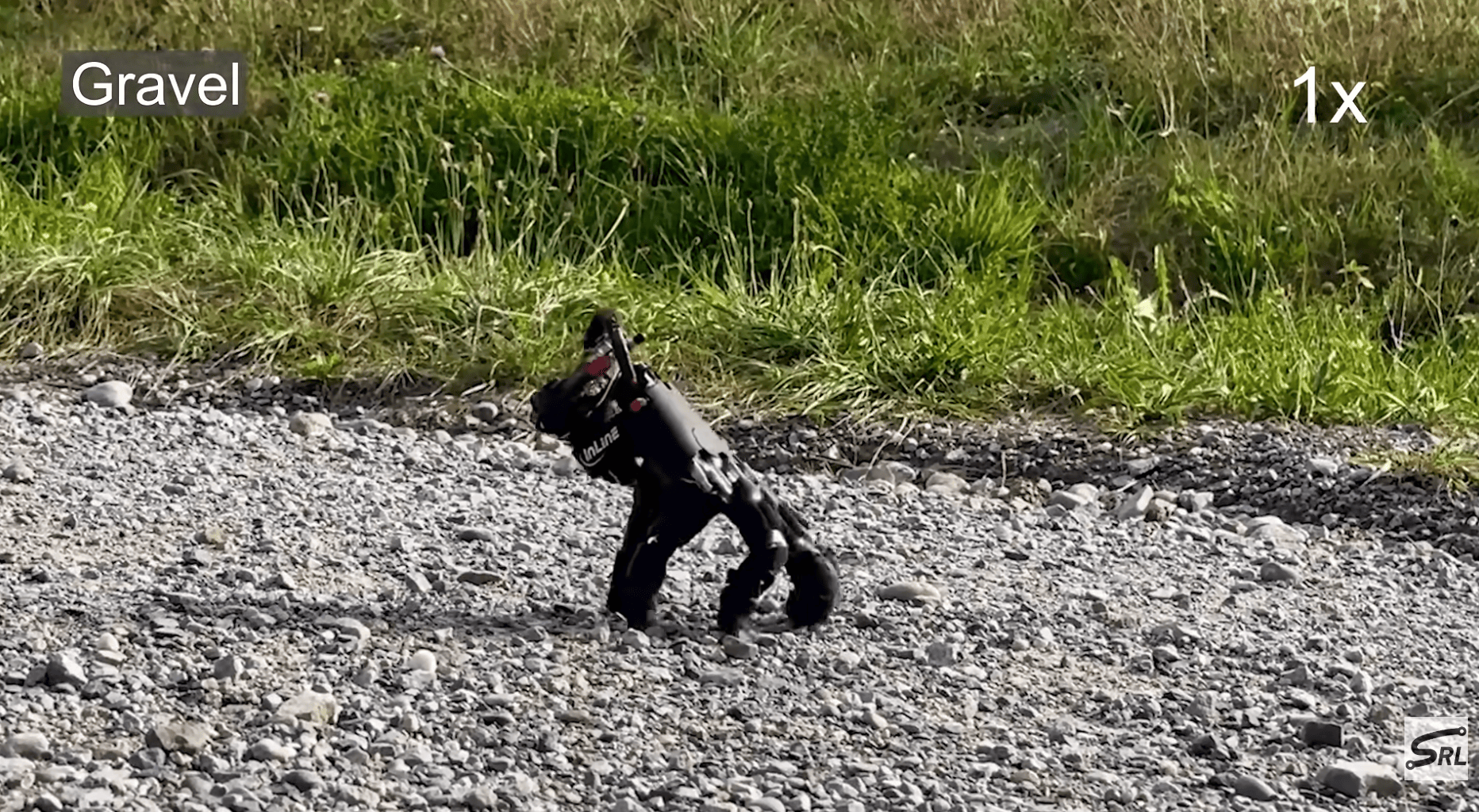
During physical evaluations, the robotic appendage successfully traversed 14 different surface textures, including carpet, gravel, grass, and metal plating. Utilizing a springy, spider-like gait, the hand maintained balance across uneven substrates while demonstrating the ability to independently right itself from a flat, fallen position without external human intervention.

Beyond simple locomotion, the system demonstrated dual-task capabilities. By allocating a subset of its fingers to stabilization, the remaining digits successfully manipulated objects. In precision testing involving a standard QWERTY keyboard, the disembodied hand successfully struck the correct keys 29 out of 32 times—achieving a high degree of input accuracy. Furthermore, the robot demonstrated cognitive interaction capabilities by playing Sokoban, a classic puzzle-solving video game, through rapid directional arrow-key inputs.
Broader Impact and Industry Implications
The implications of a mobile robotic hand extend far beyond novelty demonstrations. In industrial settings, humanoid robots deployed in confined or hazardous environments frequently encounter obstructed spaces where an entire bipedal chassis cannot fit. Researchers envision future deployment scenarios where a humanoid robot could detach a hand, dispatch it into a narrow crawlspace or conduit to retrieve a dropped tool or component, and subsequently reattach it.
This capability intersects with massive financial investments currently flooding the robotics market. Major automotive and technology entities are scaling up deployments of bipedal and humanoid systems. For instance, Toyota announced plans to integrate an extensive robotic workforce into its manufacturing infrastructure, committing billions of dollars annually beginning in 2028 to upgrade factory floors. Concurrently, companies like Figure and Tesla continue to refine general-purpose humanoid platforms intended for commercial and residential sectors.
Despite these advancements, the broader commercialization of humanoid robotics faces persistent technical hurdles. Many current systems still rely heavily on remote human operators for navigation and complex decision-making, while others remain constrained by power efficiency and manipulation durability. Innovations in localized end-effector mobility, such as those demonstrated by the ETH Zurich lab, suggest that future robotic architectures will prioritize modularity and localized autonomy to bridge the gap between static automation and fluid human-environment interaction.
Fact-Based Analysis of Market Trends
The transition from theoretical robotics research to enterprise-grade deployment is accelerating under pressure from labor shortages and rising manufacturing overhead. Analysts note that while the concept of a crawling robotic hand evokes dystopian tropes popularized by popular culture, the underlying engineering solves a very practical engineering bottleneck: optimizing dexterity without sacrificing mobility.
As academic institutions and private research laboratories continue to refine reinforcement learning models for complex morphologies, the boundary between specialized industrial machinery and adaptable, human-centric automation continues to narrow. Future research directions for the ETH Zurich team and parallel groups will likely focus on wireless power transmission, enhanced payload capacity, and seamless mechanical docking mechanisms required to transition an end-effector between an autonomous crawler and a standard robotic arm.