



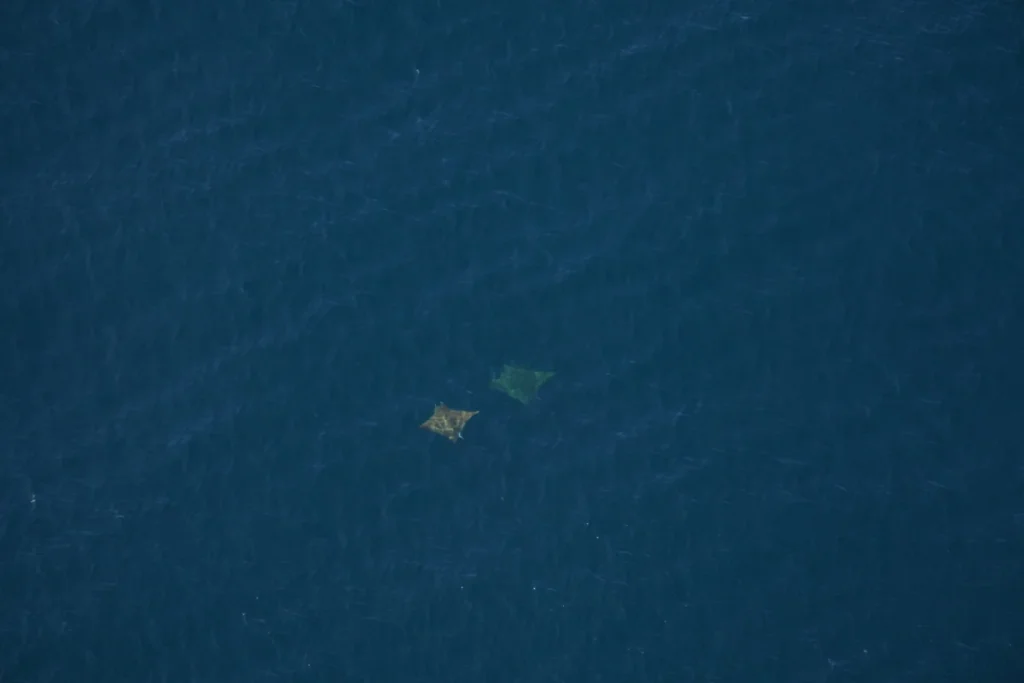
As the summer season drew to a close in the deep blue waters southeast of Cape Cod, aerial survey teams operating on behalf of the New England Aquarium documented a remarkable concentration of marine life. During routine monitoring flights over the Northeast Canyons and Seamounts Marine National Monument, researchers recorded more than 2,000 individual animals spanning 15 distinct marine species. Among the multitude of migrating pelagic wildlife, scientists observed a rare and fleeting group of Chilean devil rays (Mobula tarapacana), an elusive, olive-green giant of the open ocean often described by marine biologists as one of the deep sea’s best-kept secrets.
The discovery underscores the ecological importance of the marine monument, a protected offshore expanse known for its complex oceanography, steep submarine canyons, and high biological productivity. While the region regularly hosts summer visitors drawn northward by warm water intrusions from the Gulf Stream, the confirmed presence of Chilean devil rays offered a rare window into the habits of a globally threatened species that is notoriously difficult to track, study, and protect.
The Aerial Expedition and the Monument’s Ecosystem
The sighting was made by researchers assigned to the Anderson Cabot Center for Ocean Life at the New England Aquarium. Katherine McKenna, a marine researcher and observer on the aerial survey flight, noted that encountering Chilean devil rays from the air is an extraordinary event.
"We rarely see Chilean devil rays on our aerial surveys," McKenna said. "The Monument’s deep sea canyons, complex oceanographic conditions, and productive waters support a remarkable diversity of marine life, especially in the summer months when warm water protruding from the Gulf Stream draws in seasonal visitors like Chilean devil rays."
The Northeast Canyons and Seamounts Marine National Monument—situated roughly 130 miles southeast of Cape Cod—protects a fragile underwater landscape featuring extinct underwater volcanoes, known as seamounts, and plunging glacial canyons. These geographic formations interact with deep-sea currents to force nutrient-rich water upward toward the surface. This upwelling fuels a prolific food web that attracts everything from microscopic zooplankton and pelagic fish to large whales, sea turtles, and migratory rays.
During the late-summer survey window, the combination of elevated water temperatures and abundant prey creates an ideal foraging habitat. The aquarium’s documentation of over 2,000 animals in a single survey period highlights the region’s function as a critical seasonal feeding ground for migratory marine species navigating the western Atlantic.
Anatomy, Behavior, and Extreme Adaptations of Mobula tarapacana
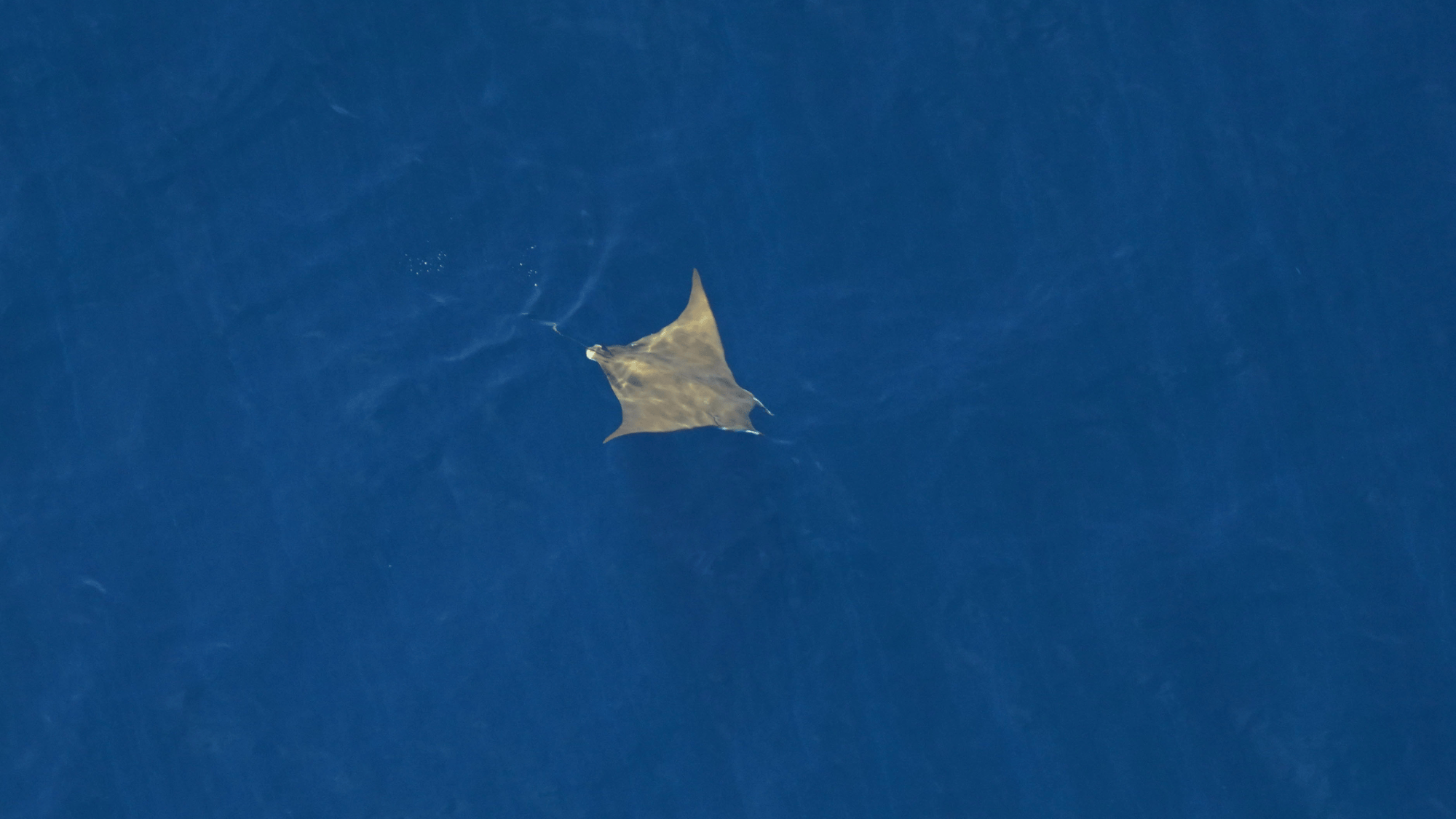
Chilean devil rays, scientifically classified as Mobula tarapacana and frequently referred to as sicklefin devil rays, are magnificent yet vulnerable cartilaginous fish. Typically displaying an olive-green or dark brown coloration on their dorsal sides, these massive rays possess an impressive wingspan measuring between 11 and 12.5 feet across. Adult specimens frequently weigh anywhere from 715 to 1,100 pounds.
The common moniker "devil ray" originates from the prominent, horn-shaped cephalic fins projecting from either side of their mouths. These specialized appendages help funnel plankton and small schooling fish into their mouths as they glide through the water column. Despite their imposing physical dimensions, Chilean devil rays are filter-feeding, docile creatures that pose no threat to humans.
One of the most remarkable physiological traits of the Chilean devil ray is its capacity for extreme diving. While many ray species remain close to coastal shelves or surface waters, Mobula tarapacana is recognized as the deepest-diving ray species recorded in marine science. Individuals have been documented plunging to depths of nearly 6,000 feet beneath the ocean surface into pitch-black, freezing waters.

This deep-diving capability is made possible by a specialized anatomical feature known as the rete mirabile—a complex network of blood vessels surrounding the animal’s brain. This biological countercurrent heat exchanger allows the rays to conserve metabolic heat and maintain elevated brain and muscle temperatures, protecting vital organs from the extreme cold found in the ocean’s bathypelagic zones.
Elusive Lifestyles and Group Dynamics
Studying Chilean devil rays presents a formidable challenge to marine biologists. Unlike coastal stingrays that inhabit predictable, shallow estuaries, Chilean devil rays are pelagic wanderers that spend the vast majority of their lives in the open ocean, far from land. They are capable of undertaking vast trans-oceanic migrations, traveling hundreds or thousands of miles across open water basins.
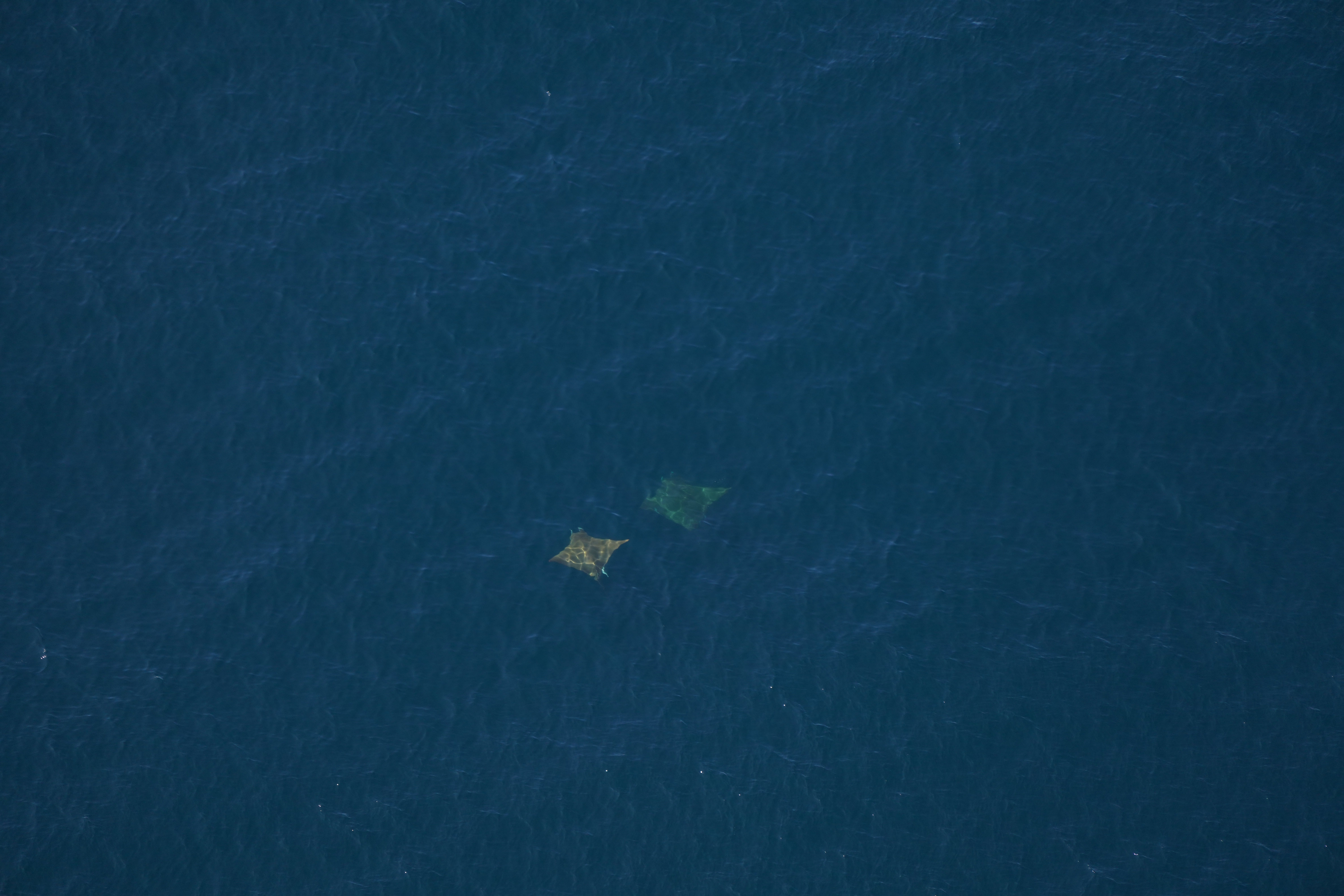
In terms of social structure, the species is predominantly solitary, often observed swimming alone through the pelagic realm. However, on rare occasions, individuals congregate in localized areas to feed, mate, or take advantage of localized upwellings. When multiple rays gather together, the assemblage is formally referred to by marine scientists and naturalists as a "fever." During their late-summer flights near Cape Cod, the New England Aquarium aerial team managed to spot a small fever of these elusive giants, providing researchers with valuable data regarding their seasonal aggregation behavior.
Conservation Status and Global Threats
Despite their majestic stature and adaptations for survival in the harshest oceanic environments, Chilean devil rays face an increasingly precarious future. The International Union for Conservation of Nature (IUCN) classifies Mobula tarapacana as Critically Endangered on its Red List of Threatened Species.
The primary drivers of the species’ population decline are commercial fisheries, particularly industrial longline and gillnet operations. Because these rays travel vast distances across international waters, they frequently swim outside the protective boundaries of marine reserves and national jurisdictions. They are heavily impacted by bycatch—unintentional capture in fisheries targeting tuna and swordfish—as well as targeted fisheries in certain regions of the world where their gill plates are harvested for use in unregulated international trade.
Furthermore, because mobulid rays possess exceptionally low reproductive rates—females typically give birth to only a single pup after a prolonged gestation period—populations depleted by overfishing require decades to recover. Environmental organizations and marine conservationists continue to advocate for expanded international protections, stricter bycatch mitigation measures, and enhanced monitoring of high seas migration corridors to prevent the extinction of the species.
Broader Implications and Future Research
The documentation of Chilean devil rays within the Northeast Canyons and Seamounts Marine National Monument carries significant implications for marine spatial planning and conservation policy. As global ocean temperatures continue to shift in response to climate change, the thermal boundaries of marine habitats are altering. Monitoring seasonal visitors like Mobula tarapacana allows scientists to track how pelagic species adapt to shifting oceanographic conditions and temperature anomalies in the North Atlantic.
For conservation managers, data gathered by organizations like the New England Aquarium provide the empirical foundation necessary to advocate for the preservation of offshore marine monuments. By establishing that these protected areas serve as vital seasonal refuges and foraging grounds for critically endangered migratory wildlife, researchers can better argue for the enforcement of strict environmental safeguards against industrial fishing and seabed disturbance.
As researchers continue to analyze the comprehensive dataset gathered during the late-summer aerial surveys, the unexpected appearance of the Chilean devil ray serves as both a celebration of ocean biodiversity and a stark reminder of the fragility of marine ecosystems. Protecting these ocean wanderers will require continued international cooperation, robust scientific surveillance, and an unwavering commitment to safeguarding the remote pelagic habitats they call home.