



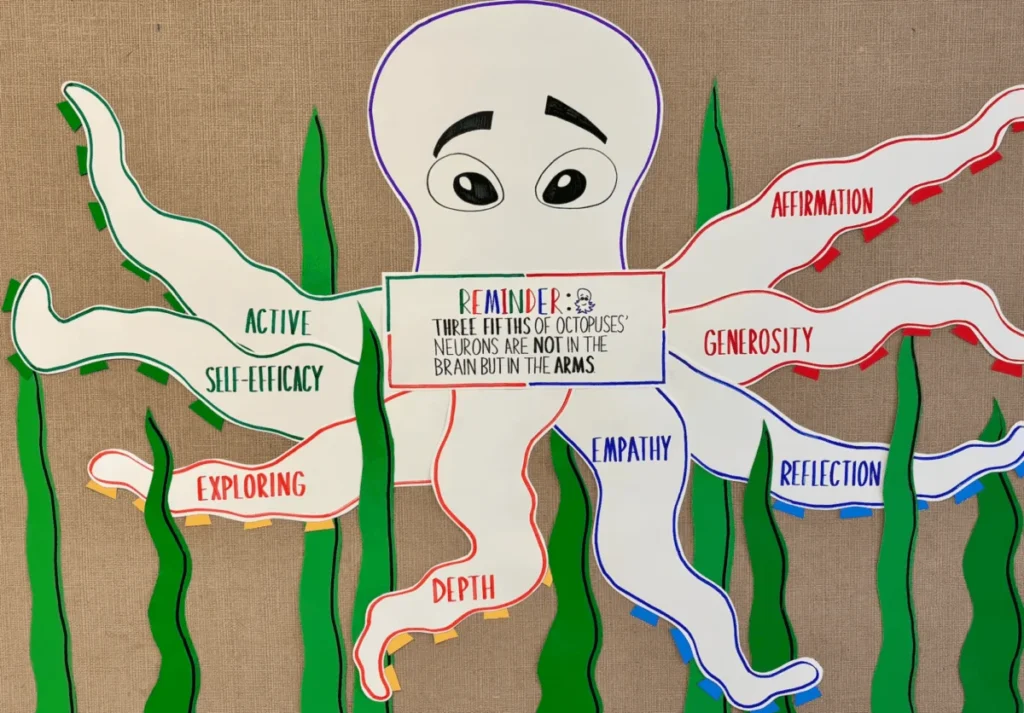
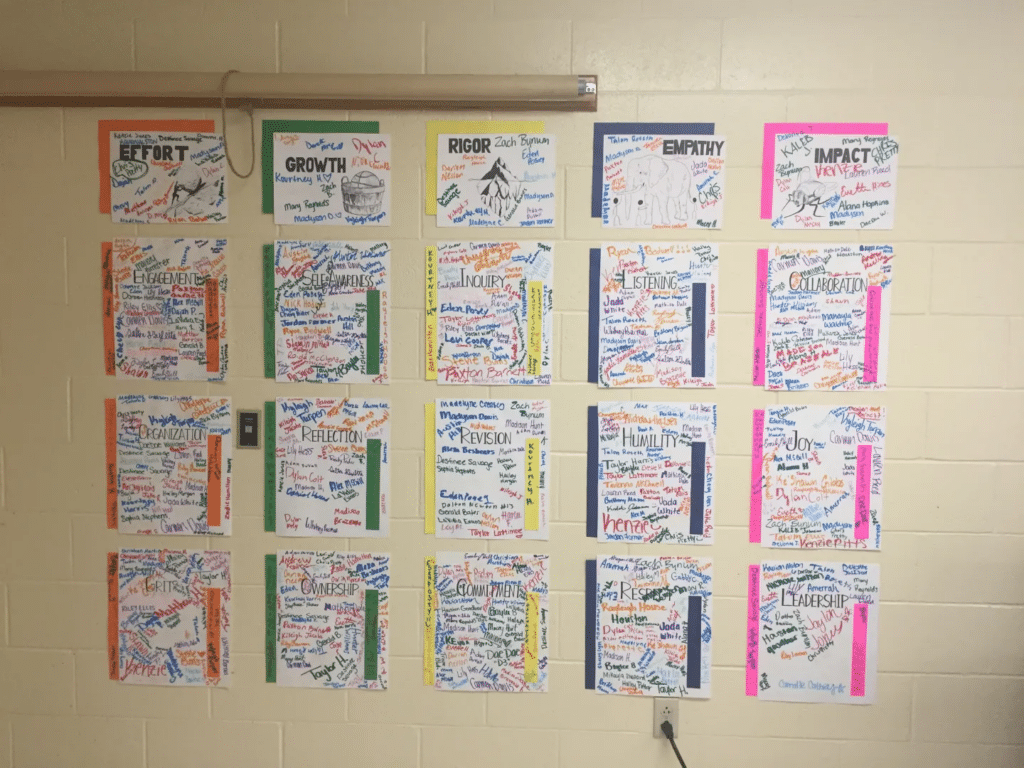
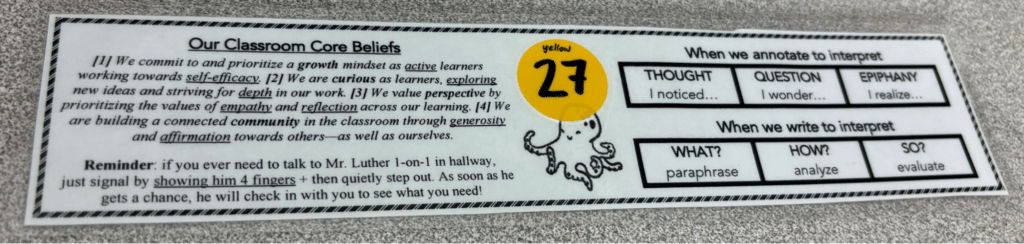
The classroom environment is a critical determinant of academic success, yet fostering a genuine sense of belonging often remains an elusive goal for secondary educators. In an era where students frequently report feelings of disconnection and academic burnout, veteran educator Marcus Luther has developed a systematic approach to community building that relies on peer-to-peer affirmation. By utilizing a visual framework known as "The Octopus"—a series of posters representing core classroom values—Luther has created a replicable model that encourages students to publicly recognize the positive contributions of their peers. This pedagogical strategy, which has evolved over a decade of practice, serves as both a tool for social-emotional learning and a data-driven method for teachers to better understand student dynamics.

Historical Evolution of the Affirmation Model
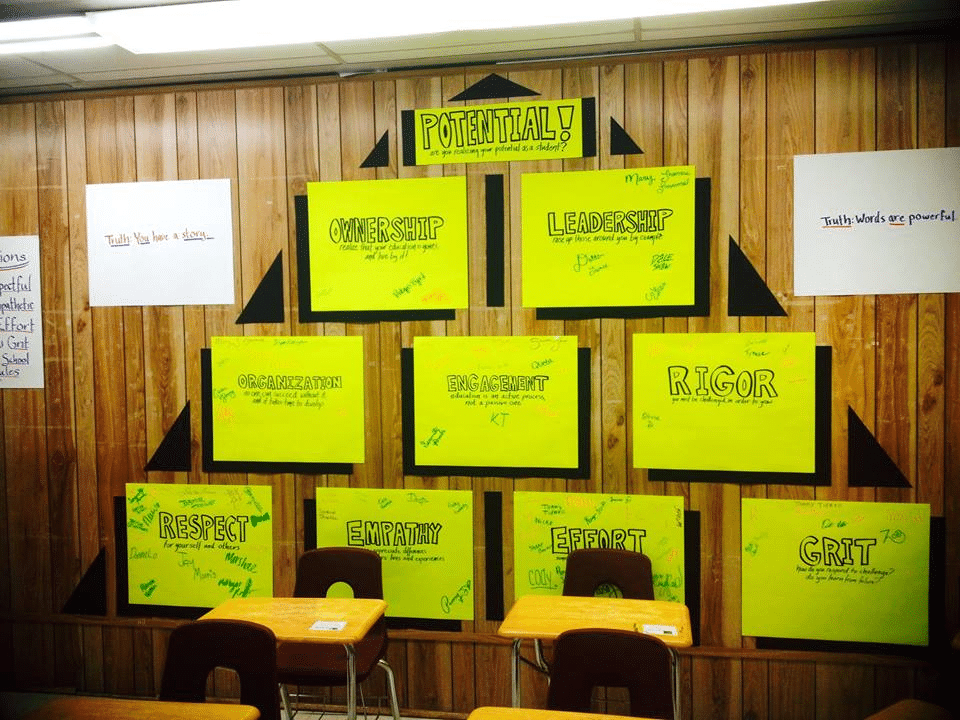
The concept of structured peer affirmation in the classroom is not entirely new, but its application in high school settings has historically been inconsistent. Luther’s implementation was inspired by his wife, a fifth-grade teacher, who utilized intentional, written positive notes to build community. In his initial attempts as a first-year teacher, Luther utilized a "Pyramid of Success" model, heavily influenced by the philosophy of legendary UCLA basketball coach John Wooden. Over the course of ten years, this structure underwent several iterations, shifting from geometric designs to the current "octopus" configuration.
The transition to an eight-appendage octopus was driven by a need for both thematic clarity and structural scalability. For a teacher managing five or six sections—totaling between 150 and 180 students—the system had to be manageable. By selecting eight core values that anchor the classroom experience, Luther provides students with a vocabulary for positive behavior, allowing them to identify and articulate specific instances of growth, kindness, or intellectual depth in their classmates.
Mechanics of the System
The effectiveness of the system rests on three foundational pillars: the identification of core values, a streamlined nomination process, and a consistent ritual of public recognition.
The process begins before the academic year starts. Rather than imposing arbitrary rules, Luther leverages feedback from the previous year’s cohort. By analyzing end-of-year surveys where students reflect on which values were most impactful, he refines the set of eight values displayed on the classroom walls. This collaborative approach ensures the values remain relevant to the current student body.
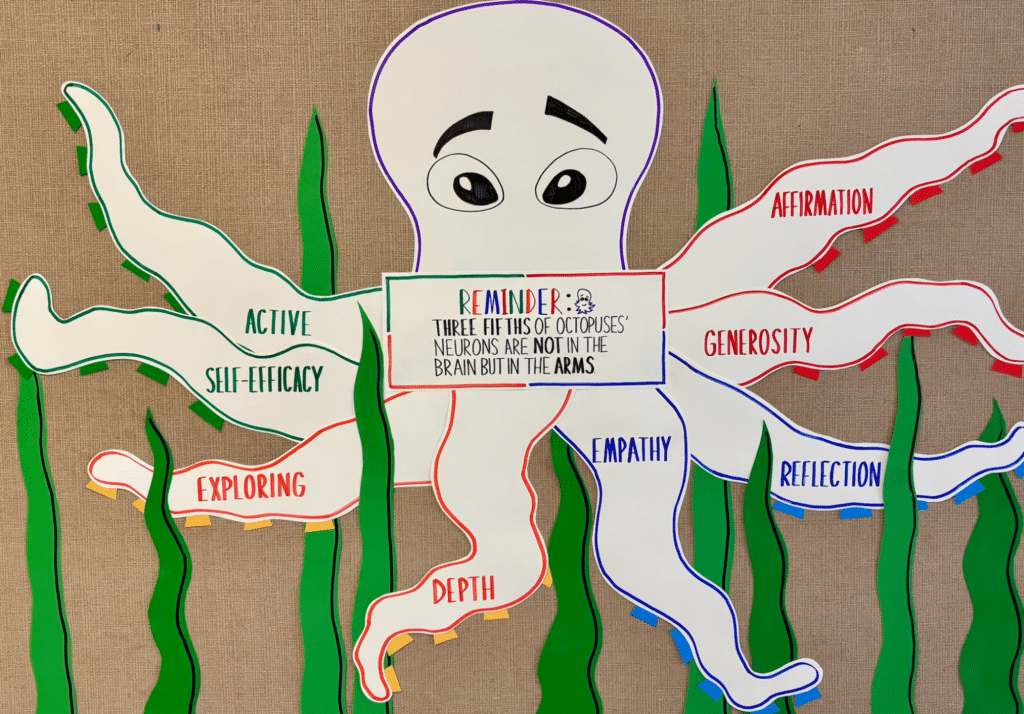
Once the school year is underway, the "blank" state of the octopus posters serves as a visual prompt. For the first two to three weeks, the posters remain empty, building curiosity. During this period, the educator focuses on community-building exercises, preparing the class for the emotional labor required in peer affirmation. When the nomination phase officially launches, it is conducted through digital platforms, such as Google Forms. This serves two purposes: it ensures the nominations remain anonymous, which increases the likelihood of participation, and it creates a database of qualitative data that the teacher can reference for parent-teacher conferences, letters of recommendation, and student check-ins.
Data and Longitudinal Observations
While the system is rooted in social-emotional health, its practical benefits are quantifiable. By maintaining a digital record of nominations, the educator gains a "bird’s-eye view" of classroom culture. Data analysis of these logs often reveals which students are consistently seen as leaders and, perhaps more importantly, which students might be struggling to integrate into the social fabric of the class.
In a professional setting, this serves as an early-warning system. If a student has zero nominations after a semester, the teacher can intentionally create opportunities for that student to contribute, or look for ways to highlight their strengths. Furthermore, these records act as a primary source document when writing college recommendation letters. Instead of relying on vague impressions, the educator can pull specific, peer-verified evidence of a student’s character, such as "always willing to help others understand complex texts" or "consistently demonstrates empathy during group work."
Addressing Implementation Challenges and Skepticism
Integrating a ritual that requires teenagers to express vulnerability is not without its challenges. Critics of similar programs often point to the risk of "forced" participation or the potential for students to view such exercises with cynicism. However, longitudinal observation suggests that student engagement with the "octopus" typically follows a predictable curve.

Initial skepticism—often manifested as eye-rolling or performative detachment—is a common response to any new ritual in a high school environment. Educators who successfully navigate this transition emphasize the importance of teacher modeling. When the teacher treats the ritual with professional gravity and genuine enthusiasm, the students mirror that behavior. Data from these classrooms indicate that even the most reluctant students often shift from skepticism to active participation once the ritual becomes a normalized part of the weekly schedule.
The Broader Impact on School Climate
The implications of this system extend beyond the four walls of the classroom. In educational research, the "Pygmalion effect" suggests that student performance is heavily influenced by the expectations placed upon them. By creating a system that explicitly labels and rewards positive values, the educator changes the definition of success within the classroom. Students are no longer just evaluated on test scores; they are recognized for the impact they have on their peers.
Parental reception of this model has also been positive. During fall conferences, the ability for a teacher to share specific, anonymous affirmations from a student’s peers provides parents with a more holistic view of their child’s social development. This bridging of the home-school gap can be a significant factor in increasing parental trust and engagement in the educational process.
Replicability and Future Applications
For administrators and teachers looking to implement similar systems, the "octopus" model offers a low-cost, high-impact solution. The primary requirements are not expensive software or proprietary curriculum, but rather the consistency of the instructor and the willingness to dedicate classroom time to the ritual of "signing the wall."
The scalability of this approach is evident in its adaptability. While the octopus is the current iteration, the underlying mechanism—the identification of values, the anonymous nomination, and the public celebration—can be applied in diverse educational environments, from primary school to specialized secondary programs.
As schools continue to grapple with the complexities of student mental health and social development, the success of the peer-to-peer affirmation model underscores a fundamental truth in education: when students are given the tools to see and value one another, the entire classroom culture shifts. By institutionalizing gratitude and recognition, educators can transform a standard learning environment into a community where every individual feels both seen and supported. The "octopus" is not merely a piece of classroom decor; it is a structural commitment to the belief that the social-emotional development of students is as vital as their academic mastery.