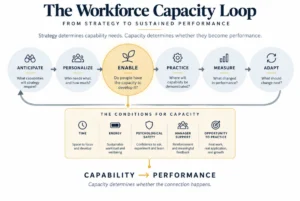




The traditional hierarchy of business competitive advantages has undergone a fundamental shift as artificial intelligence has transitioned from a niche experimental tool to a core component of global enterprise infrastructure. For decades, firms derived their market superiority from information asymmetry—the ability to access, process, and act upon data faster than competitors. However, the current landscape, defined by the ubiquity of Large Language Models (LLMs) and automated analytical tools, has rendered raw information a low-cost commodity. As the cost of data analysis approaches zero, the strategic focus for organizations has shifted from the mere acquisition of insights to the critical interpretation and governance of those insights.
The Evolution of Data as a Strategic Asset
Historically, data was a guarded resource. Companies invested millions in proprietary data warehouses, business intelligence teams, and expensive third-party consultancies to parse information. The 2010s saw the "Big Data" boom, where firms competed to hoard vast datasets, believing that volume alone would guarantee market dominance.
The emergence of generative AI platforms beginning in late 2022 fundamentally disrupted this model. By early 2024, reports from McKinsey & Company and Goldman Sachs indicated that up to 70% of business functions could be augmented or automated by AI, effectively leveling the playing field. For a business leader, the question is no longer "do we have the right data," but rather "do we have the institutional capacity to apply it meaningfully?" This transition marks the end of the era of information-hoarding and the beginning of the era of human-centered implementation.
A Four-Pillar Framework for AI Governance
For modern organizations, the absence of a standardized playbook for AI integration has created a vacuum. Without internal frameworks, firms risk both underutilizing their tools and exposing themselves to significant operational hazards. Leaders, such as those at platforms like Donorbox, are increasingly adopting structured methodologies to ensure AI serves as a "smart individual contributor" rather than a decision-making authority.
Pillar 1: Rigorous Data Discretion and Governance
The primary risk associated with AI adoption is the inadvertent compromise of sensitive data. In the current regulatory environment, characterized by GDPR, CCPA, and evolving industry-specific compliance requirements, the "copy-paste" culture in corporate environments poses an existential threat.
The industry-standard approach involves strict data sanitization before input. When dealing with customer lists, revenue figures, or proprietary research, the burden of security lies with the human operator. Experts argue that companies must implement "data-scrubbing" protocols where personally identifiable information (PII) is stripped from datasets before they are processed by third-party LLMs. Failure to enforce these boundaries can lead to intellectual property leakage, which remains a primary concern for cybersecurity firms in 2024.
Pillar 2: The Contextual Gap and Iterative Prompting
AI models are inherently probabilistic, not deterministic. They operate by predicting the most likely next word in a sequence, often producing "hallucinations"—factually incorrect or strategically irrelevant outputs presented with high confidence.
The successful deployment of AI requires a closed-loop system:
- Goal Definition: Defining specific, measurable objectives.
- Context Injection: Providing the AI with the internal constraints of the business, such as existing commitments and financial limitations.
- Critical Review: Comparing AI outputs against human experience.
- Refinement: Engaging in multi-round iterations to bridge the gap between generic output and company-specific strategy.
Recent internal case studies suggest that the "first-pass" output from an AI tool is rarely sufficient for high-stakes decision-making. High-performing teams are those that view AI as a sparring partner, challenging the model’s suggestions until they align with historical business knowledge.
Pillar 3: Dynamic Planning and Continuous Upskilling
The rapid cycle of AI model releases—often occurring on a quarterly or even monthly basis—has rendered traditional annual planning cycles obsolete. Organizations that rely on rigid, long-term roadmaps risk building toward a version of the market that no longer exists.
To adapt, forward-thinking firms are shifting toward "agile-lite" operational models. By reducing planning horizons to two-week or monthly sprints, companies can integrate the latest AI capabilities as they become available. This approach prevents "technological drift," where employees become proficient in tools that are soon rendered redundant by newer, more efficient versions. Continuous upskilling is no longer a professional development luxury; it is a fundamental operational necessity.
Pillar 4: The Necessity of Failure and Judgment
Judgment is the one attribute AI cannot replicate. It is the byproduct of lived experience, trial, and error. There is a tangible danger in allowing AI to assume the mantle of decision-maker: it stunts the development of junior staff who need to make "live" decisions to cultivate their own intuition.
If an organization insulates its workforce from the responsibility of choosing, it creates a generation of employees incapable of recognizing when an AI model is providing advice that is technically sound but strategically disastrous. For example, while AI might recommend a social media platform based on broad demographic data, a veteran marketer knows that their specific audience may be unresponsive to that channel. Organizations must provide their staff with the psychological safety to make mistakes, as these errors form the foundation of professional judgment.
Industry Implications and the Shift Toward Human Capital
The broader implication for the labor market is a fundamental shift in what constitutes a "skilled" employee. The value of an analyst who can simply extract data is plummeting; the value of an employee who can synthesize, verify, and apply that data within a complex business context is skyrocketing.
Analysts from Deloitte and other research institutions note that the "AI-ready" organization of the future will be characterized by:
- Low-latency decision-making: The ability to move from data to action in days rather than months.
- Interdisciplinary literacy: Employees who understand both the mechanics of AI and the core business functions (marketing, finance, operations).
- Ethical vigilance: A culture where questioning the machine is encouraged, not penalized.
Conclusion: The New Frontier of Talent Development
The competitive landscape of the next decade will be defined not by the sophistication of the algorithms companies utilize, but by the sophistication of the humans managing them. We are witnessing a decoupling of "technical skill" from "analytical output."
The responsibility for leadership has evolved from managing technology to cultivating human potential. By establishing robust governance, fostering iterative workflows, maintaining dynamic planning schedules, and preserving the autonomy of human decision-makers, organizations can move beyond the commoditization of information. The winners in this new era will be the firms that recognize that AI is not a replacement for human intellect, but a lever for human capacity—provided that the hands on the lever are guided by wisdom, experience, and the courage to disagree with the machine. As the barrier to entry for analysis continues to collapse, the premium on human judgment will only continue to rise, marking a new chapter in the history of global business strategy.