




OpenAI has officially announced a sweeping strategic shift that will phase out its Custom GPT ecosystem in favor of a unified plugin architecture designed to integrate deeply across both ChatGPT and its specialized Codex coding agent. The decision marks a major evolution in how OpenAI empowers developers, enterprises, and everyday users to customize artificial intelligence workflows. Rather than maintaining isolated, standalone conversational agents tailored for specific tasks, the artificial intelligence research and deployment company is consolidating its personalization framework into reusable capabilities that bridge chat interfaces with broader software engineering and enterprise environments.
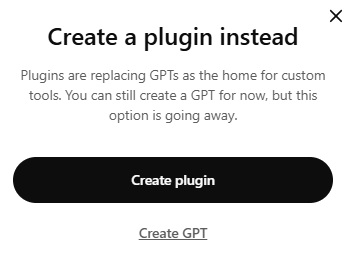
The transition process has already begun quietly within the user interface, where OpenAI has altered navigation layouts to make Custom GPTs less prominent. Users attempting to create new Custom GPTs are now actively steered toward a "create plugin instead" prompt. This foundational pivot signals the end of an era for the GPT Store and individual custom assistants, moving the platform toward a more modular, interoperable system that can leverage external tools, instructions, and reference data simultaneously.
Detailed Timeline and Phased Migration Schedule

The retirement of Custom GPTs is scheduled to culminate on December 11, 2026, though OpenAI has noted that exact timing and migration availability may vary depending on individual accounts, workspaces, and regional server rollouts. For enterprise-tier workspaces, the timeline is considerably more accelerated to allow corporate IT departments adequate time to audit and transition their internal workflows.
The enterprise migration schedule dictates that the creation of brand-new Custom GPTs within enterprise workspaces will cease on October 26, 2026. However, qualifying enterprise customers who apply for and receive approved deferrals will be permitted to continue utilizing their existing Custom GPTs until a final hard cutoff date of February 11, 2027. This staggered timeline highlights the administrative challenges organizations face when migrating mission-critical internal tools to an entirely new technological framework.
Mechanics of the New Plugin Architecture
Under the newly formalized plugin architecture, OpenAI is shifting the paradigm from separate customized versions of ChatGPT toward dynamic plugins that package reusable instructions, reference materials, and secure connections to outside services.
Technically, a plugin within this new ecosystem can encompass one or more distinct components. These include standalone skills containing specialized instructions and resources for repeatable workflows, Model Context Protocol (MCP) servers designed to expose external systems and tools, or a hybrid combination of both. Crucially, ChatGPT and Codex will share a universal plugin directory, streamlining the distribution and discovery of AI capabilities. While universal access will be the default, certain specialized capabilities will retain the flexibility to remain specific to a particular operational environment.
For organizations, this transformation extends far beyond a simple rebranding exercise. Enterprises can package recurring multi-step workflows into modular skills, while simultaneously utilizing MCP servers and connected third-party applications to grant those workflows secure, real-time access to legacy enterprise systems, cloud databases, and internal APIs.
To ease the transition for creators, OpenAI has built a migration pathway accessible through the "My GPTs" interface. During the migration process, a GPT’s existing custom instructions are converted into a skill within the replacement plugin, knowledge files are securely copied over into plugin reference repositories, and previously established connected applications are carried across to the new architecture.
Caveats, Limitations, and Friction Points in Migration
Despite OpenAI’s automated migration pathways, the transition is far from seamless, and developers are facing a series of significant technical caveats. Chief among these limitations is that existing historical GPT conversations do not transfer over to the new plugin format. Furthermore, the specific underlying AI model selected for a Custom GPT does not automatically carry over, requiring manual reconfiguration by the creator. Custom Actions tied to the original GPTs often must be entirely rebuilt utilizing either an available pre-built application or a custom-configured MCP server.
Sharing permissions and workspace access controls also undergo a fundamental reset. Migrated plugins are initialized in a private state by default, meaning existing users of a public or shared Custom GPT do not automatically receive access to the new replacement plugin. Prior sharing settings and collaborative team permissions must be manually re-established.
Perhaps most critically, OpenAI has issued stern cautions to organizations against assuming that the migration process will preserve behavioral fidelity. In technical advisories, the company has noted that a migrated plugin may respond differently due to underlying architectural changes in instruction handling and context retrieval. Consequently, OpenAI strongly recommends that developers and enterprise administrators thoroughly retest familiar prompts, reference-material utilization, required output formatting, and downstream integrations before relying on the plugins in production environments.
Developer Community Pushback and Reactions
The announcement has triggered a wave of pushback and spirited debate across OpenAI’s developer community forums and professional technology channels. Many prolific GPT builders have voiced frustration, arguing that the new plugin architecture does not provide an equivalent or fully adequate replacement for the dedicated, predictable environment offered by Custom GPTs.
Critics have pointed to migration complexity, the loss of historical chat threads, and alterations in how migrated workflows interpret and execute complex instruction sets as major pain points. Concerns regarding data privacy, sharing mechanics, and the administrative burden of rewriting custom actions have also dominated discussions among enterprise developers who invested heavily in building proprietary workflows around the original GPT ecosystem.
Despite these localized controversies, OpenAI’s overarching product strategy remains resolute. The company views consolidation around a unified plugin standard as a necessary maturation step for its AI ecosystem. Developer documentation now explicitly frames plugins as cohesive packages that users can seamlessly discover, install, share, and publish across both consumer-facing ChatGPT environments and developer-focused Codex agents.
Broader Impact and Strategic Implications for the AI Industry

OpenAI’s decision to sunset Custom GPTs in favor of a universal plugin architecture reflects a broader maturation trend within the generative artificial intelligence sector. Early experimentation with standalone, walled-garden assistant builders is rapidly giving way to modular, interoperable architectures that prioritize deep integration with existing software engineering toolchains and enterprise infrastructure.
By aligning ChatGPT and Codex under a single plugin framework, OpenAI is reducing fragmentation in its developer ecosystem. The integration of the Model Context Protocol (MCP) further demonstrates OpenAI’s alignment with open standards for connecting large language models to external data sources and local tools. This interoperability is viewed by industry analysts as a vital prerequisite for scaling AI agents beyond simple conversational interfaces into autonomous, workflow-executing systems capable of handling complex enterprise tasks.
As the December 11, 2026 general retirement date approaches, enterprise IT departments, independent developers, and corporate stakeholders face a compressed window to audit their existing AI deployments, execute migrations, and re-engineer custom actions. While the friction of transition has sparked short-term dissatisfaction among early adopters, the long-term consolidation promises a more standardized, robust, and secure foundation for the next generation of AI-driven enterprise applications.







