

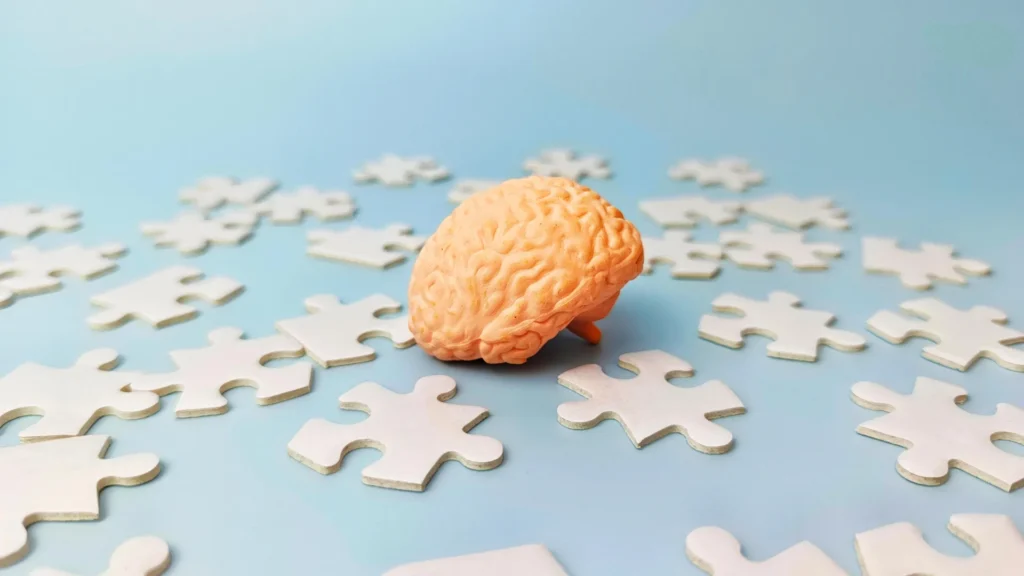
In a significant advancement for neuroscience, researchers at the University of Bonn have unveiled the intricate mechanism by which the human brain constructs coherent memories. Their groundbreaking findings, published in the prestigious journal Nature, demonstrate that the brain employs two distinct groups of neurons to store content and context separately, subsequently coordinating their activity to form comprehensive and adaptable memories. This revelation challenges previous models, particularly those based on rodent studies, suggesting that the human brain prioritizes separation and flexible linkage over integrated storage within the same neural cells.
The Foundational Challenge of Memory Formation
The human ability to recall events, faces, and facts is fundamental to our existence, yet the underlying neural architecture has long presented a profound scientific enigma. For a memory to be truly useful, it must not merely register an event but also bind it to the specific circumstances, or context, in which it occurred. Imagine recognizing a friend across vastly different scenarios—a casual dinner versus a formal business meeting. While the individual (the content) remains the same, the surrounding environment and social cues (the context) are entirely distinct. The brain must possess a sophisticated system to manage this duality, ensuring both recognition and contextual understanding.
Previous research, particularly in the realm of neuroscience, had established the existence of "concept neurons" located deep within the brain’s memory centers, such as the hippocampus and medial temporal lobe. These specialized cells are known to respond to specific individuals or objects irrespective of their setting, acting as neural identifiers for core information. Professor Florian Mormann from the Clinic for Epileptology at the University Hospital Bonn (UKB), and a member of the Transdisciplinary Research Area (TRA) "Life & Health," elucidated this concept, stating, "We already know that deep in the memory centers of the brain, specific cells, called concept neurons, respond to this friend, regardless of the environment in which he appears." This forms the bedrock of content recognition.
However, the question of how this content integrates with its specific context has been a subject of ongoing debate. Studies in rodents often indicated that individual neurons might combine both types of information, blurring the lines between content and context within single cells. This led Dr. Marcel Bausch, working group leader at the Department of Epileptology and also a member of TRA "Life & Health," to pose a critical question: "Does the human brain function fundamentally differently here? Does it map content and context separately to enable a more flexible memory? And how do these separate pieces of information connect when we need to remember specific content according to context?" The Bonn team embarked on an ambitious journey to answer these questions, aiming to uncover the unique intricacies of human memory formation.
A Unique Window into the Human Brain: The Methodology
Addressing such profound questions about human brain function requires direct observation, a feat often hampered by ethical and technical constraints. The Bonn research team leveraged a unique clinical opportunity: patients with drug-resistant epilepsy undergoing presurgical evaluation at the UKB. As part of their diagnostic process, these patients had electrodes surgically implanted in critical memory regions, including the hippocampus and nearby medial temporal lobe structures. These electrodes are essential for precisely localizing the origin of epileptic seizures, thereby guiding potential surgical interventions. This clinical necessity provided an unprecedented "window" into the real-time electrical activity of individual neurons in awake, behaving human subjects.
While doctors meticulously monitored seizure activity, patients voluntarily participated in computer-based tasks designed to probe memory formation. These tasks involved presenting participants with pairs of images and subsequently asking different types of questions about them. For instance, a patient might view an image of a biscuit and then be prompted with the question "Bigger?" This experimental design allowed researchers to observe how the brain processed identical visual content under varying contextual demands. As Professor Mormann explained, "This allowed us to observe how the brain processes exactly the same image in different task contexts." This precise control over content (the image) and context (the question type) was crucial for dissociating their neural representations.
The Discovery of Dual Neuron Systems
Through meticulous analysis of electrical signals from over 3,000 individual neurons, the research team made a pivotal discovery: the identification of two largely distinct populations of neurons dedicated to different aspects of memory.
-
Content Neurons: These neurons responded selectively to specific images, such as a "biscuit," irrespective of the question being asked or the task at hand. They consistently fired when the particular content was presented, acting as identifiers for "what" was being perceived. These align with the previously understood "concept neurons."
-
Context Neurons: In contrast, this second group of neurons responded primarily to the type of question being posed, such as "Bigger?" or "Smaller?," regardless of the specific image displayed. These cells encoded the "situation" or "task demand," representing the context in which the content was being processed.
Crucially, the researchers found that only a small fraction of neurons exhibited activity consistent with both roles simultaneously. This finding directly contradicted observations in rodents, where individual neurons frequently blend content and context information. The human brain, it appeared, maintains a clear division of labor. Dr. Bausch emphasized the significance of this separation, stating, "A key finding was that these two independent groups of neurons encoded content and context together and most reliably when the patients solved the task correctly." This correlation with correct task performance underscored the functional importance of this neural segregation.
The Orchestration of Recall: How Memories are Rebuilt
The mere separation of content and context would be insufficient for functional memory; the brain must also be able to link these distinct pieces of information when needed to form a complete, meaningful memory. The Bonn study revealed the dynamic interaction that facilitates this linkage. As the experiment progressed and participants gained experience with the tasks, the interaction between these two neuron groups strengthened. The activity of a content neuron began to predict the response of a context neuron within mere tens of milliseconds. Professor Mormann likened this learning process to a neural conversation: "It seemed as if the ‘biscuit’ neuron was learning to stimulate the ‘Bigger?’ neuron."
This rapid, coordinated interaction functions as a sophisticated control system, ensuring that only the relevant context is retrieved during memory recall. This process, known as "pattern completion," is fundamental to memory function. It allows the brain to reconstruct a full memory even when presented with only partial information—a common scenario in everyday life. For instance, encountering a familiar face might trigger the recall of a specific event and location, even if those contextual cues are not immediately present.
The researchers posit that this inherent division of labor is a cornerstone of human memory’s remarkable adaptability and flexibility. By maintaining "neural libraries" for content and context separately, the brain can reuse the same core knowledge (e.g., the concept of a "biscuit") across an infinite number of novel situations and contexts without requiring a unique, specialized neuron for every conceivable combination. "This division of labor probably explains the flexibility of human memory: the brain can reuse the same concept in countless new situations without needing a specialized neuron for each individual combination, by storing content and context in separate ‘neural libraries’," Dr. Bausch elaborated. Professor Mormann added a crucial point about generalization: "The ability of these neuronal groups to link spontaneously allows us to generalize information while preserving the specific details of individual events." This dual capacity for generalization and specificity is a hallmark of advanced cognition.
Broader Implications and Future Directions
The discovery from the University of Bonn holds profound implications reaching far beyond basic neuroscience. It offers new avenues for understanding and potentially treating memory disorders, informs the development of artificial intelligence, and could even reshape educational strategies.
Clinical Significance: Memory disorders, such as Alzheimer’s disease, various forms of amnesia, and even post-traumatic stress disorder (PTSD), often involve disruptions in the encoding, storage, or retrieval of memories. If the precise coordination between content and context neurons is compromised, it could manifest as difficulties in recalling specific details, misplacing memories in the wrong context, or an inability to form new coherent memories. Understanding this neural dance could provide novel targets for therapeutic interventions. For example, future research might explore whether specific pharmacological or stimulation techniques could bolster the interaction between these neuron groups in individuals suffering from memory deficits.
Inspiration for Artificial Intelligence: The brain’s elegant solution for managing content and context offers a powerful paradigm for artificial intelligence and machine learning. Current AI systems often struggle with contextual understanding, particularly in dynamic, real-world scenarios. Mimicking the brain’s approach of separating and then dynamically linking different information streams could lead to more robust, flexible, and context-aware AI. This could impact areas from natural language processing and computer vision to robotic navigation and complex decision-making systems.
Educational and Learning Strategies: The findings also have potential ramifications for how we approach learning and memory enhancement. If content and context are processed separately, strategies that explicitly emphasize linking new information (content) to various scenarios or applications (context) might prove more effective for long-term retention and flexible recall. This could influence curriculum design, teaching methodologies, and even personal study habits.
While this study provided a crucial snapshot of the brain’s memory mechanisms, the researchers acknowledge that the definition of "context" in this experiment was relatively narrow, defined by questions on a screen. Real-world contexts are often passive and complex, involving sensory environments, emotional states, and social dynamics. Future research will need to determine if the brain processes these more ecological contexts using the same dual-neuron mechanism. Scientists also plan to extend these investigations beyond clinical settings, perhaps using non-invasive techniques to study healthy populations.
A particularly important next step involves experimentally disrupting the interaction between these content and context neuron groups. By intentionally interfering with their communication, researchers aim to ascertain whether such disruptions directly impair a person’s ability to recall accurate memories in the appropriate context or to make sound decisions. This will be critical for establishing causality and understanding the precise functional role of this neural coordination.
This pioneering research was made possible through the generous funding and support from several key organizations, including the German Research Foundation (DFG), the Volkswagen Foundation, and the NRW joint project "iBehave," underscoring the collaborative effort required for such complex scientific endeavors. The insights gleaned from the University of Bonn represent a significant leap forward in decoding the mysteries of human memory, offering a clearer picture of how our brains weave the rich tapestry of our experiences.