


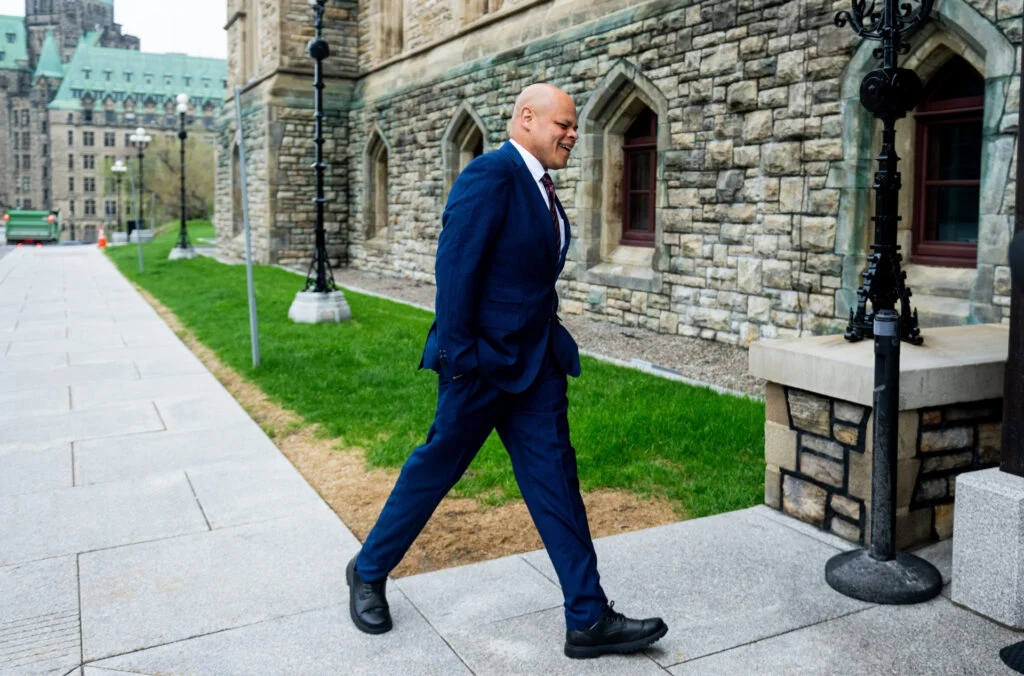
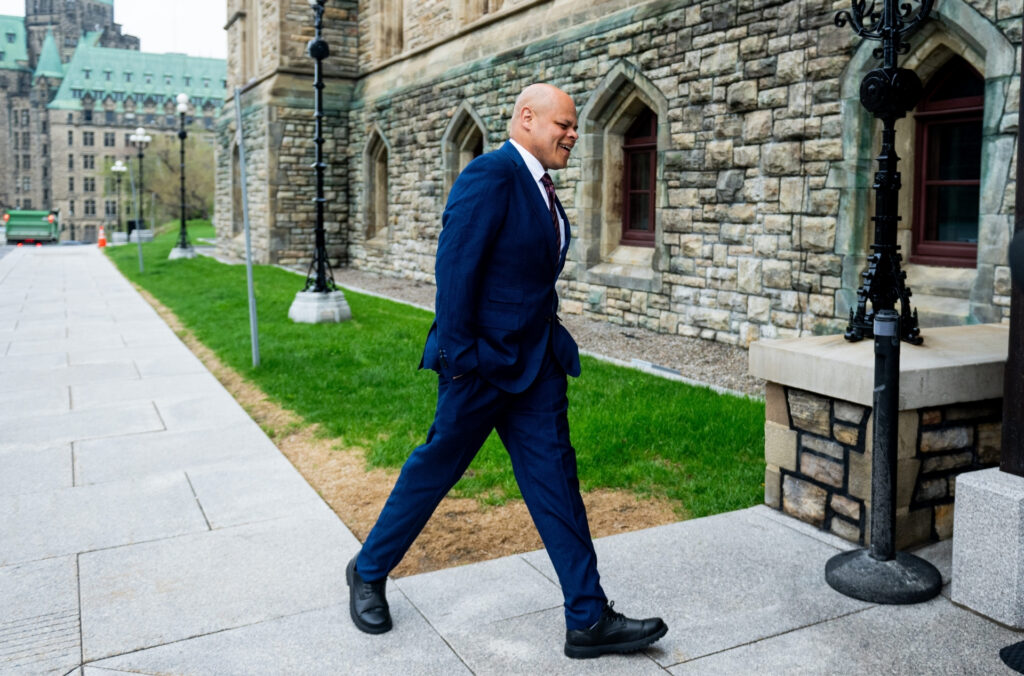
Conservative Member of Parliament Jamil Jivani concluded his "Restore the North" tour last week, a multi-city initiative that saw him visit nearly two dozen college and university campuses across Canada. The tour, which began last fall, focused on critiquing the economic and immigration policies of successive Liberal governments, while simultaneously soliciting ideas from attendees on how to "restore the promise of Canada." Jivani, the Member of Parliament for Bowmanville-Oshawa North, explicitly acknowledged that the campaign’s format was inspired by that of Charlie Kirk, a prominent American conservative activist and organizer known for his "open concept, open dialogue" approach to political engagement.
The "Restore the North" tour’s genesis predates the widely reported assassination of Charlie Kirk during a speaking engagement at Utah Valley University in September. In an interview with Breitbart News Saturday in mid-February, Jivani stated, "We started planning it before the great Charlie Kirk was assassinated, and we’ve been doing this tour since October now, very much like Charlie did – open concept, open dialogue." This direct comparison highlights Jivani’s intention to foster a similar environment of direct engagement and discussion with young Canadians.
Throughout the tour, Jivani reported that a recurring theme among attendees, particularly young men, was a palpable concern about the impact of immigration policies on their future job prospects. This concern was presented as a primary driver for the tour’s focus and the subsequent discussions held at each campus.
Dalhousie University Event Highlights Tour’s Core Themes
A specific event at Dalhousie University’s Sexton Campus on Tuesday last week, drawing approximately fifty attendees—predominantly young men, including over a dozen members of the Dalhousie Conservative Club—provided a microcosm of the tour’s broader objectives. Jivani opened his remarks by asserting that "Our quality of life is objectively declining. It is just a fact based on health-care metrics, based on purchasing power, based on economic opportunity for young people." He then invited attendees to share their perspectives on how to achieve this "restoration" of Canada’s promise.
The concept of "restore" proved open to a wide range of interpretations among the eleven speakers who came forward, ten of whom were young men, joined by one senior man and one woman. Discussions touched upon economic revival, including natural resource development, the escalating cost of living, youth unemployment, and the widening wealth gap between generational cohorts.
However, the discourse also ventured into more sensitive territory concerning the notion of a Canadian cultural or even ethnic identity. This aspect of the conversation presented a complex terrain for Jivani, whose personal background includes a Canadian-born identity shaped by a British-Canadian mother and a Kenyan Muslim father.
Immigration as a Central Focus of Concern
The sentiment that immigration was a "core issue" was explicitly voiced by the first speaker, who posited that "it seems like all the economic problems we have stem from that." Jivani echoed this perspective, characterizing immigration as a "huge issue" and arguing that the "flooding of temporary workers into our country" had demonstrably depressed wages and diminished job opportunities for Canadian citizens. He further contended that the scale of current immigration levels posed a threat to Canadian culture.
The debate took a more contentious turn when a subsequent speaker expressed concern that "heritage Canadians"—defined by the speaker as "descendants of the pioneers who built this country"—were on a trajectory to becoming a minority within their own homeland. This statement elicited a firm rejection from Jivani, who declared, "I will never use terms like ‘heritage Canadian,’ I reject it outright, okay? To me… we have founding nations as a country, British and French, those founding nations have language and history and culture, and lots of people who might come from, frankly, all different parts of the world are able to participate in that language, history and culture."
Jivani elaborated on his core concern: "Where I think we’ve made a big mistake [is when] we started to welcome so many people that assimilation is not even possible. That, to me, is the problem." When pressed by the audience member on the definition of Canadian identity, Jivani retorted, "You are not more Canadian than I am because my father’s from Africa. And I will never let a person tell me they’re more Canadian than I am." This exchange underscores Jivani’s complex position on immigration and national identity, seeking to balance concerns about assimilation with a rejection of exclusionary definitions of "heritage."
Analysis of the "Restore the North" Tour’s Strategic Implications
Luc Cousineau, a faculty member at Dalhousie University and co-director of research at the Canadian Institute for Far-Right Studies, offered a critical perspective on the "Restore the North" tour. Cousineau suggested that beyond providing a platform for young men to voice their grievances, the tour also served as a strategic recruitment tool for the Conservative Party and the broader conservative movement.
"Jamil Jivani and the other folks that are bringing this movement into Canada… they will simultaneously talk about how disadvantaged young men are with, for example, access to post-secondary education, but also focus their efforts on post-secondary education," Dr. Cousineau explained. "There are still a lot of young men in post-secondary education in Canada. And so this is a location where, if you are looking to target young men that have higher earning potential and higher influence potential, post-secondary institutions are still the place to do that."
This observation points to a potential strategy of identifying and cultivating future conservative leaders and activists within university environments, leveraging perceived disaffection among young men to build a more robust base of support. The tour’s focus on campuses, therefore, can be interpreted not merely as outreach, but as a deliberate effort to engage with a demographic deemed crucial for the future of the conservative movement.
Jivani’s Background and Evolving Rhetoric
Jivani’s engagement with the concerns of young men is not a recent development. His 2018 book, Why Young Men: Rage, Race and the Crisis of Identity, delved into the alienation experienced by many young men in contemporary Western society. In the book, he drew parallels between his own upbringing – marked by a single mother and an absent father in a predominantly Black and Muslim immigrant community in suburban Toronto – and the challenges faced by young men seeking role models. He recounted feelings of alienation at school and the allure of figures such as drug dealers, rappers, and Islamic extremists as perceived authorities on masculinity, describing himself as "part of the intergenerational cycle of fatherlessness that makes young men vulnerable to people posing as authorities on masculinity."
Following struggles in high school, Jivani pursued higher education, eventually attending Yale Law School. During his time at Yale, he formed a friendship with J.D. Vance, the current U.S. Vice-President. Jivani, who was baptized as a Christian in his thirties, has maintained connections with the Trump administration, notably through his friendship with Vance. In early February, he undertook an unofficial visit to Washington D.C., attending the National Prayer Breakfast and meeting with Trump administration officials, including Vice President Vance and Secretary of State Marco Rubio. This visit, described as a unilateral decision, underscored his engagement with American conservative circles.
In his 2018 book, Jivani drew a comparison between his outreach efforts to young men and President Barack Obama’s "My Brother’s Keeper" initiative, an effort aimed at addressing the challenges faced by young men without compromising broader goals of justice and equality.
However, Dr. Cousineau, whose research encompasses men’s rights groups and far-right extremism, argued that Jivani’s current messaging on the "Restore the North" tour represents a departure from the broader social analysis presented in his earlier work. "In his book he talks about this in a much broader sense, talking about the larger social systems that create oppression and repression," Dr. Cousineau observed.
In contrast, Cousineau characterized the discourse on the "Restore the North" tour as more "blame-oriented," encouraging individuals who feel aggrieved, specifically young men, to identify external sources for their difficulties. This approach, according to Cousineau, echoes the populist rhetoric employed by the Trump administration: "How he’s trying to engage with young people, and young men in particular, the way he’s trying to raise the temperature in order to achieve a goal – these are tactics that we have seen very recently in the U.S."
Ambition, Recruitment, and Party Dynamics
Dr. Cousineau further posited that the "Restore the North" tour’s primary objectives likely extend to bolstering support for the Conservative Party of Canada and cultivating Jivani’s personal political brand. "I think another really important part is to recruit to his own brand," he stated. "With a leader potentially in trouble… I don’t think it would be too significant a step to say Jamil Jivani might be somebody who is looking at themselves and saying, ‘Perhaps I could be that.’" This analysis suggests a potential long-term ambition for Jivani within the party hierarchy, with the tour serving as a platform to build influence and a dedicated following.
Ben Sellar, a member of the Dalhousie Campus Conservatives club who attended the event, acknowledged appreciating much of what Jivani presented. However, he also expressed reservations about some of the rhetoric employed by other young attendees. "But I think the bigger takeaway was some of the young guys that asked questions kind of were tiptoeing on very controversial rhetoric and issues," Sellar commented. "Not that I necessarily totally disagree with them, but I think that is kind of a warning sign for the party that sometimes we need to moderate ourselves." This sentiment from within the Conservative student group highlights an internal awareness of the potential for divisive rhetoric and the need for strategic messaging to maintain broader appeal.
The "Restore the North" tour, by engaging with concerns about economic opportunity, immigration, and national identity, has illuminated a segment of the Canadian youth demographic that feels overlooked or disadvantaged. The tour’s success in galvanizing attention and generating discussion, while simultaneously drawing criticism for its potential to foster divisive narratives, positions it as a significant event in the ongoing dialogue about Canada’s future direction and the evolving landscape of political engagement. The long-term impact of Jivani’s outreach on the Conservative Party’s electoral strategy and its ability to connect with younger voters remains to be seen.