



In the ever-evolving landscape of corporate education and talent development, a cadre of dedicated professionals is spearheading critical shifts, moving learning and development (L&D) from a supplementary function to a strategic imperative. The Chief Learning Officer’s "Learning Insights" series consistently spotlights these visionaries, offering a deep dive into their philosophies, career trajectories, and the innovative strategies that are reshaping how organizations cultivate their workforces. This installment features an in-depth conversation with a prominent Chief Learning Officer (CLO), whose insights underscore a profound evolution in the L&D field, emphasizing tangible business outcomes and an integrated approach to employee growth.
The CLO’s journey into the realm of learning and development was rooted in a fundamental desire to empower individuals. “I was drawn to L&D because I’ve always been motivated by helping people grow and perform better,” the CLO explained. This initial spark has since matured into a sophisticated understanding of L&D’s strategic potential. Over the years, the CLO’s role has transformed significantly, moving beyond the traditional design and delivery of training modules. The focus has shifted towards a more holistic and impactful approach, directly linking learning initiatives to enhanced performance, increased employee engagement, and ultimately, measurable business results. This evolution reflects a broader industry trend, where L&D professionals are increasingly expected to demonstrate a clear return on investment and contribute directly to organizational success.
Integrating Learning into the Performance Ecosystem
A cornerstone of the CLO’s leadership philosophy is the transformation of L&D from a collection of disparate training events into a cohesive and integrated performance ecosystem. This strategic pivot involves several key initiatives designed to embed learning seamlessly into the daily operations and strategic objectives of the organization.
One significant initiative has been the standardization of the onboarding process across all roles and geographical locations. This ensures that every new employee receives a consistent and comprehensive introduction to the company culture, operational procedures, and performance expectations, regardless of their department or location. This standardization is crucial for fostering a sense of belonging and ensuring that all new hires are equipped with the foundational knowledge and skills necessary for immediate contribution.
Furthermore, the CLO has championed the development of leadership programs directly tied to demonstrable competencies. Instead of generic leadership training, these programs focus on cultivating specific skills and behaviors that are essential for effective management within the organization. This targeted approach ensures that leadership development is relevant, practical, and directly contributes to improved team performance and organizational effectiveness.
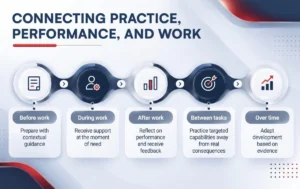
A critical element of this integrated approach is the embedding of learning within operational systems. This means that learning opportunities are not confined to dedicated training sessions but are accessible and relevant at the moment of need, directly within the tools and platforms employees use daily. This "just-in-time" learning model significantly enhances knowledge retention and application, making development a continuous and organic part of the workflow.
To guide decision-making and measure the effectiveness of these initiatives, the CLO’s team leverages a robust data-driven approach. Key metrics such as "time to competency"—the duration it takes for an employee to reach a defined level of proficiency—along with "Top Box scores" (typically representing the highest satisfaction rating in customer feedback) and productivity metrics are meticulously tracked. This data-driven methodology ensures that L&D efforts are consistently aligned with business objectives, demonstrating accountability and driving continuous improvement. The overarching goal is to foster consistency, accountability, and to make professional development an intrinsic aspect of how work is performed.
The Impact of Redesigned Onboarding and Front-Line Performance Programs
The CLO identified the redesigned onboarding and front-line performance programs as the most impactful initiatives introduced within the organization. This re-evaluation of fundamental training processes has yielded significant, quantifiable results. By fundamentally rethinking the training methodologies for systems, service delivery, and leadership behaviors, the organization achieved a remarkable reduction in time to competency by over 60 percent. This dramatic improvement means that new employees are becoming fully productive members of the team much faster, contributing to organizational output sooner.
Beyond efficiency, these programs have directly influenced customer satisfaction. The improved guest experience, as measured by Top Box scores, indicates a more positive and impactful interaction between employees and clients. This enhancement in service quality is a direct result of equipping front-line staff with superior skills and confidence from the outset.
The financial implications have also been substantial. Significant savings in training labor costs have been realized, a direct consequence of streamlining processes and improving the effectiveness of training delivery. However, the CLO emphasized that the most profound impact is on the employees themselves. New hires now emerge from the onboarding process feeling confident, capable, and genuinely prepared to perform their roles. This contrasts with a purely "trained" state, suggesting that the new approach fosters a deeper understanding and readiness, rather than mere procedural knowledge. This qualitative shift in employee readiness is crucial for long-term retention and engagement.
Addressing Misconceptions: L&D as a Strategic Partner
A persistent misconception within many organizations is that the L&D function is merely a cost center or an administrative department that fulfills training requests on demand. The CLO actively combats this perception by prioritizing a data-driven approach and focusing on solving critical business problems. “I address it by leading with data, business problems and outcomes,” the CLO stated. This philosophy is encapsulated in the powerful assertion: “If learning doesn’t move a metric, it doesn’t matter.”
This stance positions L&D as a strategic partner, integral to the organization’s success. By demonstrating how learning initiatives directly contribute to key performance indicators, the L&D department moves beyond a reactive service provider role to a proactive driver of business value. This requires L&D professionals to develop a deep understanding of the organization’s strategic goals, market challenges, and operational needs. The implication is that L&D’s success is not measured by the number of courses delivered, but by the tangible improvements in business performance that result from its interventions. This shift in perspective is vital for securing executive buy-in and resources for L&D initiatives.
Embracing the Future: Personalization, AI, and Performance Support
The future of workplace learning is a source of significant excitement for the CLO, particularly the burgeoning trends of personalization, artificial intelligence (AI), and performance support. The ability to tailor learning experiences to individual needs, leverage AI for adaptive learning pathways, and provide support precisely when and where it’s needed represents a paradigm shift in how knowledge and skills are acquired and applied.
To prepare the organization for this evolving landscape, a proactive strategy of early experimentation and continuous upskilling of the L&D team is underway. This includes exploring new technologies and methodologies to create learning solutions that are not only effective but also seamlessly integrated into the flow of daily work. The emphasis is on designing learning experiences that augment rather than interrupt the employee’s workflow, ensuring that development is both accessible and impactful. This forward-thinking approach is essential for maintaining a competitive edge and ensuring that the workforce remains agile and adaptable in the face of rapid technological advancements and changing market demands.
Cultivating Essential Leadership Qualities
The CLO highlighted three essential qualities that define a successful L&D leader: business acumen, courage, and curiosity. Business acumen is critical for understanding the organization’s strategic objectives and aligning L&D initiatives accordingly. Courage is necessary to challenge the status quo, advocate for innovative approaches, and have honest conversations about what is and isn’t working. Curiosity fuels continuous learning and the exploration of new ideas and technologies.
These traits are cultivated through consistent effort and a commitment to personal and team development. The CLO emphasizes staying closely connected to operational realities, fostering an environment where honesty about successes and failures is encouraged, and empowering the team to question assumptions—including those of leadership. This commitment to open communication and continuous learning creates a dynamic and resilient L&D function.
A Message to the Younger Self: Focus on Impact
Reflecting on their career, the CLO offered a potent piece of advice to their younger self: "Stop trying to prove your value through volume. Focus on impact, speak the language of the business, and trust that clarity is more powerful than complexity." This advice encapsulates a critical lesson learned: the true measure of L&D effectiveness lies not in the quantity of programs offered, but in the quality of the results achieved and their alignment with business goals. Speaking the language of the business—using metrics and strategic objectives that resonate with executive leadership—is paramount. Furthermore, the emphasis on clarity over complexity underscores the importance of accessible, understandable, and actionable learning solutions.
The Paramount Challenge: Relevance in a Dynamic World
When asked about the single biggest challenge facing L&D professionals and the industry as a whole, the CLO pointed to relevance. "Too much learning still exists outside the realities of the job," the CLO stated. This highlights a critical disconnect that the industry must address. L&D programs need to be deeply rooted in the day-to-day challenges and opportunities employees face. The implication is that L&D functions must accelerate their adaptation, move closer to the business units they serve, and be willing to discard outdated or ineffective methods.
This pursuit of relevance requires a commitment to continuous feedback loops, agile development methodologies, and a willingness to embrace change. As organizations navigate an increasingly complex and rapidly changing global environment, the ability of L&D to remain relevant and impactful will be a key determinant of their long-term success. The future of work demands learning that is not only accessible but also directly applicable, driving immediate value and fostering sustained growth for both individuals and the organizations they serve.
Interested in being featured in our "Learning Insights" series? Please complete this FORM.