



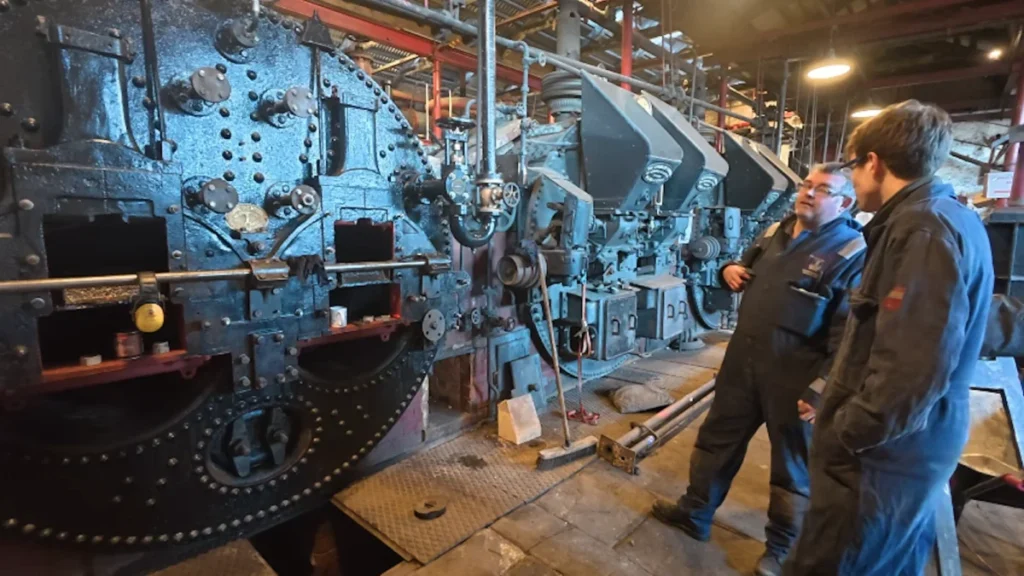
In the heart of Staffordshire, England, an ambitious engineering endeavor has reached a critical milestone as a dedicated team of volunteers nears the completion of a three-decade-long restoration of the Claymills Pumping Station. Located in the town of Burton upon Trent, this Victorian-era facility stands as a monument to 19th-century industrial ingenuity and public health infrastructure. Since the formation of the Claymills Pumping Station Trust in 1993, a rotating cohort of engineers, historians, and enthusiasts has labored to breathe life back into the massive steam-powered complex. The project, recently chronicled through a detailed YouTube documentary series titled "The Big Rebuild," has focused its latest efforts on the restoration of Boiler No. 1, a centerpiece of the station’s intricate energy system that has remained cold for over half a century.
The Historical Significance of Claymills Pumping Station
To understand the magnitude of the restoration project, one must look back to the late 19th century when Burton upon Trent was the undisputed brewing capital of the world. The rapid expansion of the brewing industry led to a surge in population and, consequently, a massive increase in sewage and industrial waste. By the 1880s, the town’s existing infrastructure was overwhelmed, creating a public health crisis that necessitated a state-of-the-art solution.
The Claymills Pumping Station was designed by James Mansergh and completed in 1885. Its primary function was to pump sewage from the town to a treatment farm several miles away. At the time of its inauguration, it represented the pinnacle of Victorian mechanical engineering. The facility featured four massive beam engines—named A, B, C, and D—built by Gimson and Co. of Leicester. These engines were powered by a battery of Lancashire boilers, which provided the high-pressure steam necessary to move millions of gallons of waste daily.
The station operated continuously for nearly a century. While many similar Victorian pumping stations were demolished or modernized with electric pumps during the mid-20th century, Claymills remained largely intact, serving as a time capsule of the steam age. However, the transition to modern technology eventually rendered the steam engines obsolete. The station ceased its primary operations in 1971, with the final fires in the boiler house being extinguished shortly thereafter in 1973. For twenty years, the facility sat in a state of gradual decay, suffering from the effects of the damp English climate and structural neglect.
The Chronology of Restoration: 1993 to Present
The modern history of Claymills began in 1993 with the establishment of the Claymills Pumping Station Trust. The site had been granted Grade II* listed status, recognizing its exceptional architectural and historical importance, but it required more than just legal protection; it required a monumental physical intervention.
The restoration timeline has been defined by incremental victories:
- 1993–2000: The initial years were focused on securing the site, clearing decades of debris, and repairing the roof to prevent further water damage.
- 2000–2010: Efforts shifted toward the restoration of the beam engines. Through meticulous cleaning and the fabrication of missing components, the team successfully brought Engine C back to steam-powered life for public demonstrations.
- 2010–2020: The Trust expanded its focus to the ancillary equipment, including the workshop’s steam-powered lathes and the station’s rare steam-powered dynamo, which was one of the first of its kind used for electric lighting in a municipal facility.
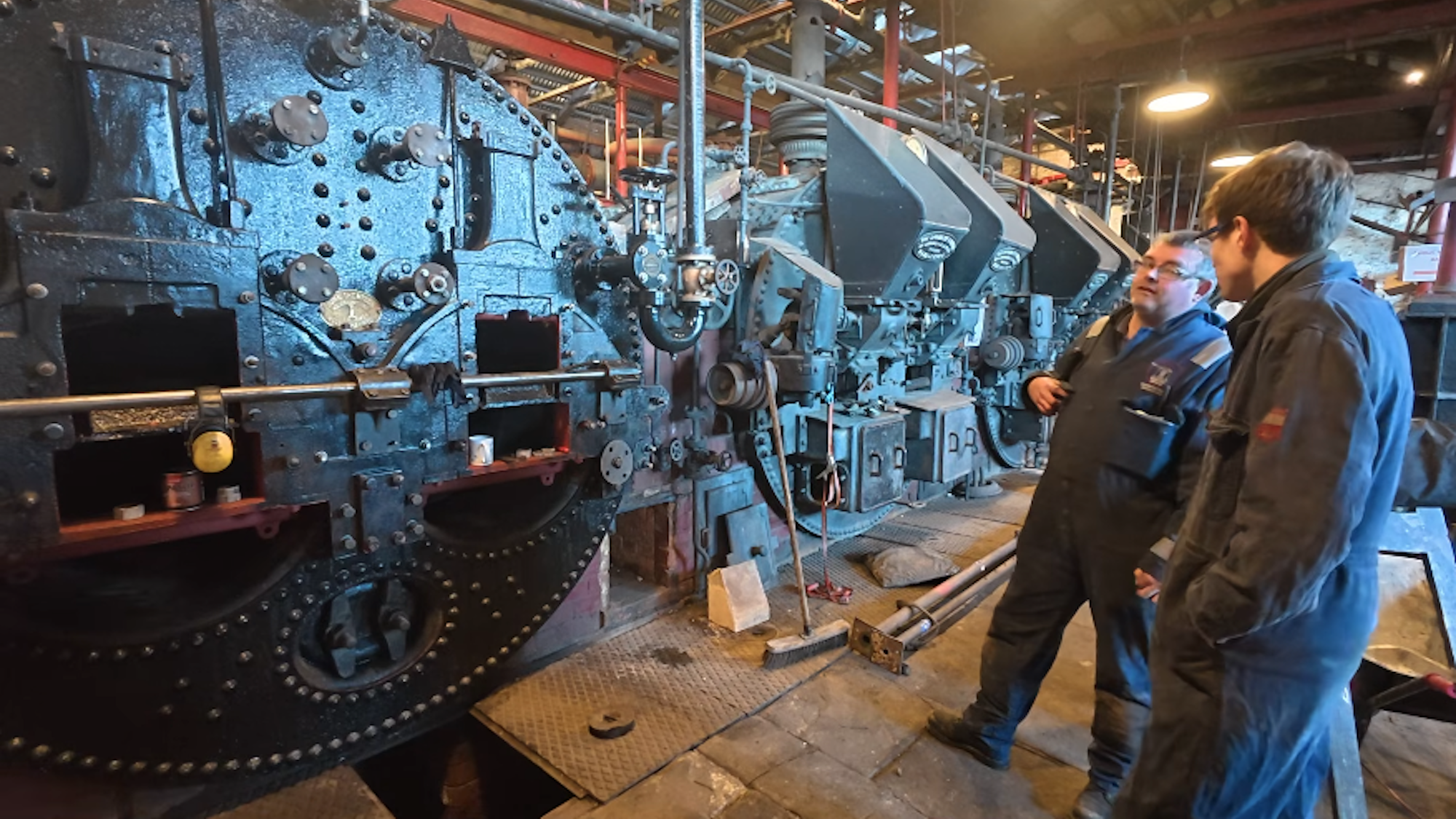
- 2021–2024: The current phase, "The Big Rebuild," targets the boiler house. While some boilers were partially restored for limited use, Boiler No. 1—the most damaged of the set—became the primary focus of the engineering team.
Technical Challenges of Boiler No. 1 and the Lancashire System
The restoration of Boiler No. 1 has proven to be one of the most technically demanding aspects of the 30-year project. The Lancashire boiler is a type of horizontal, internal-flue boiler that was a staple of the Industrial Revolution. It features two large furnace tubes running through the water-filled shell, a design intended to maximize the surface area for heat transfer.
Decades of exposure to the elements following a partial roof collapse in the late 20th century had caused significant corrosion. Furthermore, when the station was decommissioned in the 1970s, many components were stripped or left to seize. The restoration team faced several specific hurdles:
1. Brickwork and Flume Construction
To inspect the integrity of the boiler shell, the volunteers had to dismantle the massive brickwork enclosure that surrounds the unit. Once the steel was verified and treated, the "monotonous but vital" task of rebuilding the flume cradle began. This structure is essential for the boiler’s efficiency; it guides hot gases from the furnaces along the bottom and sides of the boiler shell twice before they exit through the chimney. This "three-pass" system ensures that as much thermal energy as possible is extracted from the coal.
2. Fabricating Replica Components
Many of the original 1930s-era fittings were beyond repair. The team had to rely on archival blueprints and industrial archaeology to create accurate replicas. This included the casting and machining of a new pair of heavy furnace doors, which must withstand extreme temperatures while providing a seal for the combustion chamber.
3. Safety and Certification
Restoring a Victorian boiler is not merely a matter of mechanical assembly; it is a rigorous regulatory process. To be fired up in the 21st century, the boiler must meet modern safety standards. This involves ultrasonic thickness testing of the steel plates, hydraulic pressure tests, and certification by independent inspectors to ensure the vessel can safely contain the high-pressure steam.
The Human Element: From Victorian Stokers to Modern Volunteers
The "Big Rebuild" has also shed light on the grueling labor required to run the station during its operational peak. In the Victorian era, a single stoker was responsible for managing two boilers simultaneously during an eight-hour shift. This involved shoveling several tons of coal by hand into the furnace mouths, a task that required not only physical strength but also a deep understanding of combustion to maintain steady steam pressure.
The current restoration team, though working in a voluntary capacity, mirrors the dedication of those original workers. The volunteers include retired engineers who bring decades of industrial experience, as well as younger enthusiasts eager to learn "dead" trades such as riveting and steam-fitting. Their work is a form of living history, ensuring that the specialized knowledge required to maintain such massive machinery is passed down to future generations.

Digital Outreach and "The Big Rebuild" Series
A significant development in the project’s recent history is the embrace of digital media. The launch of the Claymills Pumping Station YouTube channel has allowed the Trust to reach a global audience. The "Big Rebuild" series provides a transparent, "warts-and-all" look at the restoration process, documenting the frustrations of seized bolts and the triumphs of successful pressure tests.
This digital presence serves two purposes: it acts as an educational resource for those interested in industrial heritage, and it serves as a vital fundraising tool. The costs associated with coal, specialized materials, and insurance are substantial, and the international visibility provided by social media has helped secure the financial future of the site.
Broader Impact and Industrial Heritage Analysis
The work at Claymills is part of a broader movement in the United Kingdom to preserve the physical remains of the Industrial Revolution. Sites like Claymills are no longer viewed merely as obsolete utilities but as essential cultural assets. They provide a tangible link to the era that shaped the modern world, offering insights into the evolution of civil engineering, public health, and environmental management.
From an economic perspective, the restoration has transformed the pumping station into a significant local tourist attraction. On "steaming days," when the engines are fired up, the site draws visitors from across the country, contributing to the heritage tourism economy of Staffordshire. It serves as a reminder of Burton upon Trent’s industrial prowess, standing alongside the town’s famous breweries as a symbol of Victorian capability.
Future Outlook: The Return of Steam
As of early 2024, the volunteers are in the final stages of preparing Boiler No. 1 for its first fire in over 50 years. The successful reactivation of this unit will significantly increase the station’s steam capacity, allowing for more frequent and more extensive demonstrations of the beam engines.
While Boiler No. 1 represents a major milestone, the work at Claymills is far from over. The Trust intends to continue the restoration of the remaining boilers and ancillary systems, with the ultimate goal of having the entire facility operational as a fully functioning Victorian steam museum. The project stands as a testament to the power of volunteerism and the enduring fascination with the machines that powered the 19th century. Through "The Big Rebuild," the Claymills Pumping Station is not just being repaired; it is being secured for the education and inspiration of future generations.