


Introducing young learners to the diverse world of bugs and insects can be a powerful catalyst for igniting scientific curiosity and fostering a deep connection with nature. However, this educational endeavor often hinges on teachers’ ability to effectively manage and overcome any inherent "ickiness factor" that students, or even they themselves, might feel. This challenge is at the forefront of early childhood science education, where cultivating comfort and understanding can unlock a lifelong appreciation for the natural world.
Michelle Durange, a kindergarten teacher at Alloway Creek Elementary School in Littlestown, Pennsylvania, exemplifies this approach. "On the playground, we’ve found worms, and we pick them up," she shared. "We try not to be scared of it, so they’re not scared of it." This hands-on, fearless demonstration sets a crucial tone. Durange elaborated on how this philosophy extends to older grades, stating, "When I looped into 1st and 2nd grade, we used to get these creepy bugs, and let [students] see them, touch them, feel them." This direct engagement, guided by an educator’s calm demeanor, transforms potential apprehension into tangible learning experiences.
The reluctance to embrace entomology in the classroom is a recognized hurdle, often stemming from the educators themselves. Tony Lorsbach, a professor emeritus of science education from the School of Teaching and Learning at Illinois State University, has observed this phenomenon firsthand. "It’s sort of a cycle. Who do you teach first, the teachers or the children?" Lorsbach posed, highlighting the interconnectedness of teacher training and student learning. "It’s probably best to do both. I taught future elementary school teachers for 34 years. When we came to the topic of insects, it was, ‘No, I’m not going to touch them.’ And I’m like, ‘You could have a budding entomologist in your kindergarten class.’" This sentiment underscores the critical role of teacher professional development in equipping educators with the confidence and knowledge to introduce entomological concepts effectively.
The Power of Literature and Hands-On Exploration
Durange’s pedagogical strategy often begins with engaging children’s literature, a common and effective technique in early childhood education to introduce complex topics. She cited "The Ant Bully," a story that explores a boy’s initial antagonism towards an ant that transforms his perspective, as an example of how narrative can lay the groundwork for scientific inquiry. "We have a lot of books we read. We do caterpillars to butterflies," she explained. "We have a [classroom] science center. … Basically in kindergarten, it is about exploring."
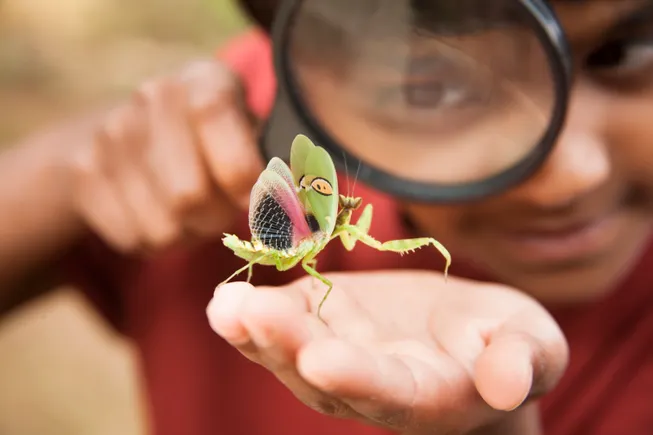
This exploration often involves careful observation. Students at Durange’s school examine live specimens housed in containers and utilize microscopes to magnify the intricate details of these small creatures. While direct physical contact might be limited at the kindergarten level, the emphasis remains on sensory engagement through sight and magnified observation. A significant portion of these lessons also addresses common childhood fears, particularly the fear of bees. Durange noted that discussions often center on the ecological importance of bees and strategies for coexisting peacefully. Drawing from personal experience, she shared an anecdote about her father-in-law, a beekeeper, and his method of gently deterring bees. "My father-in-law always clapped his hand, trying to get a bee away from him," she recalled. "You’re huge. That little tiny bee is so small. The only reason he’s going to hurt you is if you are scaring him. So stay away from him." This relatable example helps children understand that fear is often a reaction to perceived threat, and that by not provoking, they can avoid negative encounters. The outcome of such lessons is encouraging: "For the most part, they’re better about the bees. Most of them will leave them alone."
Bridging the Gap: Connecting Children to the Environment
Lorsbach emphasizes that children’s natural aversion to insects and arachnids, often observed when they are outdoors, can be overcome by placing these creatures within the broader context of the environment. "They’ve got to get to know them," he asserted. "They need to have experiences with them." This fundamental principle suggests that familiarity breeds understanding and reduces fear.
The initial steps in this educational process, according to Lorsbach, can be remarkably simple. He recommends starting with preserved specimens, allowing children to examine them under a microscope and make detailed observations. "To teach children to care about the environment, we need to teach them about the environment," he stated, underscoring the intrinsic link between environmental stewardship and ecological literacy.
This engagement does not necessitate grand expeditions to remote natural reserves. Even the familiar school playground can serve as a rich laboratory. "Your school playground is good enough," Lorsbach affirmed. "They can turn over rocks and start looking for roly-polys. There’s usually a kid who doesn’t mind picking up a roly-poly. The teacher needs to pick one up. You have to try to withhold your phobia from your students. Don’t be frightened of all these things." This direct advice to educators is pivotal. Teachers play an outsized role in shaping children’s perceptions, and their own anxieties can inadvertently be transmitted.
Lorsbach further advises a measured response to unexpected classroom visitors. Should a wasp, for instance, find its way into a classroom, his counsel is to remain calm. "Odds are, it’s not going to hurt you unless you do something silly with it," he explained. "That fear factor with students comes from somewhere: It comes from the adults in their lives." This perspective shifts the focus from the perceived threat of the insect to the learned behavior of the child, influenced by adult reactions.
Innovative Strategies for Engaging Young Learners
To foster active participation, Lorsbach suggests incorporating elements of scavenger hunts into insect education. This involves teachers preparing laminated cards featuring images of common bugs and insects that students are likely to encounter in the schoolyard. This requires thoughtful planning and reconnaissance by the educators to identify appropriate subjects. Once prepared, the students can embark on a quest to find these creatures. "It’s just giving them hands-on experiences with insects that you know are not going to hurt them," he stated.
This pedagogical approach is particularly timely given contemporary lifestyle trends. Citing research indicating that the average American spends approximately 23 hours per day indoors, Lorsbach highlighted the critical need for increased outdoor engagement. "We just don’t spend enough time outside. With early childhood learners, you have that ability." This presents a significant opportunity for educators to reintroduce children to the natural world, fostering a sense of wonder and respect for the diverse life forms that inhabit it, starting with the smallest creatures.
Broader Implications for Science Education and Environmental Literacy
The successful integration of entomological studies into early childhood curricula has far-reaching implications. By demystifying insects and fostering positive interactions, educators can lay the groundwork for a more scientifically literate populace. This approach not only addresses the immediate challenge of overcoming phobias but also cultivates a deeper appreciation for biodiversity and ecological balance. Research from organizations like the National Wildlife Federation has consistently shown a decline in children’s connection with nature, a trend that early childhood science education can actively combat.
The "ick factor," while a common barrier, is not insurmountable. It represents a teachable moment, an opportunity to reframe perceptions and build resilience. As educators like Durange and experts like Lorsbach demonstrate, a combination of direct experience, thoughtful pedagogy, and a calm, confident adult presence can transform apprehension into fascination. The ability to identify, understand, and respect the roles of insects in our ecosystems is crucial for developing informed citizens who can contribute to environmental conservation efforts.
The long-term impact of these early interventions extends beyond the classroom. Children who develop a positive relationship with nature are more likely to become environmentally conscious adults. They are more likely to support conservation initiatives, make sustainable choices, and advocate for policies that protect natural habitats. The skills developed through observing insects – critical thinking, problem-solving, and meticulous observation – are transferable to numerous other scientific disciplines and academic pursuits.
Furthermore, the integration of such topics aligns with broader educational goals of fostering curiosity and a love of learning. The natural world, in all its complexity and wonder, provides an inexhaustible source of inspiration for young minds. By embracing the study of insects, educators are not just teaching biology; they are nurturing a holistic understanding of the interconnectedness of life and humanity’s place within it. The challenges are real, but the rewards – a generation of scientifically engaged, nature-loving individuals – are immeasurable. The ongoing efforts to equip teachers and develop engaging curricula are vital steps in ensuring that the next generation is not only comfortable with the creatures that share our planet but also inspired to protect them.