


A pervasive challenge resonates through classrooms globally: despite dedicated efforts in lesson planning, engaging activities, and comprehensive scaffolding, many educators observe a distinct lack of genuine student ownership over their learning. This sentiment was recently encapsulated by an exasperated teacher during instructional rounds, remarking, "They are sweet. They do what I ask, but they just won’t own it." This frustration highlights a critical gap in contemporary pedagogical approaches, prompting the fundamental question: How do we genuinely empower students to take command of their educational journey? The answer, increasingly emphasized by educational thought leaders like Zaretta Hammond, lies in explicitly coaching students in "learn-to-learn" skills—a metacognitive framework that moves beyond traditional study habits to foster deep, sticky understanding and intellectual independence.
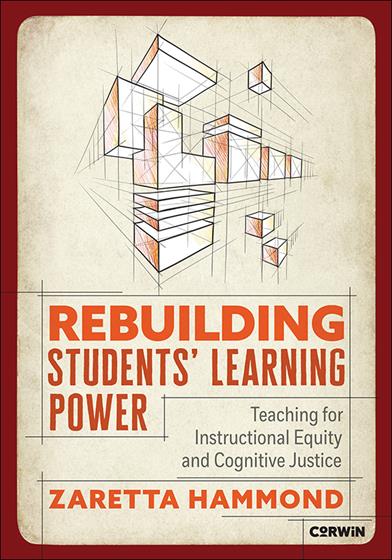
While popular, evidence-backed methodologies such as project-based learning, Universal Design for Learning (UDL), and makerspace learning are undeniably powerful, they alone do not automatically instill the intrinsic capacity for self-directed learning. Students require explicit tools, techniques, and deliberate cognitive "moves" to fully leverage these rich environments. As Hammond articulates in her forthcoming book, Rebuilding Students’ Learning Power (Corwin, 2025), the act of learning fundamentally rests with the learner. A teacher can meticulously design instruction, but if a student’s intellectual curiosity isn’t sparked, if the learning environment lacks psychological safety, or if the student lacks the cognitive skills to navigate the information processing cycle (attention, elaboration, consolidation), then profound learning remains elusive. The core challenge, therefore, is not merely to motivate students, but to equip them with the concrete strategies that transform them into effective information processors, making learning enduring and meaningful. This is where "learn-to-learn" skills become indispensable.
Defining the "Learn-to-Learn" Framework
The concept of "learn-to-learn" skills, though seemingly contemporary, draws on foundational principles of cognitive science and educational psychology. David Perkins of Harvard’s Project Zero refers to it as the "game of learning," while Ron Berger, founder of EL Education, champions the "craftsmanship of learning." Hammond aptly describes them as the "trade secrets" of learning, often hidden in plain sight, and crucially, a "hidden curriculum" that can dramatically close opportunity gaps and foster more equitable academic outcomes. These are not merely organizational "executive function" skills, which focus on planning and managing tasks with tools like binders and schedules. While important, executive function skills do not inherently enhance a student’s ability to shoulder a greater cognitive load or deepen their understanding of complex content.
The "learn-to-learn" framework distinguishes between "moves" and "skills," a distinction critical for effective instruction. A "move" is a specific, discrete action or technique executed in a particular moment—think of a chess move or a dance step, concrete with clear beginnings and ends. A "skill," conversely, is a broader, developed ability or competency that encompasses understanding, judgment, and the capacity to effectively execute various moves. Skills involve knowing when, how, and why to deploy different moves. Using a basketball analogy, a specific dribble is a move, but the overall skill of ball-handling involves the judgment to choose the right dribble at the right time, adapting to game conditions. Thus, "learn-to-learn" constitutes a skill set built from mastering five individual, flexible "moves" that empower students to process new content meaningfully and deeply.
The Five Foundational "Learn-to-Learn" Moves
These five cognitive "moves" guide students through the critical stages of information processing, moving them from passive reception to active engagement and lasting retention.
1. Move 1: Size It Up and Break It Down
This initial move centers on task analysis and strategic planning. Students learn to "size up" a task by employing a structured cognitive routine to discern its true demands. This involves asking a series of decision-making questions that ignite the information processing cycle and inform an appropriate emotional stance towards the task. Following this, the "break it down" phase focuses on crafting a plan of attack, disaggregating the task into its constituent cognitive activities and identifying the necessary tools and strategies. Research in cognitive psychology consistently demonstrates that effective planning and task decomposition are hallmarks of expert problem-solvers, significantly enhancing efficiency and reducing cognitive overload, especially for complex tasks. This move helps students proactively engage their metacognitive abilities, preparing their brains for the learning ahead.
2. Move 2: Scan the Hard Drive
Central to effective learning is the activation of prior knowledge. The "Scan the Hard Drive" move prompts the brain to fire neural pathways holding the student’s existing background knowledge, or "funds of knowledge" (schema), in preparation for new content. The fundamental "brain rule" is that all new learning must be anchored to existing learning. During the attention phase of information processing, the brain instinctively searches for connections—experiences, definitions, concepts—however tangential, that relate to the new information. This move, which can occur after task analysis or anytime new information is encountered, essentially sends the brain on a "scavenger hunt" through its stored knowledge. Educational research has long supported the constructivist view that learners build new knowledge upon existing frameworks, and activating schema is a powerful predictor of comprehension and retention.
3. Move 3: Chew and Remix
This move is the heart of the elaboration phase of information processing. Once students have activated their schema through "Scanning the Hard Drive," they must actively integrate new content with this identified related knowledge. "Chewing and Remixing" involves actively mixing the "new with the known," a process that facilitates meaning-making and leads to deeper understanding. This active engagement often necessitates "productive struggle" within a student’s Zone of Proximal Development (ZPD), where they grapple with complex, conflicting, or competing information. This process moves learning beyond surface-level recall to higher-order thinking, aligning with the upper levels of Bloom’s Taxonomy (e.g., analysis, evaluation, creation) and Webb’s Depth of Knowledge (levels 3 and 4). Studies consistently show that active learning strategies, which demand students to manipulate, interpret, and connect information, lead to significantly better long-term retention and transfer of knowledge than passive reception.
4. Move 4: Engage in Skillful Practice
While "Chew and Remix" focuses on general meaning-making, "Skillful Practice" is about refining understanding of core concepts and building automaticity with specific skills and procedures, particularly crucial in subjects like mathematics and reading. This move emphasizes deliberate practice aimed at myelinating new neural pathways, thereby increasing the speed and efficiency of information transfer. Students execute this move when they need to adjust their application of a move or execution of a skill to improve proficiency—whether it’s deepening comprehension of a historical event or mastering a mathematical formula. "Skillful Practice" cues the brain’s meta-strategic awareness, allowing students to identify weaknesses in their execution and focus on precise, iterative refinements. As cognitive scientist Anders Ericsson’s work on expertise demonstrates, deliberate practice—characterized by focused effort, immediate feedback, and continuous refinement—is the most effective way to develop high levels of skill.

5. Move 5: Make It Sticky
The final move, "Make It Sticky," targets the consolidation phase of information processing, crucial for countering the brain’s natural "pruning mechanism." This mechanism deletes fragile dendrites—new neural connections—if new learning isn’t revisited and used within 24 to 48 hours. The goal here is to transform fragile dendrites into robust neural pathways through the application of newly learned content in varied contexts, ideally outside the classroom setting. This move is most effective when used at the end of a learning episode and within twelve hours thereafter. Students are prompted to revisit information or tasks in an applied manner, such as explaining the concept to someone else, connecting it to real-world scenarios, or creating a summary or visual representation. Research on the Ebbinghaus forgetting curve and the efficacy of spaced repetition and retrieval practice underscores the critical importance of timely, active recall and application to solidify learning and embed it in long-term memory.
Strategies for Fostering Student Ownership and Learning Power
Teaching these "learn-to-learn" moves effectively requires more than simply presenting them. It demands a deliberate pedagogical shift to integrate them into the very fabric of the learning experience, transforming students into cognitively independent learners.
1. Initiate a Cognitive Apprenticeship:
Drawing parallels with traditional apprenticeships for carpenters, chefs, or artists, educators must structure the classroom as a cognitive apprenticeship. This involves a clear onboarding process, followed by distinct phases of skill-building and habit formation, culminating in mastery of learning how to learn. This initiation period, ideally lasting 4-6 weeks, explicitly lays out the path for students to become masters of their own learning. The ultimate goal is to cultivate six key capacities in students: critical thinking, adaptable problem-solving, self-monitoring, resilience in the face of challenge, resourceful inquiry, and reflective practice. This structured approach, rooted in Vygotsky’s theories of social learning, provides the necessary scaffolding for students to internalize these complex cognitive processes.
2. Invite Them to Revise Their Learner Identity:
A crucial, often overlooked, aspect of fostering learning ownership is addressing students’ self-perception as learners. Learner identity encompasses an individual’s beliefs about their abilities, motivations, and their place within the academic world, significantly impacting their sense of belonging in school. Many students, particularly those who underperform, struggle not just with content but with a diminished sense of themselves as capable learners, often expressed through self-limiting statements like, "I’m not a math person." By inviting students to critically examine and revise these narratives, educators can foster a growth mindset, where intelligence is seen as malleable rather than fixed. Research by Carol Dweck on growth mindset demonstrates that explicitly teaching students about the brain’s capacity for growth and encouraging them to attribute success to effort rather than innate ability can profoundly improve academic outcomes and persistence.
3. Integrate Regular Opportunities for Reflection:
Developing "learning power" is an iterative process that requires consistent reflection and feedback, akin to mastering any other complex skill set. Educators must create regular, structured opportunities for students to engage in instructional conversations about their learning process. These reflections should encourage students to analyze their mistakes, identify points of confusion, and articulate the "moves" they employed (or could have employed) to navigate these challenges. This includes differentiating between "choke points"—natural cognitive constraints like the limited capacity of working memory (typically 3-5 "chunks" of information at a time) or the short duration for which information is held before forgetting—and "pitfalls," which are forms of self-sabotage. Examples of pitfalls include believing that cramming by re-reading is effective, or multitasking during new learning. By reflecting on these distinctions, students learn to manage their unique cognitive constraints and avoid counterproductive habits, leading to improved meta-strategic awareness.
Broader Implications: Towards Instructional Equity and Future Readiness
The deliberate cultivation of "learn-to-learn" skills is more than a set of individual strategies to enhance lesson engagement; it is a fundamental shift towards instructional equity. By making these "hidden curriculum" skills explicit and accessible to all students, particularly those who have historically been marginalized or underserved, educators can significantly close the opportunity gap. Every student deserves to understand and master the "craftsmanship of learning."
Beyond individual academic success, fostering self-directed learners has profound societal implications. In an era of rapid technological advancement and constant change, the ability to continuously learn, unlearn, and relearn is paramount. These "learn-to-learn" skills are directly transferable to the 21st-century competencies critical for success in the workforce and active civic participation—critical thinking, problem-solving, adaptability, and resilience. A populace equipped with these skills is better prepared to navigate complex challenges, contribute meaningfully to innovation, and engage thoughtfully with an evolving world. By empowering students to own their learning, we are not just preparing them for the next test, but for a lifetime of intellectual curiosity, growth, and empowerment.