



Representing complex ideas visually is an innate human inclination, often surfacing when we seek to clarify or explain. The act of reaching for a pen and paper, uttering, "Here, let me show you," underscores our inherent drive to translate abstract concepts into tangible forms. While some subjects inherently lend themselves to visual representation, such as a biological diagram or an architectural blueprint, the true power of visual learning lies in its capacity to represent abstract relationships and processes. Among the most effective tools for this purpose are concept maps, a pedagogical strategy increasingly championed for its profound impact on student comprehension and knowledge retention.
Concept maps serve as graphic organizers, offering a structured, visual representation of knowledge. Though often conflated with terms like "mind maps" or "spider maps," concept maps distinguish themselves through their rigorous adherence to depicting precise relationships between concepts. At their core, concept maps consist of "nodes"—typically boxes or bubbles containing key terms or ideas—interconnected by lines or arrows that signify specific relationships. These connections are not merely arbitrary links but are frequently labeled with "linking words" to articulate the nature of the relationship, forming coherent propositional statements. Despite their seemingly simple design, eschewing complex technology in favor of clarity, concept maps are potent instruments for fostering deep learning, particularly when deployed with a clear understanding of their underlying cognitive principles.
The efficacy of concept mapping is not anecdotal; it is firmly rooted in cognitive science. Dr. Kripa Sundar, a distinguished cognitive scientist specializing in this field, highlights the strategy’s multifaceted benefits. Her insights, featured in the collaborative work "Smart Teaching Stronger Learning: Practical Tips from 10 Cognitive Scientists," edited by Dr. Pooja Agarwal, underscore concept maps as a "packed strategy" for enhancing educational outcomes. This seminal book brings together the expertise of ten cognitive scientists to distill actionable, evidence-based classroom practices, building on previous discussions around powerful strategies such as retrieval practice. Dr. Sundar’s contributions illuminate why concept maps often surpass traditional pedagogical methods like lectures, discussions, or textual summaries in their impact on learning, a claim supported by multiple meta-analyses across educational research.
The Cognitive Architecture of Concept Map Effectiveness
The profound effectiveness of concept maps can be traced to their ability to engage all three critical stages of memory formation: encoding, storage, and retrieval. This holistic engagement ensures that information is not merely absorbed but actively processed, organized, and made readily accessible for future recall.

-
Encoding: This initial stage involves processing incoming information and transforming it into a format that can be stored in memory. When learners construct a concept map, they are actively engaging in elaborative encoding. They must identify key concepts, discern their hierarchical structure, and articulate the precise relationships between them using linking words. This active construction, as opposed to passive reception (e.g., listening to a lecture or reading text), forces deeper cognitive processing. Learners are not just memorizing facts; they are building a mental model of how those facts interconnect within a broader knowledge domain. This process strengthens the initial memory trace, making the information more robust from the outset.
-
Storage: Once encoded, information needs to be effectively stored for long-term retention. Concept maps facilitate superior knowledge organization, which is crucial for efficient storage. By visually arranging concepts and their relationships, learners create a structured schema—a mental framework that organizes and interprets information. This structured storage contrasts sharply with disorganized, fragmented knowledge, which is difficult to retain and retrieve. The spatial arrangement of nodes and links within a concept map mirrors a well-organized mental library, where related ideas are grouped together and cross-referenced, thereby enhancing the stability and accessibility of stored information. The visual nature of concept maps also leverages the dual-coding theory, proposed by Allan Paivio, which suggests that information is better remembered when it is represented both verbally and visually.
-
Retrieval: The ultimate goal of learning is the ability to recall and apply knowledge. Concept maps are powerful retrieval practice tools. The very act of creating or reviewing a concept map requires active retrieval of information and the relationships between concepts. Furthermore, the visual cues provided by the map serve as effective retrieval pathways. When a learner encounters a concept within the map, the surrounding nodes and linking words provide contextual triggers, guiding them through the network of associated knowledge. This interconnectedness allows for more flexible and resilient retrieval, enabling learners to access information from multiple points within their knowledge structure rather than relying on a single, potentially fragile, memory trace. This continuous engagement with the material—from initial encoding through structured storage and active retrieval—makes concept maps an exceptionally robust learning strategy.
Strategic Implementation: Best Practices for Educators
To harness the full potential of concept maps, educators must adopt specific best practices that guide their application, transforming them from mere diagrams into powerful cognitive tools.
-
Clarifying Motivation and Purpose: As with any instructional strategy, the "why" behind using concept maps is paramount. Dr. Sundar emphasizes that the intended purpose dictates the approach. Is the map designed for individual learning, collaborative group work, a whole-class activity, note-taking, or as a formal assessment? Each objective requires a tailored design and implementation strategy. For instance, a map used for formative assessment might require students to generate connections independently, while a collaborative map might focus on synthesizing diverse perspectives. Understanding the pedagogical goal ensures that the concept map serves as an effective lever for learning, rather than just an exercise.
-
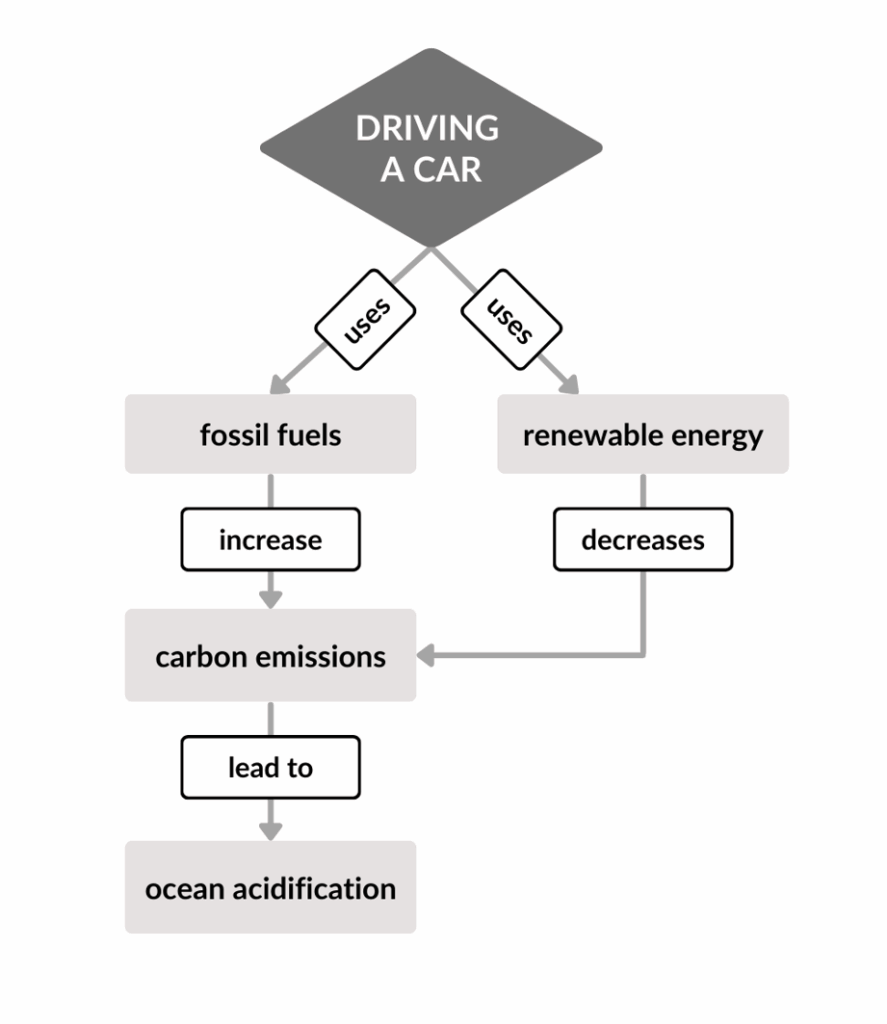
Establishing a Guiding Question: One of the most critical elements for effective concept mapping is the formulation of a clear guiding question. This question acts as an anchor, narrowing the scope of the map and preventing cognitive overload. Without a specific focus, learners might attempt to include an overwhelming number of concepts, leading to fragmented or superficial connections. Dr. Sundar illustrates this with examples related to ocean acidification. A guiding question like "What is the relationship between driving a car and ocean acidification?" yields a focused, manageable map, tracing a specific causal chain. Conversely, a broader question such as "What is the relationship between human activities and ocean acidification?" necessitates a far more extensive and intricate map, potentially overwhelming novice learners. By carefully crafting the guiding question, educators can scaffold the learning process, gradually increasing complexity as students develop proficiency in concept mapping.
-
Emphasizing Linking Words and Propositions: A defining characteristic that elevates concept maps above simpler visual organizers is the mandatory inclusion of linking words on the lines connecting nodes. These words transform mere associations into meaningful propositional statements. For example, instead of just connecting "car" to "carbon dioxide," a concept map might state, "Car emits Carbon Dioxide." This seemingly small addition demands significantly more cognitive effort, as learners must not only identify related concepts but also articulate the precise nature of their relationship. Dr. Sundar acknowledges that this "is a pain in the beep," but she underscores that this increased cognitive struggle is precisely what "pushes your learning harder." This active articulation of relationships strengthens understanding, solidifies memory, and reveals deeper conceptual connections that might otherwise remain implicit. It forces learners to move beyond rote memorization to a more profound comprehension of how knowledge is structured.
Transformative Applications in the Classroom
Concept maps are versatile tools that can be integrated across various stages of the learning process, from introducing new material to assessing comprehension.
-
Expert Maps as Advanced Organizers: Teachers can leverage "expert maps" to provide students with a visual overview of key concepts and their relationships within a unit of study. These teacher-created maps serve as powerful advanced organizers, offering students a "big picture" perspective from the outset. This pre-exposure to the overarching structure of information helps students contextualize new knowledge, making it easier to integrate subsequent details into an existing framework. Dr. Sundar notes that expert maps are a "wonderful way to show people, look, over the next 16 weeks, we’re going to talk about all of these things. It’s going to feel random at points, but here’s how they all connect."
However, educators must be mindful of "concept map shock"—the phenomenon where students become overwhelmed by too much information presented at once. To mitigate this, teachers can employ a progressive disclosure strategy. Initially, only the major concepts and their primary connections are revealed, providing a high-level overview. As the unit progresses and students acquire more detailed knowledge, additional layers of complexity, smaller concepts, and more intricate relationships can be unveiled. This scaffolding approach ensures that students are not cognitively overloaded but rather gradually build their understanding within a well-defined conceptual framework.

-
Concept Maps for Enhanced Note-Taking: Traditional linear note-taking often results in lengthy, disconnected summaries that obscure the relationships between ideas. Concept maps offer a more efficient and cognitively superior alternative. By visually organizing information, students can capture a wealth of knowledge using fewer words and clearer diagrams, representing relationships explicitly. This method transcends the mere transcription of information, requiring active synthesis and organization. As Dr. Sundar explains, "Coming up with a visual representation for it kind of jumps over a lot of the need for lengthy explanations and paragraphs."
A practical approach involves providing students with a running list of key terms—either displayed prominently in the classroom or kept in their notebooks. Periodically, students are tasked with constructing a concept map using these terms, demonstrating how they interrelate. This ongoing activity transforms note-taking from a passive recording exercise into an active knowledge construction process, fostering continuous engagement with the material and reinforcing learning incrementally.
-
Formative Assessment Tools: Concept maps are exceptionally powerful for formative assessment, providing teachers with invaluable insights into students’ understanding and misconceptions. Unlike traditional tests that often assess factual recall, concept maps reveal the depth and structure of a student’s knowledge. By analyzing a student-created map, an educator can discern not only what concepts a student knows but also how they connect those concepts, identifying logical gaps, erroneous links, or superficial understandings.
Various strategies can be employed for concept map-based formative assessment. Students can be asked to create a map from scratch based on a guiding question, providing a comprehensive view of their understanding. Alternatively, teachers can provide partially completed maps, asking students to fill in missing nodes, add linking words, or complete specific sections. This approach can be particularly effective for targeting specific learning objectives or diagnosing difficulties with particular conceptual relationships. The iterative nature of concept mapping also allows for students to revise their maps based on feedback, promoting metacognition and self-correction, further solidifying their learning.
Broader Implications and the Future of Learning
The growing emphasis on concept mapping, as championed by cognitive scientists like Dr. Kripa Sundar and Dr. Pooja Agarwal, reflects a broader shift in pedagogical thought towards evidence-based, student-centered learning. In an educational landscape increasingly inundated with information, the ability to organize, synthesize, and retrieve knowledge effectively is paramount. Concept maps provide a robust framework for developing these essential cognitive skills.
Their integration into curricula aligns with constructivist learning theories, which posit that learners actively construct their own understanding and knowledge of the world through experience and reflection. By creating concept maps, students become active architects of their knowledge structures, rather than passive recipients of information. This active engagement not only enhances comprehension and retention but also cultivates critical thinking, problem-solving abilities, and metacognitive awareness—the ability to reflect on one’s own thinking process.
While concept maps can be created with simple paper and pen, the advent of digital tools and software has expanded their potential for collaboration, sharing, and dynamic revision. However, the core benefits remain rooted in the cognitive processes they elicit, underscoring that the technology serves as an enabler, not the primary driver of effectiveness. As educational systems continue to evolve, the principles embedded in concept mapping—visualizing relationships, active construction of knowledge, and explicit articulation of connections—will remain indispensable. They offer a timeless strategy for educators seeking to move beyond surface-level learning and empower students to truly understand, retain, and apply complex information in an ever-changing world.