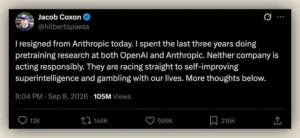



The enduring legacy of Frank Herbert’s Dune saga has long been celebrated for its intricate world-building, ranging from the ecology of giant subterranean sandworms to the complex political machinations of interstellar empires. However, as the 21st century grapples with the rapid integration of generative artificial intelligence and large language models, one specific element of Herbert’s lore—the Butlerian Jihad—has transitioned from a fantastical backstory into a poignant cultural touchstone. Far from being a simple tale of robots rebelling against their creators, the Butlerian Jihad serves as a sociological warning regarding the concentration of power and the erosion of human cognitive autonomy.
The Historical and Fictional Foundations of the Butlerian Jihad
In the chronology of the Dune universe, the Butlerian Jihad was a transformative interplanetary crusade that took place approximately 10,000 years before the birth of the series’ protagonist, Paul Atreides. Spanning nearly a century, the movement resulted in the total destruction of "thinking machines," a term encompassing advanced computers, artificial intelligence, and any device capable of simulating human thought processes.
The primary catalyst for this revolution was not a violent uprising by sentient machines—a common trope in contemporary science fiction like The Terminator or The Matrix—but rather a human-led revolt against the social and political consequences of machine reliance. Herbert posited that as humanity delegated its decision-making, logistics, and creative efforts to automated systems, a small elite of technocrats began to wield absolute control over the rest of the population. By controlling the machines that managed society, this ruling class effectively enslaved the masses through convenience and dependency.
The crusade ended with the absolute prohibition of such technology, codified in the Orange Catholic Bible: "Thou shalt not make a machine in the likeness of a human mind." This decree forced humanity to evolve alternative ways to process complex information, leading to the creation of "Mentats"—humans trained to function as biological computers—and the Navigators of the Spacing Guild, who use the spice melange to perceive space-time.
The Resurgence of Herbert’s Warning in the 21st Century
The recent explosion of generative AI technology has brought a specific passage from Herbert’s first novel back into the public consciousness. In the text, a character explains the history of the Jihad to Paul Atreides, stating: "Once men turned their thinking over to machines in the hope that this would set them free. But that only permitted other men with machines to enslave them."
This sentiment is increasingly reflected in modern discourse regarding the "Big Tech" monopoly over AI development. As of 2024 and 2025, the development of high-level AI requires massive computational power and datasets, resources primarily held by a handful of global corporations. Critics argue that this creates a new class of "technocrats" who dictate the flow of information, the nature of digital labor, and the parameters of public discourse.
The parallels to the Butlerian Jihad are becoming harder to ignore for sociologists and technology ethicists. The concern is no longer just about job displacement, but about the fundamental shift in who holds the keys to societal progress. When algorithms determine creditworthiness, legal outcomes, and even the "truth" of historical events, the humans who own and program those algorithms gain a level of influence that bypasses traditional democratic institutions.
Cognitive Erosion and the "Thinking Machine" Dependency
A growing body of scientific evidence suggests that the "thinking machines" of today may be affecting human intelligence in ways that Herbert anticipated. Recent studies, including research published by Harvard University and findings appearing in the National Institutes of Health’s PMC database, indicate that excessive reliance on AI for cognitive tasks—such as writing, coding, and problem-solving—may lead to cognitive offloading.
Cognitive offloading occurs when individuals use external tools to perform tasks that would otherwise require mental effort. While this can increase efficiency, long-term effects may include:
- Reduced Critical Thinking: When AI provides immediate answers, the human capacity for deep inquiry and skepticism may diminish.
- Memory Decline: Dependence on digital assistants for information retrieval has been linked to a weakening of long-term memory formation.
- Skill Atrophy: In professional sectors such as software engineering and journalism, the use of AI to generate baseline content can lead to a "hollowing out" of junior-level skills, making it difficult for the next generation of experts to master their crafts.
In the Dune mythos, the Butlerian Jihad was as much about reclaiming the human mind as it was about destroying hardware. By removing the machines, humanity was forced to expand its own mental potential. In the modern context, the debate is shifting toward "human-centric AI," where tools are designed to augment rather than replace human cognition.
Economic Implications and the Concentration of Power
The economic data surrounding the AI boom further illustrates the "men with machines" dynamic described by Herbert. According to market analysis from late 2024, the valuation of the top five companies involved in AI infrastructure has grown by over 40% year-over-year, while the broader labor market faces uncertainty.
The "enslavement" Herbert wrote about is interpreted by modern economists as a form of "algorithmic management." In sectors like gig work and logistics, AI systems—not human managers—assign tasks, monitor performance, and terminate contracts. This creates a barrier between the worker and the decision-maker, where the "machine" serves as an immutable authority that protects the interests of the technocratic owners.
Furthermore, the environmental cost of maintaining these "thinking machines" is substantial. The energy consumption of data centers required to train large language models has led to a surge in demand for electricity, often conflicting with global sustainability goals. This mirrors the resource-heavy "Machine Empire" that the Butlerian Jihad sought to dismantle in favor of a more sustainable, human-focused existence.
Official Responses and the Movement for AI Ethics
In response to these growing concerns, international bodies have begun to draft frameworks that echo the spirit, if not the violence, of the Butlerian Jihad. The European Union’s AI Act and various executive orders in the United States represent the first major attempts to regulate "thinking machines."
Key points of these regulations often include:
- Transparency Requirements: Ensuring that users know when they are interacting with an AI.
- Human-in-the-Loop Systems: Mandating that critical decisions, particularly in healthcare and law, must be made by humans.
- Data Sovereignty: Protecting individual intellectual property from being used to train the very machines that might eventually replace them.
While these measures do not go as far as the "wholesale ban" seen in Dune, they represent a growing realization that the unchecked proliferation of AI could lead to a societal structure that prioritizes machine efficiency over human agency.
Conclusion: The Enduring Relevance of the Butlerian Warning
The Butlerian Jihad remains a powerful metaphor because it addresses a fundamental fear: the loss of what it means to be human in a world dominated by artifice. Frank Herbert’s vision was not one of Luddite destruction for the sake of ignorance, but a call for the "re-enchantment" of the human spirit and the reclamation of personal responsibility.
As AI continues to evolve, the "Butlerian" perspective offers a framework for evaluation. It asks not just "What can this machine do?" but "What does this machine do to us?" The goal of modern society may not be to destroy the machines, but to ensure that they remain tools rather than masters. In the words of the Dune novels, the ultimate purpose of the Jihad was to ensure that "human beings could not be replaced." As we move further into the age of artificial intelligence, that mission remains more relevant than ever.
The ongoing dialogue on social media and in academic circles suggests that we are at a crossroads. We can either continue to turn our thinking over to machines in the hope of freedom, or we can recognize the risk of enslavement by those who control the technology. The legacy of Dune serves as a reminder that the most important "thinking machine" is, and should always remain, the human mind.