



The landscape of corporate learning and workforce development is in a constant state of flux, driven by visionary leaders who are not just facilitating training but fundamentally reshaping how organizations empower their employees. The Chief Learning Officer’s (CLO) "Learning Insights" series serves as a critical platform, illuminating the strategic thinking, innovative approaches, and challenges overcome by these influential figures. This in-depth exploration delves into the career trajectory and impactful initiatives of a prominent learning executive, offering a nuanced perspective on the evolution of the L&D function and its critical role in achieving business success.
The Genesis of a Learning Leader: From Training Designer to Strategic Architect
The journey into the realm of Learning and Development (L&D) often stems from a fundamental drive to foster human potential. For many, including the executive featured in this insight, the initial allure was a deep-seated motivation to empower individuals to achieve greater proficiency and excel in their roles. This intrinsic desire to contribute to personal and professional growth has been the bedrock of their career.
"I was drawn to L&D because I’ve always been motivated by helping people grow and perform better," the executive shared, reflecting on their early career. This foundational passion has guided their professional evolution. Over the years, the role has undergone a significant metamorphosis, expanding far beyond the traditional confines of instructional design. The focus has shifted dramatically from merely creating training modules to architecting comprehensive strategies that directly align learning initiatives with tangible performance improvements, enhanced employee engagement, and demonstrable business outcomes. This strategic pivot signifies a maturation of the L&D function, moving it from a support service to a core driver of organizational success.
Reimagining L&D: Building an Integrated Performance Ecosystem
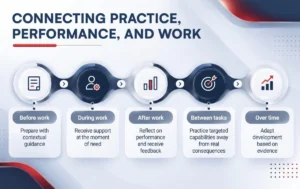
A cornerstone of effective modern L&D leadership lies in its ability to transcend isolated training events and embed learning seamlessly into the operational fabric of an organization. The executive’s approach exemplifies this paradigm shift, characterized by the implementation of an "integrated performance ecosystem." This holistic strategy encompasses several key initiatives designed to cultivate a robust learning culture and drive consistent employee development.
One of the primary achievements has been the standardization of the onboarding process. Recognizing that a consistent and effective introduction to the company is crucial for new hires, this initiative ensures that regardless of role or location, new employees receive a unified and comprehensive foundational experience. This not only streamlines the integration process but also establishes a baseline of knowledge and skills essential for immediate contribution.
Furthermore, the development of leadership programs has been strategically reoriented to be intrinsically tied to real-world competencies. This moves beyond generic leadership theory to focus on the specific skills and behaviors required to effectively lead teams within the organization’s unique context. This targeted approach ensures that leadership development is directly relevant and applicable to the challenges and opportunities faced by managers.
A critical element of this integrated ecosystem is the embedding of learning within operational systems. This means that learning opportunities are not relegated to separate training sessions but are made accessible and contextually relevant at the point of need within the daily workflow. This could involve in-system prompts, just-in-time microlearning modules, or performance support tools integrated directly into the software employees use daily.
The success of these initiatives is rigorously measured through data. Key performance indicators (KPIs) such as "time to competency," "Top Box scores" (often referring to customer satisfaction metrics), and productivity metrics are actively used to inform decision-making and guide future strategies. This data-driven approach ensures accountability and demonstrates the tangible impact of L&D efforts. The underlying philosophy is to make development an intrinsic part of how work is accomplished, fostering a culture where continuous learning is not an add-on but a fundamental aspect of daily operations.
The Impact of Redesigned Onboarding and Front-Line Performance Programs
Among the suite of initiatives, the redesigned onboarding and front-line performance programs have emerged as the most impactful. This strategic overhaul involved a fundamental re-evaluation of how new employees are trained in systems, service protocols, and essential leadership behaviors. The results have been transformative.
"By rethinking how we train systems, service and leadership behaviors, we reduced time to competency by more than 60 percent, improved guest experience Top Box scores and saved significant training labor costs," the executive stated, quantifying the significant gains achieved. A reduction in time to competency by over 60% represents a substantial acceleration in employee productivity and a quicker return on investment for new hires. Simultaneously, improvements in guest experience Top Box scores directly correlate with enhanced customer satisfaction and loyalty, a critical metric for many organizations. The reduction in training labor costs further underscores the efficiency and effectiveness of the new approach.
Beyond these quantifiable metrics, the qualitative impact has been equally profound. The executive emphasized, "More important, new hires leave onboarding confident, capable and ready to perform – not just ‘trained.’" This distinction between being "trained" and being "ready to perform" is crucial. It signifies that the new programs are not merely imparting knowledge but are equipping employees with the skills, confidence, and practical ability to excel from day one. This fosters a more engaged and productive workforce from the outset, setting a positive trajectory for their tenure within the organization.
Addressing Misconceptions: Elevating L&D from Cost Center to Strategic Partner
A persistent challenge within the L&D domain is the pervasive misconception that the function operates as a mere cost center or a passive order-taker, fulfilling requests for training without strategic input. This view fails to recognize the transformative potential of L&D when aligned with organizational objectives.
The executive directly confronts this misconception by adopting a leadership style rooted in data, business challenges, and measurable outcomes. "That L&D is a cost center or an order-taker," they stated. "I address it by leading with data, business problems and outcomes. If learning doesn’t move a metric, it doesn’t matter." This assertive stance reframes the narrative around L&D, positioning it as a strategic partner that delivers measurable value. By demonstrating how learning initiatives directly contribute to key business indicators, L&D professionals can unequivocally prove their worth and secure greater investment and buy-in from senior leadership. This evidence-based approach is essential for elevating the perception and impact of the L&D function within any organization.
The Future of Workplace Learning: Personalization, AI, and Performance Support
The future of workplace learning is brimming with exciting possibilities, driven by advancements in technology and a deeper understanding of how individuals learn best. The executive identifies the burgeoning trends of personalization, artificial intelligence (AI), and performance support as particularly compelling.
The shift toward personalized learning acknowledges that a one-size-fits-all approach is increasingly ineffective. Learners today expect tailored experiences that cater to their individual needs, preferences, and learning styles. AI is poised to play a pivotal role in enabling this personalization at scale, through intelligent recommendation engines, adaptive learning pathways, and AI-powered coaching.
Performance support, on the other hand, focuses on providing learning resources and guidance precisely when and where employees need them, directly within their workflow. This "just-in-time" learning approach minimizes disruption and maximizes application, ensuring that knowledge is immediately actionable.
To prepare their organization for this evolving landscape, the executive emphasizes a proactive strategy. "We’re preparing by experimenting early, upskilling our team and designing learning that fits into the flow of work, not around it," they explained. This includes embracing pilot programs for new technologies, investing in the continuous professional development of their L&D team to equip them with future-ready skills, and prioritizing the design of learning solutions that are seamlessly integrated into daily tasks rather than being perceived as separate interruptions. This forward-thinking approach ensures the organization remains agile and competitive in a rapidly changing world of work.
Essential Qualities of a Successful L&D Leader
The demanding and dynamic nature of L&D leadership necessitates a specific set of essential qualities. The executive highlights three core traits: business acumen, courage, and curiosity.
Business acumen is crucial for understanding the broader organizational context, its strategic goals, and the financial drivers that influence decision-making. This enables L&D leaders to align their efforts with the company’s objectives and speak the language of business leaders. Courage is vital for challenging the status quo, advocating for innovative approaches, and being willing to admit when something isn’t working. Curiosity fuels a continuous desire to learn, explore new possibilities, and adapt to emerging trends.
Cultivating these traits within oneself and one’s team is an ongoing process. The executive’s approach involves staying deeply connected with operational realities, fostering an environment of honest feedback, and encouraging the team to question assumptions. "I cultivate those by staying close to operations, being honest about what works and what doesn’t, and encouraging my team to challenge assumptions – including mine," they shared. This commitment to transparency and open dialogue creates a culture of continuous improvement and intellectual humility.
A Message to a Younger Self: Prioritizing Impact Over Volume
Reflecting on their career journey, the executive offers a potent piece of advice to their younger self: "Stop trying to prove your value through volume. Focus on impact, speak the language of the business, and trust that clarity is more powerful than complexity." This sentiment underscores a critical lesson learned: the true measure of L&D effectiveness lies not in the quantity of programs delivered but in the quality of the outcomes achieved.
This advice serves as a powerful reminder for all L&D professionals to shift their focus from producing numerous training modules to driving meaningful change. By prioritizing initiatives that demonstrably influence business metrics, communicating in terms that resonate with organizational stakeholders, and simplifying complex learning concepts, L&D leaders can significantly amplify their influence and demonstrate their strategic value.
The Foremost Challenge: Relevancy in a Dynamic Business Environment
The single biggest challenge facing L&D professionals and the industry as a whole, according to the executive, is relevance. "Too much learning still exists outside the realities of the job," they stated, highlighting a critical disconnect. Many traditional learning approaches fail to adequately address the immediate needs and practical challenges faced by employees in their day-to-day roles.
The imperative for the industry is clear: to move with greater agility, forge closer ties with business operations, and be prepared to divest from learning initiatives that have lost their efficacy. This necessitates a continuous process of evaluation, adaptation, and innovation to ensure that L&D remains a vital and indispensable component of organizational success. As the world of work continues its rapid evolution, the ability of L&D to maintain its relevance will be paramount to its continued impact and value.