



In a persistent effort to improve the educational landscape, particularly within the United States, the crucial element of student voice has largely receded from focus. Contemporary educational reforms frequently prioritize standardized test scores, top-down curriculum mandates, and quantitative measures of success that often fail to engage with the intrinsic humanity and diverse experiences of students. This narrow focus has yielded concerning results; recent data indicates that these efforts have not only failed to significantly elevate test scores, with reading scores falling to new lows on NAEP assessments, exacerbated by declines among struggling students (Schwartz, 2025), but have also contributed to a deteriorating school environment. A recent survey revealed that nearly half of educators perceive student behavior as worse than pre-pandemic levels, a statistic that has grown notably in just two years (Stephens, 2025). This trajectory suggests a profound misalignment between current approaches and the holistic needs of students and educators alike.
While pockets of innovation and excellence undoubtedly exist within individual schools, the broader system frequently misses the mark, attempting to address systemic challenges without genuinely engaging with the very individuals most profoundly affected: the students themselves. This oversight perpetuates a cycle of solutions imposed from above, often disconnected from the lived realities within classrooms and school communities.
The Genesis of "Street Data": A New Paradigm for School Improvement
Four years prior, a groundbreaking approach to school improvement began to garner significant attention through the publication of "Street Data: A Pathway Toward Equitable, Anti-Racist Schools." Co-authored by Shane Safir and Jamila Dugan, this seminal work introduced a methodology markedly different from conventional educational reform models. "Street Data" advocates for a qualitative, human-centered approach, emphasizing slow, thoughtful listening sessions conducted with students at the margins—those whose perspectives are routinely overlooked and whose needs are inconsistently met within the school system. From these deep listening sessions, the model posits that authentic, sustainable solutions can be collaboratively developed, piloted, iteratively refined, and then further guided by subsequent listening engagements, creating a continuous feedback loop rooted in student experience.
This approach stood in stark contrast to many existing programs and initiatives, which often entail substantial financial investment without delivering commensurate improvements. The "Street Data" model, with its emphasis on authentic engagement and iterative development, presented a compelling, cost-effective alternative that promised genuine systemic change.
A Chronology of "Street Data" in Practice and Evolution

The journey of "Street Data" from a theoretical framework to a practical methodology has been meticulously documented and widely disseminated. Initially, the authors, Shane Safir and Jamila Dugan, were featured on episode 178 of a prominent educational podcast, introducing their concepts to a broad audience of educators. Recognizing the transformative potential of this methodology, further efforts were made to illustrate its practical application. A mini-documentary was subsequently produced, showcasing Safir and Dugan actively guiding two distinct schools through the "Street Data" process. This visual and experiential account provided teachers and school leaders with an invaluable, up-close demonstration of how the approach functioned in real-world settings, demystifying its implementation.
Building on this foundational work, an eight-episode video series was released a year later, offering an even deeper dive into the methodology. Participants from the documented schools were invited to share their experiences and insights on a follow-up podcast, episode 203, providing firsthand accounts of the impact and nuances of adopting the "Street Data" framework. As the methodology gained traction and was adopted by an increasing number of schools, a critical question frequently emerged: What does it concretely look like when teachers intentionally center student voice and agency within their daily pedagogical practices? This inquiry highlighted a crucial need to translate the macro-level "Street Data" framework into actionable, classroom-level strategies.
"Pedagogies of Voice": Bridging Theory to Classroom Practice
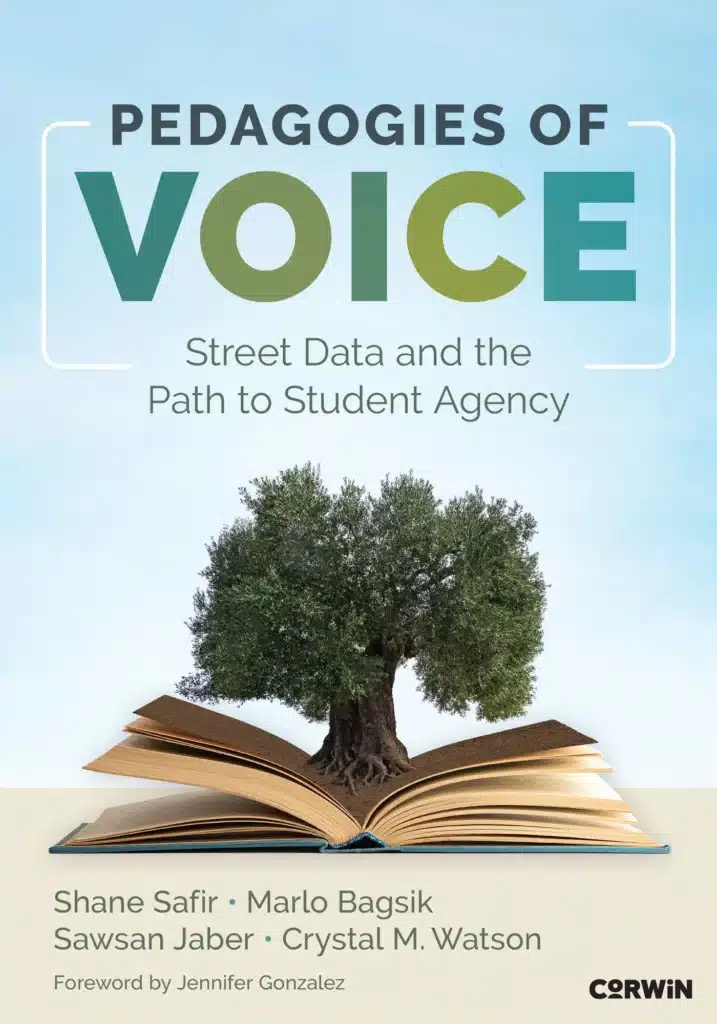
To address this pressing question and operationalize the principles of "Street Data" within the classroom, Shane Safir collaborated with three distinguished educators: Marlo Bagsik, Sawsan Jaber, and Crystal Watson. Their collective expertise culminated in the co-authorship of the new book, "Pedagogies of Voice: Street Data and the Path to Student Agency." This publication is not designed as a rigid instructional manual but rather as a "seed store" of practices—a comprehensive collection of adaptable and replicable strategies that educators can readily integrate to amplify student voice, cultivate agency, and foster environments conducive to meaningful, student-driven learning.
The book’s timely release holds particular significance in the current socio-political climate. Across various regions, there is an observable trend of marginalized voices, which had recently begun to receive much-needed recognition, being systematically pushed back into obscurity. Instances of book bans, censorship imposed on teachers, and broader threats to democratic principles are becoming increasingly prevalent. For educators grappling with where to direct their energies amidst these challenging and often disquieting circumstances, "Pedagogies of Voice" offers a potent and clear directive: teach in a manner that intrinsically amplifies student voice. The book advocates for the deliberate creation of classroom spaces where students are empowered to reflect critically, articulate their thoughts, and engage in meaningful action. It champions the cultivation of democratic practices such as active listening, respectful challenging of diverse opinions, and collaborative problem-solving, thereby nurturing individuals who are equipped and motivated to positively reshape the world.
The authors of "Pedagogies of Voice" recently shared insights from their work on a podcast, each elaborating on one or two favored classroom practices derived from the book. These discussions underscored the actionable nature of the strategies presented, offering educators immediate, tangible methods for implementation.
The Agency Framework: Four Domains for Empowering Students
"Pedagogies of Voice" organizes its classroom practices within an overarching Agency framework, structured around four interconnected domains: Identity, Belonging, Inquiry, and Efficacy. Each domain represents a critical dimension of student empowerment and provides a lens through which to develop and apply pedagogical strategies.
Practices that Awaken Identity
This domain focuses on cultivating learning environments where every student can unequivocally affirm, "My ways of being, knowing, and learning are valued here." It addresses the fundamental human need for recognition and validation, particularly for students from diverse cultural, linguistic, and socio-economic backgrounds. Sawsan Jaber, one of the co-authors, highlights practices centered on storientation, a pedagogical approach that leverages personal and shared stories as a dynamic springboard for both learning and the nuanced development of individual and collective identity.
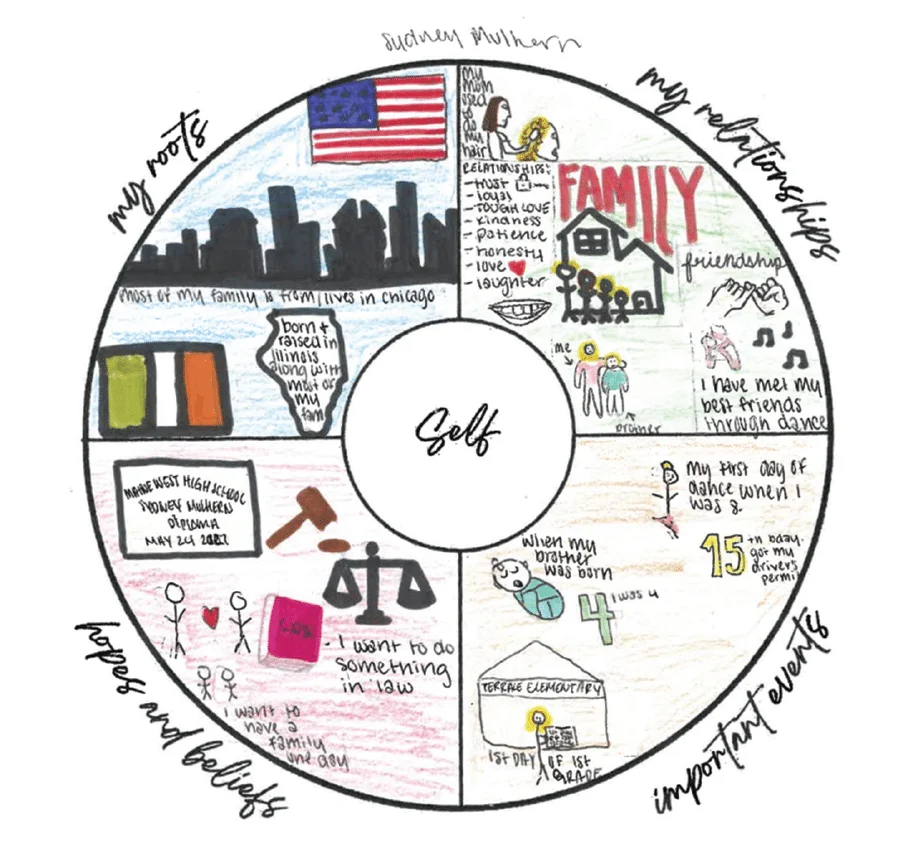
An illustrative example is the Identity Mandala, a visual and reflective exercise. Students are guided to create a mandala, a symbolic representation of their inner and outer worlds, using various artistic mediums. Each section of the mandala is dedicated to different facets of their identity—family heritage, cultural traditions, personal interests, aspirations, strengths, and even challenges. This process encourages deep introspection and self-expression. By sharing and discussing their mandalas, students not only gain a deeper understanding of themselves but also develop empathy and appreciation for the rich tapestry of identities within their classroom community. This practice moves beyond superficial recognition, delving into the core of who students are, affirming their unique contributions to the learning space.
Practices that Awaken Belonging
The domain of Belonging centers on implementing practices that foster a profound sense of being seen, heard, and cherished within the classroom. It moves beyond mere inclusion to ensure that each student feels an authentic connection to their peers and their learning community. Crystal Watson, another co-author, champions the simple yet profoundly impactful practice of circling up. This involves arranging classroom seating in a circular configuration for a wide array of activities, from discussions to problem-solving sessions.
Watson articulates the power of this arrangement: "I just love the fact that when you circle up, you’re all equidistant from the center. At any given time, an identity, an idea, a person can be centered. We’re not centering one or two identities or thoughts or ideals. We can center them all at any given time in our time together." This spatial reorientation inherently democratizes the classroom, ensuring that no single individual or perspective is perpetually at the periphery. For Watson, whose work often intersects with math education, "circling up" has proven particularly transformative. She notes that many individuals who express a dislike for mathematics often attribute it to the passive, isolated nature of traditional instruction: "You just sit there and do problems. That’s the problem. It should be more conversational. Argumentation should be a part of the math classroom." By facilitating open dialogue and collaborative problem-solving, circling up transforms the math classroom into an interactive space where diverse approaches are valued, and mathematical reasoning becomes a shared, dynamic experience.
Practices that Awaken Inquiry
The Inquiry domain is dedicated to empowering students to pose profound questions, critically investigate phenomena, and construct knowledge in increasingly sophisticated and complex ways. Shane Safir underscores the systemic erosion of inquiry-based learning in many educational settings. "Inquiry has been stripped from the learning environments, so many places," she laments. "The ability for young people to wrestle with big questions about the world, to be curious, to stay curious, to develop not just literacy, but critical literacy about text, about media, about the world."
Practices in this domain encourage students to move beyond rote memorization towards genuine intellectual curiosity. This can involve structured inquiry projects where students formulate their own research questions based on real-world issues, design investigative processes, analyze information from multiple sources (including diverse media), and synthesize their findings. For instance, a "Wonder Wall" where students post questions about a topic, followed by "Research Circles" where small groups collaboratively explore answers and present their findings, can foster deep inquiry. The emphasis is on developing critical literacy—the ability to analyze information for bias, context, and purpose—a crucial skill in an increasingly complex information landscape. By nurturing inquiry, educators equip students with the tools to navigate uncertainty, challenge assumptions, and engage with the world as active, critical thinkers.
Practices that Awaken Efficacy
Finally, the Efficacy domain focuses on creating learning environments where every student genuinely believes in their capacity to effect positive change concerning issues that resonate with them. It moves beyond academic competence to foster a sense of personal agency and social responsibility. Marlo Bagsik shared two practices in this domain that effectively "bookend" a week, providing a consistent framework for reflection and action.
At the beginning of the week, a practice like "Monday Mission Setting" can be implemented. Students are prompted to identify a specific goal or "mission" for the week, not just academically, but perhaps related to personal growth, community contribution, or a challenge they wish to address. This mission could involve helping a peer, initiating a small project, or advocating for a particular idea. They articulate their mission, consider potential obstacles, and brainstorm strategies for success. This upfront commitment instills a sense of purpose and direction.
To conclude the week, a complementary practice such as "Friday Forward Feedback & Future Action" can be employed. Students reflect on their "Monday Mission," assessing their progress, identifying what worked well, and what challenges they encountered. This reflection is often done in small groups or pairs, where peers provide constructive feedback and support. Crucially, the session culminates in students articulating their "next steps" or "future actions" based on their reflections. This might involve refining their approach, seeking additional resources, or committing to a new mission. These bookending practices cultivate a cyclical process of goal-setting, action, reflection, and iterative improvement, teaching students that their efforts can indeed lead to tangible outcomes and foster a deep-seated belief in their power to make a difference.
Broader Impact and Implications for a Democratic Society
The principles and practices outlined in "Pedagogies of Voice" transcend mere pedagogical techniques; they represent a fundamental commitment to democratic ideals within the educational sphere. In an era marked by increasing polarization, the suppression of diverse viewpoints, and direct challenges to democratic institutions, the cultivation of student voice and agency becomes not just beneficial but essential. By teaching in ways that amplify student voice, educators are directly counteracting forces that seek to marginalize and silence. They are fostering environments where the democratic practices of listening, respectful debate, critical inquiry, and collaborative action are not just taught but actively lived.
The long-term implications are profound. Students who are empowered to reflect, speak, and act thoughtfully are more likely to become engaged citizens, capable of navigating complex societal issues, challenging injustices, and contributing constructively to their communities. They develop critical thinking skills necessary to discern truth from misinformation, the empathy to understand diverse perspectives, and the courage to advocate for positive change. "Pedagogies of Voice" offers a powerful response to the anxieties of the current moment, providing educators with concrete tools to cultivate a generation of individuals prepared to uphold and reshape the world for the better, ensuring that the promise of an inclusive, democratic society can endure and thrive.