



The annual back-to-school season invariably ignites a fervent debate across social media platforms and parent-teacher forums regarding classroom supplies. What might appear as a minor logistical detail – the provision of pencils, notebooks, and glue sticks – has, in recent years, become a flashpoint for misunderstandings, financial strain, and occasionally, heated accusations between parents and educators. At the heart of this contentious discussion lies the widespread adoption of "community supplies" or "teacher-distributed supplies" systems in many K-8 schools, a departure from the individualized supply model many parents experienced in their own youth. This shift, driven by complex factors including evolving pedagogical practices, budget constraints, and a focus on educational equity, often creates a significant mismatch between parental expectations and classroom realities, leading to frustration and a sense of unfairness.
The Evolution of Classroom Supply Systems: A Historical Context
For generations, the image of a student proudly arranging their personalized supplies in their desk – a new box of crayons, a fresh stack of paper, and their very own ruler – was a hallmark of the school experience. This individual ownership model, while fostering a sense of personal responsibility for some, also presented challenges. Classrooms often became repositories of forgotten or mismatched items, and the constant disruption of students rummaging through desks for specific tools could impede instructional flow. More significantly, this model inadvertently highlighted socioeconomic disparities, as not all families could afford to provide a full complement of brand-new supplies, potentially stigmatizing students from less affluent backgrounds.
The shift towards communal or teacher-distributed supplies began gaining traction in the late 20th and early 21st centuries, propelled by several interconnected factors. One primary driver has been the increasing departmentalization of elementary and middle schools. Where a student once spent the entire day with a single teacher in one classroom, many now rotate between multiple subject-specific teachers and different learning environments. This mobility renders individual desk-based supply management impractical. Furthermore, modern educational philosophies often emphasize collaborative learning and project-based activities, which benefit from readily accessible, shared resources rather than individual stashes.
However, the most significant catalyst for this evolution is arguably the persistent underfunding of public education across many regions. According to data from the National Center for Education Statistics (NCES), while per-pupil spending has generally increased over time, a significant portion of these funds is allocated to salaries, facilities, and technology, leaving less for essential classroom consumables. This shortfall often trickles down to teachers, who, out of necessity and dedication, frequently dip into their own pockets. A 2021 report by AdoptAClassroom.org revealed that teachers in the U.S. spent an average of $750 of their own money on classroom supplies annually, with 30% spending $1,000 or more. This financial burden on educators, coupled with the desire to ensure all students have equal access to learning tools, has made parent contributions via communal supply lists a pragmatic solution for many schools.
Defining Community Supplies: How Modern Classrooms Operate
In a community supply system, parents purchase items from a standardized list, but instead of these items being labeled and reserved for their child, they are collected, pooled, and managed by the teacher for the entire class. This approach can manifest in various ways depending on the grade level and school’s specific protocols. For instance:
- Early Elementary (K-2): A kindergarten teacher might have supply bags attached to each student’s chair, replenished weekly from a central classroom stock. Bins of crayons, glue sticks, and construction paper are readily available for group projects, ensuring every child has what they need without delay.
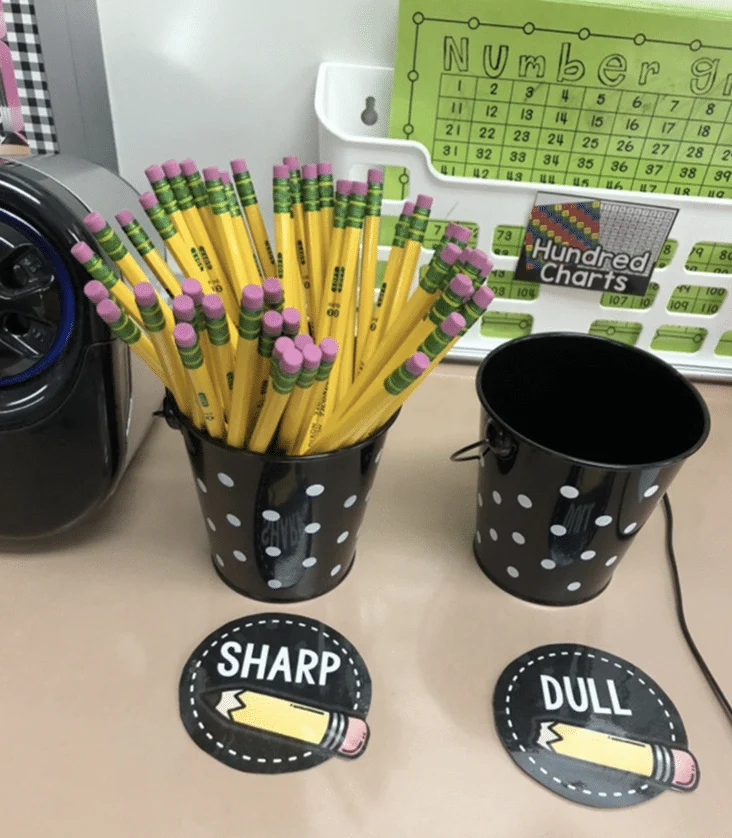
- Upper Elementary (3-5): A teacher might maintain two cups of pencils at the front of the room – one for dull pencils to be deposited, and another with sharpened pencils for students to exchange as needed, minimizing disruptions for sharpening. Shared containers of colored pencils, markers, and scissors are common.
- Middle School (6-8): While students may have some personal items for individual use across classes, core supplies like paper, pens, and project materials are often centralized within each subject’s classroom, managed by the respective teacher.
The fundamental principle is efficiency and equity. The goal is to maximize instructional time by minimizing interruptions related to supply acquisition and to ensure that no child ever goes without a necessary tool, regardless of their family’s ability to contribute.
The Rift: Misaligned Expectations and Perceived Unfairness
Despite the clear rationale from the educators’ perspective, the community supply model frequently generates significant friction with parents. A common scenario involves parents taking their children back-to-school shopping, allowing them to pick out personalized folders, notebooks, and pencils featuring beloved characters or designs. The disappointment is palpable when these cherished, personalized items are then collected on the first day of school and placed into a generic communal pile. This immediate mismatch sets the stage for resentment.
Parents often express concerns that their "hard-earned money" is subsidizing children whose families "don’t care enough" to send supplies. This sentiment is often fueled by a misunderstanding of how the system works and the underlying reasons for its implementation. Accusations, though often unfounded, can range from teachers "hoarding supplies" to "redistributing" items from contributing families to "needy kids." While it is true that supplies contributed by one family might be used by another child, this is not an act of targeted redistribution based on need in the way some parents imagine. Instead, it is a natural outcome of a system designed for collective utility.

For example, an elementary student might use five glue sticks over the course of a year. In a communal system, these five glue sticks are not individually labeled and stored for that specific child. Instead, the teacher places all collected glue sticks into a central bin. When a project requires glue, the teacher quickly distributes them from the bin, ensuring every child has one. The logistical impossibility of individually tracking and distributing 25 unique glue sticks, each with a child’s name, for every supply item, would consume valuable instructional time – potentially 15 minutes for a single item – that teachers simply do not have.
Similarly, if a parent sends 48 pencils, some bearing their child’s name, it is highly probable that other children will use those pencils. This is not because those children are "needy" or failed to bring supplies, but because the teacher manages pencils as a shared resource, ensuring a steady supply of sharpened writing instruments for the entire classroom. The teacher’s objective is to maintain a functional learning environment for all, not to meticulously track the provenance of every single pencil.
Addressing Common Concerns and Misconceptions
Several recurrent parental concerns about community supplies warrant a deeper look, with explanations rooted in pedagogical and operational realities:
- "Teachers are too controlling; letting kids manage their own supplies is no big deal." From a classroom management perspective, constant individual supply management is a significant time sink and distraction. If 25 students need to sharpen pencils three times a day, or constantly search for a specific colored crayon, the cumulative loss of instructional time becomes substantial. Teachers establish systems – like the sharpened pencil cup exchange – to streamline these tasks, allowing children to focus on learning rather than logistics. The goal is a classroom environment conducive to collective learning, not individual autonomy over every small item.
- "Kids won’t learn responsibility if they don’t manage their own supplies." While personal responsibility is a crucial life skill, teaching it through crayon management in a K-5 setting is inefficient. Teachers have limited time and a vast curriculum to cover. Lessons on supply management would detract from academic subjects like math, reading, and writing. Furthermore, the sheer volume and variety of supplies needed for younger students (multiple crayon colors, various paper types, glue sticks, rulers, etc.) make individual management cumbersome for small children. As students advance to high school, where supply needs are fewer and more specialized, individual responsibility for supplies naturally increases.
- "Why can’t they keep supplies in their desk like we did?" This concern often stems from nostalgic memories that may not align with contemporary school structures. As noted, departmentalized learning, where students move between multiple classrooms daily, makes a single-desk supply system unfeasible. Teachers either travel with their supplies, or more commonly, each classroom is stocked with the necessary materials for the subjects taught there.
- "Teachers are just keeping these supplies for themselves." This cynical view is largely unfounded. The "unhealthy passion for school supplies" often observed in teachers is a direct consequence of their financial vulnerability. Knowing they will likely have to pay out-of-pocket if supplies run out, teachers meticulously manage inventory to stretch resources as far as possible. There is no "black market" for glue sticks; rather, there is a dedicated professional trying to ensure continuous learning for their students without incurring personal debt.
- "I want to purchase special supplies just for my child." Back-to-school shopping can be a cherished tradition. Parents can absolutely purchase special items. The key is to communicate with the teacher. If the classroom setup allows for a personal pencil box or a special notebook in addition to the communal supplies, go for it. However, parents should be prepared for the possibility that these items might get lost or stolen, as teachers cannot dedicate instructional time to tracking down a unique unicorn pencil. A practical alternative is to create an exciting "homework station" at home with personalized, fun supplies, providing an incentive for after-school learning.
- "I’m not sending supplies for other people’s children." This perspective overlooks the fundamental reality of elementary school consumption. A typical child will use a significant quantity of supplies in a year – dozens of pencils, several glue sticks, multiple packs of crayons and paper. The teacher’s supply list generally reflects the collective needs of the classroom, aiming to ensure that the total quantity received will cover the average consumption of all students, including one’s own. Contributing to the collective ensures your child, and every other child, has what they need throughout the year.
- "Why can’t my child have a character folder?" Folders are often integral to classroom organization systems. Teachers might color-code folders for different subjects, use them for specific communication (e.g., "take-home" vs. "keep-at-school"), or utilize them in a rapid, standardized distribution system. A collection of diverse character folders can disrupt these systems, making quick identification and organization difficult.
- "Just tell me when my child’s supplies are running low." In a K-8 classroom with a student-teacher ratio far exceeding that of a daycare, individually notifying each family about depleted supplies is simply not feasible. Teachers manage supplies proactively to avoid interruptions. Expecting parents to drop everything to bring a single pencil is unreasonable. The communal system benefits parents by removing the daily burden of checking and replenishing individual student supplies.
- "My child shouldn’t have to use cheap supplies if I buy expensive ones." While the quality of supplies can vary, the primary focus in a classroom is on functionality and access. Children, especially younger ones, often don’t differentiate between high-end and standard brands as much as adults do. Embracing the community aspect means understanding that while your child may not always use the "top-of-the-line" materials, they will consistently have access to what they need, as will all their peers.
Bridging the Communication Gap: Strategies for Harmony
The key to resolving the annual supply debate lies in clear, proactive communication from schools and an understanding approach from parents. Schools should explicitly communicate their supply management system well in advance of the school year, explaining why they use a particular system (efficiency, equity, pedagogical benefits) and how it operates. This includes detailing whether supplies are collected and pooled, how often they are replenished, and who bears the cost of mid-year replenishment.
Parents, in turn, should actively seek this information. If the school hasn’t provided clear guidance a month before school starts, a polite inquiry to the school office or the specific teacher is warranted. Aligning parental actions with school systems – for example, opting for generic supplies if personalization isn’t supported, or contributing generously if the school relies heavily on parent donations – can significantly reduce frustration.
Furthermore, fostering a spirit of community and shared responsibility can transform the supply contribution process. When parents understand that their contributions are not just for their child, but for the collective learning environment that benefits all students, including their own, the perception of "unfairness" can diminish. Some schools facilitate this by offering optional "extra" contributions or funds to cover the costs for families who cannot contribute, explicitly framing it as supporting the entire school community.
Broader Implications: Equity, Efficiency, and Community
The debate over school supplies is more than just about pencils and paper; it touches upon fundamental issues of educational equity, school funding, and community cohesion. The communal supply model, when properly communicated and managed, can be a powerful tool for promoting equity, ensuring that every child, regardless of their family’s economic situation, has the necessary resources to learn. It also enhances classroom efficiency, allowing teachers to maximize instructional time and focus on teaching rather than logistics.
However, the continued reliance on parent and teacher contributions for basic school supplies also highlights a systemic issue: the insufficient funding of public education. While individual generosity is commendable, it cannot be a sustainable substitute for robust, equitable public funding. Advocates for education often point to this reliance as evidence that school districts are being asked to do more with less, pushing financial burdens onto families and educators.
Ultimately, navigating the landscape of school supplies requires empathy, transparency, and a shared commitment to creating the best possible learning environment for all students. By understanding the rationales behind modern supply systems, openly communicating expectations, and embracing the communal aspect of school, parents and educators can move beyond the annual debate and foster a stronger, more supportive educational community.