

In an educational landscape increasingly shaped by artificial intelligence, one educator is pioneering innovative methods to ensure student writing remains authentic, celebrated, and deeply meaningful. Marcus Luther, a high school English teacher, has developed a multifaceted approach centered on student exemplars, transforming his classroom into a vibrant hub where young writers are affirmed, inspired, and intrinsically motivated. His strategies move beyond traditional grading, fostering a powerful sense of belonging and confidence crucial for navigating the evolving demands of academic and personal expression. This pedagogical shift, highlighted through practices like the "Beautiful Language Wall," "Specific Wins" recognition, interactive exemplar analysis, and "collective poems," underscores a deliberate effort to counteract the potential homogenizing effects of AI on student creativity and individual voice.
The Genesis of the "Beautiful Language Wall"
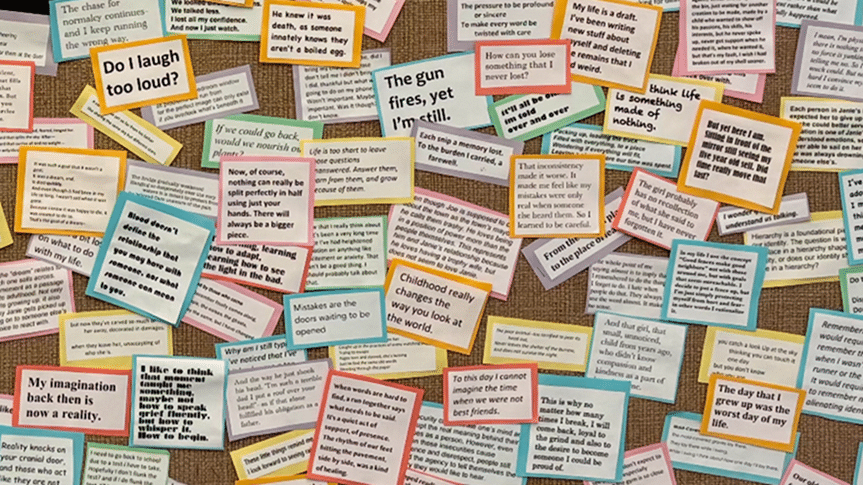
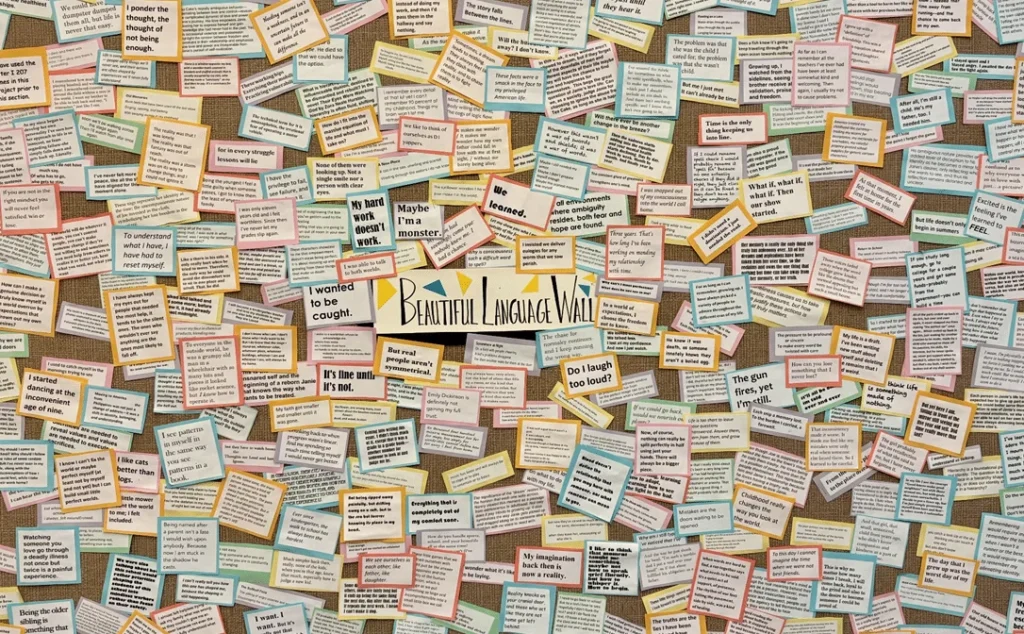
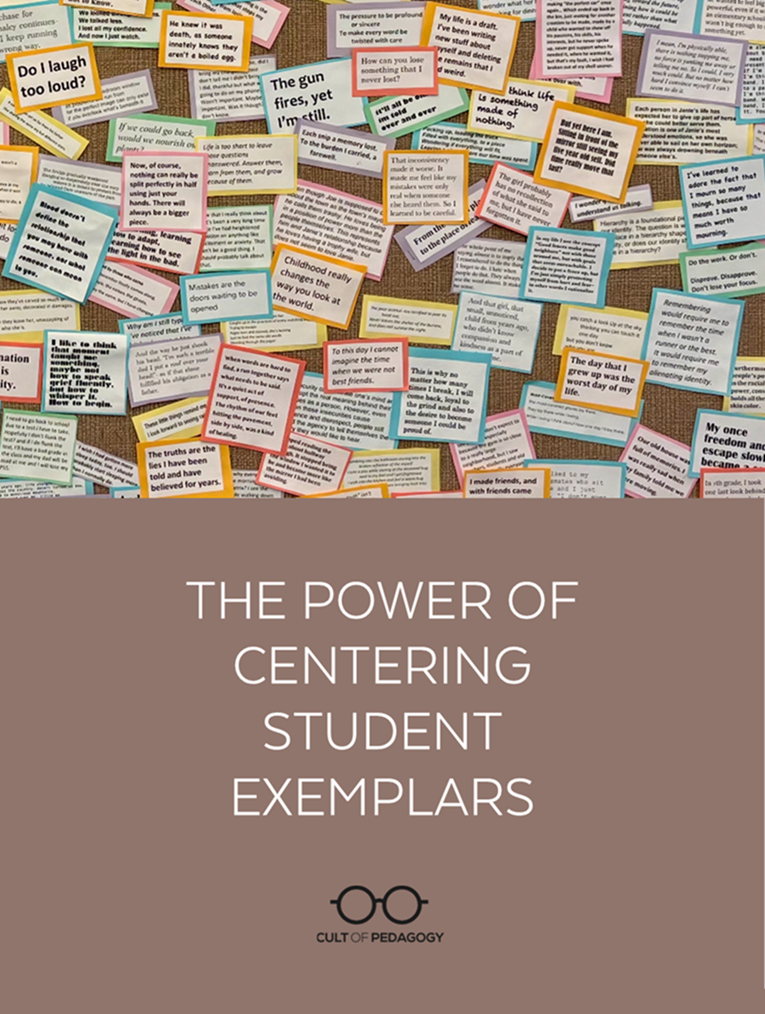
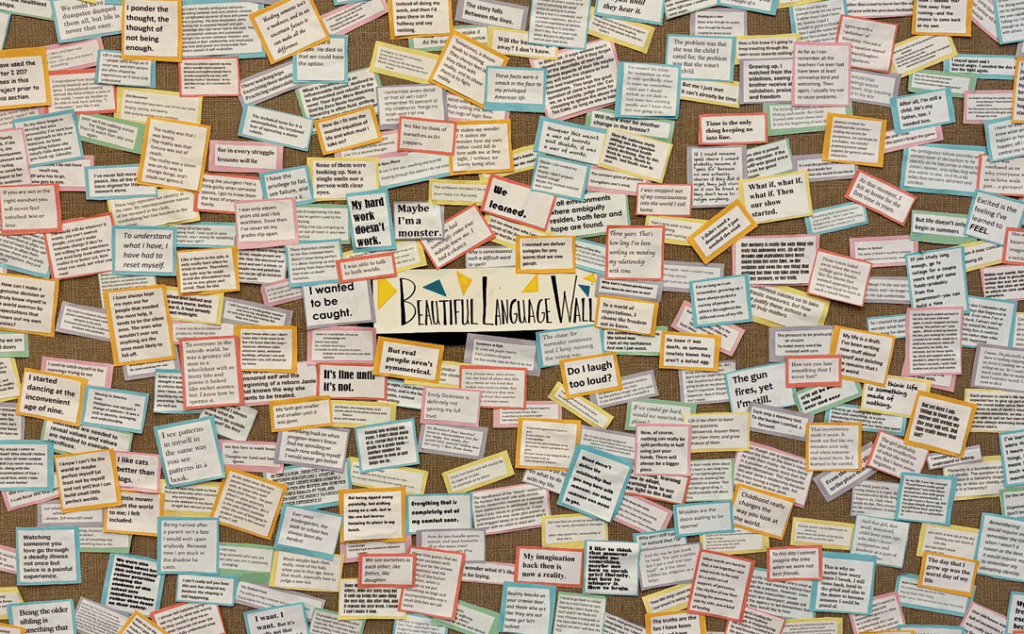
At the heart of Luther’s classroom innovation is a bulletin board, initially barren, designated as the "Beautiful Language Wall." This space, inspired by a Kelly Gallagher workshop nearly a decade ago, gradually fills throughout the academic year with anonymized sentences extracted from student writing. Each week, as Luther reviews and provides feedback on student work, he identifies particularly eloquent, insightful, or well-crafted sentences. These chosen exemplars are then projected, discussed with the class, and subsequently added to the wall. This gradual accumulation transforms the empty board into a dynamic, student-generated anthology of literary excellence.
The impact of the "Beautiful Language Wall" extends far beyond mere display. Students are observed gravitating towards it before and after class, eager to discover new additions or proudly point out their own contributions to peers, even those from outside the class. This visual representation of collective achievement serves multiple pedagogical functions. It provides concrete examples of high-quality writing, offering tangible models for students to emulate. More importantly, it cultivates a culture of appreciation for language and individual expression, validating student efforts in a public, affirming manner. The anonymity ensures that the focus remains on the quality of the writing itself, rather than individual competition, allowing all students to draw inspiration without direct comparison. Educational research consistently supports the use of exemplars as powerful teaching tools, demonstrating that concrete examples can clarify expectations, demystify complex tasks, and significantly improve student performance by providing a clear target for learning.
Celebrating Specific Wins: Beyond the Grade
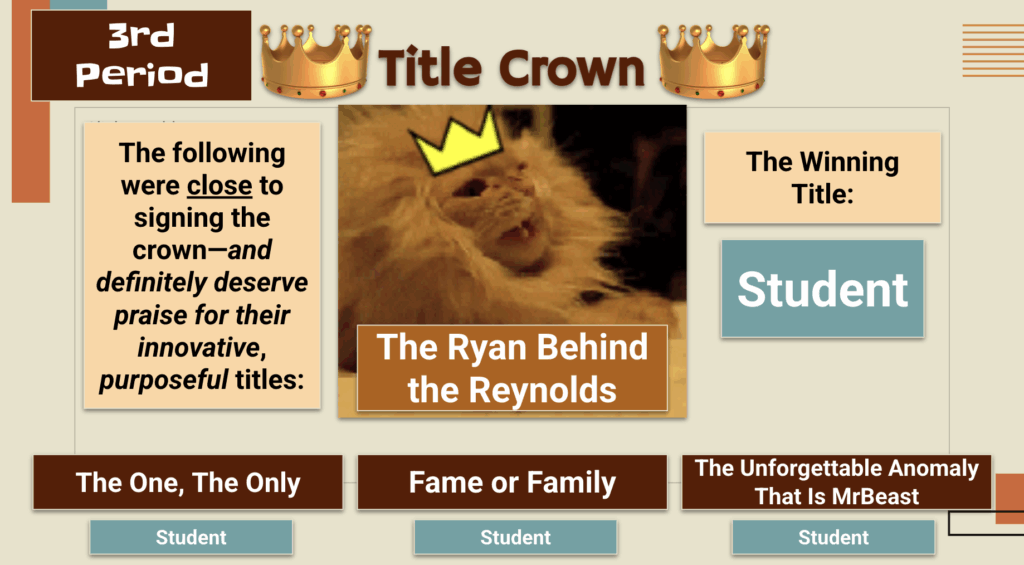
Beyond the evolving tapestry of the "Beautiful Language Wall," Luther employs a strategy of recognizing "specific wins" in student essays, a practice refined with the input of colleague Andrea James. This involves dedicating a segment of feedback lessons not just to collective strengths and growth areas, but to highlighting particular elements of individual student work. Categories for recognition include "best title," "best opening or hook," "favorite sentence," and "strongest closing." Each selected example is projected and analyzed, with Luther articulating precisely why the piece stands out. The top choice in each category earns the right to "sign the crown," a large cardstock crown maintained throughout the year for classroom competition winners.
This granular approach to celebration offers a critical departure from traditional grading paradigms. Often, a single grade can overshadow the nuanced strengths within a student’s work, leading to feelings of complete failure if the overall mark is not what they desired. By dissecting essays into specific components and acknowledging excellence in each, Luther builds confidence and demonstrates that every student possesses unique strengths worth recognizing. An anecdote shared by Luther illustrates this powerfully: a student who had struggled throughout the year, but found a passion researching Ryan Reynolds, created a fantastic title, "The Ryan Behind the Reynolds." When this title was announced as the "title crown" winner, the student’s "genuine roar of enthusiasm" and subsequent wearing of the crown symbolized a profound shift in self-perception. This resonates with psychological studies on intrinsic motivation, which suggest that specific, positive feedback on effort and achievement can significantly boost student self-efficacy and persistence. Student reflections, such as "I’m so proud of my essay!! I got the award for best title […] I told myself I should at least try because I wanted to see if I could get it and I did!", further underscore the profound impact of this targeted positive reinforcement. This method also aligns with growth mindset principles, where effort and specific achievements are celebrated, encouraging students to see challenges as opportunities for development rather than fixed indicators of ability.
Empowering Interaction: Students as Active Learners

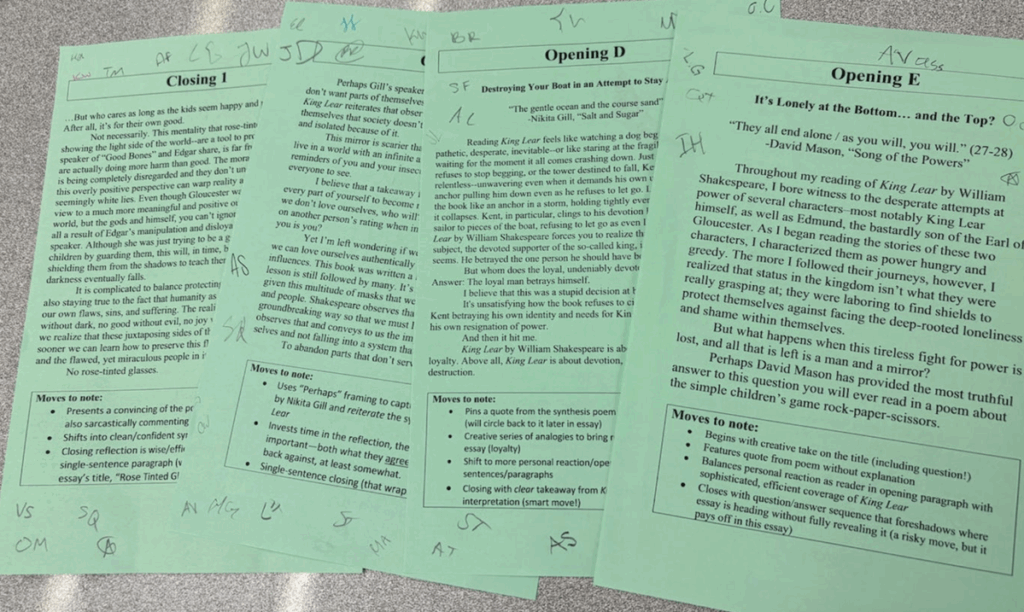
Luther’s pedagogical philosophy extends to making exemplars not just objects of display or passive admiration, but active tools for student learning and interaction. Following a particularly challenging synthesis essay unit with his junior students, where they developed independent interpretations of King Lear and contemporary poetry, Luther observed a marked improvement in essay openings and closings. Instead of merely presenting these examples on a screen, he transformed them into a dynamic, hands-on activity.
Five distinct opening paragraphs and five distinct closing paragraphs, all anonymized, were printed and posted around the classroom. Each sheet included a section titled "Moves to note," where Luther provided his expert commentary on the specific rhetorical strategies and literary merits of the excerpt. Students were then instructed to conduct a "gallery walk," moving around the room, analyzing their peers’ work, taking notes on what resonated with them, and leaving their initials on examples they found particularly effective or inspiring. The activity concluded with small group debriefings, allowing students to articulate their observations and learn from each other’s insights.
This interactive approach yields several critical benefits. Firstly, it offers students diverse pathways for improvement, demonstrating that there isn’t a single "right" way to craft an effective opening or closing. Seeing a variety of successful strategies, all generated by their classmates, demystifies the writing process and makes advanced techniques feel attainable. Secondly, it fosters a sense of ownership and agency over their learning. By actively analyzing and discussing peer work, students develop critical evaluative skills and a deeper understanding of writing conventions. Finally, and perhaps most importantly, it profoundly impacts student confidence. For those whose work is featured, it’s a powerful affirmation of their risks and achievements. As one student reflected, "I am proud of the risks I took and my ability to insert my own voice into my essay when the thought of that terrified me at first." This underscores the dual impact of such activities: improving writing skills while simultaneously building the self-assurance necessary for authentic expression. Educational psychologists emphasize the importance of active learning and peer interaction in deepening understanding and promoting higher-order thinking, principles clearly embedded in this strategy.
Bringing Exemplars to Life: The Collective Poem
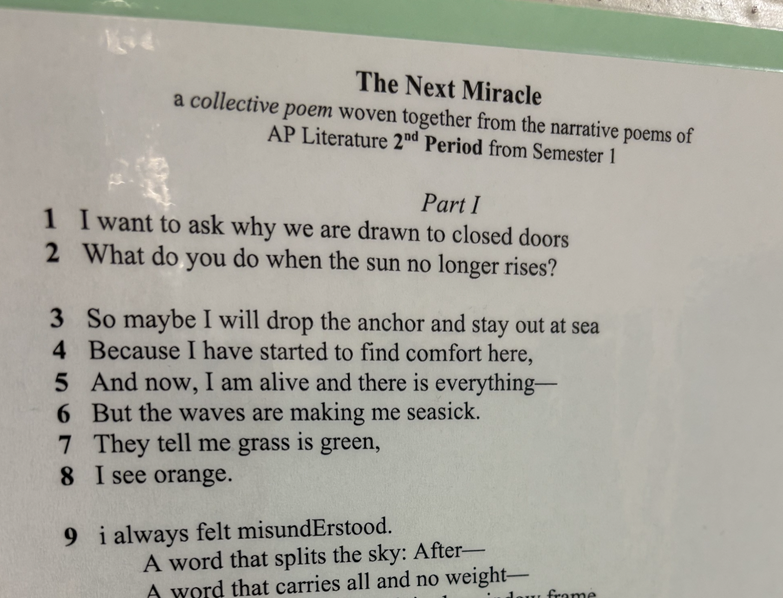
Perhaps the most poignant illustration of Luther’s commitment to centering student voice comes at the culmination of the first semester, through the creation of a "collective poem." After students complete their self-reflection activities, Luther introduces what appears to be one final, unexpected poem reading. Each student is given a copy and instructed to read one line aloud in sequence, creating a collaborative recitation. As the lines unfold, a palpable shift occurs in the classroom: whispers of recognition emerge, "Hey, I wrote that," "This is from my poem," "I did this."
The "poem" is, in fact, a meticulously crafted mosaic of individual lines, carefully selected by Luther from each student’s narrative poem written earlier in the semester. This "puzzle work," as Luther describes it, involves weaving together fragments of every student’s unique voice into a cohesive, shared piece. The experience culminates in a realization by the class: "We wrote this." This collective ownership transforms the act of reading into a profound moment of shared identity and celebration.
The "collective poem" transcends a mere literary exercise; it becomes a powerful symbol of community and belonging. Students witness their individual contributions forming part of a larger, beautiful whole, reinforcing the idea that every voice matters and contributes to the classroom’s collective narrative. A student’s end-of-year reflection encapsulates this sentiment: "It shows how each person, aware or not, is given a spot to be, which seems pretty meaningful to me. The poem truly became a symbol of the community we created – even in a classroom setting." This strategy taps into deep human needs for recognition and belonging, which are fundamental drivers of engagement and well-being in educational environments. Sociocultural theories of learning highlight the role of social interaction and collaborative meaning-making in cognitive development, making this "collective poem" a rich example of applied pedagogy.
Addressing the AI Challenge: Fostering Authentic Voice in a New Era
In an era where artificial intelligence tools like ChatGPT can generate sophisticated text with alarming speed and proficiency, the question of authentic student writing has become paramount for educators globally. For teachers like Marcus Luther, the rise of AI necessitates a fundamental re-evaluation of pedagogical practices. "It has never been more important to ask myself, How am I making writing meaningful in my classroom? How am I valuing authentic voice in writing? How am I making students feel confident in sharing their own stories?" Luther states, acknowledging the inherent difficulties in answering these questions today.
His exemplar-based strategies directly address this challenge. By focusing on the unique, often imperfect, yet deeply personal expressions of students, he cultivates an environment where AI-generated prose would feel out of place and ultimately unrewarding. The "Beautiful Language Wall," the "Specific Wins" crown, the interactive gallery walks, and the "collective poem" all celebrate the process of writing, the individual voice, and the human connection inherent in storytelling. These practices make writing an act of personal contribution and community building, rather than a mere transactional task that could be outsourced to an algorithm. When students see their own words celebrated by their peers and their teacher, and when they actively engage with the nuanced beauty of their classmates’ writing, they develop an intrinsic motivation to create authentically. This intrinsic value system is difficult for AI to replicate or undermine.
Educational leaders and researchers are increasingly advocating for instructional methods that prioritize critical thinking, creativity, and unique expression—skills that AI can augment but not replace. Luther’s approach aligns perfectly with this forward-looking perspective, transforming writing from a potentially solitary, anxiety-inducing task into a collaborative, empowering experience. His classroom becomes a testament to the idea that in a world awash with algorithmically generated content, human originality and voice retain their irreplaceable value.
Broader Implications and Future Outlook
Marcus Luther’s integrated use of student exemplars offers a powerful model for educators across disciplines. The principles—celebrating specific achievements, fostering interactive learning, and building community through shared creation—are adaptable to various subjects, from scientific reports to historical essays and artistic critiques. The long-term implications for students extend beyond improved writing skills; they include enhanced self-efficacy, a stronger sense of belonging, and the development of a critical appreciation for the diverse voices within their community.
As educational institutions grapple with the ethical and pedagogical challenges posed by AI, the emphasis on authentic student voice and the meaningfulness of human expression will only grow. Practices like those championed by Luther demonstrate that by intentionally centering student work, educators can cultivate resilient, confident writers who understand the power and value of their unique perspectives. His mentor’s adage, "our choices are expressions of our values," resonates deeply here: by choosing to elevate and celebrate student writing, teachers powerfully communicate its intrinsic worth, now more than ever. The enduring presence of "favorite ten sentences" from each year, preserved even after the main bulletin board is cleared, symbolizes this lasting commitment to student legacy and the enduring impact of their words.