



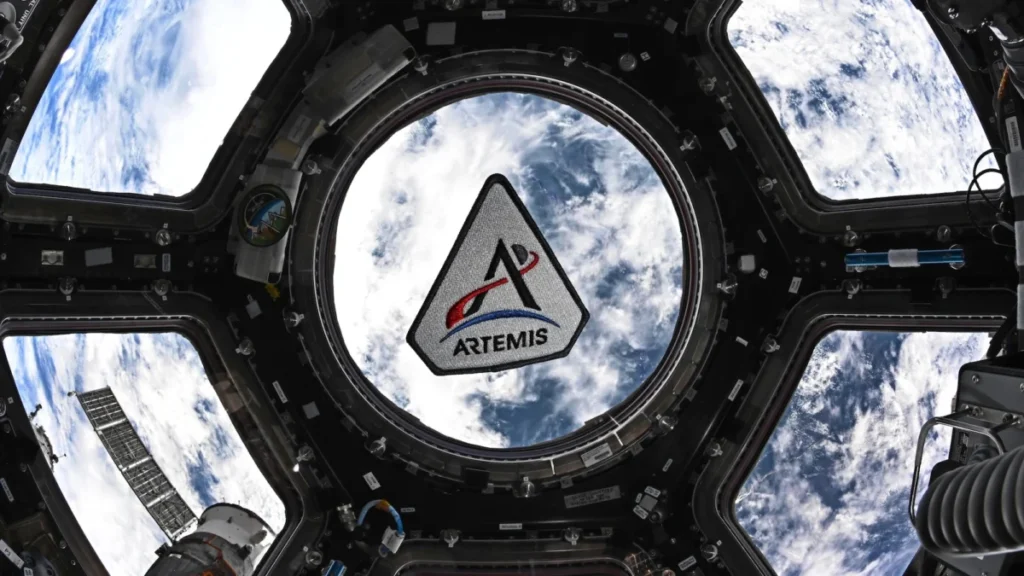
The successful completion of the Artemis II lunar flyby marks a definitive milestone in humanity’s return to deep space exploration, yet the stunning high-resolution imagery returned by the crew has ignited a peculiar public debate regarding the cleanliness of Earth’s orbital environment. As the Orion spacecraft transitioned from Low Earth Orbit (LEO) toward the lunar sphere, the absence of visible "space junk" in mission photographs led to widespread inquiries on social media and within scientific forums. Despite the well-documented crisis of orbital congestion, the photographic record of the mission appears pristine, a phenomenon that experts suggest highlights the staggering scale of the vacuum of space rather than a lack of pollution. This discrepancy between the perceived "cloud" of debris and the reality of orbital photography provides a unique opportunity to analyze the current state of orbital mechanics, the logistics of the Artemis program, and the escalating risks posed by the Kessler Syndrome.
The Artemis II Mission: A Chronological Overview of the Lunar Journey
The Artemis II mission represents the first crewed flight of the Space Launch System (SLS) and the Orion spacecraft, carrying a diverse crew consisting of Commander Reid Wiseman, Pilot Victor Glover, and Mission Specialists Christina Koch and Jeremy Hansen. The mission profile was designed as a ten-day flight test to validate the life-support systems and manual piloting capabilities of the Orion capsule before the scheduled lunar landing of Artemis III.
The chronology of the mission began with a high-stakes launch from Kennedy Space Center’s Launch Complex 39B. Upon reaching space, the crew did not immediately depart for the moon. Instead, they spent the first 24 hours in a High Earth Orbit (HEO) to perform a series of proximity operations and system checks. This phase was critical for ensuring that the spacecraft could safely sustain life during the long-duration transit. Following the successful completion of these maneuvers, the interim cryogenic propulsion stage (ICPS) performed the Trans-Lunar Injection (TLI) burn, propelling the crew toward the lunar far side.
During the outbound transit, the crew captured numerous images of the receding Earth. These photographs, while aesthetically breathtaking, became the focal point of the space junk controversy. To the untrained eye, the Earth appears as a "Blue Marble" suspended in a perfect, empty void. However, the mission trajectory required the Orion capsule to pass through the very regions where the highest concentrations of human-made debris reside.
The Visibility Paradox: Why Space Junk Remains Hidden to the Camera
The primary reason orbital debris does not appear in Artemis II photography is a matter of scale and relative velocity. While researchers and astronomers frequently use visualizations that show Earth surrounded by a dense, thick cloud of debris, these models are not to scale. If the debris were represented at its actual size relative to the Earth, the particles would be smaller than a single pixel.
According to the NASA Orbital Debris Program Office (ODPO), the vast majority of space junk consists of fragments smaller than a marble. Of the estimated 130 million pieces of debris currently in orbit, only about 25,000 are larger than 10 centimeters (approximately 4 inches). When these objects are spread across the millions of cubic miles of volume that constitute Low Earth Orbit and Medium Earth Orbit (MEO), the probability of an object being close enough to the Orion spacecraft to be resolved by a camera lens—without causing a catastrophic collision—is statistically negligible.
Furthermore, the physics of orbital motion complicates photography. Objects in LEO travel at speeds of approximately 17,500 miles per hour. For a piece of debris to be visible in a photograph, it would either need to be traveling in a nearly identical orbit at a similar speed or be large enough to reflect significant sunlight against the blackness of space. For the Artemis II crew, focusing on the moon or the Earth meant using exposure settings that would likely render small, fast-moving debris as an invisible blur.
Quantitative Analysis of the Orbital Debris Environment
To understand the magnitude of the problem that Artemis II navigated, one must look at the data provided by the U.S. Space Surveillance Network (SSN). The orbital environment is categorized by altitude, with different risks associated with each "shell" of space.
- Low Earth Orbit (LEO): Extending up to 1,200 miles above Earth, this is the most congested region. It houses the International Space Station (ISS), the Hubble Space Telescope, and thousands of communication satellites. The highest concentration of debris is found between 466 and 621 miles (750 to 1,000 kilometers).
- The Debris Population: As of 2024, there are approximately 9,000 active satellites in orbit, but they are outnumbered by "zombie" satellites, spent rocket stages, and fragmentation debris. NASA estimates there are 500,000 pieces of debris the size of a marble (up to 1 cm) and over 100 million pieces of debris about 1 mm and larger.
- Collision Energy: Because of the velocities involved, a 1-centimeter paint fleck hitting a spacecraft has the kinetic energy of a 550-pound object moving at 60 miles per hour.
The Artemis II mission profile intentionally minimized time spent in the high-density debris zones of LEO to reduce the risk of Micrometeoroid and Orbital Debris (MMOD) strikes. The spacecraft’s shielding, known as Whipple shielding, is designed to break up small particles upon impact, but it cannot protect against objects larger than 1 to 2 centimeters.
Official Responses and the Threat of the Kessler Syndrome
The "Kessler Syndrome," a theoretical scenario proposed by NASA scientist Donald J. Kessler in 1978, remains the greatest long-term fear for space agencies. This phenomenon occurs when the density of objects in LEO is high enough that a single collision creates a cascade of further collisions, eventually rendering certain orbital shells unusable for generations.
In response to the growing visibility of this issue—if not in photos, then in policy—the Federal Communications Commission (FCC) and international bodies like the Inter-Agency Space Debris Coordination Committee (IADC) have implemented stricter "25-year rules," now being shortened to 5-year rules, requiring satellite operators to de-orbit their hardware after mission completion.
NASA’s Artemis team has reiterated that while the photos look clear, the navigation of the spacecraft is a masterpiece of computational avoidance. "We track every object larger than a softball with extreme precision," a NASA orbital analyst noted during a post-launch briefing. "Before Orion ever leaves the pad, thousands of trajectories are simulated to ensure a ‘clear’ window. The fact that the crew didn’t see junk is a testament to the success of our flight dynamics team, not an indication that the junk isn’t there."
Engineering Resilience: Protecting the Orion Capsule
The Orion spacecraft is one of the most hardened vehicles ever built for human flight. Unlike the Space Shuttle, which had a large, vulnerable windshield and thermal tiles, Orion uses a more compact design with advanced composite shielding. The spacecraft’s exterior is designed to withstand the harsh environment of deep space, which includes not only man-made debris but also natural micrometeoroids traveling at even higher velocities.
During the Artemis II mission, the crew reported several "pings" or small impact sounds, which are common for spacecraft in orbit. These are typically the result of sub-millimeter particles hitting the outer hull. While these impacts do not threaten the integrity of the pressure vessel, they serve as a constant reminder of the "invisible" environment the crew inhabits.
Broader Implications for Future Lunar and Martian Exploration
The Artemis II mission serves as a prelude to a much more crowded future. With the rise of "mega-constellations" like SpaceX’s Starlink and Amazon’s Project Kuiper, the number of active satellites is expected to grow from 9,000 to over 60,000 within the next decade. This expansion poses a significant challenge for the "Moon-to-Mars" pathway.
If the debris problem is not addressed through active debris removal (ADR) technologies—such as robotic arms, nets, or lasers designed to de-orbit large fragments—the launch windows for missions like Artemis IV and beyond will become increasingly narrow. The "pristine" photos returned by the Artemis II crew may eventually become a relic of the past if orbital management does not keep pace with commercial expansion.
Conclusion: The Vastness of Space and the Responsibility of Earth
The Artemis II mission has successfully demonstrated that humanity can still reach for the stars despite the growing ring of waste surrounding our planet. The absence of space junk in the mission’s photography is not a sign of a solved problem, but rather a reflection of the incomprehensible vastness of the space environment.
As the Orion capsule returned to Earth, splashing down in the Pacific Ocean, it brought back data that will be used to protect future crews. The mission underscores a dual reality: space is both dangerously crowded and safely vast, depending entirely on the precision of our tracking and the responsibility of our orbital stewardship. For now, the view from the Orion windows remains clear, but the silent, speeding fragments of past missions continue to circle overhead, a permanent reminder that the path to the moon must be kept clear for the generations to follow.