
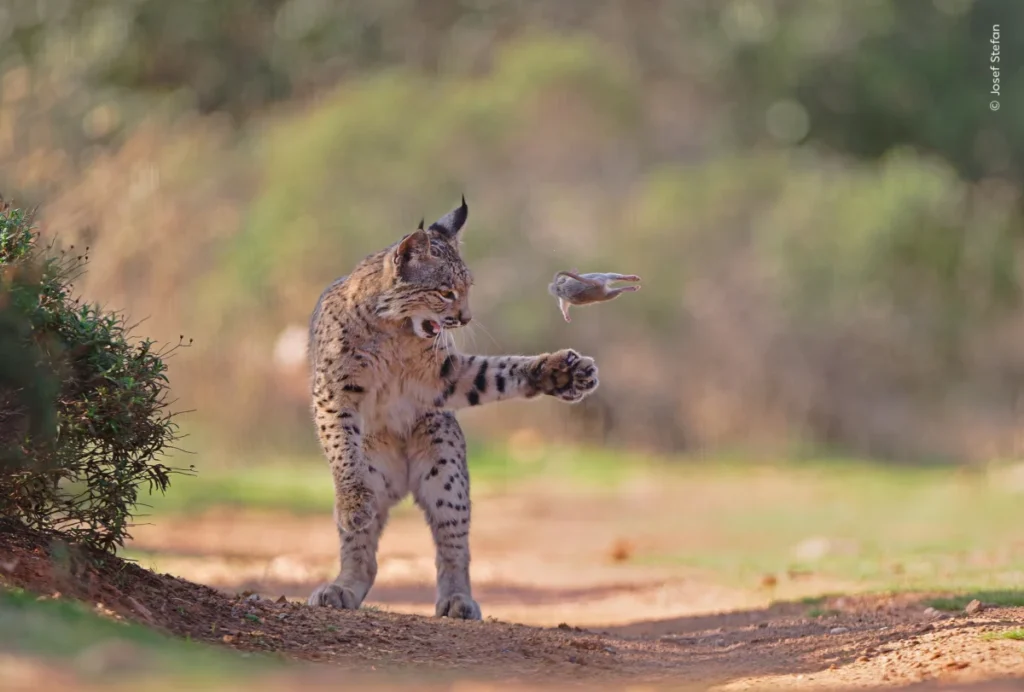
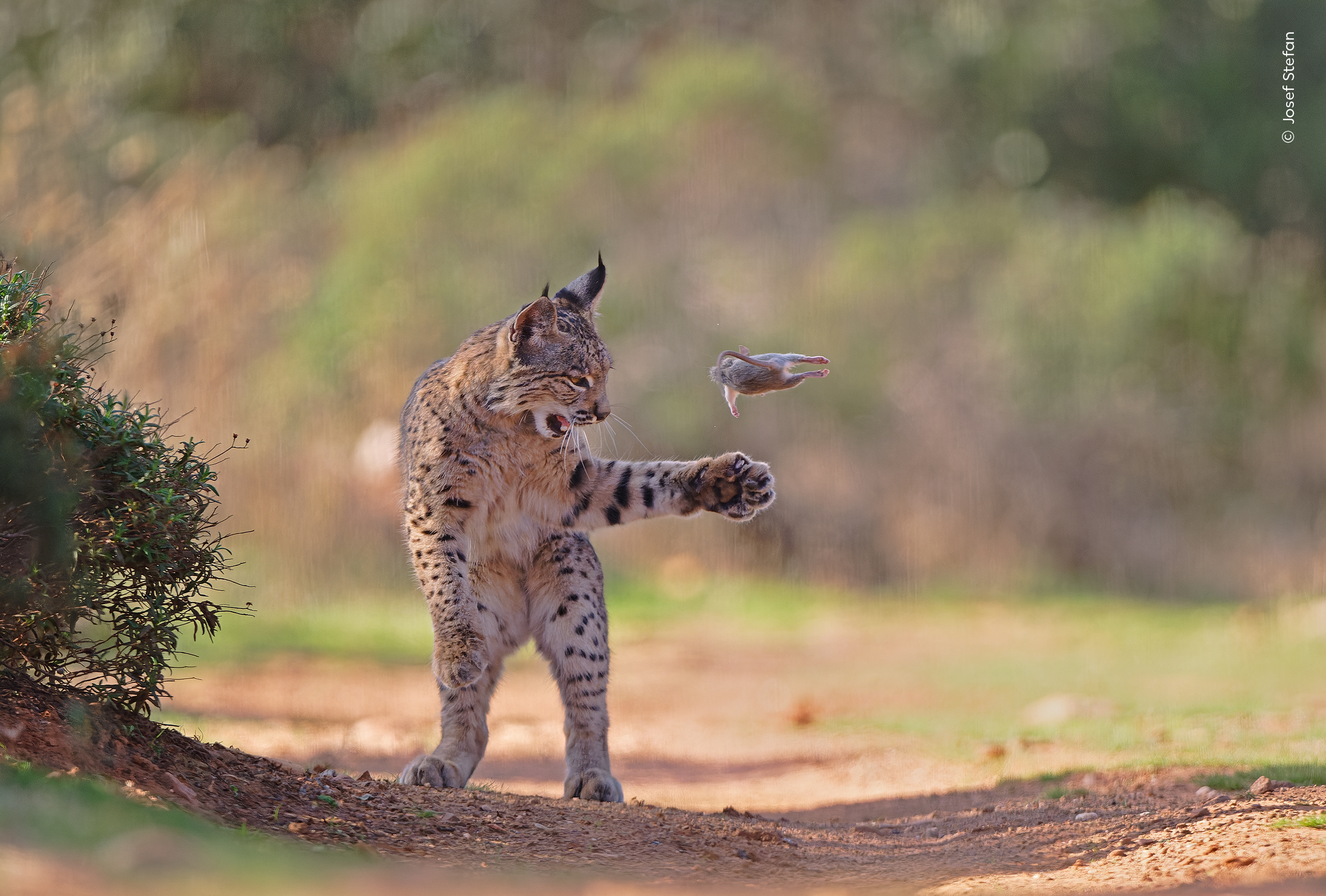
The Natural History Museum in London has officially announced the winner of the Nuveen People’s Choice Award for the 2026 Wildlife Photographer of the Year competition. Following a global public vote that saw nearly 90,000 ballots cast, Austrian photographer Josef Stefan secured the top honor for his striking and dynamic image titled "Flying Rodent." The photograph captures a rare moment of predatory play, featuring an Iberian lynx tossing a small rodent high into the air against the backdrop of the Spanish countryside.
The winning image was selected from a shortlist of 25 photographs, which were curated by the Natural History Museum from more than 50,000 entries submitted from across the globe. Stefan’s victory highlights not only the technical prowess required to capture such a fleeting moment but also the significant conservation narrative surrounding the Iberian lynx, a species that has become a global symbol of successful wildlife restoration.
The Story Behind the Winning Shot
Josef Stefan, a veteran nature photographer with three decades of experience, captured the winning frame at Torre de Juan Abad in Ciudad Real, Spain. The image was the culmination of a two-week observation period during which Stefan remained stationed in a specialized photography hide. The "Flying Rodent" photograph depicts a young lynx engaged in a behavior common among feline predators: playing with its prey before the final kill.
Stefan observed the lynx repeatedly throwing the rodent into the air and catching it, a display of agility and instinct that lasted approximately 20 minutes. The photographer noted that the interaction appeared almost theatrical, as if the rodent were momentarily granted the gift of flight before the lynx eventually retreated behind a bush to consume its meal.
For Stefan, the award represents the fulfillment of a lifelong ambition to document the Iberian lynx. Once considered the most endangered feline species in the world, the Iberian lynx has seen a remarkable recovery. In the early 2000s, fewer than 100 individuals remained in the wild, primarily due to habitat loss and a decline in the population of European rabbits, their primary food source. Today, thanks to intensive international conservation efforts, the population has surpassed 2,000 individuals.
Recognition of Excellence: The Four Runners-Up
In addition to Stefan’s grand prize, the Natural History Museum recognized four runners-up whose work spanned diverse ecosystems and highlighted various environmental challenges. These images were also selected through the public voting process and will be featured prominently in the upcoming international tour of the Wildlife Photographer of the Year exhibition.
Alexandre Brisson: Beauty Against the Beast
Alexandre Brisson’s "Beauty Against the Beast" offers a stark commentary on the intersection of wildlife and human infrastructure. Captured in Walvis Bay, Namibia, the image features lesser flamingos navigating a landscape dominated by high-voltage power lines. Brisson arrived at the bird sanctuary at sunset after a grueling ten-hour drive, noting the overwhelming contrast between the elegance of the birds and the industrial odors of a nearby open-air dump. The photograph serves as a visual reminder of the shrinking boundaries between protected natural spaces and human expansion.
Kohei Nagira: Never-ending Struggle
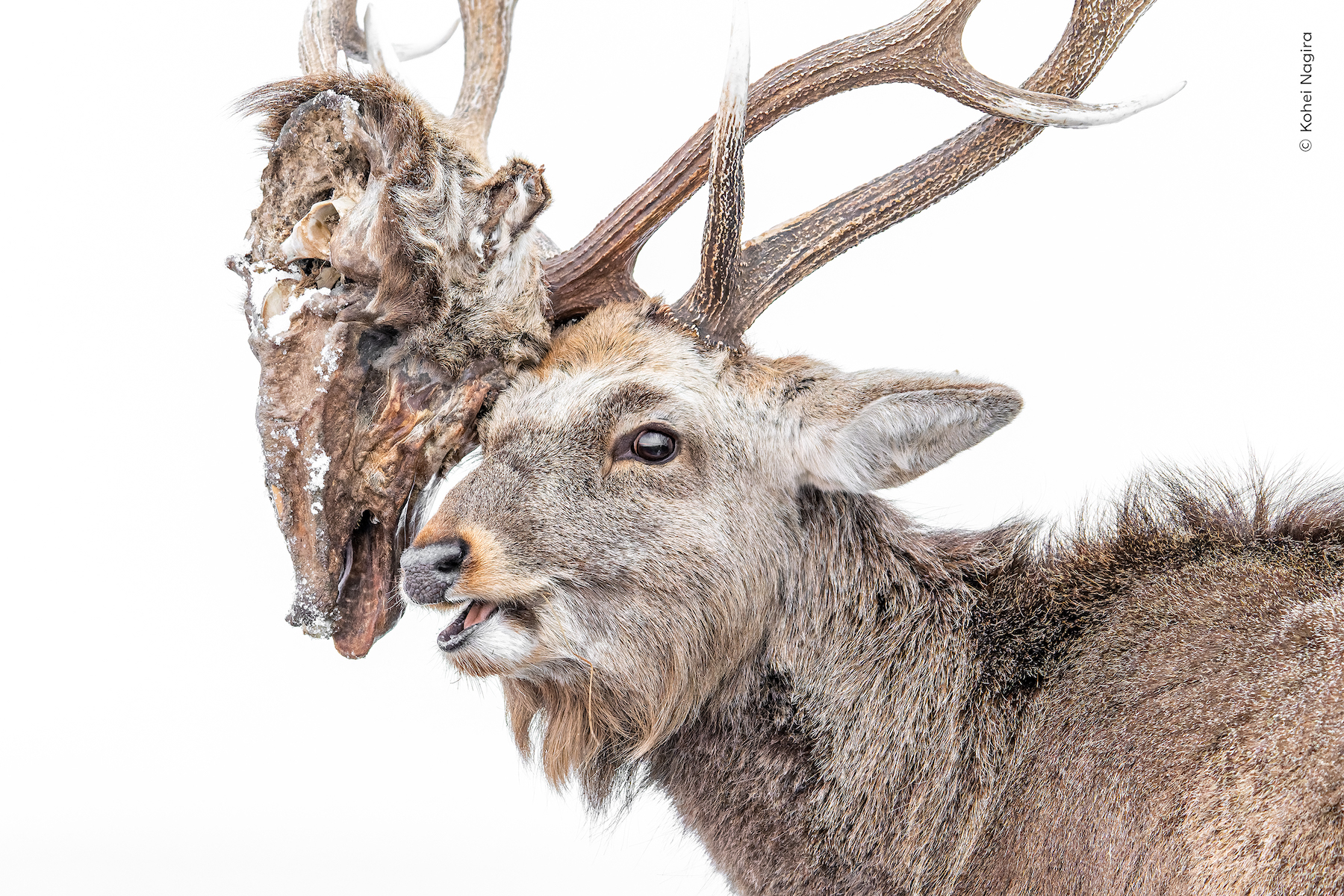
Japanese photographer Kohei Nagira received recognition for his visceral image "Never-ending Struggle," taken on the Notsuke Peninsula in Hokkaido, Japan. The photograph depicts a male sika deer surviving the harsh winter while carrying the severed head and antlers of a rival deer. The two animals had become inextricably locked during a rutting battle months earlier. According to local reports, the surviving deer dragged the carcass of its opponent for days until the weight caused the rival’s head to detach. Nagira tracked the deer from November 2020 through April 2021, documenting its resilience as it continued to forage despite the gruesome burden attached to its own antlers.
Will Nicholls: Dancing in the Headlights
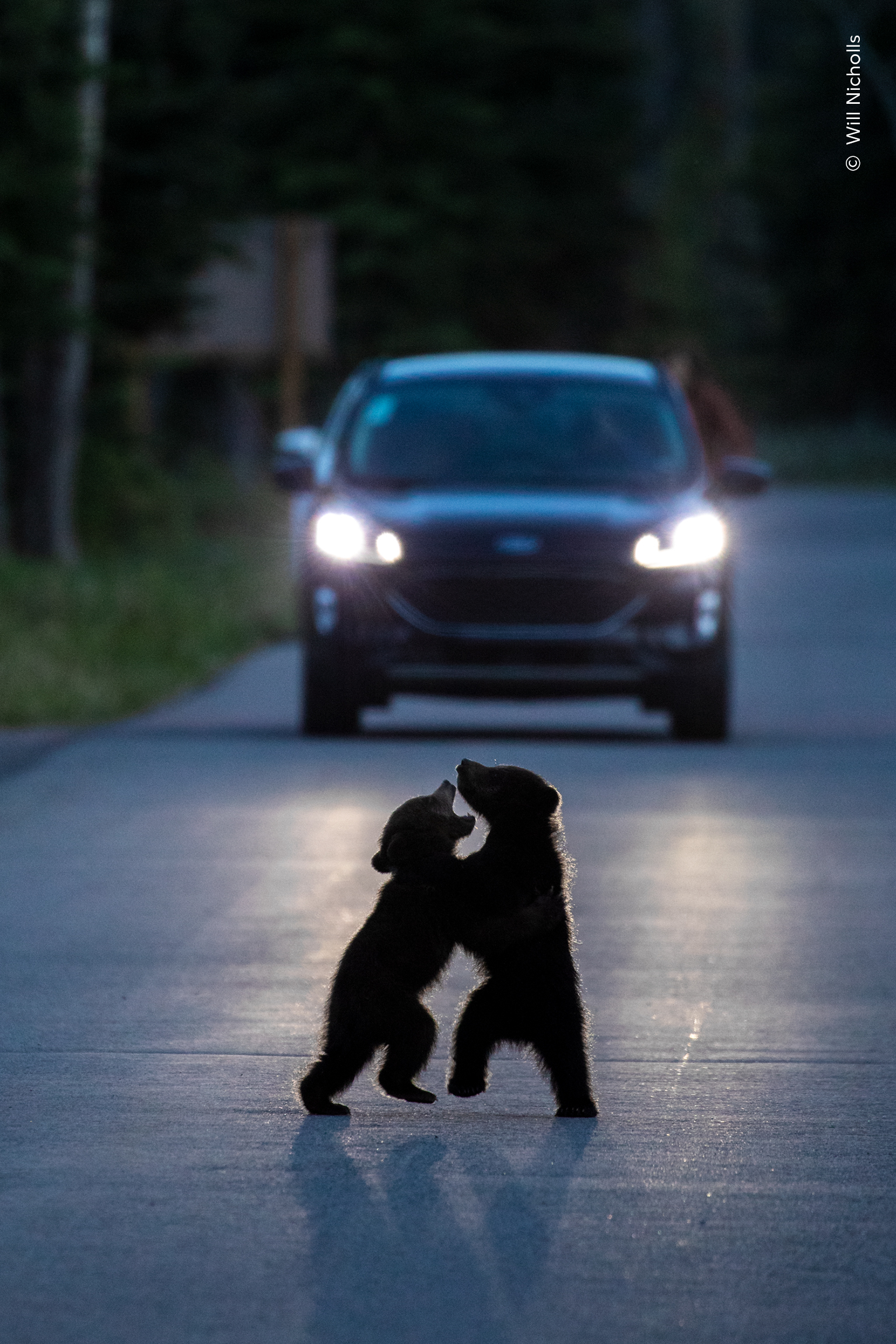
In Canada’s Jasper National Park, Will Nicholls captured "Dancing in the Headlights," a silhouette of two bear cubs playing in the middle of a road. The image is framed by the glow of approaching car headlights, creating a theatrical effect that masks a dangerous reality. While Jasper is known for its bear populations, sightings of cubs are relatively rare as mothers typically keep them away from human-frequented areas. Nicholls’ work highlights the ongoing conflict between wildlife safety and tourism in national parks, where road-related fatalities remain a significant threat to young animals.
Christopher Paetkau: Family Rest
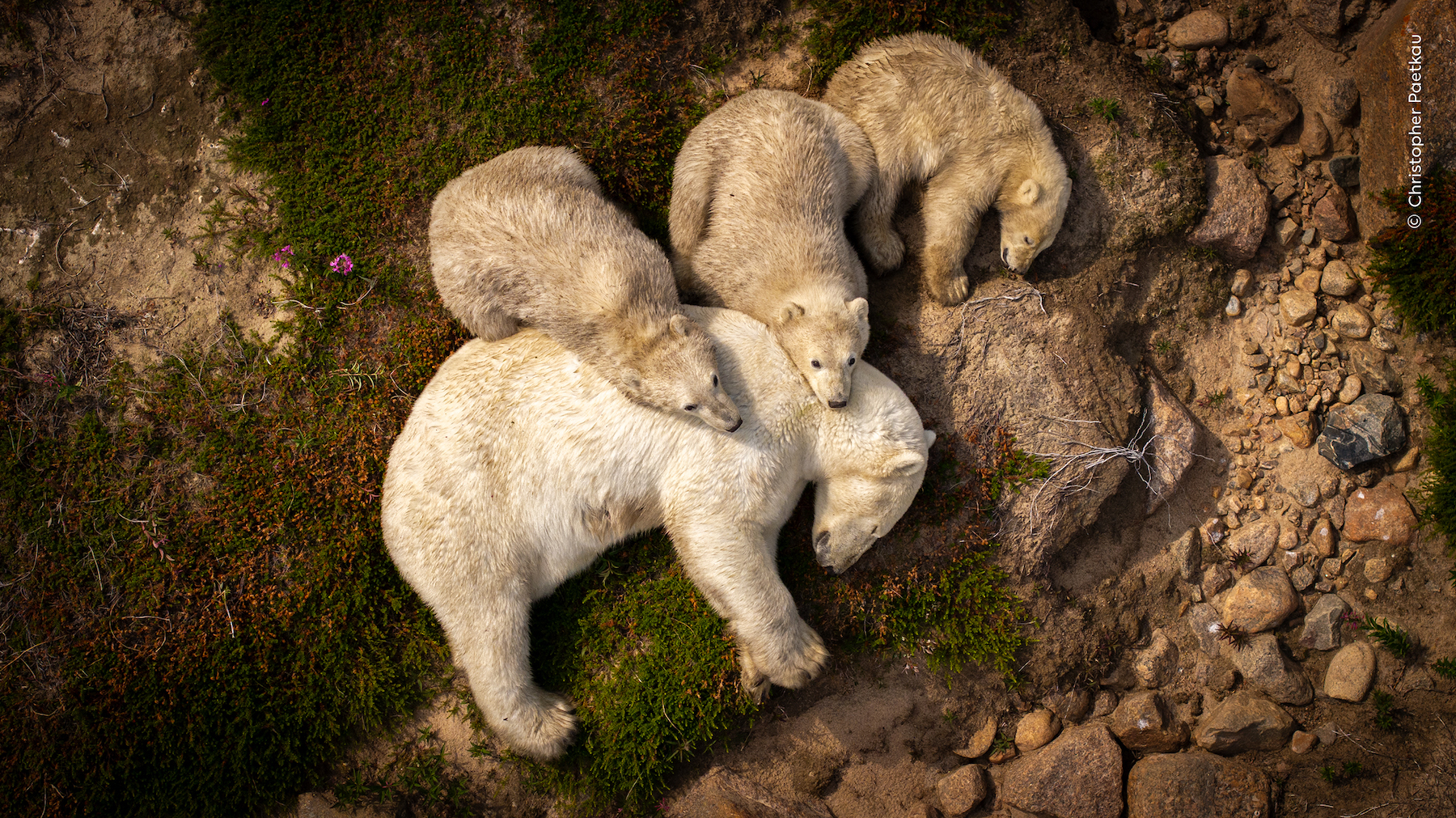
The fourth runner-up, Christopher Paetkau, submitted "Family Rest," an intimate portrait of a polar bear mother and her three cubs resting on the shores of Hudson Bay, Canada. The image captures a moment of tranquility after the family’s long journey north. However, the accompanying narrative is one of environmental precarity. As sea ice continues to shrink due to global warming, polar bears face increasingly difficult hunting conditions. The Hudson Bay population, in particular, is forced to spend more time on land, relying on stored fat reserves for longer periods, which threatens the survival of nursing cubs.
The Conservation Context and Data Analysis
The success of the 2026 People’s Choice Award winners reflects a growing public interest in conservation success stories balanced against the realities of the climate crisis. The Iberian lynx, featured in the winning photograph, serves as a primary case study for the effectiveness of the European Union’s LIFE program and the "Lynx-Connect" initiative. These programs focused on habitat restoration, the reintroduction of captive-bred individuals, and the management of rabbit populations. The transition of the species from "Critically Endangered" to "Endangered" and eventually "Vulnerable" on the IUCN Red List is widely regarded as one of the greatest achievements in modern conservation biology.
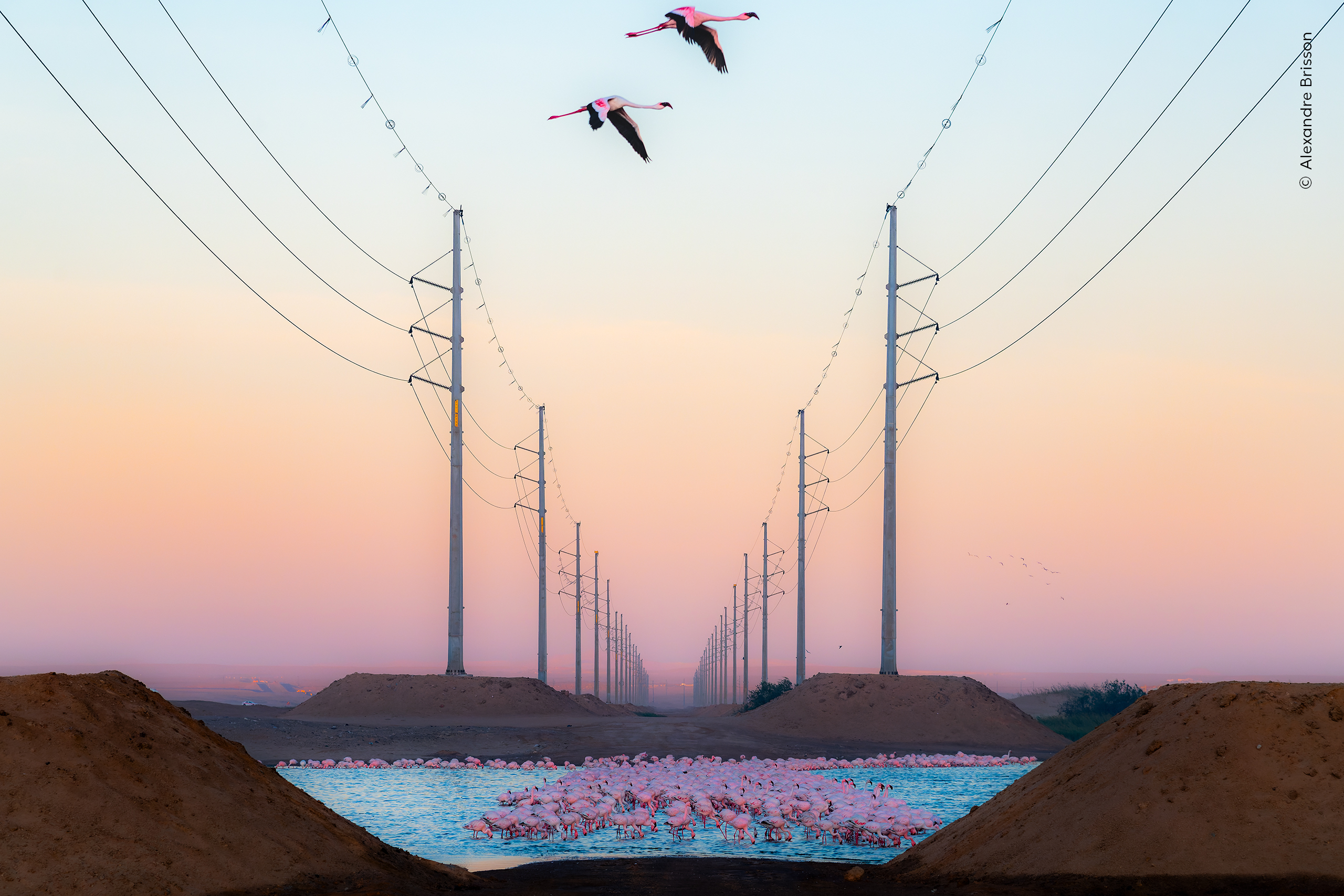
Conversely, the images by Brisson and Paetkau highlight the "Anthropocene" challenges that continue to escalate. In Namibia, power line collisions are a leading cause of mortality for large birds like flamingos and cranes. Conservationists in the region are currently working to install bird flight diverters—brightly colored markers—to make the lines more visible to migratory flocks.
In the Arctic, data from the National Snow and Ice Data Center (NSIDC) indicates that the Hudson Bay sea ice is melting earlier in the spring and forming later in the autumn compared to historical averages. For every week of ice lost, polar bears lose an estimated 10 kilograms of body fat, a critical margin for mothers attempting to raise multiple cubs, such as those seen in Paetkau’s photograph.
The Role of the Wildlife Photographer of the Year Competition
Established in 1965, the Wildlife Photographer of the Year competition is owned and produced by the Natural History Museum, London. It is widely considered the most prestigious photography competition of its kind, serving as a platform for the world’s best nature photographers to showcase the beauty and fragility of the natural world.
The Nuveen People’s Choice Award is a unique category within the competition, as it allows the general public to have a direct say in which stories resonate most deeply. While the main competition categories are judged by a panel of industry experts based on technical merit and originality, the People’s Choice Award often highlights images with strong emotional narratives or those that represent significant environmental milestones.
Dr. Douglas Gurr, Director of the Natural History Museum, noted that the high volume of votes this year demonstrates a profound global connection to the natural world. He emphasized that photography remains one of the most powerful tools available for advocacy, capable of translating complex scientific data into visual stories that inspire action and empathy.
Exhibition and Public Impact
The winning images and the runners-up will be on display at the Natural History Museum in South Kensington as part of the flagship Wildlife Photographer of the Year exhibition. The display is scheduled to remain open to the public until July 12, 2026. Following the London showing, the exhibition will embark on an international tour, visiting dozens of countries across six continents.
This global reach is intended to foster international dialogue regarding biodiversity loss and climate change. By showcasing the beauty of the Iberian lynx alongside the struggles of the polar bear and the sika deer, the exhibition aims to provide a comprehensive overview of the current state of global wildlife.
The 2026 competition has also seen an increase in entries from younger photographers and those from underrepresented regions, reflecting a broader demographic shift in the field of wildlife photojournalism. This diversity of perspective is seen as essential for documenting the varied impacts of environmental change across different biomes.
Conclusion and Future Outlook
The recognition of Josef Stefan’s "Flying Rodent" marks a celebratory moment for the photography community and conservationists alike. It validates the decades of work spent bringing the Iberian lynx back from the brink of extinction and underscores the importance of patient, ethical wildlife photography.
However, the inclusion of the four runners-up ensures that the public does not lose sight of the ongoing challenges. From the industrial landscapes of Namibia to the melting ice of the Canadian Arctic, the 2026 award-winning collection serves as both a gallery of natural wonder and a call to stewardship. As the exhibition prepares to travel the world, these images will continue to serve as ambassadors for the species they depict, reminding viewers that the survival of such extraordinary creatures depends largely on human choices and global policy.