


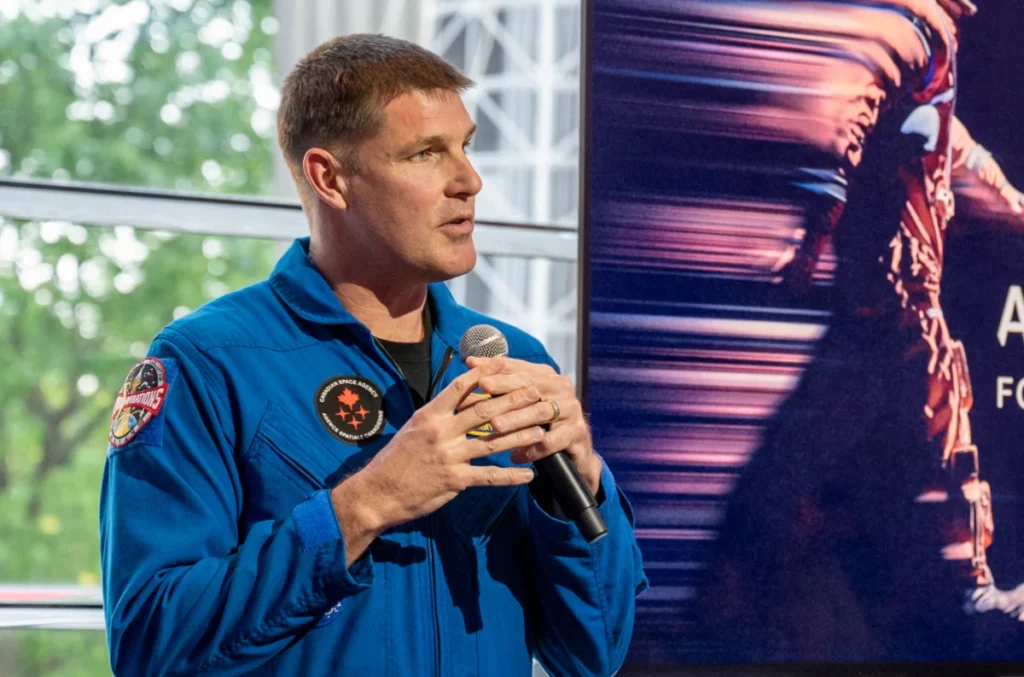
Colonel Jeremy Hansen, a distinguished figure in both Canadian military and space exploration circles, is poised to etch his name in the annals of history as the first Canadian to journey around the Moon. His upcoming participation in the Artemis II mission signifies not only a monumental achievement for Canada but also a testament to a career meticulously built on a foundation of rigorous academic pursuit, particularly in the fields of physics and space sciences, coupled with unwavering dedication to service. Beneath the outward persona of a seasoned military officer lies an exceptional intellect and a lifelong passion for the cosmos, ignited in his youth and systematically cultivated through years of advanced education and demanding professional experiences.
Born in London, Ontario, in 1976, Colonel Hansen’s fascination with space was kindled at a tender age, profoundly inspired by the pioneering spirit of astronauts like Neil Armstrong. This early fascination quickly translated into action. At the age of 12, he joined the Air Cadets, a formative experience that provided him with crucial early exposure to aviation. By 16, he had earned his glider pilot’s license, a remarkable feat for his age, and by 17, he had secured his private pilot’s license, demonstrating an early aptitude and commitment to mastering the principles of flight, a skill set that would prove invaluable in his future endeavors.
The rigorous academic path that would define Colonel Hansen’s intellectual development began in Quebec at the Royal Military College Saint-Jean. He then transitioned to the Royal Military College of Canada (RMC) in Kingston, Ontario, a prestigious institution renowned for its strong science and engineering programs. It was at RMC that his academic prowess truly shone. In 1999, he graduated with honours, earning a Bachelor of Science in Space Science. This was not the end of his academic journey; he continued to deepen his expertise, completing a Master of Science degree in Physics just one year later, in 2000.
During his master’s studies, under the astute supervision of Professor Erwin Batalla, Colonel Hansen focused his research on the intricate domain of tracking Wide Field of View satellites. This specialization placed him at the forefront of a critical area of space observation, demanding a sophisticated understanding of orbital mechanics, sensor technology, and data analysis. Professor Batalla, now retired, fondly recalls Hansen’s exceptional capabilities during his academic tenure. "He really stood out from the crowd," Professor Batalla stated, reflecting on Hansen’s performance. "He was a very determined student with an exceptional work ethic, very patient, and who got along well with everyone. I know he’s very happy today, because this is exactly what he wanted to do." This sentiment underscores the profound alignment between Hansen’s early aspirations and his current monumental undertaking.
The space science program at RMC is recognized as one of Canada’s leading academic offerings in the field, providing specialized training that encompasses a broad spectrum of critical disciplines. These include orbital mechanics, the fundamental principles governing the motion of celestial bodies and spacecraft; space mission design and analysis, the complex process of planning and evaluating space missions; satellite tracking, the essential art of monitoring and maintaining contact with orbiting assets; remote sensing, the acquisition of information about Earth or other celestial bodies without direct contact; and space communications, the vital links that enable data transmission across vast distances. This comprehensive curriculum equipped Colonel Hansen with the theoretical knowledge and practical skills necessary for a career in space exploration.
A Foundation in Geology: Preparing for Lunar Landscapes
Beyond his academic and military qualifications, Colonel Hansen has undergone extensive specialized training that directly prepares him for the geological exploration of extraterrestrial bodies. Gordon Osinski, a professor of planetary geology at Western University in London, Ontario, played a pivotal role in this aspect of the Artemis II astronauts’ preparation. Professor Osinski has cultivated a long-standing professional relationship with Colonel Hansen, commencing in 2012, shortly after Hansen was selected as an astronaut.
The Canadian Space Agency (CSA) recognized the importance of providing its astronaut cohort, including Hansen, with enhanced geological training. Professor Osinski, an expert in leading field expeditions in the Canadian Arctic, was tasked with delivering a program that blended scientific instruction with operational preparation. "The Canadian Arctic is an excellent analogue for Mars and the Moon due to its isolation and geological structure," Professor Osinski explained, highlighting the strategic value of these terrestrial environments for simulating extraterrestrial conditions.
A particular focus of this training involved expeditions to the Kamestastin Lake impact crater in northern Labrador, where Professor Osinski has conducted extensive research in 2021 and 2023. This site holds unique significance for lunar and Martian geological studies. "This site is unique in the world for two reasons: it’s a perfectly preserved meteorite impact crater, similar to the millions of craters that dot the Moon, and it’s made of anorthosite," Professor Osinski elaborated. "Anorthosite is the white rock that glows when you look at the Moon; it’s very rare on Earth, but ubiquitous up there." By studying such terrestrial analogues, astronauts gain invaluable experience in identifying geological formations, understanding cratering processes, and interpreting the history of planetary surfaces.
The practical application of this rigorous training is not lost on Professor Osinski. He views the Artemis II mission as a culmination of years of dedicated preparation. "Listening to the astronauts talk about craters and geology from space, I thought to myself that all that training was worth it," he remarked. "They’re finally putting into practice what they learned with us in the field." This sentiment underscores the critical synergy between academic research, specialized training, and the ultimate realization of ambitious space exploration goals.
Professor Osinski’s expertise has been further recognized by NASA, which has appointed him to the geology team for the next Artemis mission. He is the sole researcher from a Canadian university to hold this distinguished role, further solidifying the contribution of Canadian scientific institutions to the global Artemis program.
A Legacy of Excellence: RMC Graduates in Space
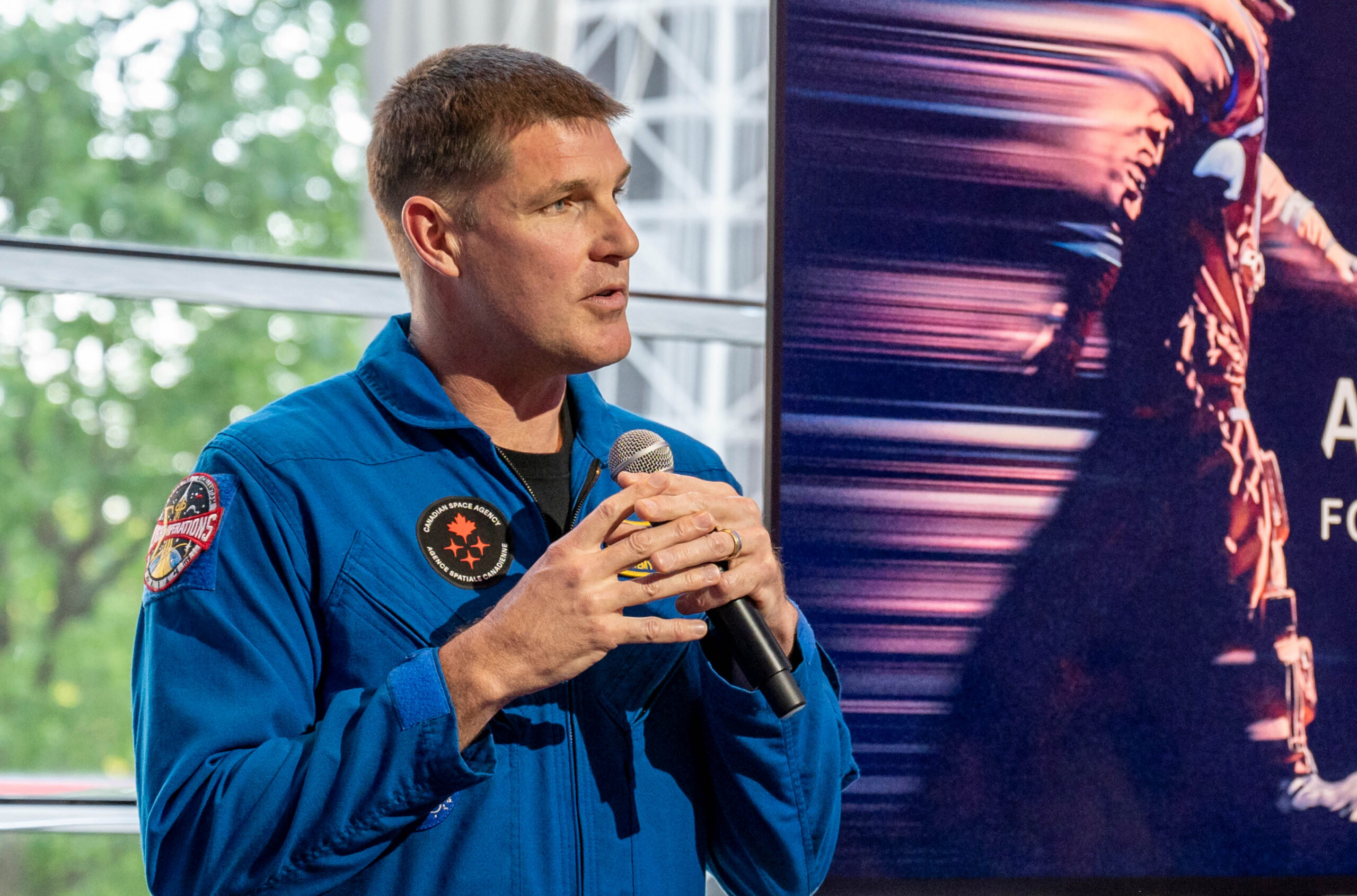
Colonel Hansen’s journey to the Moon is not an isolated event but rather part of a proud tradition of excellence emanating from the Royal Military College of Canada. RMC has a distinguished history of producing graduates who have gone on to achieve significant milestones in space exploration. Among these luminaries are Marc Garneau, Canada’s first astronaut; Chris Hadfield, celebrated for his command of the International Space Station and his engaging outreach activities; and Joshua Kutryk, another accomplished astronaut poised for future missions.
Colonel Hansen’s inclusion in this esteemed group highlights the critical role that universities, particularly institutions like RMC, play in cultivating the talent and expertise required for cutting-edge space missions. The rigorous academic programs, coupled with the disciplined environment of military colleges, forge individuals with the intellectual capacity, physical resilience, and unwavering commitment necessary to push the boundaries of human knowledge and exploration.
The Artemis Program: A Renewed Lunar Ambition
The Artemis program, spearheaded by NASA with significant international collaboration, represents a monumental effort to return humans to the Moon and establish a sustainable lunar presence. Artemis II, the inaugural crewed mission of the program, is scheduled to launch in late 2024. This mission will carry four astronauts – three from NASA and Colonel Hansen from the Canadian Space Agency – on a critical trajectory around the Moon, marking humanity’s first return to lunar orbit since the Apollo era concluded over fifty years ago.
The mission’s primary objective is to test the Orion spacecraft’s life support systems, navigation capabilities, and operational performance in the deep space environment, paving the way for future lunar landings. The crew will perform a series of complex maneuvers, including a lunar flyby and a high-speed re-entry into Earth’s atmosphere, simulating the conditions for a future landing mission. Colonel Hansen’s role on Artemis II is particularly significant, as it represents a major step forward in Canada’s participation in international human spaceflight and its aspirations for continued lunar exploration.
Supporting Data and Context: The Evolution of Space Exploration
The Artemis program builds upon decades of scientific inquiry and technological advancement. Since the dawn of the space age in the mid-20th century, humanity has sent probes, satellites, and astronauts to explore the solar system. The Apollo missions, which successfully landed humans on the Moon between 1969 and 1972, provided invaluable data about lunar geology and composition. However, these missions were limited in their scope and duration.
The Artemis program aims to go beyond the initial landings, with objectives that include establishing a long-term human presence on the Moon, including a lunar gateway (a space station in lunar orbit) and a surface habitat. This sustained presence is intended to serve as a stepping stone for future missions to Mars and other celestial bodies. The program also emphasizes the development of new technologies, such as advanced propulsion systems, in-situ resource utilization (ISRU), and closed-loop life support systems, which are crucial for enabling long-duration space travel.
The international collaboration inherent in the Artemis program is a key element of its success. Canada’s participation, through the provision of the Canadarm3 for the Lunar Gateway and Colonel Hansen’s role as an astronaut, underscores the value of global partnerships in achieving ambitious scientific and exploratory goals. This collaborative approach not only shares the financial and technical burden but also fosters a spirit of shared human endeavor.
Timeline of Colonel Hansen’s Journey
- 1976: Born in London, Ontario.
- Early Years: Develops a passion for space exploration, inspired by Neil Armstrong.
- Age 12: Joins the Air Cadets.
- Age 16: Earns glider pilot’s license.
- Age 17: Earns private pilot’s license.
- 1990s: Attends Royal Military College Saint-Jean, followed by the Royal Military College of Canada (RMC) in Kingston, Ontario.
- 1999: Graduates from RMC with a B.Sc. in Space Science (with honours).
- 2000: Completes a Master of Science degree in Physics from RMC, specializing in tracking Wide Field of View satellites.
- Post-Graduation: Embarks on a distinguished career in the Canadian Armed Forces, serving as a pilot and undertaking various operational roles.
- 2006: Selected by the Canadian Space Agency as one of two new astronauts.
- 2012: Begins enhanced geological training with Professor Gordon Osinski, including expeditions to the Canadian Arctic.
- Present: Selected as a crew member for the Artemis II mission, poised to become the first Canadian to orbit the Moon.
Broader Impact and Implications: Canada’s Role in Lunar Exploration
Colonel Hansen’s historic flight on Artemis II carries profound implications for Canada’s standing in the international space community and its future ambitions in space exploration. It signifies a significant leap forward in Canada’s commitment to human spaceflight and its strategic investment in space technologies and astronaut training.
The mission will undoubtedly inspire a new generation of Canadians to pursue careers in science, technology, engineering, and mathematics (STEM). By showcasing Canadian expertise on a global stage, the Artemis II mission can foster a renewed interest in space exploration and encourage young minds to envision themselves as future astronauts, scientists, and engineers contributing to humanity’s cosmic journey.
Furthermore, Colonel Hansen’s involvement reinforces the value of Canada’s contributions to international space initiatives. His presence on Artemis II, a mission focused on preparing for lunar landings and eventual Mars exploration, positions Canada as a key partner in humanity’s boldest endeavors. The data and experience gained from this mission will not only advance scientific understanding but also inform the development of future space technologies and mission architectures, benefiting all participating nations.
The successful completion of Artemis II will mark a pivotal moment in the resumption of human lunar exploration, signaling a new era of scientific discovery and technological innovation. Colonel Jeremy Hansen, with his robust academic background in physics and space sciences, his extensive military experience, and his specialized geological training, is exceptionally well-prepared to contribute to this historic undertaking, representing Canada with distinction as humanity ventures once again towards the Moon.